
OPEC+ Agrees Fourth Straight Oil Output Hike as Hormuz Crisis Deepens Supply Gap
OPEC+ Ministers Approve July Production Increase OPEC+ members convened on June 7, 2026, and agreed to a fourth consecutive monthly rise in collective output targets, setting an additional 188,000 barrels per day for July. This decision followed similar adjustments in April, May, and June, reflecting the group's ongoing effort to manage targets even as physical supply constrain
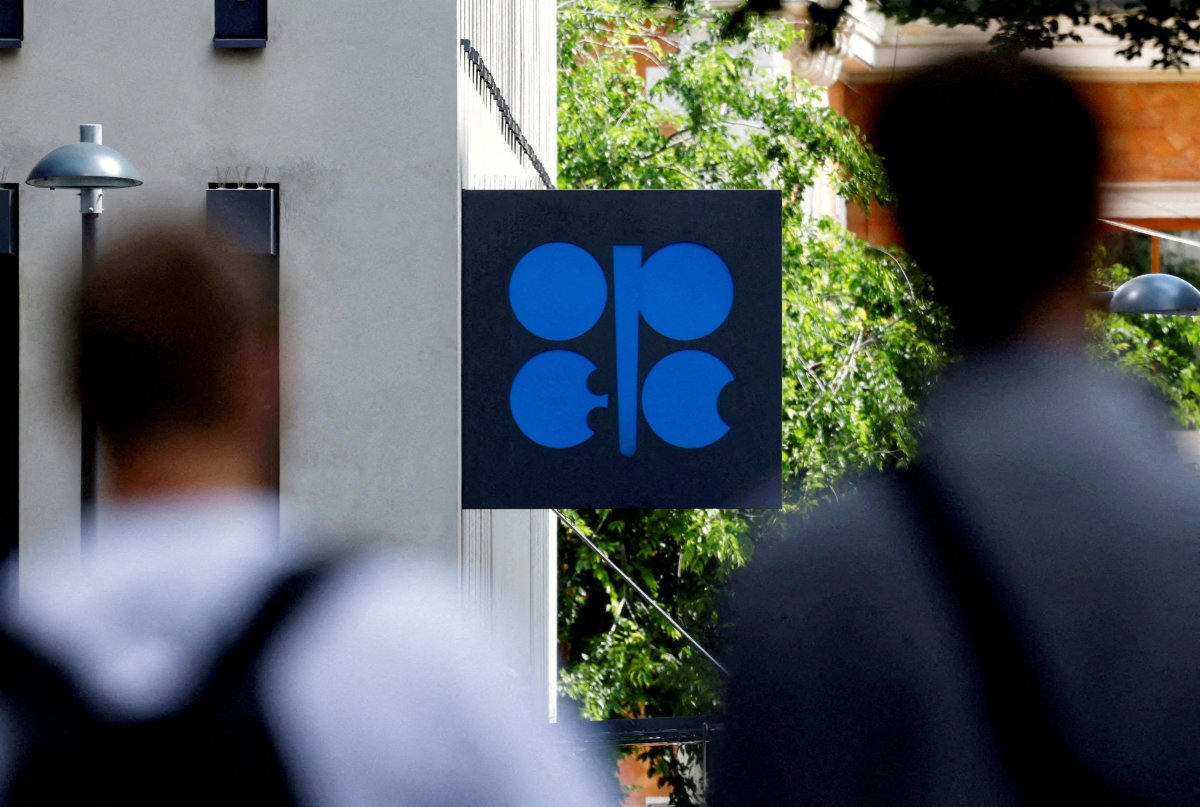
OPEC+ Ministers Approve July Production Increase
OPEC+ members convened on June 7, 2026, and agreed to a fourth consecutive monthly rise in collective output targets, setting an additional 188,000 barrels per day for July. This decision followed similar adjustments in April, May, and June, reflecting the group's ongoing effort to manage targets even as physical supply constraints persist across the region.
The seven participating countries — Saudi Arabia, Iraq, Kuwait, Algeria, Kazakhstan, Russia, and Oman — supported the measured increase. Three additional OPEC and OPEC+ gatherings occurred the same day, including a full ministerial session that left the broader group-wide policy unchanged.
These steps occur against the backdrop of longstanding OPEC+ diplomacy that balances the interests of major producers with fluctuating global demand signals. The incremental approach underscores how the organization continues to calibrate quotas despite external shocks that limit actual barrels reaching the market.
OPEC+ Agrees Fourth Straight Oil Output Hike as Hormuz Crisis Deepens Supply Gap
Beirut, Lebanon – June 7, 2026 — OPEC+ approved its fourth consecutive monthly output target increase on Sunday, setting a 188,000 barrels per day hike for July, even as the Strait of Hormuz closure continues to prevent Gulf members from translating those quotas into actual shipments. The gap between announced targets and physical production has widened to historic levels, exposing the limits of OPEC+ coordination during the most severe supply crisis in modern history.
The July Quota Decision and Its Context
The seven of 21 OPEC+ members who set output policy — Saudi Arabia, Iraq, Kuwait, Algeria, Kazakhstan, Russia, and Oman — agreed to raise collective targets by 188,000 barrels per day (bpd) for July. This matches the June adjustment, which had been scaled down from the 206,000 bpd monthly increases in April and May to account for the departure of the United Arab Emirates from the organization.
Collective quotas from April through June rose by roughly 600,000 bpd. Yet actual OPEC+ output tells a starkly different story: production averaged just 33.19 million bpd in April, down from 42.77 million bpd in February, according to OPEC figures. The divergence between targets and real barrels has become the defining feature of this crisis.
Three other OPEC and OPEC+ meetings were also held on Sunday, including a full session of all OPEC+ ministers. That broader gathering was not expected to alter group-wide output policy, according to OPEC+ sources, signaling that the core seven members retain effective control over quota decisions for now.
Strait of Hormuz: The World's Biggest Supply Disruption
Iran's closure of the Strait of Hormuz on March 4, 2026 severed the transit route for approximately one-fifth of global seaborne oil. Gulf producers including Saudi Arabia, Kuwait, Iraq, the UAE, and Qatar saw their export capacity gutted overnight. The resulting supply loss — exceeding 9 million bpd at its peak — constitutes the largest disruption in the history of global energy markets, eclipsing the 1973 Arab oil embargo and the 1990 Gulf War combined.
Brent crude surged past $120 per barrel following the closure and has remained elevated, as buyers compete for the limited volumes that can still move through alternative routes. The International Energy Agency (IEA) has warned that global oil supply risks falling below demand this year for the first time since the 1970s, compounding inflationary pressure on importing economies.
Iran's decision to close the strait reflects its strategic calculus within the broader confrontation with the United States and Israel. By weaponizing the chokepoint, Tehran seeks to impose economic costs on Gulf adversaries and their Western allies while demonstrating its ability to disrupt regional energy infrastructure — a capability long factored into Gulf state contingency planning but never before exercised on this scale.
UAE Exit and the Reshaping of OPEC+ Governance
The United Arab Emirates departed OPEC on May 1, 2026 after nearly 60 years of membership, delivering a significant blow to the organization's unity at a moment of maximum strain. The exit was driven by Abu Dhabi's frustration with quota allocations that it believed undervalued its production capacity, as well as diverging strategic priorities between the UAE and Saudi Arabia on energy policy and regional positioning.
The departure forced the remaining seven core members to recalibrate the monthly increment from 206,000 bpd to 188,000 bpd — a reduction that acknowledges the loss of the UAE's quota share. Beyond the arithmetic, the exit reflects deeper shifts in Gulf dynamics: the UAE's post-oil economic vision, anchored by investments in logistics, renewable energy, and financial services, reduces its reliance on OPEC-driven revenue management compared to neighbors with fewer diversified revenue streams.
For Saudi Arabia, the UAE's exit represents both a diplomatic setback and a practical challenge. Riyadh has long relied on OPEC+ as a vehicle for projecting leadership within the Sunni Gulf bloc and coordinating policy with Moscow. The narrowing of the core decision-making group to seven members — now excluding the region's third-largest producer — weakens the cartel's claim to represent Gulf oil interests comprehensively.
Strategic Calculus of the Core Seven Members
Each participant in Sunday's meeting approached the quota decision with distinct priorities. Saudi Arabia, as the de facto leader of OPEC+, seeks to preserve the alliance's credibility by maintaining regular quota adjustments, even when they cannot be fulfilled. Riyadh's Vision 2030 economic transformation agenda depends on sustained revenue, but the kingdom's inability to ship through Hormuz means its actual export income is determined by price, not volume.
Iraq and Kuwait face similar constraints: both are major Gulf producers whose export infrastructure is routed through the Persian Gulf and thus blocked by the Hormuz closure. Their support for continued quota hikes signals solidarity with the Saudi-led framework, but neither benefits operationally from higher targets.
Russia and Kazakhstan, as non-Gulf members with alternative export routes, occupy a different position. Moscow benefits from the elevated prices caused by the supply shortfall and has an interest in maintaining OPEC+ cohesion as a platform for its energy diplomacy. The 188,000 bpd hike costs Russia little in real terms — its own production capacity is already constrained by Western sanctions — but preserves its seat at the table.
Algeria and Oman, smaller producers with limited spare capacity, round out the seven. Their participation reinforces the principle of collective decision-making, even as the gap between policy and physical reality widens with each successive hike.
Historical Parallels: OPEC Through Previous Supply Shocks
The current situation echoes earlier episodes in OPEC's history when external disruptions overwhelmed the organization's ability to manage supply. The 1973 Arab oil embargo demonstrated how geopolitical shocks could bypass market mechanisms entirely. The 1990 Gulf crisis, triggered by Iraq's invasion of Kuwait, removed 4.3 million bpd from markets and saw OPEC suspend quotas to allow members to maximize output.
What distinguishes the 2026 crisis is its scale and duration. The loss of more than 9 million bpd of Gulf output through Hormuz dwarfs previous disruptions. And unlike the 1990 crisis, when non-Gulf producers could ramp up to fill the gap, today's oil market operates with minimal spare capacity outside the very Gulf states that are blocked from exporting.
The four consecutive quota hikes — April through July — represent OPEC+'s effort to maintain the appearance of normal policy function. But the historical record suggests that when the disconnect between targets and reality becomes this wide, the organization's relevance depends on its ability to address the underlying blockage rather than adjust paper quotas.
Global Energy Market Fallout and Consumer Impact
Brent crude trading above $120 per barrel has cascading effects on the global economy. Import-dependent nations in Asia and Europe face higher fuel import bills, straining current accounts and fueling inflation. The World Bank has warned that energy prices will average roughly 25% higher this year as a result of the Hormuz disruption, with recovery potentially taking six months or more after the strait reopens.
The IEA's May 2026 Oil Market Report projected that global supply could fall short of demand unless alternative supply sources emerge. Non-OPEC producers in the Americas — the United States, Brazil, Guyana, and Canada — have increased output, but not enough to replace the lost Gulf volumes. Strategic petroleum reserve releases have provided temporary relief, but stockpiles are finite.
For consumers, the implications are direct. Higher gasoline prices, increased heating costs, and elevated petrochemical feedstock prices ripple through supply chains. Central banks face the difficult task of managing inflation driven by energy supply shocks that monetary policy alone cannot address.
Regional Implications for Gulf Stability and Diversification
The prolonged supply disruption poses an existential challenge to the economic diversification strategies that Gulf states have pursued over the past decade. Saudi Arabia's Vision 2030, Kuwait's Vision 2035, and Oman's Vision 2040 all depend on sustained oil revenue to fund non-oil sector investments. With export volumes slashed, the fiscal headroom available for these initiatives is sharply reduced.
The UAE's early exit from OPEC, viewed in this light, appears strategically prescient. Abu Dhabi's investments in logistics, renewable energy, tourism, and financial services provide revenue streams that are less directly tied to oil export volumes. Other Gulf states, which moved more slowly on diversification, now face harder fiscal trade-offs.
On the geopolitical front, the Hormuz crisis has reshaped alliances within the region. Iran's ability to close the strait, even at the cost of its own oil exports, demonstrates the asymmetric leverage that chokepoint geography confers. Gulf states are accelerating investments in alternative export routes, overland pipeline capacity, and strategic storage — but these are medium-term solutions that offer little relief in the current crisis.
The evolving relationship between Gulf producers and Asian buyers also bears watching. China, India, Japan, and South Korea are the primary consumers of Gulf crude. The supply disruption is driving these major importers to diversify sources, potentially reshaping long-term trade patterns in ways that diminish Gulf market share even after the strait reopens.
What Comes Next: OPEC+ Policy and the Path Forward
The July quota hike is unlikely to be the last. With the core seven members committed to maintaining regular adjustments, an August increase of similar magnitude is plausible if the strait remains closed. But the fundamental question — whether OPEC+ can meaningfully influence real supply — remains unanswered.
Three scenarios define the outlook. First, a diplomatic resolution that reopens the Strait of Hormuz would allow Gulf producers to translate their quota increases into actual barrels, potentially bringing prices down. Second, a prolonged closure with continued symbolic hikes would sustain the current dynamic of high prices and constrained supply. Third, a further escalation that damages Gulf export infrastructure could make even quota adjustments irrelevant.
For now, OPEC+ continues to function as a coordinating mechanism, but its credibility rests on events far beyond the meeting rooms in Vienna. The next months will test whether the organization can adapt to a world where its most powerful members cannot ship the oil they are authorized to produce.
By Malik Hassan, Staff Writer
This article was produced with AI-assisted research and editorial support. Reporting is based on sources cited in the article.
What's Your Reaction?
 Like
0
Like
0
 Dislike
0
Dislike
0
 Love
0
Love
0
 Funny
0
Funny
0
 Wow
0
Wow
0
 Sad
0
Sad
0
 Angry
0
Angry
0
Middle East Correspondent at Global1.News. Based in Beirut, covering politics, conflict, energy, and society across the Middle East. Brings context and depth to a region often reduced to headlines.











Comments (0)