
AI's Climate Cost: Latin America's Water and Energy Crisis
The rise of artificial intelligence is driving a hidden environmental crisis across Latin America. Data centers in Chile, Brazil, Mexico, and Argentina consume electricity rivaling entire cities and draw water from aquifers already under siege from megadroughts. As global AI demand surges, the Al Jazeera English Digital Dilemma report reveals how server farms are reshaping resource competition, ecosystem health, and regulatory frameworks from Santiago to the Amazon.
The rise of artificial intelligence has been billed as a revolution — faster decisions, smarter logistics, medical breakthroughs. But beneath the code and the cloud lies a physical infrastructure with a mounting environmental price tag that Latin America is beginning to pay in full. Across the region, from Chile's drought-stricken Santiago basin to Brazil's Amazon frontier and Mexico's water-scarce highlands, data centers built to power AI are consuming electricity at rates that rival entire cities and drawing water from aquifers already under siege. The Al Jazeera English Digital Dilemma report "Counting the Climate Cost of AI" documents a global phenomenon with acute local consequences for Latin America's most vulnerable ecosystems and communities.
Counting the Climate Cost: AI's Environmental Toll on Latin America
Quilicura, Chile — July 17, 2026 — In the Santiago suburb where Latin America's highest concentration of data centers now operates, residents watch their electricity bills rise and their protected wetland shrink as the region's megadrought enters its sixteenth year. This is the hidden geography of artificial intelligence — server farms consuming 62 percent of Quilicura's electricity and 461 million liters of water annually at a single Google facility alone, all while AI-driven demand for computational power shows no sign of slowing down.
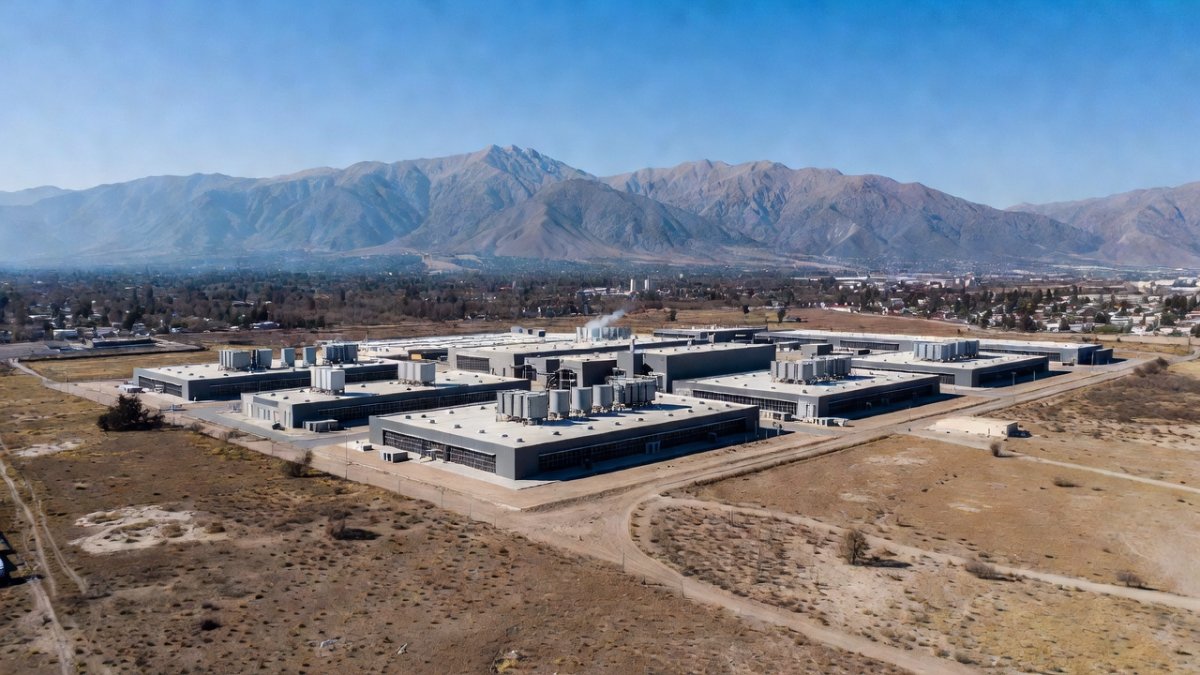
The Hidden Price of Progress — AI's Growing Environmental Footprint
Artificial intelligence is reshaping economies across Latin America, yet its environmental toll remains largely invisible to the public. Data centers consumed roughly 415 TWh of electricity in 2024, representing 1.5 percent of global supply according to the IEA. Projections show this figure climbing to 945 TWh by 2030. AI servers alone are expected to reach 175 TWh in 2026, an 84 percent jump from 95 TWh the previous year. These facilities already emit around 400 million tonnes of CO2 annually, a volume projected to persist through the decade.
Water consumption tells an even starker story. UNU-INWEH estimates AI infrastructure used 4.5 trillion liters in 2025, doubling to 9.3 trillion liters by 2030. That footprint equals the basic domestic needs of 1.3 billion people in Sub-Saharan Africa. A medium GPT-3 interaction draws 0.5 liters, while a single hyperscale data center can pull 100-750 MW continuously. US AI servers may consume 731-1,125 million cubic meters of water yearly by 2030. E-waste from AI hardware could hit 2.5 million tonnes annually, and land use is forecast to expand from 6,900 km² today to over 14,500 km² by 2030. Latin American nations now compete to host these power-hungry installations, trading short-term investment for long-term ecological strain.
Chile Ground Zero — Quilicura and the Santiago Megadrought
Chile has become Latin America’s most visible battleground for AI infrastructure. Thirty-three new data centers have opened, with 34 more under construction, trailing only Brazil and Mexico. Quilicura hosts the region’s highest concentration. Data centers already account for 62 percent of the municipality’s electricity use and are projected to reach 102 percent by 2030. Consumption is expected to surge from 325 MW today to 1,200 MW, a fourfold increase in six years. Google’s Quilicura facility alone reported 461 million liters of water withdrawn in 2024 while holding rights to 50 liters per second, enough for roughly 8,500 households.
The proposed Cerrillos project sought 228 liters per second before an environmental court order halted it in 2024. Chile’s megadrought, now exceeding 15 years, has left the 468-hectare protected wetland in Quilicura visibly declining. Activists from Movimiento Socioambiental de Quilicura and Mosacat chant “We don’t want machines that eat our water.” The new Kast administration has signaled reduced environmental requirements, raising fears that oversight will weaken further. Grid modernization will cost an estimated $5 billion, while more than 6,200 GWh of solar and wind power were curtailed in 2025 due to transmission shortfalls. The contradiction between renewable potential and AI-driven demand grows sharper each month.
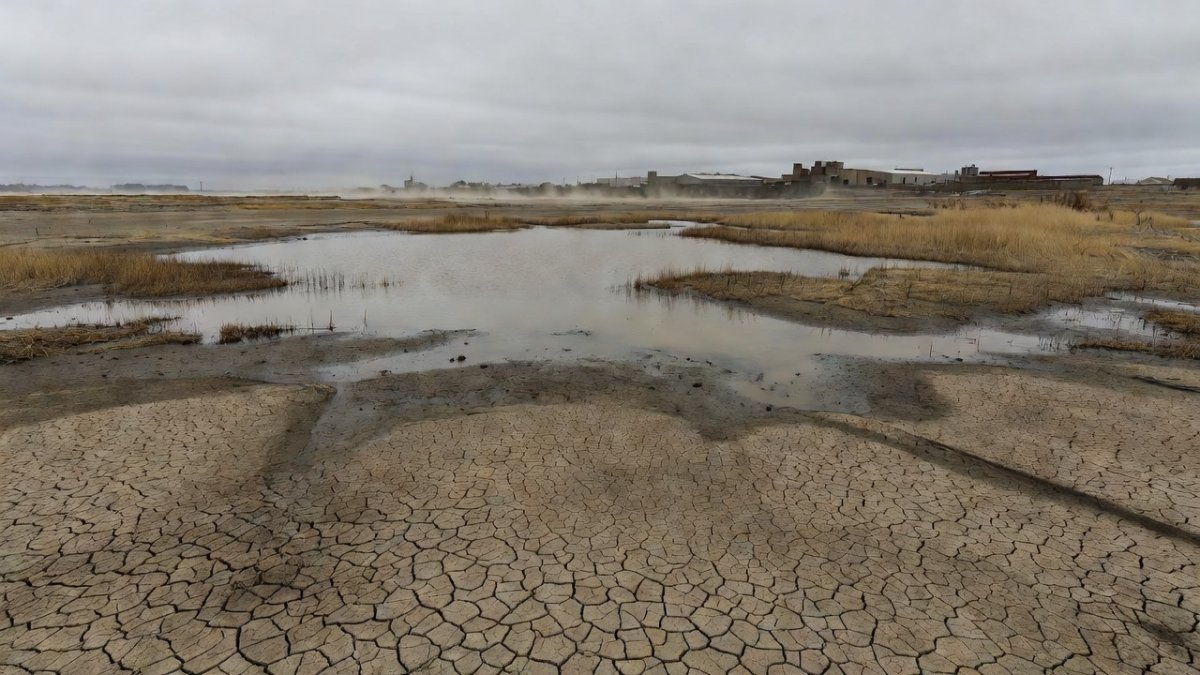
Brazil's Renewable Paradox — Clean Grid, Dirty Costs
Brazil’s electricity matrix is 83 percent renewable, making it an attractive destination for hyperscale operators. AWS, Microsoft, and Google are racing to secure land in São Paulo, Rio de Janeiro, and Ceará, with up to 15 operational campuses expected by 2028. Each facility could consume electricity equivalent to 100,000 homes. A planned project in Belém, Pará, aims to scale from 7.5 MW to 100 MW inside the Amazon basin. Yet 37 TWh of renewable generation were curtailed in 2025 because transmission lines cannot keep pace.
Water stress in the Southeast, particularly around the Cantareira reservoir serving São Paulo, adds pressure. Institutions including ANA, ANEEL, CETESB, and IBAMA oversee licensing, but critics note the absence of specific rules for AI data centers. Regions such as Pará enjoy abundant hydropower while still facing high energy poverty, creating equity concerns. Foreign investment promises jobs, yet local communities question whether the benefits will offset rising water competition and ecosystem strain. Without targeted regulation, Brazil risks repeating the same resource conflicts already visible in Chile.
Mexico's Water Crisis — Queretaro at the Tipping Point
Querétaro holds 70-79 percent of Mexico’s data center capacity. AWS announced a $5 billion investment beginning in 2025 for one to three cloud and AI facilities, joined by Microsoft, Google, and CloudHQ. These installations consume millions of liters of water daily for cooling in a state already facing acute water scarcity. Activists warn the region is being “turned into a desert.” Proposals now circulate to mandate treated wastewater for industrial cooling, protecting potable supplies managed by CONAGUA.
Grid instability and frequent outages have forced CFE to reinforce infrastructure at significant cost. SEMARNAT remains responsible for environmental licensing, yet enforcement often lags behind rapid project timelines. The concentration of AI infrastructure in one water-stressed state amplifies risks for surrounding agricultural communities. Without stronger safeguards, Mexico’s digital ambitions could deepen existing inequalities between corporate users and residents who already ration water during prolonged dry seasons.
Argentina's Patagonia Gamble — Cold Air and Fossil Fuel Tensions
Patagonia’s cold climate reduces cooling demands, drawing interest from OpenAI and Sur Energy for the “Stargate” project, potentially reaching 500 MW with a $25 billion investment still in planning. Amazon, Google, Microsoft, and Tesla/YPF Luz are also eyeing Neuquén. Vaca Muerta gas supplies offer a ready energy source, yet the combination of foreign capital and fossil infrastructure raises alarms. Foreign ownership of roughly 13 million hectares in Patagonia already fuels sovereignty debates.
Environmental impact studies are required, but specific AI regulations remain underdeveloped. Corpoelec-style coordination seen elsewhere in the region is absent here. While lower temperatures cut energy needs for cooling, the scale of proposed facilities could still strain local ecosystems and water resources. Argentina’s gamble pits short-term investment against long-term questions of resource control and climate accountability.
The Human Cost — Communities, Activists, and Equity
Behind every megawatt and liter lies human displacement and resistance. In Quilicura, Movimiento Socioambiental de Quilicura and Mosacat document declining wetlands and rising electricity bills. In Querétaro, residents organized by local water defenders confront daily shortages while data centers draw millions of liters. Brazilian communities near planned Amazon facilities question whether 100,000-home equivalents of power will reach energy-poor households in Pará.
Institutions such as ANA, ANEEL, CETESB, IBAMA, SEMARNAT, CFE, and CONAGUA possess mandates yet lack AI-specific frameworks. The UNU-INWEH water projections and IEA energy forecasts translate into concrete losses for families already navigating megadroughts and grid failures. Activists across the region argue that the 400 million tonnes of projected CO2 and 2.5 million tonnes of e-waste represent not abstract statistics but burdens shifted onto communities least responsible for AI’s rise.
The Bottom Line — Can Latin America Balance AI Ambition with Sustainability?
Latin America stands at a crossroads where AI investment collides with water scarcity, grid limits, and regulatory gaps. Chile’s Quilicura concentration, Brazil’s curtailment paradox, Mexico’s Querétaro stress, and Argentina’s Patagonia projects all illustrate the same pattern: rapid deployment without adequate safeguards. The $5 billion grid upgrades, 6,200 GWh of wasted renewables, and rights to hundreds of liters per second reveal systemic under-preparation.
Meaningful balance requires binding rules on water sourcing, mandatory use of treated wastewater, transparent impact assessments, and equitable benefit-sharing. Without these steps, the region risks trading one form of resource extraction for another. The data are clear: 945 TWh, 9.3 trillion liters, and millions of tonnes of waste by 2030 demand coordinated action before irreversible thresholds are crossed. Latin America can host the cloud, but only if it first protects the water, land, and people beneath it.
By Elena Vasquez, Staff WriterThis article was produced with AI-assisted research and editorial support. Reporting is based on sources cited in the article.
What's Your Reaction?
 Like
0
Like
0
 Dislike
0
Dislike
0
 Love
0
Love
0
 Funny
0
Funny
0
 Wow
0
Wow
0
 Sad
0
Sad
0
 Angry
0
Angry
0

Latin America Correspondent at Global1.News. Based in Mexico City, covering politics, economics, energy, and culture across the region. Brings an on-the-ground perspective to stories spanning from the Rio Grande to Patagonia.














Comments (0)