
Gulf of Paria widens as Trinidad pours oil on troubled Venezuelan waters
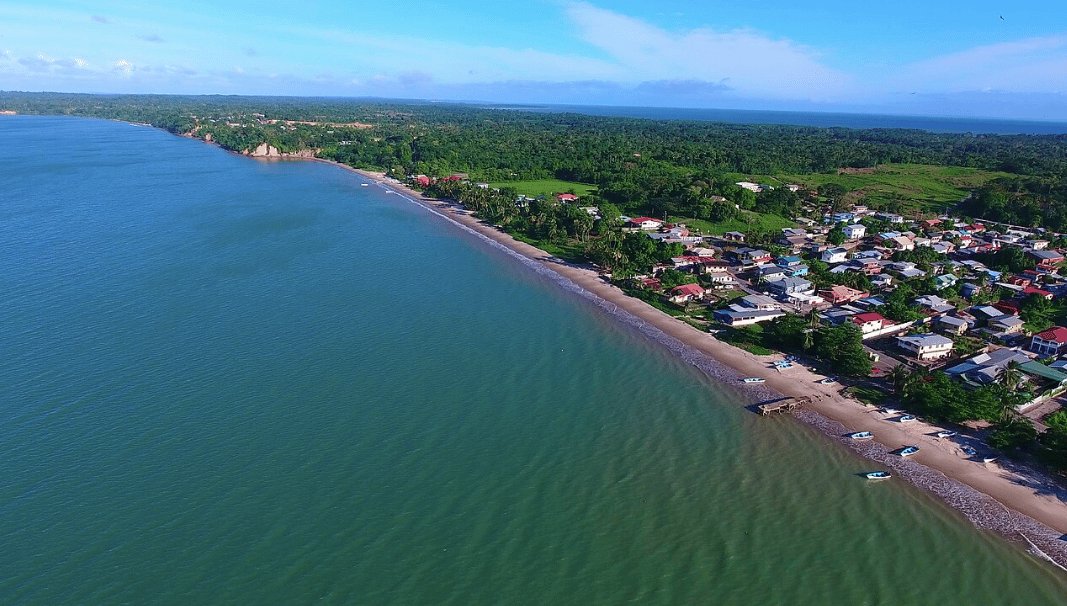
Diplomatic waves spread across shared waters The calm waters of the Gulf of Paria, which have long served as a natural bridge between Trinidad and Tobago and Venezuela, have become the centre of a growing diplomatic dispute. On 10 May 2026, Venezuela’s Foreign Ministry issued a formal demand for information and compensation following an oil spill first detected on 1 May.
Diplomatic waves spread across shared waters
The calm waters of the Gulf of Paria, which have long served as a natural bridge between Trinidad and Tobago and Venezuela, have become the centre of a growing diplomatic dispute. On 10 May 2026, Venezuela’s Foreign Ministry issued a formal demand for information and compensation following an oil spill first detected on 1 May. Caracas claims the incident, which it says originated in Trinidadian waters, has caused serious environmental damage along the coastlines of Sucre and Delta Amacuro states as well as in the Gulf itself. Port of Spain has pushed back firmly, describing the event as a minor incident involving only an estimated 10 barrels that was quickly contained by Heritage Petroleum Limited.
This is not simply a technical disagreement over barrels of crude. It touches the heart of how two neighbouring countries manage a shared marine ecosystem at a time when both face serious economic pressures. For Trinidad and Tobago, the energy sector remains the backbone of government revenue even as global calls for renewable energy grow louder. For Venezuela, the claim reflects deep concern over its fragile wetlands and the thousands of families who depend on fishing for daily bread. The story, therefore, sits at the intersection of environmental protection, energy politics, and longstanding regional tensions.
Timeline of a contested spill
According to official accounts, Heritage Petroleum Limited first detected the spill at 07:25 hrs on 1 May in the company’s Main Field. Trinidad and Tobago authorities say they moved swiftly to contain the hydrocarbon material amid initial fears that it could cross the maritime boundary. The government in Port of Spain chose not to make a public statement until after Venezuela raised the matter internationally.
Venezuela’s response has been forceful. Foreign Minister Yvan Gil has displayed satellite images dated 28 April that, according to Caracas, show oil originating from the Trinidad side. Minister Gil has warned that the spill threatens 1,625 square kilometres across 12 strategic wetland systems. He has spoken of risks to more than 500 fishermen whose livelihoods hang in the balance. Venezuelan officials say they have sent several communiqués to their Trinidadian counterparts seeking detailed information.
Caracas has mobilised a wide range of state agencies including the Ministry of Ecosocialism, the Ministry of Fisheries and Aquaculture, PDVSA, the National Institute of Aquatic Spaces (INEA), and the Venezuelan Navy. Four national parks are said to be at risk. The Venezuelan government is invoking international environmental law to press its case for reparations.
Trinidad and Tobago’s Energy Minister Dr Roodal Moonilal has described the spill as minor. In public statements he has emphasised that the volume involved was only around 10 barrels and that containment measures proved effective. The contrasting assessments have left many in both countries wondering where the truth lies and what the real impact has been on the delicate ecology of the Gulf.
The ecological importance of the Gulf of Paria
The Gulf of Paria is no ordinary body of water. This inland sea, located at Venezuela’s westernmost end and directly south of Trinidad, functions as a shared nursery for marine life that sustains communities on both sides of the border. Its mangrove systems, seagrass beds, and wetlands support a rich biodiversity that includes commercially important fish species, shrimp, and crabs.
Environmental experts have long warned that the Gulf is particularly vulnerable to oil pollution because of its semi-enclosed nature. Limited water exchange with the open Caribbean Sea means that any hydrocarbon spill can linger and spread across boundaries with relative ease. The 1,625 square kilometres of wetlands mentioned by Minister Gil include some of the most productive ecosystems in the region. These areas do not respect maritime borders; damage on one side inevitably affects the other.
For Trinidad and Tobago, the Gulf has always been more than a political line on a map. Fisherfolk from communities such as Cedros, La Brea, and Point Fortin have traditionally worked these waters. Many households in southern Trinidad still depend on the daily catch to put food on the table amid rising food prices and cost-of-living pressures that have squeezed Caribbean families since the end of the COVID-19 pandemic. A serious pollution event could therefore have direct consequences for household incomes at a time when many are already struggling.
The same is true on the Venezuelan side. In Delta Amacuro and Sucre, fishing is not a hobby but a primary source of protein and income for thousands. The potential loss of more than 500 livelihoods, as warned by Venezuelan authorities, would deepen hardship in communities already battered by years of economic difficulty. This shared vulnerability is what makes the current dispute so sensitive.
Trinidad and Tobago’s energy sector under scrutiny
Heritage Petroleum Limited, the state-owned company that reported the spill, sits at the centre of Trinidad and Tobago’s efforts to maintain its position as the Caribbean’s leading energy producer. The company was formed to manage the assets of the former Petrotrin following years of financial losses. Its operations in the Main Field form part of a broader portfolio that includes both onshore and offshore production.
The energy sector has historically accounted for roughly 40 percent of Trinidad and Tobago’s gross domestic product and the majority of export earnings. Natural gas from fields in the Columbus Basin feeds Atlantic LNG, one of the region’s most important export facilities. Oil production, though smaller in volume, remains symbolically and economically significant, especially in southern communities where the industry has shaped local identity for generations.
Yet the sector faces mounting challenges. Global pressure to transition away from fossil fuels, ageing infrastructure, and the constant risk of spills have raised questions about long-term sustainability. The current incident, even if limited to 10 barrels as Trinidad maintains, has brought renewed attention to safety standards and spill response capabilities. Environmental groups in Trinidad have called for greater transparency in how such incidents are monitored and reported to the public.
Dr Moonilal and other government officials have sought to reassure citizens that the country maintains high operational standards. They point to the rapid containment as evidence that lessons have been learned from past incidents. Nevertheless, the fact that the spill was not publicly disclosed until Venezuela complained has fuelled criticism from local environmental advocates and opposition politicians who argue for stronger accountability mechanisms.
Regional tensions and CARICOM-Venezuela relations
The dispute comes at a delicate moment in relations between Trinidad and Tobago and its South American neighbour. While the two countries have historically maintained diplomatic and economic ties, differences over political issues in Venezuela have sometimes strained cooperation. CARICOM governments, including Trinidad and Tobago, have walked a careful line between supporting democratic processes and protecting practical interests such as energy cooperation and border security.
The Gulf of Paria has long been a zone of both collaboration and occasional friction. Joint commissions have worked on issues ranging from fisheries management to counter-narcotics. Yet the maritime boundary, though formally agreed, requires constant management, especially as both countries seek to develop seabed resources.
Venezuela’s demand for compensation in line with international environmental law raises important legal questions. Small island developing states like Trinidad and Tobago have consistently argued at global forums that they face disproportionate risks from climate change and environmental hazards despite contributing relatively little to global emissions. Now, in this case, Trinidad finds itself cast in the role of potential polluter in the eyes of a much larger neighbour.
Regional observers suggest the matter could be resolved through quiet diplomacy rather than public confrontation. Both countries have too much to lose from a prolonged dispute. Trinidad needs stable relations to protect its energy investments and fishing grounds. Venezuela, facing its own internal challenges, cannot easily absorb additional environmental or economic shocks along its Caribbean coastline.
Impact on Caribbean communities and livelihoods
Beyond the diplomatic exchanges, the human dimension of this story deserves close attention. In Trinidad, fishing families in the south have expressed quiet anxiety about what the spill might mean for their future catches. Many remember previous incidents when oil washed up on beaches and affected both marine life and tourism. The post-pandemic recovery of the tourism sector remains fragile, and any perception of polluted waters could deter visitors to areas such as Tobago’s beaches or the increasingly popular southern eco-tourism sites.
Cost-of-living concerns add another layer. Inflation in food prices has been a persistent problem across the Caribbean. If fishing yields decline because of pollution, the price of fresh fish and other seafood could rise further, hitting low-income households hardest. This is particularly relevant in Trinidad where many communities already face challenges with crime and public safety that are sometimes linked to economic desperation.
On the Venezuelan side, the stakes appear even higher. The wetlands and national parks at risk are not only ecologically valuable but also culturally significant to indigenous and local communities. The involvement of the Ministry of Ecosocialism signals that Caracas views this as more than a technical spill; it is seen as a threat to national environmental heritage.
The diaspora connection adds yet another dimension. Many Trinidadian families have relatives in Venezuela and vice versa. News of the dispute travels quickly through community networks in places like Toronto, New York, and London where Caribbean people gather. There is understandable concern that political tension could complicate family visits or economic opportunities that depend on cordial bilateral relations.
Calls for transparency, cooperation and prevention
Environmental organisations in both countries have urged the governments to prioritise facts over rhetoric. They call for independent verification of the spill’s scale and impact, perhaps through a jointly agreed scientific assessment. Such an approach could help rebuild trust while providing clearer data on the actual risks to the 1,625 square kilometres of wetlands and the marine species that depend on them.
There are also broader lessons for the Caribbean energy sector. As countries like Trinidad and Tobago explore new frontiers, including deeper water exploration and potential renewable projects, robust environmental safeguards must keep pace. The incident highlights the need for real-time monitoring systems, rapid response protocols, and greater public communication when spills occur.
Climate change adds urgency to these discussions. Rising sea levels and more intense weather patterns, including the annual hurricane season, increase the risk that future spills could spread even further. Small island developing states have repeatedly warned at international conferences that they lack the resources to manage such compounded threats alone. Regional cooperation through CARICOM and other forums therefore becomes essential.
Some voices in Trinidad have suggested that this episode could serve as a catalyst for renewed dialogue on joint environmental management of the Gulf of Paria. Rather than allowing the dispute to widen the divide, both sides might use it to strengthen mechanisms for early warning, information sharing, and collective stewardship of a resource that belongs to neither country exclusively.
Looking ahead: diplomacy over confrontation
As the weeks pass since the 1 May detection, the diplomatic machinery continues to turn. Venezuela’s demand for reparations remains on the table, while Trinidad maintains that the spill was contained and its effects limited. The coming days and months will likely see further exchanges through official channels, possibly involving technical teams from both sides.
For ordinary citizens in Port of Spain, San Fernando, Caracas, and the fishing villages along both coasts, the hope is that cooler heads will prevail. The Gulf of Paria has sustained communities for centuries. Its health is too important to become another casualty of political posturing.
The story also carries a wider message for the Caribbean. In a region vulnerable to natural disasters, economic shocks, and the effects of climate change, neighbourly cooperation is not optional but essential. Whether the current dispute leads to greater transparency and joint action or becomes another chapter in a history of mistrust will say much about the region’s maturity in handling shared environmental challenges.
Trinidad and Tobago, as a small island nation with significant energy infrastructure, carries a special responsibility. Its actions in the wake of this spill will be watched closely not only by Venezuela but by other CARICOM partners and international partners concerned with marine protection. The same is true for Venezuela, whose vast territory and complex internal situation make consistent environmental enforcement difficult but no less necessary.
In the final analysis, the 10 barrels at the centre of this controversy matter less than what they represent: the fragile interdependence of two nations connected by geography, history, and a common marine heritage. The Gulf of Paria does not belong to Trinidad alone, nor to Venezuela. It belongs to the people who fish its waters, the birds that nest in its mangroves, and the future generations who deserve to inherit a healthy ecosystem rather than a polluted legacy.
The coming weeks will test the diplomatic skills of both governments. They will also test the commitment of Caribbean societies to place long-term environmental sustainability above short-term political advantage. In a region where cost-of-living pressures, public safety concerns, and the need for economic recovery already stretch limited resources, getting this right matters deeply.
Trinidadians and Tobagonians have always shown resilience in the face of challenges, whether during hurricane season, economic downturns, or the difficult years of pandemic recovery. That same spirit of community and practical problem-solving will be needed now as officials seek to navigate these troubled waters. The Gulf of Paria has widened in a diplomatic sense, but with goodwill and transparency it can still be bridged.
By Sharon Sahatoo, Staff WriterThis article was produced with AI-assisted research and editorial support. Reporting is based on sources cited in the article.
What's Your Reaction?
 Like
0
Like
0
 Dislike
0
Dislike
0
 Love
0
Love
0
 Funny
0
Funny
0
 Wow
0
Wow
0
 Sad
0
Sad
0
 Angry
0
Angry
0

Caribbean Correspondent at Global1.News. Based in Port of Spain, Trinidad, covering Caribbean politics, economy, energy, climate, and culture. Amplifying the voices and stories of the Caribbean region.









Comments (0)