
7.3 Chiapas Earthquake: Seismic Resilience Tested Across Latin America
In the wake of yet another powerful seismic event along Mexico’s southern coast, communities across Latin America are once again confronting the realities of living atop one of the world’s most active subduction zones. Friday’s 7.3-magnitude quake tested both the progress made in early-warning...
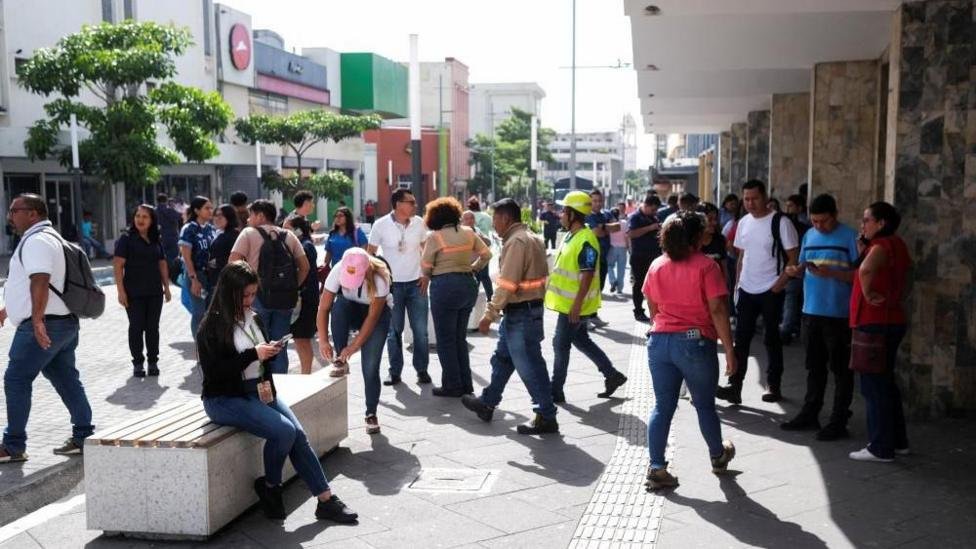
In the wake of yet another powerful seismic event along Mexico’s southern coast, communities across Latin America are once again confronting the realities of living atop one of the world’s most active subduction zones. Friday’s 7.3-magnitude quake tested both the progress made in early-warning systems and building standards and the persistent gaps that leave informal settlements and rural schools exposed. As climate pressures mount alongside tectonic risks, the narrow escape offers a critical moment to assess regional resilience.
7.3 Chiapas Earthquake: Seismic Resilience Tested Across Latin America
Ciudad Hidalgo, Mexico — Article continues...
A powerful 7.3-magnitude earthquake struck the Gulf of Tehuantepec off Mexico’s Chiapas coast on Friday, sending shockwaves through southern Mexico, Guatemala, and El Salvador while triggering a brief tsunami warning for the Pacific shoreline. The shallow 15.2-kilometer depth amplified ground shaking near populated areas, yet the event produced no fatalities despite damaging homes, schools, and public buildings across the border region. This near-miss highlights both the persistent seismic threat along the Pacific Ring of Fire and the uneven progress Latin American nations have made in protecting their most vulnerable communities from nature’s sudden fury.
Seismic History and Regional Vulnerability
The July 17 event near Ciudad Hidalgo and Aquiles Serdán echoes earlier catastrophes that reshaped national policies. The 2017 Chiapas quake, magnitude 8.2 and centered in the same Gulf of Tehuantepec, killed 98 people and affected 1.5 million residents while destroying thousands of homes in Chiapas and Oaxaca. That disaster followed the 1985 Mexico City quake, magnitude 8.1, which killed more than 10,000 when aging mid-rise buildings collapsed onto soft lakebed soil. Further south, Haiti’s 7.2 quake in 2021 claimed over 2,200 lives and destroyed 130,000 homes amid widespread building failures, while Colombia’s 1999 Armenia earthquake of magnitude 6.2 killed 1,185. Each event exposed how informal housing, underfunded schools, and hospitals built without modern standards turn moderate shaking into mass casualties.
Regional comparisons reveal uneven progress. The 1990 Peru earthquake of magnitude 6.4 killed 77, and the 2007 Peru event of magnitude 8.0 killed 595, underscoring persistent vulnerabilities along the subduction zone. In contrast, the 2023 Turkey-Syria quakes demonstrated how even modern construction can fail catastrophically when codes are ignored or enforcement is lax. Latin America’s Pacific coast sits atop one of the world’s most active subduction zones, where the Cocos Plate dives beneath the Caribbean and North American plates, yet preparedness varies sharply between nations that invest in retrofits and those that do not.
Earthquake risk extends beyond the usual headlines to Brazil’s western border regions. Although rarely discussed, tectonically active zones in Acre and Amazonas face potential ground motion from distant subduction events, reminding observers that seismic threats do not stop at national boundaries. The pattern of repeated loss across Mexico, Central America, the Andes, and the Caribbean shows that every moderate-to-large quake tests whether past lessons have translated into durable protection for the most exposed communities.
Immediate Damage and Cross-Border Effects
Friday’s quake injured at least three people and damaged dozens of structures. In Mexico’s Suchiate municipality, 12 homes suffered cracks and partial collapses, while gas leaks forced evacuations. Across the border in Guatemala, eight homes, 14 schools, and 12 public buildings sustained damage, and landslides blocked three roads. The U.S. Tsunami Warning Center recorded modest 0.3-meter waves at Puerto Madero in Chiapas before lifting the alert hours later. Ten aftershocks between 4.9 and 6.0 kept residents on edge, forcing families into shelters for much of the day. Although the U.S. Geological Survey warned that significant damage was likely, rapid local response limited the toll.
Building Codes and Infrastructure Realities
Enforcing seismic standards remains difficult across much of Latin America because of tight public budgets and rapid urban growth. Mexico’s NTCS building code has evolved through successive revisions after 1985 and 2017, yet many homes in Chiapas continue to be constructed with unreinforced masonry or lightweight materials that perform poorly under lateral forces. Guatemala’s CONRED coordinates national disaster response and has pushed for improved standards, but enforcement varies sharply between wealthy districts and informal settlements. Across the border region, 30-40 percent of housing in Chiapas and Guatemala’s rural departments is self-built, often without engineering oversight.
Brazil’s situation illustrates another layer of the problem. Most of the country lies in low-seismic zones, so national codes have historically given little attention to earthquake resistance; however, the western Amazon border area in Acre and Amazonas carries underappreciated risk from regional tectonics. Schools and hospitals often receive lower priority for retrofitting than commercial projects. Mexico’s Escuelas Seguras program, launched after the 2017 disaster, has targeted vulnerable campuses for structural upgrades, yet progress remains uneven in remote municipalities where daily survival takes precedence over compliance.
The 2017 Chiapas quake demonstrated that even newer buildings can fail when construction oversight is weak. Regional governments have pledged incremental upgrades, yet the gap between code on paper and actual practice continues to determine whether the next event produces manageable damage or widespread collapse.
Early-Warning Systems and Institutional Response
Mexico’s SISMOMexico seismic alert network and the National Center for Disaster Prevention (CENAPRED) played visible roles in Friday’s response. Alerts reached Mexico City within minutes, giving residents time to evacuate high-rises before strong shaking arrived. CENAPRED coordinated with state civil-protection agencies to open shelters and inspect critical infrastructure. Guatemala’s equivalent agencies activated similar protocols, though coverage remains patchier in rural areas. These systems represent hard-won lessons from 1985 and 2017, yet they cannot compensate for buildings that were never designed to withstand strong ground motion in the first place.
Tsunami Preparedness and Economic Stakes
The brief tsunami warning underscored ongoing gaps in Pacific-basin preparedness. The Pacific Tsunami Warning Center, based in Hawaii, issued the initial alert that was later supplemented by local Mexican and Guatemalan systems, highlighting both the value of international coordination and the need for faster community-level dissemination. While Mexico and Guatemala have improved coastal evacuation routes since earlier events, many smaller communities still lack clear signage or regular drills. Chile’s experience after the 2010 magnitude 8.8 quake and tsunami, which killed 525 people, led to major reforms in warning infrastructure and public education that now serve as a regional model.
Economically, even moderate quakes impose heavy costs. The World Bank estimates that natural disasters shave between 0.5 and 2 percent off annual GDP growth in Central American nations already burdened by debt and climate-related storms. Rebuilding after the 2017 Chiapas earthquake cost Mexico over $2 billion, diverting resources from long-term development. Tourism in Chiapas coastal towns such as Puerto Madero and Puerto Arista suffered immediate cancellations and longer-term reputational damage, while repeated repairs to schools and roads continue to strain municipal budgets.
Climate overlap adds further complexity. Sea-level rise is changing tsunami risk calculations for low-lying communities, increasing inundation potential during even modest wave events. Friday’s limited casualties may ease immediate fiscal pressure, but sustained investment in building codes, rural outreach, and cross-border coordination will determine whether future events remain manageable or again become tragedies.
Lessons from a Narrow Escape
That a shallow 7.3 quake near densely settled areas produced no deaths offers cautious optimism. Improved early-warning technology, better public awareness, and targeted retrofits appear to have made a measurable difference compared with the 1985 and 2017 disasters. Still, the pattern of damaged schools and informal housing shows that resilience remains incomplete. As climate change adds new stresses to aging infrastructure, sustained investment in building codes, rural outreach, and cross-border coordination will determine whether future events remain manageable or again become tragedies. Latin America’s seismic belt will not quiet; the region’s ability to adapt continues to be tested.
By Elena Vasquez, Staff WriterThis article was produced with AI-assisted research and editorial support. Reporting is based on sources cited in the article.
What's Your Reaction?
 Like
0
Like
0
 Dislike
0
Dislike
0
 Love
0
Love
0
 Funny
0
Funny
0
 Wow
0
Wow
0
 Sad
0
Sad
0
 Angry
0
Angry
0

Latin America Correspondent at Global1.News. Based in Mexico City, covering politics, economics, energy, and culture across the region. Brings an on-the-ground perspective to stories spanning from the Rio Grande to Patagonia.















Comments (0)