
AI Data Center Boom Is a Bubble — Here's the Truth
The AI Data Center Land Grab Is About to Collapse Under Its Own Weight Let me tell you something about this industry we're in right now. I've been running production servers for over a decade — real servers, real networks, real customers who pay me real money every single month. And in all that time, I've never seen anything quite like the AI data center land grab of 2025-2026. It's not that AI isn't real. It's very real. I use it every day to run my business.
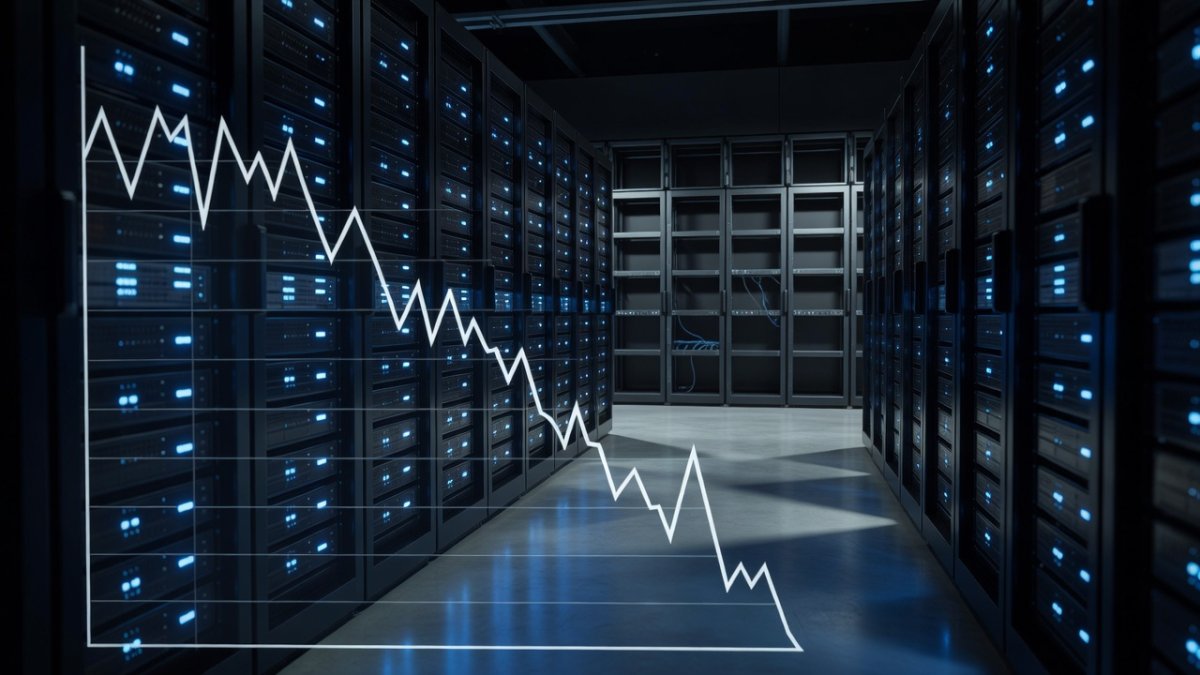
The AI Data Center Land Grab Is About to Collapse Under Its Own Weight
Let me tell you something about this industry we're in right now. I've been running production servers for over a decade — real servers, real networks, real customers who pay me real money every single month. And in all that time, I've never seen anything quite like the AI data center land grab of 2025-2026.
It's not that AI isn't real. It's very real. I use it every day to run my business. But the infrastructure buildout happening right now? The billions of dollars being poured into data centers that don't exist yet, backed by projected demand that may never materialize? That's not a technology story. That's a financial story. And I've seen this movie before.
The Numbers Don't Add Up — Not Even Close
Let's talk about what's actually happening on the ground. AWS announced $150 billion in data center spending over the next 15 years. Microsoft is doing $80 billion in fiscal 2026 alone. Google is at $75 billion. OpenAI and SoftBank just announced Stargate — a joint venture they're calling a $500 billion project spread across the United States.
Half a trillion dollars. For data centers that don't exist yet.
Now, I'm not a Wall Street analyst. I'm a guy who runs servers out of colocation facilities and has to think very carefully about every dollar I spend on power and bandwidth. But when I look at these numbers, one question keeps coming back: where are all the customers going to come from?
The entire AI industry did maybe $30 billion in revenue last year. OpenAI is projecting $11 billion in revenue by the end of 2026 — and they're losing money on every dollar of it because their inference costs are astronomical. Every single major AI company is burning cash faster than they can raise it. And the infrastructure providers — the data center builders, the chip manufacturers, the cooling system vendors — are building capacity based on demand projections that assume those AI companies will somehow become profitable overnight.
That's not a growth story. That's a Greater Fool theory playing out in real time.
What This Means for People Who Actually Run Stuff
Here's where it gets personal. While the hyperscalers are fighting over NVIDIA H200 clusters and liquid cooling contracts, the rest of us — small business owners, startups that haven't raised a billion dollars, independent hosting providers — are getting squeezed from both sides.
Power costs are going up because data center operators are willing to pay a premium for guaranteed capacity. Bandwidth prices are creeping higher as fiber providers prioritize routes to the mega-campuses. Even basic server hardware is getting more expensive because manufacturing capacity is being diverted to AI accelerators.
If you're running a SaaS business on AWS right now, your compute costs went up 15-25% in the last 18 months. Not because you're using more resources. Because AWS is passing its AI infrastructure buildout costs onto every customer, regardless of whether you're running AI workloads or not.
Let that sink in. You're paying more so Amazon can build data centers that may never get used.
The Independent Provider Renaissance Nobody's Talking About
This is where the story gets interesting. While the hyperscalers are off competing for AI workloads, independent hosting providers are quietly having a renaissance. I'm seeing it firsthand.
Companies are migrating back from AWS and Azure to smaller, independent providers for the workloads that actually matter — their production databases, their customer-facing applications, their internal tools. The workloads that need to be reliable, predictable, and affordable. The workloads that hyperscalers have been neglecting because they're too busy chasing AI dreams.
The numbers back this up. According to the 2026 State of Hosting report from Netcraft, independent providers grew their market share by 8% over the past year — the first time that's happened since 2019. Meanwhile, AWS's growth rate slowed to single digits for the first time in its history.
People are voting with their wallets. They're tired of getting nickel-and-dimed on egress fees. They're tired of getting locked into proprietary services. They're tired of their cloud bill doubling every year for the same workload.
What Smart Founders Should Do Right Now
If you're a founder reading this — and I know some of you are — here's my advice. Stop treating infrastructure as an afterthought. The company that saves 40% on its cloud bill by moving to sensible infrastructure isn't just cutting costs. It's buying itself runway. It's building moat.
Start simple. A bare-metal server from a reputable independent provider with a solid backup strategy will take you further than you think. Hetzner, OVHcloud, Leaseweb, or any of the dozens of regional providers in your area — they're all competing for your business and they'll give you better terms than AWS ever will.
Don't chase the hype. You don't need a GPU cluster. You don't need distributed Kubernetes across three regions. You need a server that stays up, a database that doesn't corrupt itself, and backups that actually work. That's it. That's the secret that hyperscalers don't want you to know.
Build for portability. Whatever you build, make sure you can run it somewhere else. Use open standards. Avoid proprietary lock-in. The day you can pick up your entire infrastructure and move it to another provider in 24 hours is the day you gain real negotiating power.
The Bottom Line
The AI data center boom is going to have a reckoning. I don't know when — maybe next year, maybe in three years — but it's coming. The fundamentals don't support the current spending trajectory. The revenue isn't there. The customers aren't there. And when the music stops, there are going to be a lot of empty server racks and broken spreadsheets.
But here's what I know for sure: the businesses that survive the coming correction are the ones that kept their feet on the ground. The ones that didn't get swept up in the hype. The ones that focused on delivering real value to real customers at a price that made sense.
That's what we do at Sylt.ing and Global1.News That's what every good independent provider does. And that's what's going to matter when the AI bubble finally deflates.
Stay grounded, stay profitable, and for God's sake — don't put your entire business on a platform that sees you as a side project. Ent?
— Allan Ali, Founder
This article was produced with AI-assisted research and editorial support. Reporting is based on sources cited in the article.
What's Your Reaction?
 Like
0
Like
0
 Dislike
0
Dislike
0
 Love
0
Love
0
 Funny
0
Funny
0
 Wow
0
Wow
0
 Sad
0
Sad
0
 Angry
0
Angry
0

Publisher of Global1.News. Automation architect, systems builder, and the guy making sure the truth gets published.











Comments (0)