
Trump's F-35 Proposal to Türkiye Triggers Coordinated Regional Pushback
Trump's NATO summit offer to sell F-35 fighter jets to Türkiye has triggered coordinated opposition from Netanyahu, AIPAC-backed lawmakers, and pro-Israel groups. The proposal would reverse CAATSA sanctions imposed after Ankara's S-400 acquisition and reshape Eastern Mediterranean military balance.
Trump's Offer and Its Immediate Context
During bilateral talks with President Recep Tayyip Erdoğan, Trump signaled that sanctions imposed after Türkiye's 2019 acquisition of Russian S-400 systems could be removed. He also floated the possibility of resuming F-35 deliveries, a step that would reverse the earlier exclusion of Türkiye from the joint production program. Erdoğan expressed confidence that the matter could be resolved, reflecting warmer bilateral ties since Trump's return to office in January 2025. The gesture represents the most concrete U.S. outreach to Ankara in years and carries implications for NATO cohesion and Eastern Mediterranean stability.
Türkiye joined the F-35 program as a Tier-3 partner in the mid-2000s, contributing to development costs and planning to acquire over one hundred aircraft while hosting a regional maintenance facility. The 2017 decision to pursue the S-400 reflected Ankara's frustration with delivery delays and export restrictions on the Patriot system, prompting the United States to invoke CAATSA sanctions in 2020 that removed Türkiye from the consortium and halted further deliveries. These measures also restricted access to certain components and training, underscoring the tension between alliance commitments and Ankara's pursuit of diversified suppliers.
From Ankara's perspective, reintegration into the F-35 program would restore operational flexibility and signal renewed U.S. recognition of Türkiye's role in NATO's southern flank. Washington, meanwhile, weighs the benefits of strengthening a key ally against the risk of further Russian influence through existing S-400 infrastructure. Eastern Mediterranean energy routes add another layer, as stable U.S.-Türkiye defense ties could influence security arrangements around prospective gas pipelines and maritime boundaries.
Israeli and Greek Reactions Surface Quickly
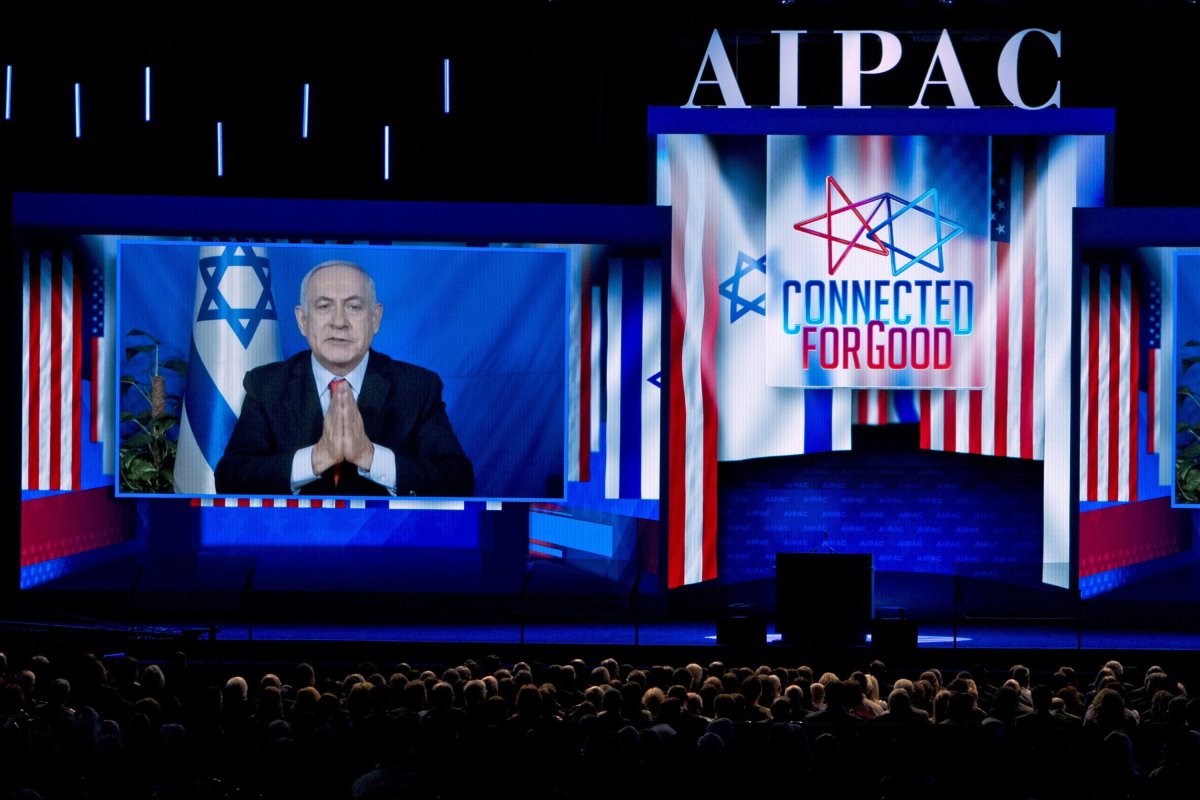
Israeli officials and aligned voices in Washington responded within hours. Prime Minister Benjamin Netanyahu appeared on American television to argue that any transfer would upset the military balance in the Middle East. He stressed the need to preserve Israel's qualitative military edge and noted Türkiye's positions on Cyprus and regional issues. Greek and Greek Cypriot representatives echoed similar concerns, citing longstanding disputes over airspace and maritime boundaries. These statements framed the proposed sale as a potential shift that could affect multiple actors simultaneously.
Israel's calculus centers on maintaining technological superiority amid ongoing operations against Iranian-backed groups in multiple theaters. Greek concerns focus on how advanced Turkish air assets might alter the balance in the Aegean, where overlapping claims have produced repeated incidents. Both capitals have coordinated diplomatic messaging to U.S. lawmakers, highlighting the potential for an F-35-equipped Türkiye to complicate their own procurement and basing decisions.
Second-order effects include possible acceleration of Greek-Cypriot defense cooperation with third parties and adjustments in Arab-Israeli normalization talks, as Gulf states assess whether U.S. policy toward Ankara signals greater tolerance for independent regional actors. Iran could interpret any reversal as evidence of fractures within the Western security architecture, potentially adjusting its own proxy strategies accordingly.
AIPAC and Congressional Opposition Mobilizes
Within Congress, several members introduced measures to block related engine sales and called for a joint resolution of disapproval. Representatives Dina Titus, Chris Pappas, Maggie Goodlander, and Grace Meng led early legislative efforts, citing Türkiye's regional posture. Many of these lawmakers have received substantial support from the American Israel Public Affairs Committee (AIPAC). Additional voices from both parties, including Mike Lawler and Brad Schneider, joined the criticism, often referencing Israel's security needs alongside Greek and Greek Cypriot concerns. The pattern illustrates how pro-Israel organizations coordinate with congressional allies on defense export questions.
Groups such as the Foundation for Defense of Democracies and the Jewish Institute for National Security of America have long tracked Türkiye's defense choices and supplied analysis to congressional offices. Their arguments emphasize the precedent set by CAATSA enforcement and the risk that lifting restrictions could encourage other NATO members to pursue similar Russian systems. Gulf state reactions have been measured, with several capitals privately weighing how a stronger Turkish air force might affect their own strategic hedging between Washington and Ankara.
These lobbying dynamics intersect with Eastern Mediterranean energy politics, where Greek and Cypriot exploration licenses compete with Turkish claims. Congressional resistance therefore reflects not only immediate security concerns but also longer-term calculations about influence over maritime resource development and alliance cohesion.
Netanyahu's Public Plea and Trump's Response
Netanyahu's televised comments drew a sharp private reaction from Trump, who viewed the intervention as inappropriate. White House officials indicated that the Israeli leader lacked standing to dictate U.S. decisions on a NATO ally's equipment. Reports noted that Netanyahu had sought a meeting with Trump for weeks, yet no session had been scheduled by the time the controversy peaked. The episode highlights the limits of Israeli influence when it directly challenges a sitting president's foreign policy initiative toward another key partner.
The episode illustrates the differing institutional incentives at play: the White House prioritizes alliance management and great-power competition, while Israeli leadership focuses on preserving qualitative advantages amid multiple simultaneous threats. Congressional allies of Israel have nevertheless continued to press the administration through hearings and funding restrictions, demonstrating the durability of these networks even when presidential preferences diverge.
Arab states engaged in normalization processes with Israel have watched the exchange closely, assessing whether U.S. willingness to consider Turkish reintegration signals a broader recalibration that could affect their own security guarantees. Iran's position remains one of watchful opportunism, monitoring whether alliance frictions create openings for diplomatic or proxy maneuvering.
S-400 Legacy and Defense Autonomy Questions
Türkiye acquired the S-400 systems after its removal from the F-35 program, citing unmet delivery timelines and a desire for independent air defense. Ankara has maintained that the Russian system poses no interoperability risk with NATO assets and has proposed technical reviews. Recent reports suggest ongoing multilateral discussions about the S-400s, possibly involving a third-party transfer. This background underscores Türkiye's long-standing effort to balance NATO commitments with diversified procurement options amid shifting U.S. export policies.
The 2017-2019 period revealed Ankara's strategic calculus that reliance on a single supplier left it vulnerable to political conditionality. Washington's application of CAATSA sanctions reinforced Turkish arguments for greater defense autonomy, even as NATO partners expressed concern over potential intelligence risks. Any future compromise on the S-400s would need to address both technical compatibility and political signaling to Moscow.
These questions intersect with Eastern Mediterranean dynamics, where Turkish air defense capabilities influence calculations by Greece and Cyprus regarding their own force posture. Gulf states have similarly tracked the episode as a test case for how the United States manages alliance disputes over Russian equipment, informing their own procurement diversification strategies.
Strategic Implications for Regional Power Dynamics
A completed F-35 transfer would enhance Türkiye's air capabilities at a moment when multiple regional actors pursue advanced platforms. Israel seeks to retain its qualitative edge while managing threats from Iranian proxies and ongoing operations in Gaza and Lebanon. Greece and the Greek Cypriot administration aim to strengthen their own deterrence in the Aegean and Eastern Mediterranean. For the United States, the decision involves weighing NATO solidarity against domestic lobbying pressures and great-power competition with Russia and China. Second-order effects could include adjustments in Gulf state procurement patterns and renewed focus on energy corridor security. Historical patterns show that U.S. arms decisions in the region often recalibrate alliances rather than resolve underlying disputes.
Deeper historical context shows that Türkiye's original F-35 partnership was designed to integrate its air force more tightly with NATO standards while supporting domestic industry through co-production. The S-400 acquisition disrupted that trajectory and prompted Ankara to accelerate indigenous fighter programs. Reopening F-35 access would therefore represent a partial restoration of earlier integration plans rather than an entirely new departure.
Geopolitical analysis reveals competing strategic priorities: Ankara seeks leverage within NATO and greater freedom of action in its neighborhood, while Washington attempts to maintain alliance cohesion without ceding ground to Russian or Chinese influence. Eastern Mediterranean energy security remains a cross-cutting concern, as any shift in Turkish capabilities could affect calculations around existing and planned infrastructure projects.
Regional Implications for the Broader Middle East Balance of Power
A U.S. decision to resume F-35 deliveries would reverberate across multiple theaters, altering the perceived hierarchy of advanced air forces and prompting recalibrations by both state and non-state actors. Iran would likely interpret the move as evidence that alliance management can override earlier sanctions precedents, potentially accelerating its own efforts to secure advanced systems through alternative suppliers. Gulf states, already navigating normalization frameworks and energy diversification, would reassess their own procurement timelines and diplomatic hedging strategies to avoid being outpaced by a strengthened Turkish posture.
The Eastern Mediterranean would experience secondary effects through adjusted Greek and Cypriot defense planning, possibly accelerating trilateral cooperation with third parties. These shifts would not resolve underlying territorial disputes but would change the cost-benefit calculations surrounding escalation and deterrence. Over time, such adjustments could influence the pace and direction of Arab-Israeli normalization by demonstrating that U.S. policy remains responsive to multiple alliance equities simultaneously.
Outlook for U.S.-Türkiye Relations
Prospects for sustained improvement in bilateral ties hinge on whether the current opening produces concrete deliverables or remains limited to rhetorical gestures. Ankara continues to value diversified defense options and recognition of its regional role, while Washington seeks reliable NATO contributions without renewed friction over Russian systems. Any agreement would likely require parallel understandings on S-400 management and future procurement transparency.
Longer-term trajectories depend on domestic political developments in both capitals and the evolution of great-power competition. Successful reintegration could strengthen NATO's southern flank and provide a channel for managing Eastern Mediterranean tensions, yet persistent congressional resistance and regional lobbying dynamics suggest that implementation would remain contested. The episode underscores that U.S.-Türkiye relations continue to operate at the intersection of alliance obligations, domestic politics, and shifting regional balances.
By Malik Hassan, Staff Writer
This article was produced with AI-assisted research and editorial support. Reporting is based on sources cited in the article.
What's Your Reaction?
 Like
0
Like
0
 Dislike
0
Dislike
0
 Love
0
Love
0
 Funny
0
Funny
0
 Wow
0
Wow
0
 Sad
0
Sad
0
 Angry
0
Angry
0

Middle East Correspondent at Global1.News. Based in Beirut, covering politics, conflict, energy, and society across the Middle East. Brings context and depth to a region often reduced to headlines.














Comments (0)