
Argentina Malvinas Banner at World Cup 2026 Sparks FIFA Probe and Latin American Solidarity
The 2026 World Cup has brought people together across borders in ways that feel deeply personal, especially for families in Mexico who traveled to cheer on their teams and found themselves reflecting on shared histories of sovereignty and pride. The recent controversy involving Argentina's players and a Malvinas banner has stirred conversations from bustling Mexico City streets to quiet rural plazas, reminding us how football often mirrors larger questions of identity and ...
The 2026 World Cup has brought people together across borders in ways that feel deeply personal, especially for families in Mexico who traveled to cheer on their teams and found themselves reflecting on shared histories of sovereignty and pride. The recent controversy involving Argentina's players and a Malvinas banner has stirred conversations from bustling Mexico City streets to quiet rural plazas, reminding us how football often mirrors larger questions of identity and justice that touch every corner of our region.
\n\n
Argentina's Malvinas Banner Ignites Debate on Sovereignty and Sports at World Cup
\nAtlanta, Georgia — Article continues here...
\n\nThe Dramatic Semi-Final and Banner Display
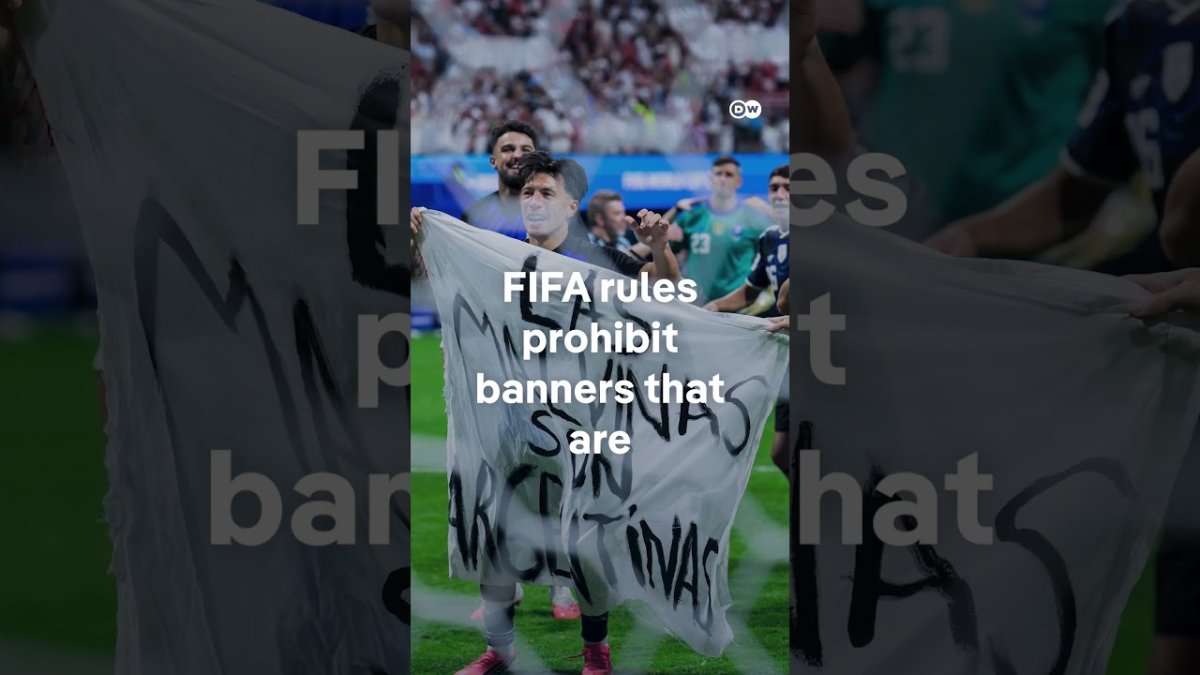
\nIn a recent DW News report titled "Why FIFA might fine Argentina players for celebrating with Falklands banner," viewers saw footage of Argentina's 2-1 comeback victory over England in the 2026 World Cup semi-final at Atlanta Stadium in Georgia. Argentina trailed 0-1 until the 84th minute before scoring twice in the closing stages. After the final whistle, several players held up a banner reading "Las Malvinas son Argentinas."
\nThe incident occurred during the first World Cup co-hosted by the United States, Mexico, and Canada. Mexico hosted matches at Estadio Azteca in Mexico City, Estadio Akron in Guadalajara, and Estadio BBVA in Monterrey, drawing thousands of Mexican fans who traveled across the border for the tournament. These venues became vibrant gathering points where families from across the country shared stories of resilience while watching the action unfold.
FIFA Investigation Under Stadium Code
\nFIFA immediately opened an investigation under its Stadium Code of Conduct, which prohibits banners of a political, offensive, or discriminatory nature. The disciplinary committee is currently reviewing match reports from the Atlanta game. Argentina faces the possibility of fines, similar to the 2012 case when the team was sanctioned for displaying a comparable Malvinas banner before a friendly against Slovenia. The process typically involves an initial review within days, followed by a hearing that could take one to two weeks, allowing the committee to weigh precedents and issue a ruling before the final.
\nPrecedents show FIFA takes such displays seriously. In 2012, South Korean player Park Jong-woo received a two-match suspension for a political banner about the Dokdo islands. No prospect exists that Argentina will be removed from the final scheduled for Sunday at MetLife Stadium in New Jersey against Spain.
\n\nUK Government Response and Diplomatic Tensions
\nThe UK government urged FIFA to act swiftly. A Downing Street spokesperson stated that while the World Cup might not belong to Britain, the Falkland Islands definitely do. Business Minister Peter Kyle described the banner as an egregious violation of FIFA rules. Liberal Democrat leader Ed Davey called for the players involved to be suspended from the final.
\nArgentina also lodged a formal diplomatic protest over the British warship HMS Medway passing through waters Argentina considers its own. Argentina's Vice President Victoria Villarruel had stated before the match that the game was about putting the invaders in their place.
\n\nHistorical Context of the Sovereignty Dispute
\nThe Falklands/Malvinas sovereignty dispute dates to 1833 when Britain occupied the islands. In 1982, Argentina invaded, leading to a 74-day war that resulted in 655 Argentine and 255 British deaths. The conflict remains a deeply felt national issue in Argentina, as midfielder Leandro Paredes noted when he described the war as a sad part of history and said the match was not just football for his country.
 \n
\nLatin American nations have consistently supported Argentina's position in international forums, including through the Organization of American States. This solidarity reflects broader anti-colonial sentiment across the region. The UN has also addressed the issue through repeated resolutions calling for bilateral negotiations, underscoring how the dispute resonates far beyond the pitch and into diplomatic halls where Mexico and other nations advocate for peaceful resolutions.
\n\nMexican and Latin American Solidarity
\nIn Mexico City colonias and rural communities in Oaxaca and Chiapas, many residents view the Malvinas claim through the lens of shared Latin American history. The 2026 World Cup matches hosted in Guadalajara and Monterrey allowed Mexican fans to experience the tournament firsthand while hearing echoes of regional territorial concerns. Mexico itself maintains active positions on border and resource issues that resonate with Argentina's stance. Small business owners near taquerías in Monterrey and farmers in ejidos across central Mexico often discuss how external powers have historically challenged sovereignty in the Americas. The banner incident has sparked conversations in these communities about unity against perceived outside interference.
\n \n\n
\n\nVoices from Mexican Fans and Institutions
\nMexican football fans who made the journey to matches in the United States shared heartfelt perspectives on the unfolding events. One supporter from Guadalajara, who traveled to Atlanta, described how the banner reminded him of Mexico's own struggles to protect its sovereignty, noting that "we stand with our Argentine brothers because these questions of dignity connect us all." The Secretaría de Relaciones Exteriores has echoed this sentiment in measured statements, reaffirming Mexico's support for dialogue on territorial matters while emphasizing the importance of keeping sports free from unnecessary political escalation.
\n\nHuman Impact on Families Across the Region
\nThe controversy reaches beyond stadiums into homes of maquiladora workers in Ciudad Juárez and teachers in Mérida who follow the World Cup closely. Families in these areas see the Malvinas issue as connected to wider questions of dignity and self-determination that affect daily life from healthcare access through IMSS to local economic pressures.
\nArgentine Vice President Villarruel's pre-match comments and the players' actions have amplified discussions among migrant workers and students who traveled to support their teams in the United States. The OAS historical backing for Argentina's claim provides a framework many Mexican observers reference when analyzing the events.
\n\nBroader Implications and the Gibraltar Precedent
\nAs Argentina prepares to face Spain at MetLife Stadium, attention remains on how FIFA will rule. Spain's own players faced UEFA sanctions in 2024 for similar territorial chants during Euro 2024 involving Gibraltar, a situation that closely parallels Argentina's case and highlights how European and Latin American disputes over sovereignty often intersect with international sports governance. The outcome will influence how political expressions are handled in future matches hosted across North America, including those in Mexican venues.
\nThe incident underscores ongoing regional conversations about history, identity, and international rules that directly touch communities from Tijuana to Cancún. Mexican fans and their Latin American counterparts continue to watch developments closely as the tournament concludes, finding in these moments a renewed sense of connection to the shared stories that bind our hemisphere together.
\n\nBy Rosa Martinez, Staff WriterThis article was produced with AI-assisted research and editorial support. Reporting is based on sources cited in the article.
What's Your Reaction?
 Like
0
Like
0
 Dislike
0
Dislike
0
 Love
0
Love
0
 Funny
0
Funny
0
 Wow
0
Wow
0
 Sad
0
Sad
0
 Angry
0
Angry
0

Latin America/Andes Correspondent at Global1.News. Based in Bogota, covering politics, environment, energy, and social movements across the Andean region. Passionate about environmental journalism and communities protecting their land.













Comments (0)