
Herzog on Iran-US MoU Collapse: Israel Eyes Diplomatic Path
The 14-point memorandum, mediated by Pakistan and intended to end hostilities after the February 28 US-Israeli campaign, has unraveled with startling speed. Herzog on Iran-US MoU Collapse: Israel Eyes Diplomatic Path Jerusalem, Israel — As the seventh consecutive night of US airstrikes pounds Iranian military positions along the southern coast, Israeli President Isaac Herzog has broken his silence on the collapse of the Islamabad Memorandum of Understanding.
The renewed US airstrikes on Iranian military sites along the southern coast and the IRGC's claimed attack on Al Udeid Air Base have returned the region to open confrontation less than a month after the Islamabad MoU was signed. The 14-point memorandum, mediated by Pakistan and intended to end hostilities after the February 28 US-Israeli campaign, has unraveled with startling speed.
Herzog on Iran-US MoU Collapse: Israel Eyes Diplomatic Path
Jerusalem, Israel — As the seventh consecutive night of US airstrikes pounds Iranian military positions along the southern coast, Israeli President Isaac Herzog has broken his silence on the collapse of the Islamabad Memorandum of Understanding.
The Rapid Unraveling of the Islamabad MoU
The Islamabad MoU, signed June 17, 2026, promised a ceasefire, reopening of the Strait of Hormuz, a sanctions-relief framework, and a negotiation roadmap. By July 7 the United States had already revoked the license for Iranian oil sales and resumed airstrikes following attacks on commercial shipping. On July 14 Iranian lawmakers formally demanded the agreement's termination, citing the death of Supreme Leader Khamenei. CENTCOM reinstated its naval blockade the same day, and President Trump declared the memorandum "effectively nullified" on July 15.
The 14-point Islamabad MoU, signed under Pakistani mediation, lacked any dedicated nuclear resolution mechanism or binding enforcement clauses, rendering it structurally fragile from inception. Pakistani diplomats, led by Foreign Minister Ishaq Dar, positioned Islamabad as an honest broker leveraging its ties to Tehran, yet the text omitted verification protocols for Iran's enrichment levels or dispute arbitration beyond vague bilateral consultations. This omission allowed both sides to interpret compliance selectively, with Israeli officials privately viewing the document as a tactical pause rather than a durable framework.
The Trump administration's internal divisions accelerated the collapse. National Security Advisor Mike Waltz pushed for stricter linkage to Iranian ballistic missile curbs, while State Department officials favored incremental de-escalation. Within 30 days of signing, the ceasefire recorded 17 documented violations, including IRGC drone incursions over the Golan and Israeli strikes on Syrian transit routes. By day 28, cumulative incidents exceeded the threshold that had previously triggered full resumption of hostilities in earlier shadow-war cycles, exposing the MoU's enforcement vacuum.
Herzog's Assessment of the Collapse
In his July 16 interview with Al Arabiya English, President Isaac Herzog stated he was "not surprised" by the MoU's failure. He nevertheless reiterated Israel's official position that a diplomatic solution remains the preferred outcome. Herzog's remarks reflect a calculated Israeli stance: public support for diplomacy paired with private acceptance that military pressure may continue.
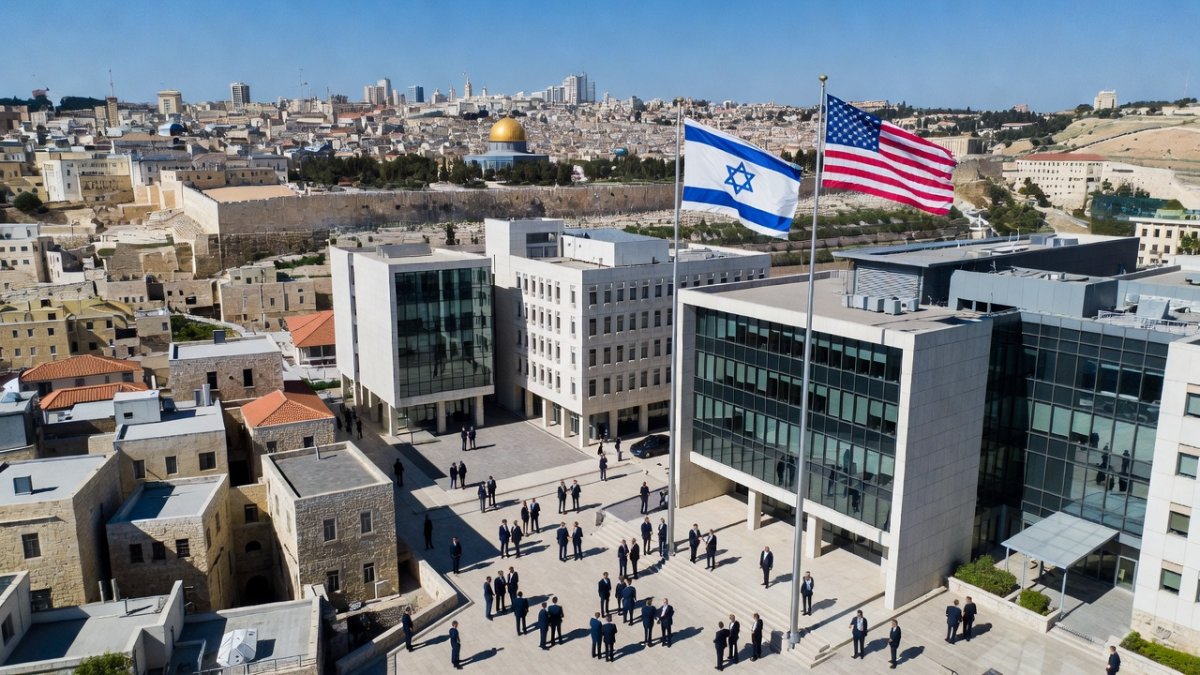
President Isaac Herzog conducted the Al Arabiya interview from his Jerusalem office overlooking the Old City, a deliberate choice underscoring the symbolic weight of an Israeli head of state addressing a Saudi-owned outlet. His remarks framed differences with Washington as "tactical" rather than strategic, emphasizing that Prime Minister Netanyahu retained full confidence in President Trump's long-term commitment to Israeli security. Herzog's broader vision surfaced when he reiterated his longstanding aspiration to "drive to Beirut," signaling openness to normalized ties extending beyond the Gulf.
Herzog argued that Israel's core interest in the MoU was never containment of Iran per se but the creation of diplomatic space for Saudi normalization. He noted that tactical friction over sequencing-whether Iranian nuclear rollback should precede or follow Gulf deals-did not alter the strategic alignment between Jerusalem and the current U.S. administration. The interview thus served as calibrated reassurance to Riyadh that Israeli policy remained anchored in the same regional architecture despite the MoU's failure.
US-Israel Alignment and Tactical Differences
Herzog emphasized the "close and good dialogue" between Jerusalem and Washington, noting that differences remain "tactical." This alignment has allowed Israel to maintain operational freedom while the United States conducts the seventh consecutive night of strikes, including the destruction of an IRGC surveillance tower at Chabahar Shahid Kalantari Port and attacks on bridges near Bandar Abbas.
Saudi Normalization Remains Israel's Core Objective
Herzog singled out Crown Prince Mohammed bin Salman, expressing "great respect" and stating that rapprochement with Saudi Arabia is "the thing that we want most in Israel." The collapse of the MoU has forced Riyadh to reassess both the India-Middle East-Europe Corridor and any near-term normalization timeline, as Gulf states weigh Iranian retaliation risks against American security guarantees.
Saudi Arabia's pursuit of normalization continues to hinge on Vision 2030's requirement for predictable regional stability to attract foreign direct investment. Crown Prince Mohammed bin Salman has tied the kingdom's $1.2 trillion sovereign wealth fund deployment to reduced IRGC exposure of critical infrastructure, particularly after the 2019 Abqaiq attacks demonstrated Saudi vulnerability. The MoU's collapse has not killed the track but has reset timelines, with Riyadh now conditioning progress on firmer U.S. security guarantees embedded in ongoing mutual defense treaty negotiations.
Israeli strategists assess that the Abraham Accords framework remains intact precisely because Saudi Arabia views normalization as a hedge against Iranian conventional and proxy threats rather than a reward for Israeli concessions. Defense spending data shows Riyadh allocated $75 billion in 2024, much of it directed toward layered air defenses that would gain operational depth through Israeli intelligence sharing. The war's interruption of talks is therefore viewed as temporary, contingent on restoring deterrence rather than a fundamental rupture.
Iran's Retaliatory Calculus
Tehran's response has been swift. The IRGC announced a surprise strike on Al Udeid Air Base in Qatar on July 17, while Iranian ballistic missiles and drones targeted Saudi territory on July 14. With its nuclear program still unresolved in the collapsed agreement, Iran appears determined to demonstrate that any renewed sanctions regime will carry immediate costs for US regional assets and Gulf partners.
Gulf States Navigate Between Blockade and Retaliation
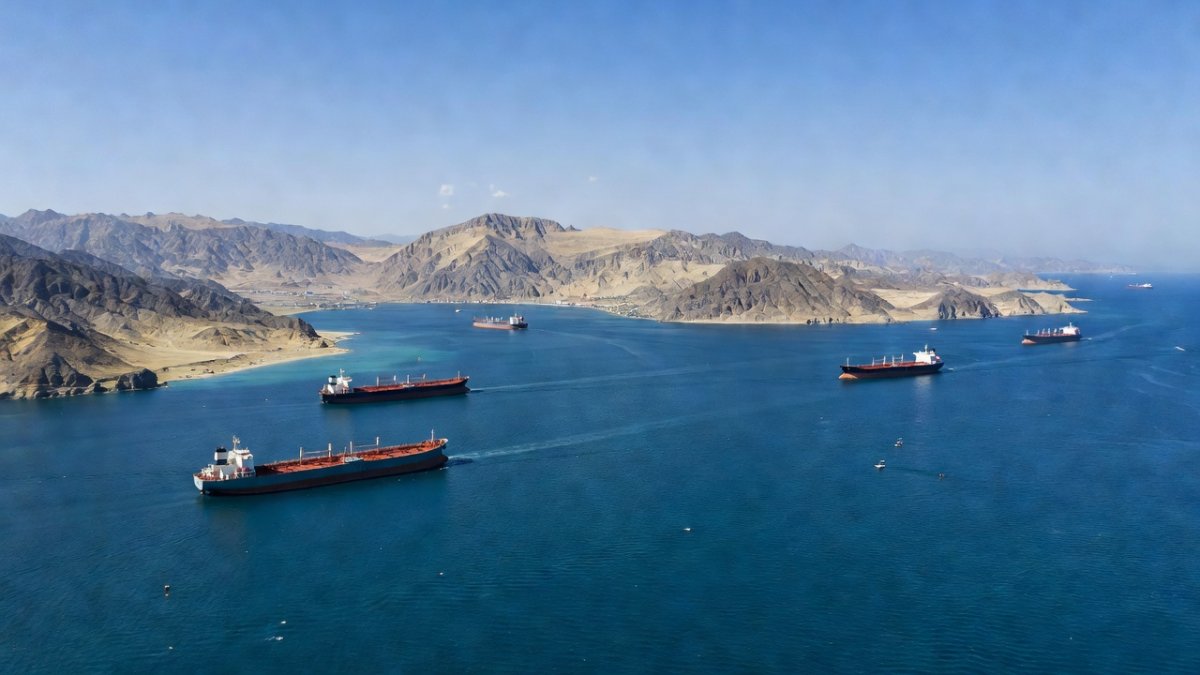
Saudi Arabia's downing of three ballistic missiles and seven drones on July 14 illustrates the narrow space available to Gulf capitals. The re-closure of the Strait of Hormuz, through which roughly 20 percent of global oil transits, has already placed severe pressure on energy markets and forced Gulf sovereign wealth funds to reassess diversification timelines.
The UAE has accelerated strategic diversification away from exclusive reliance on the U.S. security umbrella, signing additional defense pacts with France and India while expanding its own missile shield coverage. Bahrain, more exposed geographically, has maintained quiet coordination with Israeli naval assets in the Gulf. Qatar's position is complicated by the IRGC strike on Al Udeid, which damaged forward operating facilities and forced Doha to recalibrate its hosting role for U.S. Central Command.
Energy markets registered an immediate 11 percent spike in Brent crude following the MoU's collapse, prompting Gulf sovereign wealth funds-whose combined assets exceed $3 trillion-to rebalance portfolios toward Asian equities and domestic infrastructure. This shift has delayed several Vision 2030 milestone projects by 18-24 months as capital is redirected toward immediate hardening of energy export terminals against potential Iranian retaliation.
Energy Security and the Strait of Hormuz
The brief reopening of the strait after the Islamabad MoU lasted only weeks. CENTCOM's renewed blockade and Iranian threats to shipping have returned the waterway to a flashpoint. Any sustained closure would trigger second-order effects across Asia and Europe, complicating both Chinese and Indian energy calculations at a moment of heightened great-power competition.
Regional Implications Beyond the Current Strikes
The overt Israel-Iran shadow war now intersects with unfinished business from the Abraham Accords, Turkish regional ambitions, and the unresolved Palestinian question. Herzog's expressed desire to "take a car and drive to Beirut" underscores the enduring Israeli aspiration for normalized relations across the Levant and Gulf, yet the current trajectory suggests that military escalation will precede any renewed diplomatic opening.
Turkey has sought to expand its influence by positioning itself as a potential mediator, yet Ankara's own strained relations with both Jerusalem and Tehran limit its leverage. The Palestinian question has been placed on indefinite hold, with normalization talks frozen until the current escalation cycle concludes. The Abraham Accords legacy endures in the form of quiet security and economic channels that persist below the political radar.
China, Iran's primary economic lifeline through oil purchases exceeding 1.2 million barrels per day, has urged restraint to protect Belt and Road investments. Russia, acting as spoiler, has supplied additional air-defense components to Tehran while avoiding direct entanglement. The transformation of the shadow war into overt exchanges suggests an endgame centered on managed attrition rather than decisive victory, with all parties calibrating thresholds to avoid uncontrolled regional escalation.
By Malik Hassan, Staff WriterThis article was produced with AI-assisted research and editorial support. Reporting is based on sources cited in the article.
What's Your Reaction?
 Like
0
Like
0
 Dislike
0
Dislike
0
 Love
0
Love
0
 Funny
0
Funny
0
 Wow
0
Wow
0
 Sad
0
Sad
0
 Angry
0
Angry
0

Middle East Correspondent at Global1.News. Based in Beirut, covering politics, conflict, energy, and society across the Middle East. Brings context and depth to a region often reduced to headlines.










Comments (0)