
Israel Faces Cheese Shortage from Tnuva Plant Failure
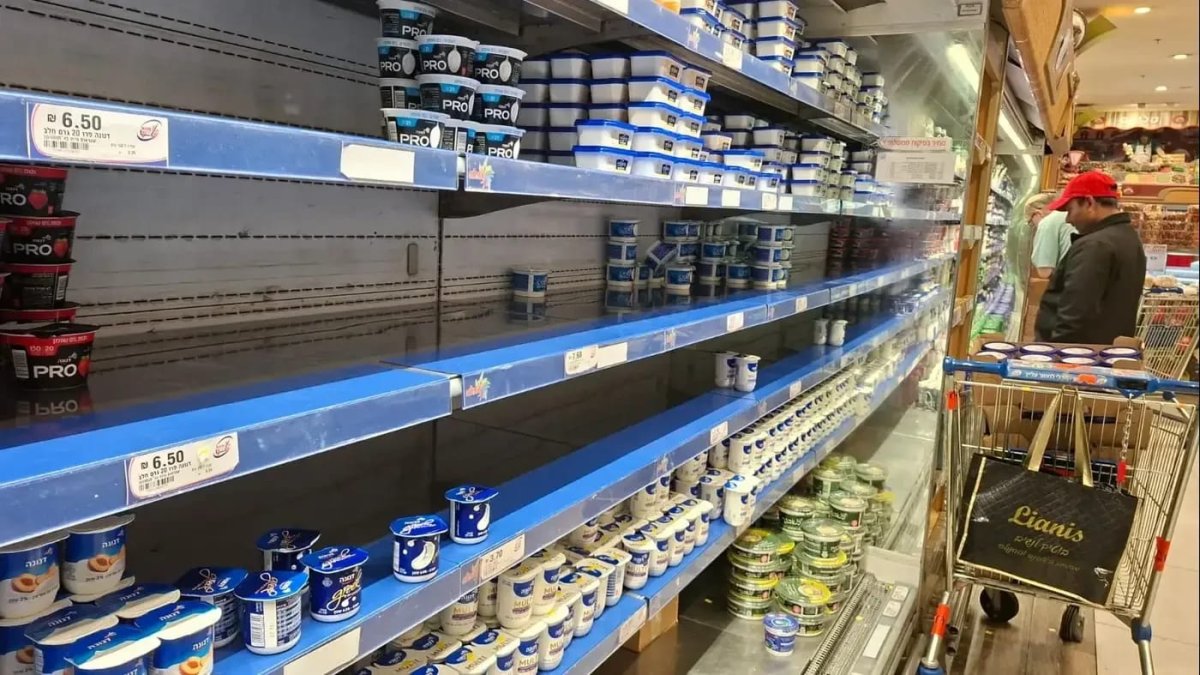
The Expanding Shortage of Cottage Cheese and White Cheese on Israeli Shelves Consumers entering retail chains in recent days discovered that the shelves usually holding cottage cheese and white cheese look completely different. Instead of the familiar plastic tubs, there lay packages of labneh, sour cream, and other dairy products to fill the void left behind. We have almost grown accustomed to the cottage cheese shortage, which can barely be found.
The Expanding Shortage of Cottage Cheese and White Cheese on Israeli Shelves
Consumers entering retail chains in recent days discovered that the shelves usually holding cottage cheese and white cheese look completely different. Instead of the familiar plastic tubs, there lay packages of labneh, sour cream, and other dairy products to fill the void left behind. We have almost grown accustomed to the cottage cheese shortage, which can barely be found. Now, however, the dairy supply crisis is expanding to the white cheese category. While until a few days ago it was difficult to find mostly cottage cheese, the phenomenon has expanded to white cheese shelves as well.
Consumer Struggles Across Neighborhood Retail Chains
One shopper described visiting branches of three different chains in the neighborhood without finding even one tub of white cheese. This includes not only price-controlled varieties but also 9% white cheese, 3% options, smooth and low-fat cheeses, and creams priced up to NIS 15. The inability to prepare simple items like a child's sandwich with white cheese highlights daily disruptions felt by families throughout Israel.
It is worth noting that cottage cheese has long served as a cultural staple in Israeli households, its affordability making it a daily essential across socioeconomic lines. The 2011 cottage cheese protests, which began as a grassroots boycott over sudden price hikes, quickly evolved into a broader social movement that forced regulatory scrutiny on the entire dairy supply chain and highlighted how even modest increases in staple prices can ignite public anger. In the years since, these tensions have fed directly into the ongoing cost-of-living crisis that has become a defining fault line in Israeli politics, with voters repeatedly punishing governments perceived as inattentive to household expenses.
Tnuva, Israel's dominant dairy processor and a subsidiary of China's Bright Food Group, controls the majority of the fresh milk and cottage cheese market. This concentration means that any disruption at its facilities quickly translates into visible shortages on supermarket shelves nationwide. The current crisis therefore does not merely reflect a single plant failure; it underscores how the structure of Israel's dairy sector amplifies the effects of technical breakdowns, leaving consumers with few immediate alternatives while prices remain elevated.
How Cottage Cheese Shortages Trigger White Cheese Hoarding
Food market sources explain that the shortage of white cheese stems directly from the shortage of cottage cheese, with one eating into the other. The cottage cheese shortage started weeks ago and is getting worse. Retailers order 10 crates and receive barely half a crate, and in peripheral areas they sometimes make do with only one tub. When there is no cottage cheese, the public switches to white cheese and starts hoarding at home, creating a shortage due to heavy demand. This is an escalating tailspin that must be stopped.
The Root Cause at Tnuva's Alon Tavor Production Plant
The root of the white cheese panic begins with a computer malfunction at Tnuva's cottage cheese production plant in Alon Tavor. The problem is not in the production line, but in the automated warehouse that is supposed to dispatch the pallets to the distribution trucks. The cottage cheese is produced, packaged, and ready for marketing, but a large portion of it simply fails to leave the dairy and reach the shelves of retail chains. Disruptions in the automated warehouse system have been ongoing for over two months. It is a system that manages the movement of pallets inside the warehouse and their dispatch to trucks.
Alon Tavor, Tnuva's flagship facility in the Lower Galilee, relies on an Automated Storage and Retrieval System (ASRS) to manage high-volume pallet movement inside its massive refrigerated warehouses. These systems use computer-controlled cranes and shuttles that travel along fixed rails to deposit and retrieve goods without human intervention, optimizing space and speed in environments where temperature consistency is critical. When the German-engineered software that orchestrates these movements malfunctioned, the entire retrieval process halted, creating a bottleneck that no manual workaround could quickly resolve.
The episode reveals a telling irony: Israel's globally recognized technology sector, valued at more than $50 billion, has limited leverage when proprietary automation systems supplied by foreign vendors encounter failures. KION Group, the German parent of Dematic that provided the ASRS technology, maintains the core intellectual property and remote diagnostic tools. Local engineers can perform routine maintenance yet lack the authority or code access to override deeper system faults, leaving the plant dependent on external specialists whose arrival has been delayed.
Critical Role of Automated Warehouse Systems in Dairy Supply Chains
Automated warehouse systems like the one at Alon Tavor handle the precise movement and dispatch of pallets, ensuring steady flow from production to trucks. When such a system malfunctions, even fully packaged dairy products remain stuck inside the facility. This creates immediate gaps on retail shelves across chains. The reliance on these technologies in Israel's dairy sector means that technical failures quickly translate into widespread shortages felt by consumers in Tel Aviv, Jerusalem, and peripheral regions alike.
Dematic's Involvement and Remote Assistance Limitations
Technicians from the German company Dematic arrived in Israel in recent weeks for a scheduled maintenance visit at the Osem plant. However, they did not visit Tnuva because it is a different team with different skills, whose visit dates are scheduled months in advance. Dematic personnel are trying to assist Tnuva teams remotely via phone calls and Zoom, and at the same time, Tnuva employees are operating some of the systems manually. This is a limited solution that does not allow a return to the normal rate of supply.
Security Situation Cancels On-Site Repairs at Tnuva
The visit that was supposed to take place at Tnuva during Operation Lion's Roar was canceled following the war. The next date is set only for a few months from now, and its occurrence also depends on the geopolitical situation. These delays prevent full restoration of the automated warehouse functions, prolonging the supply disruptions that began weeks earlier at the Alon Tavor facility.
Operation Lion's Roar and the wider security environment that has persisted since October 2023 have sharply reduced the willingness of foreign vendors to maintain on-site technical teams inside Israel. Many European and Asian suppliers now route support through remote channels or insist on lengthy security clearances before permitting engineers to travel, extending resolution times for complex industrial equipment from days to weeks. This shift affects not only Tnuva but a range of manufacturers that depend on imported automation platforms for food processing, pharmaceuticals, and logistics.
The pattern reflects a broader recalibration among global suppliers wary of operating in an active conflict zone. Israeli factories that once benefited from rapid in-person troubleshooting now face extended downtime, raising questions about the resilience of production systems built around foreign proprietary technology. Companies across multiple sectors report similar delays, suggesting the Tnuva episode is symptomatic of an economy increasingly isolated from the hands-on expertise its advanced machinery requires.
The dairy shortages expose vulnerabilities in Israel's food security that extend beyond any single company. With domestic production hampered and ministers from the Ministry of Economy and Ministry of Agriculture yet to outline concrete contingency measures, calls have grown for temporary import liberalization to stabilize supply. Such a step would mark a departure from long-standing protectionist policies but could provide immediate relief while local automation issues are addressed.
Over the longer term, the episode illustrates the risks of embedding critical food infrastructure within closed, foreign-controlled automation ecosystems. Policymakers face pressure to diversify suppliers, develop domestic diagnostic capabilities, and create regulatory frameworks that ensure rapid access to technical support during national emergencies. Without these adjustments, similar disruptions could recur across other automated industries whenever external conditions limit the physical presence of vendor personnel.
Rising Demand for Dairy Products Since the Start of the Year
Since the beginning of the year, demand for dairy products has risen by about 4%, partly because fewer Israelis traveled abroad due to the security situation. Dairies explain that the high demand and the gaps created since the Shavuot holiday make it difficult to replenish stocks, and therefore any logistical delay is immediately felt on the shelves. This combination of increased domestic consumption and existing production bottlenecks amplifies the effects of the warehouse malfunction.
Logistics Pressures Including Shufersal Delivery Fee Increases
Shufersal, the largest marketing chain in Israel, recently raised delivery fees by 20% to NIS 35.90, citing a shortage of drivers and operational costs. This follows similar moves by Rami Levy, Victory and Hatzi Hinam. These adjustments reflect broader strains in Israel's food distribution networks, where dairy shortages compound existing challenges in getting products from plants like Alon Tavor to consumers efficiently.
Implications for Israel's Food Supply Chain and Economy
The ongoing issues at Tnuva's automated warehouse illustrate how a single technical failure in a key dairy facility can ripple through retail chains nationwide. With cottage cheese shortages driving demand for white cheese alternatives, the tailspin affects everyday consumption patterns and places pressure on the entire supply chain. In an economy where dairy products form a staple, such disruptions highlight vulnerabilities in automated systems that support modern production and distribution.
Broader Context of Automation Failures in Israeli Industry
Systems designed to manage pallet movement and truck dispatch are essential for maintaining supply rates in facilities like the one in Alon Tavor. Manual operations provide only partial relief, leaving large portions of ready products undelivered. This situation, combined with canceled technician visits tied to the war and rising demand, underscores the challenges facing Israel's dairy sector amid current conditions.
By Hannah Berg, Staff WriterThis article was produced with AI-assisted research and editorial support. Reporting is based on sources cited in the article.
What's Your Reaction?
 Like
0
Like
0
 Dislike
0
Dislike
0
 Love
0
Love
0
 Funny
0
Funny
0
 Wow
0
Wow
0
 Sad
0
Sad
0
 Angry
0
Angry
0

Israel Correspondent at Global1.News. Based in Tel Aviv, covering Israeli politics, security, technology, and society. Provides balanced, deeply-sourced reporting on one of the most closely-watched regions in the world.












Comments (0)