
Wall Street Is About to Ask Big Tech the Question Nobody Wants to Answer
Wall Street Is About to Ask Big Tech the Question Nobody Wants to Answer Let me tell you something I've been thinking about for the past few weeks. Q2 2026 earnings season kicks off next week for the big four — Alphabet, Microsoft, Amazon, and Meta — and I've been watching the run-up with the kind of nervous anticipation you'd have before opening a server cabinet you know is running hot. Here's the thing.
Wall Street Is About to Ask Big Tech the Question Nobody Wants to Answer
Let me tell you something I've been thinking about for the past few weeks. Q2 2026 earnings season kicks off next week for the big four — Alphabet, Microsoft, Amazon, and Meta — and I've been watching the run-up with the kind of nervous anticipation you'd have before opening a server cabinet you know is running hot.
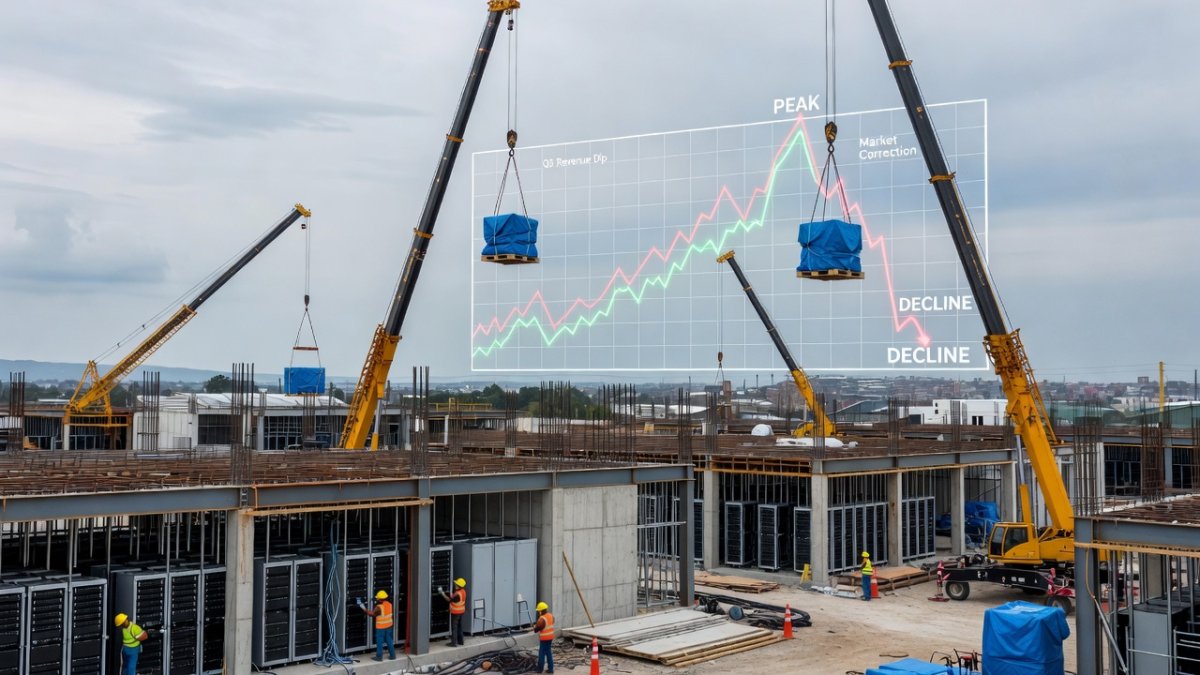
Here's the thing. These four companies have collectively committed somewhere between $635 billion and $725 billion in capital expenditure this year. That's not a typo. That's not a rounding error. That is more than the GDP of most countries on this planet. And they've committed it all to one thing: AI infrastructure. Data centers, GPUs, networking, power — the whole stack. And the question hanging over every single earnings call starting July 22 is the same one that's been keeping me up at night: where's the return?
The Number That Should Scare You
Let me give you some context from someone who actually runs infrastructure for a living. Microsoft alone is spending roughly $190 billion in capital expenditure this calendar year. $190 billion. Their Q3 capex hit $30.88 billion — an 84.4% increase year-over-year. And here's the part that makes me wince: analysts were expecting $154.6 billion. Microsoft came in $35 billion above that. That's not a guidance beat. That's a signal that someone in Redmond looked at the spreadsheet and decided the normal rules don't apply anymore.
Amazon is even more aggressive. Their AI bet is pushing $200 billion in capex this year. AWS revenue hit $37.6 billion in Q1, growing 28% year-over-year — which sounds great until you realize that CEO Andy Jassy is on record saying they're facing more demand than they can handle because of power constraints and server production delays. You're spending $200 billion and you still can't keep up with demand? That's not a demand problem. That's a signal that the supply chain is screaming at you to slow down.
Meta's thrown $75 billion-plus into the ring with a $30 billion bond offering to fund it. Alphabet and Google are in the same boat. Citi is now forecasting the combined capex could hit $800 billion. Not over five years. This year.
Here's What the Earnings Calls Are Really About
Q1 earnings season back in April told us something interesting. All four companies beat on earnings. All four reported growing cloud revenue. And all four saw their stock prices drop anyway. Wall Street rewarded them with a sell-off because the market is starting to ask the question nobody at the C-suite level wants to answer: when do these investments start paying for themselves?
Let me put this in terms that make sense for anyone who's ever run a business. If you told me I needed to spend 84% more on infrastructure this quarter than I did last year, I'd ask you two questions. One: what's the ROI? Two: when does it show up? And if you couldn't answer either one clearly, I'd tell you to come back with a better spreadsheet.
But here's the problem with Big Tech: the incentives are broken. Microsoft's $190 billion capex plan isn't driven by a sober analysis of AI demand. It's driven by the fear that Google might get there first. Amazon's $200 billion bet isn't about serving customers better. It's about not letting Microsoft's Azure get too far ahead. Meta's $75 billion isn't about building better products. It's about Mark Zuckerberg not wanting to be the guy who sat out the AI revolution.
That's not investment. That's an arms race. And arms races historically don't end well for the people writing the checks.
The Revenue Reality Nobody's Talking About
Let's talk about what's actually generating revenue from all this spending. The entire AI industry — every SaaS product, every API call, every enterprise deployment, every ChatGPT subscription — generated roughly $30 billion in revenue last year according to industry estimates. The entire industry. Combined. That's 4% of what Microsoft alone is spending this year on infrastructure.
I don't care how fast the AI market is growing. When your capex is 25 times the total addressable market of the thing you're investing in, you're not investing — you're speculating. And speculation at this scale has consequences.
Here's what keeps me up at night. If the revenue doesn't materialize — and I mean materialize at the scale of hundreds of billions of dollars annually — then what happens to all those data centers? What happens to all those GPUs that NVIDIA sold at a premium? What happens to the power contracts, the fiber builds, the land acquisitions?
They become stranded assets. Just like the office towers from 2019 that nobody wants to lease anymore. Just like the crypto mining rigs that ended up in landfills. Just like every other infrastructure bubble that smart people convinced themselves was different this time.
What This Means for Independent Hosting Providers
Now, you might be reading this thinking "Allan, I don't run a trillion-dollar company. What does this have to do with me?" Fair question. Let me connect the dots.
When the hyperscalers overbuild — and they are overbuilding — two things happen. First, hardware prices spike because the hyperscalers are buying everything. I've seen server component prices increase 15-25% over the past year because NVIDIA, Dell, Supermicro, and everyone in between is prioritizing hyperscaler contracts over the independent market. You and I are paying more because Microsoft needs another 100,000 H200s for a data center that might run at 40% utilization.
Second, when the bubble bursts — and I believe it will — the hyperscalers will do what they always do. They'll slash prices to fill capacity. AWS will drop compute pricing by 30% to keep those data centers from sitting dark. Azure will match. Google Cloud will undercut both. And every independent hosting provider who bought hardware at inflated prices will be competing against subsidized hyperscaler capacity that's being sold below cost.
Sound familiar? It's the same playbook they used to kill off the traditional hosting industry in the 2010s. The only difference is the scale is larger and the stakes are higher this time.
I've been watching the independent provider space grow about 8% year-over-year while the hyperscalers' combined market share has been plateauing. Companies like Hetzner, OVHcloud, Vultr, and even smaller regional providers are quietly picking up customers who are tired of the AWS spreadsheet game. But a price war driven by overbuilt hyperscaler capacity could reverse that trend overnight.
What Smart Founders Should Do Right Now
I've been running hosting infrastructure for over a decade. I've seen the dot-com bubble, the cloud migration wave, the crypto mining boom, and now this. Here's what I'm telling my own customers and anyone else who'll listen:
Don't lock into long-term hyperscaler commitments. Those three-year reserved instance deals look cheap now because the hyperscalers are trying to lock in revenue before the reckoning. But when the price war hits, on-demand pricing could drop below your reserved rate. You'll be paying a premium for the privilege of being locked in.
Build for portability. If your entire infrastructure is built on AWS Lambda, S3, DynamoDB, and a dozen other proprietary services, you can't leave. And not being able to leave means you can't negotiate. Keep your stack portable enough that you could move to a competitor or back to your own hardware within a quarter.
Watch your hardware supply chain. If you're an independent hosting provider, secure your hardware orders now. The hyperscalers are eating the supply chain alive, and lead times are only getting worse. If you wait until the bubble bursts to buy, everyone else will be trying to do the same thing at the same time.
Keep your margins healthy. The next two years are going to be volatile. If you're running on thin margins, a 20% drop in revenue or a 15% increase in hardware costs will kill you. Build a buffer while you can.
The Bottom Line — I Hope I'm Wrong
Look, I want to be clear about something. I'm not anti-AI. I think the technology is genuinely transformative. I use it in my own workflow. I've seen what it can do for customer support automation, code generation, and data analysis. The potential is real.
What I'm skeptical about is the idea that you can spend $700 billion in a single year on infrastructure for a technology that's still figuring out its business model and expect everything to work out fine. That's not how any other industry has worked, and it's not how this one will work either.
The Q2 earnings calls starting next week are going to be interesting. The numbers will look great. Revenue will be up. Cloud growth will be strong. But the market is going to be listening for something else. They're going to be listening for signs that the hyperscalers themselves are starting to ask the hard questions about ROI. And if they're not asking them yet — well, that's the scariest answer of all.
Stay grounded. Keep your options open. And don't let the hype machine convince you that the old rules of business don't apply anymore, because they do. They always do.
— Allan Ali, Founder
This article was produced with AI-assisted research and editorial support. Reporting is based on sources cited in the article.
What's Your Reaction?
 Like
0
Like
0
 Dislike
0
Dislike
0
 Love
0
Love
0
 Funny
0
Funny
0
 Wow
0
Wow
0
 Sad
0
Sad
0
 Angry
0
Angry
0

Publisher of Global1.News. Automation architect, systems builder, and the guy making sure the truth gets published.














Comments (0)