
Xi Jinping Just Declared "AI for All." Here's What That Actually Means for Independent Hosting
Xi Jinping Just Declared "AI for All." Here's What That Actually Means for Independent Hosting. Let me tell you something straight up.
Xi Jinping Just Declared "AI for All." Here's What That Actually Means for Independent Hosting.
Let me tell you something straight up. When Xi Jinping walks on stage at the World AI Conference in Shanghai for the first time ever and starts talking about "AI for all" — I don't care what side of the geopolitical fence you're on, you pay attention.
Because here's the thing about infrastructure: it doesn't care about politics. The servers don't know whose flag is flying outside. They just run whatever you put on them. And what Xi just announced changes the game for everyone who builds, hosts, or deploys AI workloads — whether you're in Silicon Valley, Shanghai, or Port of Spain.
I've been running hosting infrastructure for over a decade. I've seen buzzwords come and go. But what happened in Shanghai today isn't buzz. It's the sound of tectonic plates shifting under the global tech industry.
What Xi Actually Said — and What He Didn't Say
Xi's speech at WAIC 2026 was a masterclass in diplomatic messaging. He called for "AI development not to be a solo performance by a single country, but a symphony of international cooperation." Beautifully said. The question nobody's asking is: who's conducting the orchestra?
The headline move is the World AI Cooperation Organization — WAICO — a 29-nation alliance that launched yesterday, headquartered in Shanghai. Founding members include Russia, Brazil, Indonesia, South Africa, Pakistan, and a dozen Asian and African nations. Notice who's not on that list? The United States. The European Union. Japan. South Korea. Any of the major Western tech powers.
Xi also announced China's plan to provide AI training and capacity-building to developing nations across Africa, Latin America, and Asia. He talked about preventing "new historical injustices" in AI. He positioned China as the champion of open-source, equitable AI access.
But here's what he didn't say: China is also having closed-door meetings with Alibaba, ByteDance, and Tencent about restricting overseas access to their most advanced models. So it's "AI for all" — but only on Beijing's terms. Sound familiar?
The Kimi K3 Elephant in the Room
Right alongside Xi's speech, Moonshot AI dropped Kimi K3 — a 2.8 trillion parameter model that independent benchmarks say rivals GPT and Claude. It'll be open-source on July 27. Let me repeat that: an open-source 2.8T parameter model, freely downloadable, from a Chinese company, launching in 10 days.
This is the first open-source model in the three-trillion-parameter class. The BBC called it a "sudden breakthrough" that "upends long-held assumptions that Chinese developers trail their American peers." And they're right. The capability gap is closing fast — and the open-weight release means anyone with enough GPU juice can run it.
The announcement already cratered Zhipu and MiniMax shares — down 27% and 16% respectively in Hong Kong. The market is pricing in consolidation, and Moonshot just showed up as the heavyweight.
Now, here's where it gets real for us. An open-source 2.8T model changes the economics of AI hosting. If a developer in Lagos, São Paulo, or Jakarta can download Kimi K3 and run it on rented GPU instances instead of paying OpenAI's per-token pricing, the entire AI hosting market reshuffles. And independent providers are the ones who will capture that traffic — not the hyperscalers, not AWS, not Azure.
The Hyperscaler Trap — Same Playbook, Different Country
Let me connect some dots for you. The US hyperscalers — Microsoft, Amazon, Google — are spending a combined $700 billion on AI infrastructure this year. They're building data centers everywhere, locking customers into three-year commitments, and hoping the revenue catches up to the hype.
Now China enters the same playbook, but with a twist. Instead of proprietary clouds, they're promoting open-source models and international cooperation. Why? Because open-source disrupts the AWS pricing model. It commoditizes inference. And who benefits when AI inference becomes a commodity? The low-cost providers. The independents. The Hetzners, the OVHclouds, the Vultrs — and yes, the smaller operators like us.
Make no mistake: China isn't doing this out of altruism. They're doing it because they can't compete with the US on proprietary AI models (thanks to semiconductor export controls), so they're competing on openness and scale instead. It's brilliant strategy, and it's going to work.
But here's what keeps me up at night. Independent providers in the middle — not US hyperscalers, not Chinese state-backed clouds — are going to get squeezed from both sides. The US has the proprietary models and the chip supply. China has the open-source models and the cheap electricity (they generate twice as much power as the US, and that gap is widening). Where does that leave a hosting provider in Trinidad building a business serving regional customers?
What This Actually Means for Your Business
Let me be practical. Here's what I'm watching — and what you should be watching too:
1. AI hosting is about to get cheaper, fast. When Kimi K3 goes open-source on July 27, the cost of running frontier-level AI inference drops. Not because hardware got cheaper, but because the software stack just became a public good. If you're charging by the token, your margins just got thinner. If you're charging by the GPU-hour, you might be fine — but watch your utilization.
2. Geopolitical routing matters. If US export controls tighten further, Chinese models won't be available on US-based cloud instances. Independent providers in neutral jurisdictions — Caribbean, Southeast Asia, Middle East — become the natural routing hubs. That's an opportunity, but it requires infrastructure investments you need to start planning now.
3. Don't lock into any single AI provider's ecosystem. Not OpenAI's. Not Anthropic's. Not Kimi's. Build for model portability. The winning providers in 2027 will be the ones who let customers swap between GPT, Claude, Kimi K3, and whatever comes next — without changing their deployment configuration.
4. Watch the power cost curve. China's electricity advantage is structural — not temporary — and it's getting reinforced by state-level grid investments. If you're running GPU-heavy workloads, your power bill is your competitive disadvantage against Chinese-backed clouds. Plan accordingly.
The Data Center Arms Race Nobody's Talking About
Everyone's focused on the model war — GPT vs Claude vs Kimi K3. But the real war is being fought in data center construction. China already dominates rare earth mineral production needed for chips, has cheap electricity, and is state-investing in energy grid capacity at a rate the US can't match.
The US has the semiconductor edge. China has the power and scale edge. And independent providers have... agility. The ability to pivot faster, serve niche markets better, and offer the human touch that hyperscalers just can't replicate. That's not a sentimental advantage — it's a real business moat, but it only works if you lean into it.
We're heading toward a bifurcated AI infrastructure market. US models on US hardware. Chinese models on Chinese hardware. And in the middle, a growing demand for neutral-ground hosting that can serve both ecosystems without picking a side. That's the opportunity I'm watching closest.
Closing
Xi Jinping's "AI for all" speech was a shot across the bow. It wasn't just a diplomatic gesture — it was a business strategy announcement wrapped in the language of international cooperation. The message is clear: China intends to be the open-source backbone of global AI, and they're building the infrastructure and alliances to make it happen.
For independent hosting providers, this isn't a threat. It's a challenge to get our act together. The hyperscalers are fighting a war on two fronts — US vs China — and both sides have resources we can't match. But neither side can serve the middle market as well as we can. Neither side can offer the flexibility, the personal support, the custom configurations that real businesses need.
So here's my advice: stop worrying about which superpower wins the AI race. Neither of them is going to win decisively. Instead, build the bridge between them. Be the provider that can run whatever model your customer needs, wherever they need it, without picking a side. That's how you win in a bifurcated world.
Now I need to go check on a support ticket and figure out where we sit on GPU availability for Q3. The landscape just shifted under our feet. Time to move.
— Allan Ali, Founder
This article was produced with AI-assisted research and editorial support. Reporting is based on sources cited in the article.
What's Your Reaction?
 Like
0
Like
0
 Dislike
0
Dislike
0
 Love
0
Love
0
 Funny
0
Funny
0
 Wow
0
Wow
0
 Sad
0
Sad
0
 Angry
0
Angry
0
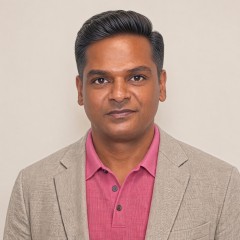
Publisher of Global1.News. Automation architect, systems builder, and the guy making sure the truth gets published.













Comments (0)