
Brazil's Election Is a Scandal-Fueled Showdown — Lula vs. Bolsonaro's Son and the Future of Latin America's Biggest Economy
Brazil's Election Is a Scandal-Fueled Showdown — Lula vs. Bolsonaro's Son and the Future of Latin America's Biggest Economy The Dark Horse Leak That Blew Up Flavio Bolsonaro's Momentum The leaked recordings of Flavio Bolsonaro pleading with banker Daniel Vorcaro for 26.8 million dollars to bankroll a US-Brazilian film called Dark Horse that would polish his father's image lande
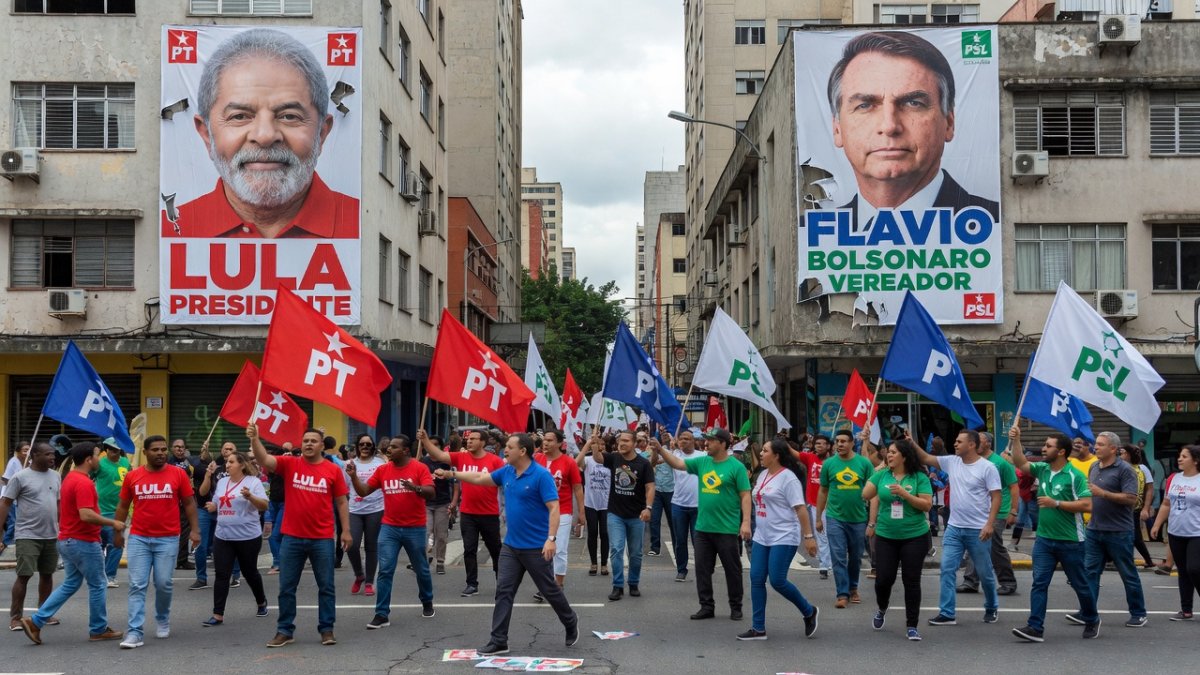
The Dark Horse Leak That Blew Up Flavio Bolsonaro's Momentum
The leaked recordings of Flavio Bolsonaro pleading with banker Daniel Vorcaro for 26.8 million dollars to bankroll a US-Brazilian film called Dark Horse that would polish his father's image landed like a grenade in the middle of the 2026 race. The Guardian reported the tape shows the senator directly asking the jailed financier for the cash, and that connection alone has handed Lula's team a weapon they are swinging hard. Washington Post coverage framed the project as a blatant attempt to rehabilitate Jair Bolsonaro through Hollywood-style propaganda, which only makes the whole thing reek of desperation from a candidate who already struggles with his father's larger-than-life shadow.
Flavio inherited the PL party base and the hard-right voters who still see Jair as a victim of judicial overreach, yet he lacks the raw charisma that made his father a force. The Economist called the leak a bombshell that threatens to derail his entire bid before the October 4 first round even arrives. Every time the tape surfaces in newscasts, it reminds voters that Flavio is trying to avenge a conviction handed down by the Supreme Federal Court rather than offering a fresh vision for Latin America's largest economy.
Vorcaro himself sits under investigation for alleged financial crimes, so the optics of a presidential contender cozying up to that kind of money source could not be worse. The scandal widened Lula's lead from three points to nine points almost overnight according to Datafolha tracking, proving that Brazilian voters still punish perceived corruption even when the target is the opposition. This is not abstract Beltway drama; it is raw material that could decide whether Brazil tilts back toward the left or doubles down on the right.
For American audiences watching commodity markets and migration flows, the fallout matters because Brazil remains the anchor of South American stability. A weakened Flavio means less predictable pushback against Chinese influence in the region, and US companies with heavy exposure to Brazilian agriculture and energy are already pricing in the uncertainty. The leak did not just embarrass one candidate; it reframed the entire contest around accountability versus revenge.
Lula's Narrow Path to a Fourth Term Against Rejection Numbers
Incumbent Luiz Inácio Lula da Silva is chasing an unprecedented fourth term with approval sitting at just 29 percent positive and 40 percent negative, numbers that would terrify most politicians yet have not stopped him from opening a clear lead. His rejection rate hovers at 48 percent, only two points higher than Flavio's 46 percent, which tells you this race is less about love and more about who voters dislike less. Datafolha's May 22 survey captured Lula at 40 percent in the first round against Flavio's 31 percent, a gap that expanded after the film scandal broke.
The president has governed through a fragmented Congress and constant legal and political friction, yet he still commands the PT machine and the loyalty of voters who credit him with earlier social programs. In a runoff scenario the same poll showed him at 47 percent to Flavio's 43 percent, inside the two-point margin of error but trending in his direction. Lula's team knows they cannot run on enthusiasm alone; they must keep hammering the scandal to suppress turnout among wavering conservatives.
What makes this contest different from 2022 is the absence of Jair Bolsonaro himself on the ballot. The Supreme Federal Court conviction that barred the former president has forced the right to anoint his son, a move that feels like a holding pattern rather than a genuine succession. Lula is betting that voters will see Flavio as a pale imitation and stay home or swing left in the runoff. The math is tight, and any fresh economic shock between now and October could erase the current advantage.
American policymakers tracking BRICS dynamics and Amazon policy should pay attention because a Lula victory likely means continued emphasis on multilateral climate deals while a Flavio win could reopen space for agribusiness expansion that clashes with US environmental priorities. Neither outcome delivers a clean win for Washington, which is why the scandal's ripple effects are being watched from Foggy Bottom as closely as from Brasília.
Flavio's Struggle to Step Out of His Father's Convicted Shadow
Flavio Bolsonaro entered this race carrying the weight of his father's legal baggage and the explicit mission to avenge the Supreme Federal Court decision that blocked Jair from running. He has the PL party infrastructure and the same social-media-savvy base, but the charisma gap is glaring every time he appears on television next to footage of the elder Bolsonaro. The Dark Horse scandal only magnified that problem by making him look like he is still taking orders from the family rather than charting his own course.
Polls show his rejection rate at 46 percent, nearly identical to Lula's, which suggests Brazilian voters are not especially excited about either choice. The first-round numbers from Datafolha give him 31 percent, enough to force a runoff but far short of the dominant position his father once enjoyed. Without the magnetic stage presence that defined Jair, Flavio must rely on crime policy and anti-establishment rhetoric to close the gap.
The film project itself was meant to humanize and promote the Bolsonaro brand in the United States and Brazil, yet the leak turned it into evidence of shady fundraising. That single revelation has forced his campaign to spend weeks on defense instead of attacking Lula's economic record. The son is learning the hard way that inheriting a movement is easier than sustaining it once the founder is sidelined by courts.
US observers should note that a Flavio presidency would likely double down on the same nationalist tone that strained relations during Jair's term, particularly on trade and security cooperation. Yet the scandal has already damaged his ability to project strength, leaving American diplomats wondering whether the right can still deliver a unified challenge to Lula's coalition.
Why Crime Policy Could Decide the October Showdown
Chatham House analysts have flagged crime policy as the issue most likely to move undecided voters between now and the first round on October 4. Brazil's urban violence and organized crime networks remain top voter concerns, and both candidates are racing to claim the tougher-on-crime mantle. Lula's record includes some successful state-level partnerships, but his national image still carries the baggage of earlier PT administrations viewed as soft by conservative voters.
Flavio has leaned hard into his father's signature law-and-order themes, promising expanded police powers and tougher sentencing. The problem is that the Dark Horse leak keeps interrupting that message, forcing the campaign to answer questions about banker ties instead of laying out detailed security plans. Every time the tape plays, it undercuts the law-and-order brand the right needs to win.
Datafolha's margin of error sits at two points, so even small shifts on crime could flip the runoff. Lula's team is countering by tying Flavio to the same corruption scandals that dogged the previous administration, hoping voters will see continuity rather than change. The race is turning into a referendum on whether Brazilians want to revisit the Bolsonaro era through his son or stick with the known quantity of Lula despite his own approval weaknesses.
For the United States, Brazilian crime policy directly affects counternarcotics cooperation and border security cooperation in the hemisphere. A candidate who can credibly claim progress on gangs and trafficking will find more willing partners in Washington, which is why the scandal's damage to Flavio's credibility on this file carries consequences far beyond Brazilian domestic politics.
The Simultaneous Battle for Congress and Statehouses
Brazil's 2026 vote is not limited to the presidential palace; voters will also choose governors and a new Congress that will determine whether the winner can actually govern. Lula currently navigates a divided legislature where his PT bloc must constantly negotiate with centrist parties, and a strong showing by the PL could lock in gridlock for another four years. The same Datafolha survey that shows Lula ahead nationally also hints at competitive races in key states that could flip governorships.
Flavio's campaign is trying to nationalize the contest around his father's legacy, but local issues like infrastructure and public safety often dominate state races. The scandal has made it harder for PL candidates down the ballot to separate themselves from the fundraising questions swirling around the presidential ticket. That linkage could suppress turnout in conservative strongholds where voters expect clean messaging on crime and the economy.
American investors watching Brazilian debt and equity markets know that divided government in Brasília usually means slower reform and more volatility. A Lula-led coalition that expands its congressional footprint would likely push social spending and environmental regulations, while a PL surge could revive privatization talk but also reignite culture-war fights that spook foreign capital. The October results will shape both the presidency and the legislative arithmetic that follows.
The stakes extend to US-Brazil trade talks and defense agreements that require congressional ratification on both sides. When the entire ballot is in play, the scandal's effect on Flavio's coattails could determine whether Washington deals with a cooperative or confrontational legislature in the years ahead.
Rejection Ratings and the Low-Energy Reality of This Race
Both candidates carry rejection numbers that would sink most campaigns in other countries, yet the race remains competitive because Brazilian voters have grown accustomed to choosing the lesser evil. Lula's 48 percent rejection and Flavio's 46 percent reflect deep polarization that has not softened since 2022. The Datafolha poll captured this fatigue clearly, with first-round support totaling well below 75 percent combined, leaving plenty of room for late swings or abstention.
The scandal widened Lula's lead precisely because it reinforced existing doubts about Flavio rather than creating new ones about the incumbent. Lula's negative approval rating of 40 percent has not moved much, suggesting his base is locked in while the right is still searching for a way to re-energize after the film leak. This is not a wave election; it is a grinding contest where turnout and scandal management will matter more than soaring rhetoric.
Flavio's attempt to position himself as the fresh face of the right keeps colliding with the reality that he is running on his father's unfinished business. The conviction that barred Jair remains the central grievance for his supporters, but it also serves as a reminder of institutional pushback that many moderates do not want to relitigate. The numbers show a race that could tighten again if the scandal fades from headlines before October.
US strategic planners tracking Latin American influence operations should recognize that low-energy races with high rejection create openings for external actors. Brazil's economic size and resource wealth make it a prize worth contesting, and the current polling volatility means the final outcome could still shift in ways that affect everything from soybean exports to satellite launch cooperation.
How the Scandal Shifted the Numbers and What Comes Next
Datafolha's May 22 release showed Lula's first-round lead expanding from three to nine points after the Dark Horse recordings surfaced, a swing that demonstrates how quickly Brazilian opinion can move when corruption allegations hit the frontrunner's opponent. The poll placed Lula at 40 percent and Flavio at 31 percent, with the runoff gap at 47 to 43 percent. Those figures sit inside historical margins but reflect a clear post-scandal trajectory that Flavio must reverse.
The leak did not invent new facts about Jair Bolsonaro's legal troubles; it simply reminded voters that his son is still entangled in the same circles that produced the conviction. Every fresh detail about the 26.8 million dollar ask and Vorcaro's own legal exposure keeps the story alive and prevents Flavio from pivoting to pocketbook issues where Lula remains vulnerable. The campaign calendar leaves little time for recovery before the October 4 vote.
Lula's team has no incentive to let the story die, and Brazilian media has shown it will keep replaying the tape. That sustained pressure could depress conservative turnout in key states and hand the incumbent the congressional breathing room he currently lacks. The race is no longer about competing visions alone; it is about which side can keep its voters from staying home in disgust.
American companies with supply chains running through Brazil are already modeling both scenarios because a nine-point swing this early suggests the final margin could be decided by scandal management rather than policy substance. The next few months will test whether Flavio can neutralize the damage or whether the leak becomes the defining memory of his presidential run.
What This Means for US Interests in a Volatile Hemisphere
Brazil's election will shape everything from Amazon enforcement to trade negotiations and counternarcotics cooperation, which is why Washington is tracking the scandal's damage to Flavio as closely as any domestic primary. Lula's current lead gives the United States a known quantity on climate and multilateral forums, but his low approval also signals continued domestic friction that could limit bold new agreements. A Flavio victory would likely restore the nationalist tone that complicated joint operations during the previous administration.
The Dark Horse leak has already narrowed Flavio's path by forcing him onto defense and reminding voters of the legal cloud hanging over the family name. That dynamic reduces the chance of a clean right-wing sweep that might have altered regional alignments on China and Venezuela. Instead, the contest is settling into a grinding battle where small shifts in crime messaging or turnout could still decide the outcome inside the two-point margin of error.
US investors and diplomats alike understand that Brazil's size makes even modest policy changes consequential for global food prices, energy markets, and migration patterns. The simultaneous congressional and gubernatorial races add another layer of complexity, because whoever wins the presidency will still need legislative partners to deliver results. The scandal's lingering effect on Flavio's coattails could therefore influence not just the top job but the entire balance of power in Brasília.
In the end this is a race defined by rejection, scandal, and the absence of the original Bolsonaro from the ballot. Lula holds the current edge, but the numbers remain close enough that one more surprise before October could reset the board. American interests will be shaped by whichever side manages to turn low enthusiasm into actual votes on election day.
By Jessica Ali, Staff Writer.This article was produced with AI-assisted research and editorial support. Reporting is based on sources cited in the article.
What's Your Reaction?
 Like
0
Like
0
 Dislike
0
Dislike
0
 Love
0
Love
0
 Funny
0
Funny
0
 Wow
0
Wow
0
 Sad
0
Sad
0
 Angry
0
Angry
0

Editor-in-Chief at Global1.News. Atlanta-based journalist who cuts through the BS and tells it like it is. Lead anchor, host, and the voice you hear when the spin stops and the truth starts.










Comments (0)