
Wildfire Smoke Threatens World Cup Final: Argentina vs Spain
The haze hung thick over MetLife Stadium on Friday, turning the New Jersey sky a murky orange as over 800 active Canadian wildfires pumped smoke southward across the border. The 2026 FIFA World Cup final between Argentina and Spain faces an unwelcome opponent this weekend — and it is not wearing football boots.
The haze
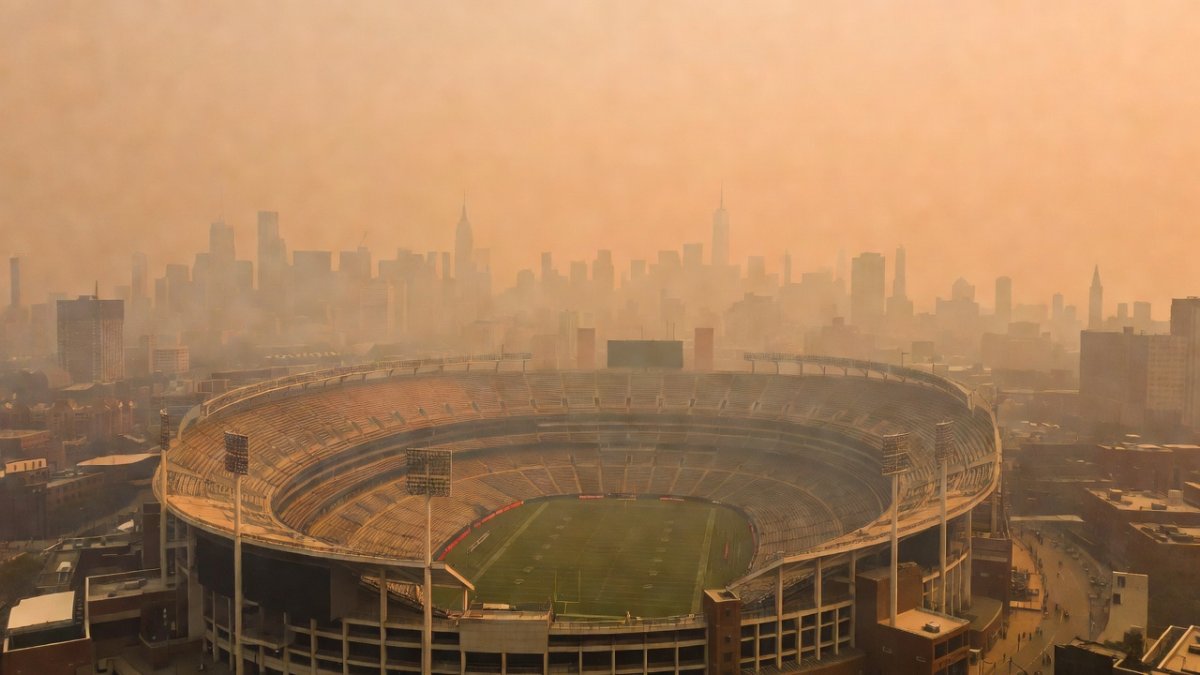 hung thick over MetLife Stadium on Friday, turning the New Jersey sky a murky orange as over 800 active Canadian wildfires pumped smoke southward across the border. The 2026 FIFA World Cup final between Argentina and Spain faces an unwelcome opponent this weekend — and it is not wearing football boots. Air quality alerts have been issued across New York and New Jersey, with conditions rated as unhealthy for sensitive groups, directly threatening the 80,000 fans expected inside the New York New Jersey Stadium and the 50,000 more gathering at Central Park for a public viewing party.
This is not just a New York story. South African supporters who followed Bafana Bafana's historic run to the Round of 32 now watch this final with a familiar unease — the same environmental anxiety that has already disrupted training grounds in Johannesburg and Cape Town, where drought and heat waves have become part of the sporting calendar.
Wildfire Smoke Threatens World Cup Final as Argentina and Spain Prepare for Sunday's Showdown at MetLife Stadium
New York, United States — The 2026 FIFA World Cup final faces an extraordinary challenge as toxic smoke from over 800 active Canadian wildfires blankets the New York metropolitan area, triggering air quality alerts just days before the biggest match in world football.
Argentina and Spain Set Up a Champion vs Champion Final
The defending champions, led by Lionel Messi in what could be his final World Cup appearance, earned their place with a dramatic 2-1 comeback victory over England on July 15 at Atlanta's Mercedes-Benz Stadium. Argentina have scored 17 goals across this tournament, more than any other team, and one more against Spain would equal their highest total at a single World Cup — 18, set on the way to winning the trophy in 2022.
Spain, the European champions playing in their first World Cup final since 2010, overcame France 2-1 in the other semifinal on July 14 at Dallas's AT&T Stadium. The Spanish side brings a possession-based precision that contrasts with Argentina's explosive counter-attacking style, setting up a tactical battle that South African coaches and analysts will study in the months ahead.
For Bafana Bafana supporters, seeing two nations of this calibre contest the final carries added weight. South Africa's own path to the Round of 32 — secured by Thapelo Maseko's famous goal in Monterrey — proved that African teams can compete at this level, even if the dream ended with a 1-0 loss to Canada. That loss stung, but it also showed the gap is closing.
Canadian Wildfires Create Hazardous Training Conditions in New Jersey
Spain conducted outdoor training sessions in New Jersey on Thursday under the same hazy skies that forced the NWSL match at Citi Field to include mandated air-quality breaks every 15 minutes. Washington Spirit forward Trinity Rodman did not hold back after that fixture, telling reporters that in her opinion, they should not have played at all. On both sides, players were calling for more breaks, she said — a clear sign that the conditions were affecting performance and safety alike.
Toronto recorded the world's worst air quality among all major cities on Wednesday, surpassing Kinshasa and New Delhi, according to IQAir. Environment Canada reported an Air Quality Health Index reading of 10+, classified as very high risk, with forecasts suggesting hazardous conditions could persist through the end of the week. The Canadian National Railway suspended operations near Armstrong, Ontario, after a train was surrounded by fire in a viral video that underscored the scale of the crisis.
This resonates deeply in South Africa, where industrial air pollution around Durban and Pretoria has already forced SAFA to adjust youth development schedules in the MultiChoice Diski Challenge. Poor air quality does not respect stadium boundaries, and South African clubs have learned to adapt training protocols the hard way — experience that now looks prescient as MetLife Stadium confronts the same challenge on the biggest stage in world sport.
Rain Forecasts Offer Hope for a Clear Final Day
AccuWeather meteorologist Alex DaSilva confirmed in an interview with Reuters that heavy rain expected on Saturday and a cold front arriving Sunday morning should clear the remaining smoke before kickoff. The areas where the smoke is densest can cause respiratory problems, DaSilva warned, urging sensitive individuals to stay inside as long as possible. But the forecast trajectory points to improvement: by Sunday afternoon, when 80,000 fans stream into the stadium and the half-time show begins, the air should be significantly cleaner.
New York Governor Kathy Hochul advised residents to reduce strenuous outdoor activity and take extra breaks, warning that smoke from Canadian wildfires would continue to blanket the state. The Statue of Liberty was seen through a cover of haze in images captured by Reuters photographers — a visual that travelled around the world and captured the surreal atmosphere of a city preparing for its biggest sporting event under an orange sky.
For South African fans, the weather drama carries echoes of the 2010 World Cup in Johannesburg, where winter chill and altitude conditions forced teams to adjust training regimes. The lessons from that tournament — adaptability, contingency planning, and respect for environmental factors — are now being applied on a much larger scale in New Jersey.
Bafana Bafana's Historic Run: From Monterrey to the Round of 32
Bafana Bafana etched their name into South African football history with a gritty 1-0 victory over South Korea on June 24 at Monterrey's Estadio BBVA, where Thapelo Maseko smashed home the winner in the 63rd minute from a pinpoint assist by Tshepang Moremi. That strike sent the South African bench into wild celebrations and marked the nation's first-ever knockout stage appearance at a World Cup — a massive leap from years of near-misses and heartbreak in qualifying campaigns stretching back to 2002.
Coach Hugo Broos had drilled the squad with disciplined pressing and quick transitions, turning a talented but raw group into a unit that punched above its weight against Asian giants. After starting the group stage with a 2-0 loss to Mexico and a 1-1 draw against Czechia, Bafana knew nothing less than a win against South Korea would keep their tournament alive. They delivered under pressure, producing what analysts now call the defining moment of South African football since the 2010 World Cup on home soil.
The dream ended with a narrow 1-0 loss to Canada in the Round of 32 at LA Stadium, where defensive lapses proved costly despite another solid showing from the backline. But Broos's tactical tweaks, including midfield rotations that kept energy high in the Monterrey humidity, earned praise from analysts who saw real progress in African football's rise. Fans back home in Johannesburg and Cape Town greeted the team as heroes, and the SA Sports Ministry has pointed to this run as proof that transformation and grassroots investment through SASCOC programs are delivering results.
Climate Change Links MetLife Stadium to South Africa's Sporting Frontline
The same climate forces choking MetLife Stadium have already hammered South African sport. The ongoing drought has slashed Cape Town's water supply, forcing Cape Town Stadium to ration irrigation and delay pitch maintenance ahead of major PSL fixtures. Heat waves have scrambled SuperSport United's schedules, pushing evening kick-offs and cutting training hours as temperatures soar past 40 degrees Celsius in Gauteng. These are not isolated events — they are connected threads showing how global warming disrupts the beautiful game from Joburg to New York.
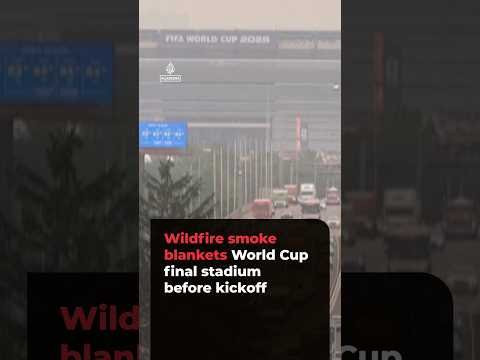
The SA Sports Ministry has rolled out climate adaptation plans, investing in solar-powered venues and heat-resilient training protocols to protect athletes and fans. Regional reactions from Durban to Pretoria highlight the urgency, with supporters' groups calling for greener policies as they watch the MetLife haze unfold on screens. Economic data shows lost revenue from postponed matches running into millions of rands, underscoring how environmental threats hit developing football nations hardest.
SAFA has documented how rising temperatures affect player recovery in domestic leagues, just as the smoke forced mandatory breaks at Citi Field. Connecting these dots reveals a shared battle where South African resilience meets the Canadian wildfire fallout — a warning that the next World Cup final disrupted by climate may be closer to home than anyone thinks.
Africa's Moment: Three Nations Reach the Knockout Stage
Morocco's deep run into the knockouts alongside Bafana Bafana lit up the 2026 tournament, with the Atlas Lions showcasing the silky skills that drew global scouts and boosted CAF's profile. Senegal powered through the group stages, adding to a narrative of African growth that saw multiple nations reach the latter stages of a men's World Cup for the first time. This visibility at the final amplifies calls for more equitable World Cup slots and recognition that African football has arrived to stay.
CAF's increased investment in youth academies and infrastructure — including new facilities in Johannesburg and Lagos — has fuelled this surge, with economic benefits flowing back to local leagues through sponsorships and talent development. The significance extends to the 2027 Africa Cup of Nations in Morocco, where Bafana and others aim to build on the 2026 momentum. Fans across the continent erupted in celebration throughout the tournament, their voices carrying from Soweto to Dakar as a new generation of African talent announced itself on the world stage.
South African viewers watching the Spain-Argentina final understand that their team's 1-0 loss to Canada was not an end but a beginning. The resilience shown by Bafana Bafana, the strategic vision of Broos, and the raw emotion of Maseko's goal have planted a flag for South African football. The next step — reaching a final like the one unfolding in New Jersey — now feels possible rather than impossible.
What to Watch For: A Final Under Uncertain Skies
Kickoff at New York New Jersey Stadium is set for 3pm ET on Sunday, with rain on Saturday expected to clear much of the haze. The cold front forecast for Sunday morning should kick out any remaining smoke, meteorologists say, potentially giving the 80,000 fans inside the stadium and the 50,000 at Central Park a clear afternoon for football. But the uncertainty itself is the story — a reminder that the global game, from the Premier League to the PSL to the World Cup final, must now factor climate risk into every major event.
For South Africans, the final represents both aspiration and reflection. Argentina's Messi, chasing a second consecutive World Cup title, embodies the longevity and excellence that Bafana's young stars aspire to. Spain's possession game shows the tactical evolution that SAFA hopes to instil through the MultiChoice Diski Challenge and youth development pipelines. And the smoke overhead — from Canadian wildfires that have burned through an area larger than some provinces — connects the football world to a shared environmental reality.
South African supporters gather in Johannesburg shebeens and Cape Town sports bars to watch the final, carrying the pride of Bafana's historic run and the knowledge that the next World Cup on African soil — perhaps as early as 2030 with Morocco's bid — could bring this spectacle home. Until then, the lesson from MetLife is clear: football adapts, fans endure, and the game goes on, even when the sky turns orange.
By Dante Williams, Staff WriterThis article was produced with AI-assisted research and editorial support. Reporting is based on sources cited in the article.
What's Your Reaction?
 Like
0
Like
0
 Dislike
0
Dislike
0
 Love
0
Love
0
 Funny
0
Funny
0
 Wow
0
Wow
0
 Sad
0
Sad
0
 Angry
0
Angry
0

Breaking News and Investigations Correspondent at Global1.News. Based in London, covering global breaking news, security, and investigative stories. Known for digging deeper and connecting the dots across continents.














Comments (0)