
Netanyahu Eyes Trump Meeting After Graham Funeral Delay
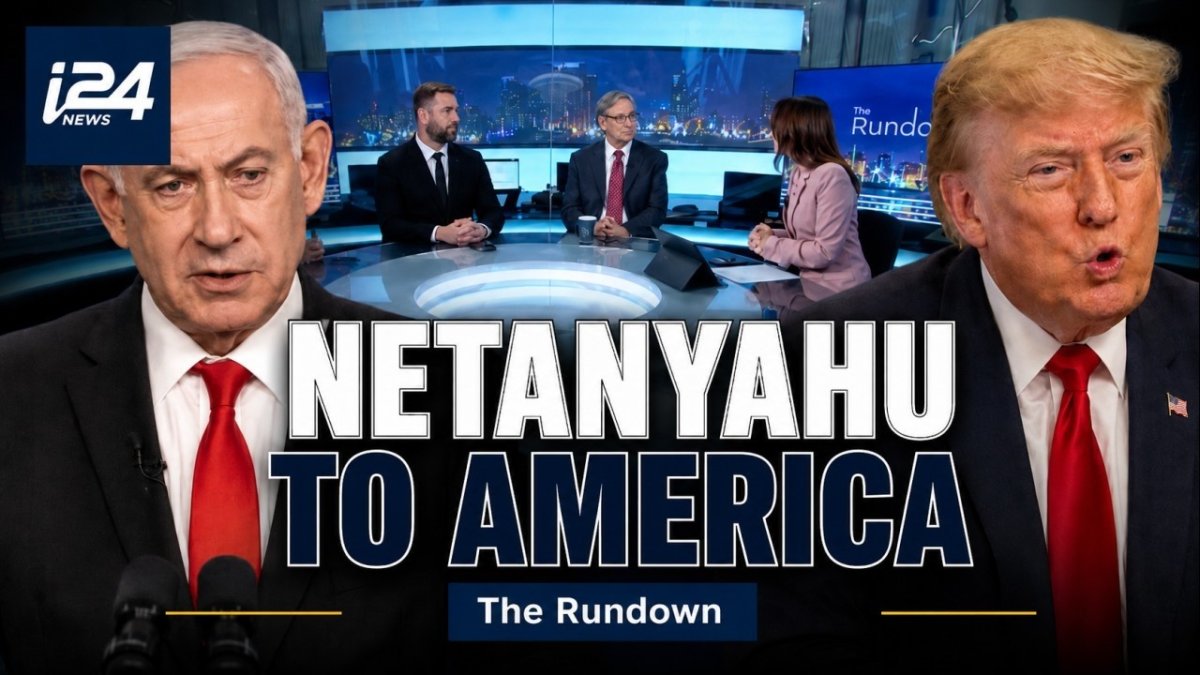
The i24NEWS English video reports that Prime Minister Benjamin Netanyahu is expected to meet US President Donald Trump next week in Washington after attending the funeral of former Senator Lindsey Graham. Conflicting statements from Israeli and American officials have created uncertainty over the timing of any such visit. This diplomatic friction comes weeks after Israel's 12-day war with Iran ended last month.
The i24NEWS English video reports that Prime Minister Benjamin Netanyahu is expected to meet US President Donald Trump next week in Washington after attending the funeral of former Senator Lindsey Graham. Conflicting statements from Israeli and American officials have created uncertainty over the timing of any such visit. This diplomatic friction comes weeks after Israel's 12-day war with Iran ended last month.
Netanyahu-Trump Meeting Delayed by Graham Funeral Shift
Jerusalem, Israel — this week Prime Minister Benjamin Netanyahu postponed his planned departure to Washington after the Prime Minister's Office announced on Thursday that former US Senator Lindsey Graham's funeral had been moved to the end of July. Netanyahu had intended to fly Saturday night to attend the service and hold talks with President Donald Trump. The visit would have been Netanyahu's first to Washington since the war with Iran concluded last month.
Conflicting Statements on White House Schedule
Israeli media outlets reported Tuesday that Netanyahu expects to travel to the United States next week for direct meetings with President Trump following what he described as a great victory in the 12-day war with Iran. White House officials immediately denied any meeting appears on the president's schedule. Axios reported that Trump had earlier indicated Netanyahu could visit after the NATO summit in Ankara, Turkey, concluded on July 8, yet no formal invitation followed the president's return.
Netanyahu's previous visits to Washington offer instructive parallels. During his February 2026 trip, the prime minister secured verbal assurances from President Trump on qualitative military edge enhancements and expedited munitions deliveries, yet those pledges remained largely unimplemented by the time the 12-day war erupted. The intervening months witnessed a marked shift: Iran's proxy network intensified attacks on Israeli positions in the Golan and northern border areas, while US Central Command repositioned assets to deter direct Iranian retaliation. Israeli officials, including National Security Advisor Tzachi Hanegbi and Defense Minister Israel Katz, now seek binding written guarantees—specifically, a renewed memorandum of understanding that would codify American intervention thresholds should Iran attempt to reconstitute its nuclear infrastructure. This evolution reflects a broader recalibration in Jerusalem, where policymakers view the post-February landscape as one in which American deterrence credibility must be demonstrated through concrete, time-bound commitments rather than rhetorical solidarity alone. The absence of a confirmed meeting thus carries heightened stakes, as any further delay risks signaling to Tehran that the US-Israel strategic compact has weakened precisely when Israel most needs visible American backing.
Coalition Losses Weaken Netanyahu's Position
Netanyahu's governing coalition now holds only 48 seats in the Knesset while the opposition commands 62 seats after a recent legislative push. A poll released this week showed 83 percent of Israeli voters oppose bringing Haredi parties back into any future coalition. These domestic constraints limit Netanyahu's room to maneuver on foreign policy decisions tied to Washington.
Opposition leader Yair Lapid has seized on these numbers to argue that Netanyahu's weakened parliamentary standing undermines his ability to extract meaningful concessions from Washington. Speaking at a press conference in Tel Aviv, Lapid claimed the prime minister's coalition arithmetic leaves him "dependent on American goodwill rather than negotiating from strength," particularly regarding long-term security arrangements. With only 48 seats, Netanyahu must constantly court potential defectors from within his own bloc, including far-right ministers such as Itamar Ben-Gvir and Bezalel Smotrich, whose demands for accelerated West Bank settlement expansion clash with American preferences for calibrated diplomacy. This internal fragility directly affects leverage abroad: US officials, including Secretary of State Marco Rubio, are reportedly monitoring whether Netanyahu can deliver Knesset ratification for any new security memorandum. The 83 percent public opposition to Haredi reintegration further narrows options, as any attempt to rebuild the coalition along religious lines would likely trigger early elections that could remove Netanyahu from office mid-negotiation. Consequently, the prime minister's Washington agenda is now filtered through the prism of domestic survival, forcing Israeli diplomats to prioritize quick, symbolic wins over the deeper strategic architecture that military planners in the IDF General Staff believe is essential.
US Role in Iran Conflict Shapes Current Talks
The United States provided critical support to Israel during the 12-day war with Iran that ended last month. Netanyahu has repeatedly credited American assistance for the outcome he called a great victory. Any upcoming meeting in Washington would focus on post-conflict security arrangements and regional deterrence against Iranian proxies including Hezbollah and Hamas.
The 12-day war fundamentally altered US-Israel strategic calculations by demonstrating both the limits and the necessity of American involvement. While US forces intercepted Iranian ballistic missiles and shared real-time intelligence that enabled Israeli strikes on key Revolutionary Guard facilities, Israeli officials privately note that Washington withheld permission for deeper attacks on Iranian nuclear sites, leaving residual enrichment capacity intact. Defense Minister Israel Katz and IDF Chief of Staff Lt. Gen. Herzi Halevi have therefore placed specific requests on the table: expanded access to US bunker-buster munitions, joint planning for rapid response against Hezbollah rearmament corridors in Syria, and a standing commitment to resupply Iron Dome interceptors within 72 hours of any future Iranian barrage. These guarantees are viewed in Jerusalem as essential to restoring deterrence, especially after Iranian Supreme Leader Ayatollah Khamenei publicly vowed retaliation. American counterparts, led by National Security Advisor Jake Sullivan's successor, have signaled willingness to discuss these items but insist on linking them to Gaza reconstruction oversight and de-escalation mechanisms with Egypt. The war thus shifted the bilateral conversation from general alliance rhetoric to granular operational commitments that will determine whether Israel can deter a second-round Iranian challenge without requiring another direct US military intervention.
Israel Expands Ties With South Sudan
Separately, i24NEWS reported growing strategic cooperation between Israel and South Sudan aimed at countering instability in East Africa. Israeli officials have increased diplomatic and security engagement with Juba as part of efforts to secure new partners outside traditional Middle East channels. These ties provide Israel with additional leverage amid shifting alliances in the Horn of Africa.
Graham Funeral Postponement Affects Timing
Lindsey Graham, the South Carolina senator and longtime supporter of both Netanyahu and Trump, died recently. His funeral was originally set for this weekend but has now been rescheduled for the end of July. The change forced Netanyahu to delay his own travel plans and created the current gap in confirmed high-level US-Israel contact.
Regional Implications of Delayed Washington Visit
Failure to confirm a meeting this week leaves open questions about US commitments to Israel's post-war security needs. Israeli defense officials continue to monitor Iranian attempts to rebuild capabilities after the 12-day conflict. The absence of a scheduled White House session also affects coordination with other regional actors including the Palestinian Authority and Egyptian mediators on Gaza issues.
The postponement reverberates across ongoing Saudi normalization talks and the broader Abraham Accords framework. Riyadh has conditioned any formal recognition of Israel on concrete progress toward a Gaza ceasefire and renewed US security guarantees against Iran—precisely the issues Netanyahu hoped to advance in Washington. Saudi Crown Prince Mohammed bin Salman has maintained back-channel contacts through US Special Envoy for Middle East Affairs, yet Iranian Foreign Minister Abbas Araghchi's recent tour of Gulf capitals signals Tehran's determination to fracture the emerging Sunni-Israeli alignment. With the Abraham Accords now encompassing Bahrain, Morocco, and the UAE, Israeli diplomats fear that further delay in US-Israel coordination could stall Sudanese and Mauritanian accession while emboldening Iranian efforts to court Oman and Qatar. The post-war landscape thus presents a narrow window: either the delayed Trump-Netanyahu meeting produces visible momentum on Saudi talks and proxy deterrence, or Iran succeeds in portraying the 12-day conflict as a strategic draw that weakens Israel's regional hand. Officials in Jerusalem, including Foreign Minister Gideon Sa'ar, view the coming weeks as decisive for locking in the diplomatic gains achieved during the war before regional actors recalibrate.
By Hannah Berg, Staff Writer
This article was produced with AI-assisted research and editorial support. Reporting is based on sources cited in the article.
What's Your Reaction?
 Like
0
Like
0
 Dislike
0
Dislike
0
 Love
0
Love
0
 Funny
0
Funny
0
 Wow
0
Wow
0
 Sad
0
Sad
0
 Angry
0
Angry
0
Israel Correspondent at Global1.News. Based in Tel Aviv, covering Israeli politics, security, technology, and society. Provides balanced, deeply-sourced reporting on one of the most closely-watched regions in the world.











Comments (0)