
Argentina Stun England to Reach World Cup Final After Falklands Controversy
Argentina defeated England 2-1 in a stunning World Cup semifinal comeback, with Lionel Messi setting up both goals. A Falklands banner controversy erupted post-match as FIFA launched an investigation. Argentina now face Spain in Sunday's final at MetLife Stadium.
Argentina's dramatic late comeback against England has propelled them into a blockbuster World Cup final against Spain, but the celebrations are overshadowed by a fiery Falklands banner that has reignited old geopolitical tensions and drawn FIFA scrutiny. With Lionel Messi once again the architect of history and political shadows looming large over MetLife Stadium, the 2026 tournament has delivered the kind of high-stakes drama that echoes across continents, including here in South Africa.
Argentina's Late Heroics Headline World Cup Final Against Spain After Falklands Controversy
Atlanta, United States — The stage was set for a classic, and the 2026 World Cup semifinal delivered beyond expectations.
The Thrilling Semifinal Clash in Atlanta
Argentina defeated England 2-1 in the 2026 FIFA World Cup semifinal on July 15 at Mercedes-Benz Stadium in Atlanta, Georgia. A crowd of 68,239 watched Anthony Gordon score for England in the 55th minute before Enzo Fernandez equalized in the 85th minute and Lautaro Martinez netted the winner in the 90+2nd minute.
The atmosphere inside Mercedes-Benz Stadium crackled like a Soweto derby under floodlights. South African fans glued to SuperSport feeds could feel the tension even from across the Atlantic, with vuvuzelas probably echoing in living rooms from Cape Town to Durban. The late drama mirrored those heart-stopping moments when Bafana Bafana snatched victory in 1996, proving once again that football belongs to the believers who never quit.
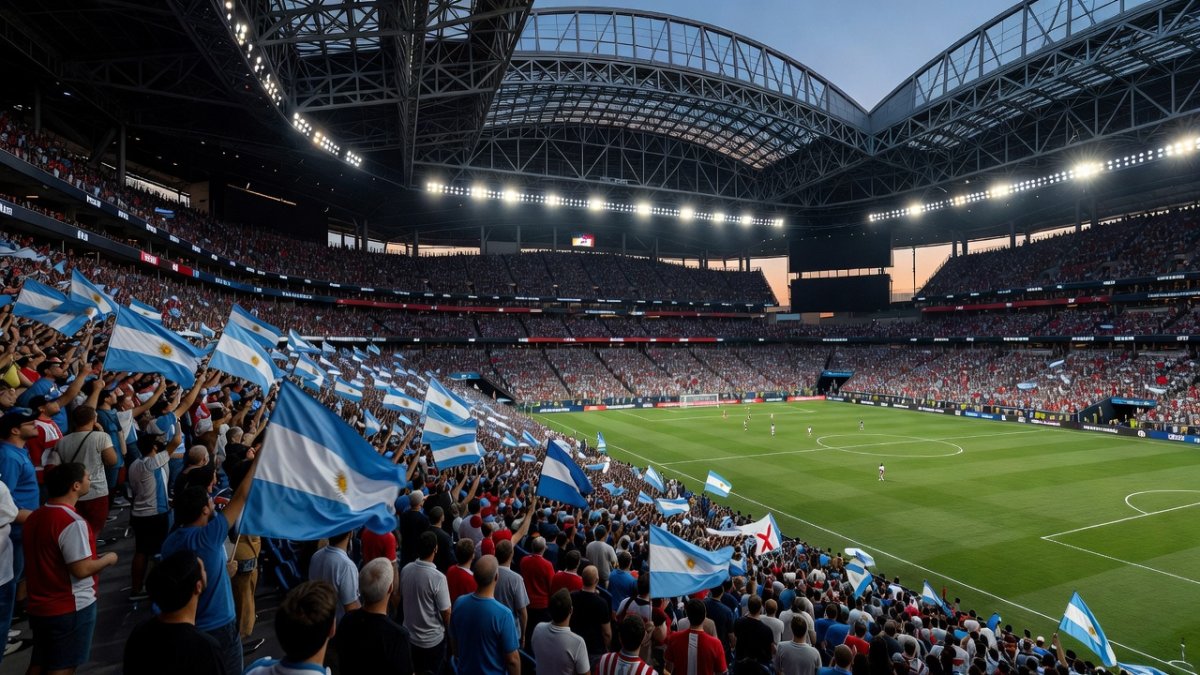
Argentine supporters turned the stands into a sea of sky-blue and white, their chants rolling like the Indian Ocean waves we know so well. The 68,239-strong crowd witnessed a tactical chess match that flipped on its head in the final ten minutes, leaving English hearts broken and Argentine dreams alive for one more chapter.
Messi Creates History Once More
Lionel Messi, aged 39, delivered both assists for Argentina's goals. He set up Fernandez for the equalizer and crossed for Martinez's late winner. Messi has now recorded 8 goals and 4 assists in this tournament, bringing his World Cup totals to 21 goals and 12 assists, both all-time records. He became only the second player to reach three World Cup finals.
At 39, the little magician from Rosario is still writing chapters that make even hardened journalists like me reach for the tissues. This is his third World Cup final, a feat that echoes the longevity of our own legends who kept the PSL flame burning well into their late thirties. Messi's vision and delivery under pressure remind us of Mark Fish marshalling the backline in '96, calm when the whole nation held its breath.
His tournament numbers, 8 goals and 4 assists already, speak to a genius that refuses to fade. South African kids watching on SuperSport will be mimicking those no-look passes in the streets of Alexandra for years to come, dreaming that one day Bafana can produce their own eternal number ten.
England's Tactical Shift Backfires
England manager Thomas Tuchel switched to a defensive back five after taking the lead. From the 55th minute onward England managed just 12 percent possession. The Springboks-style defensive wall that worked in earlier rounds crumbled under sustained Argentine pressure in the final stages.
That back-five fortress looked unbreakable at first, much like the Springboks' famous rush defence that Siya Kolisi has turned into an art form. But Argentina's relentless probing exposed the flaw: you cannot park the bus forever when the opposition smells blood in the final quarter. The collapse followed a familiar English pattern we have seen before, where early control evaporates under sustained pressure.
Stats tell the story clearly. After Gordon's goal, England touched the ball only 12 percent of the time, a figure that would make any PSL coach reach for the whiteboard in panic. The lesson for South African football is simple: belief and adaptability win matches, not just rigid structures copied from elsewhere.
The Malvinas Banner Ignites FIFA Probe
After the final whistle Argentina players displayed a banner reading "Las Malvinas son Argentinas." FIFA immediately launched an investigation because the banner breached the organization's code of conduct that prohibits political messages inside stadiums. The incident occurred in front of 68,239 spectators in Atlanta.
The banner moment sent shockwaves through the stadium and straight into living rooms across the world, including ours here in South Africa where political symbols on the pitch always stir strong memories of our own divided sporting past. FIFA's swift probe shows the governing body is serious about keeping politics off the field, yet the passion on display proves football and identity remain tightly woven.
Atlanta's crowd watched history repeat itself in real time. The image of Argentine players holding that banner will be replayed for weeks, sparking debates from Johannesburg bars to Buenos Aires cafes about where sport ends and national pride begins.
London and Buenos Aires Trade Sharp Responses
UK Prime Minister Keir Starmer's office stated that Britain's position remains unchanged and self-determination rests with the islanders. Argentina's Vice President Victoria Villarruel, daughter of a Falklands War veteran, posted that the islands are Argentinian and that the players carry the cause in their blood and hearts despite stadium bans.
The diplomatic exchanges flew thick and fast this week, with London standing firm on self-determination while Buenos Aires reminded the world that the cause still burns in players' hearts. Vice President Villarruel's personal connection, her father a Falklands veteran, adds layers of emotion that no press release can fully capture.
Here in South Africa we understand how deeply history shapes sporting rivalries. The sharp words between capitals echo the kind of national pride we felt during the 1996 AFCON, when every victory carried extra meaning for a young democracy finding its feet.
1982 War Shadows the 2026 Semifinal
The 1982 Falklands War lasted 74 days and claimed 655 Argentine and 255 British service members. A 2013 referendum saw 99.8 percent of islanders vote to remain British. A Pentagon memo has indicated the United States is reviewing its stance on the islands after the UK declined to support certain Iran-related actions.
The 74-day conflict still casts long shadows over any Argentina-England meeting, much like our own apartheid-era sporting bans continue to inform how we view transformation in the game today. The human cost, 655 Argentine and 255 British lives, remains a sombre backdrop to every banner and every chant.
With President Trump scheduled to attend the final and a Pentagon memo hinting at shifting US positions, the political undercurrents feel stronger than ever. Milei's government and the Trump circle add fresh intrigue that could influence more than just football diplomacy in the months ahead.
Argentina Face Spain in MetLife Showpiece
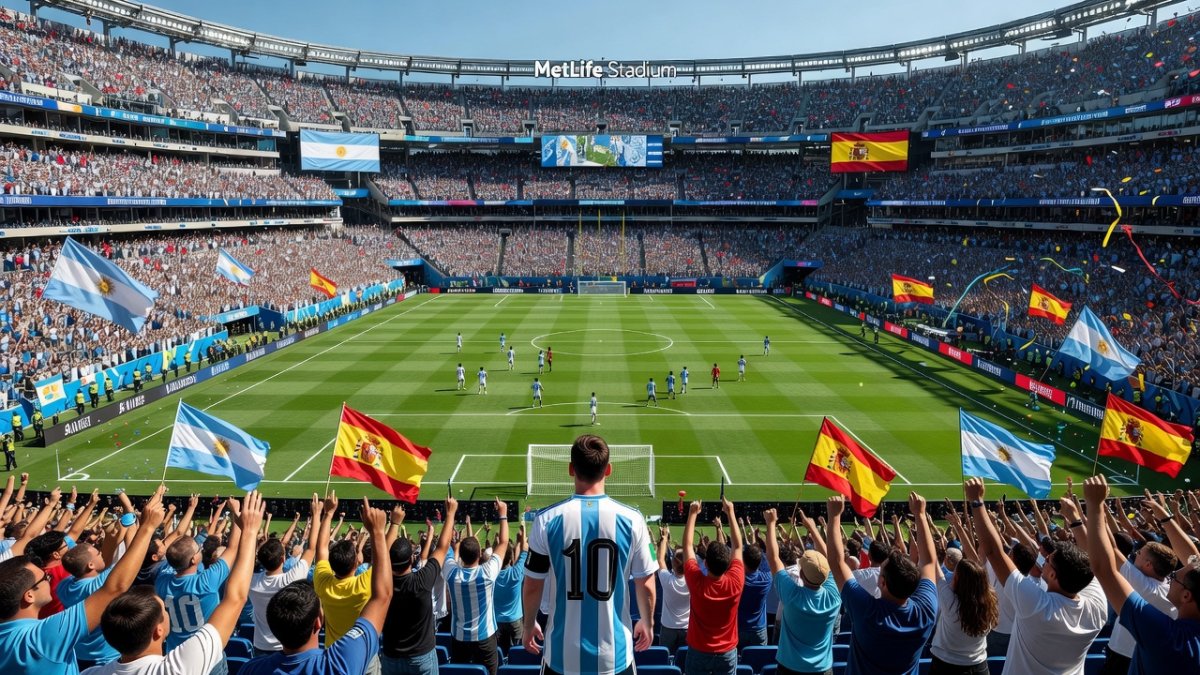
Argentina will meet Spain in the final on Sunday, July 19 at MetLife Stadium in East Rutherford, New Jersey. Spain reached the final after beating France 2-0 in their semifinal with a penalty from Oyarzabal and a goal from Porro. This marks the first World Cup final between the European champions and the Copa America champions. The match will feature the tournament's first Super Bowl-style halftime show with Madonna, Justin Bieber, Shakira, BTS, Burna Boy and Coldplay. President Trump is scheduled to attend and present the trophy. Opta gives Spain a 45.1 percent chance of victory, Argentina 29.4 percent and extra time or penalties 25.4 percent.
MetLife Stadium is already buzzing in anticipation of a clash that pits two continental champions against each other for the first time at this level. The Super Bowl-style halftime show featuring Burna Boy alongside global stars will bring African rhythm to New Jersey, something that will make every South African viewer feel right at home.
Opta's numbers give Spain the slight edge, yet we all know Messi has made a habit of rewriting probability tables. The stage is set for a final that will be talked about for generations, just like that magical night in 1996 when South Africa lifted the AFCON trophy.
Spain's Path to the Final
Lamine Yamal has been the shining light in Spain's charge, the teenage sensation dismantling France with the kind of flair that would light up any PSL pitch. His vision and dribbling tore through the French defence, creating the platform for Oyarzabal's penalty and Porro's clinical finish in the 2-0 semifinal win.
Spain's journey combined youthful exuberance with tactical maturity, a blueprint South African coaches under SAFA would do well to study. Yamal's ability to perform on the biggest stage at such a tender age mirrors the raw talent we sometimes see in the MultiChoice Diski Challenge, waiting for the right structure to flourish.
France, despite their pedigree, could not contain the Spanish wave. The 2-0 scoreline flattered no one; Spain simply played with the freedom and belief that has defined their tournament run from the opening whistle.
The World Cup Final Preview
The key battles will centre on Messi’s orchestration against Yamal’s explosive runs, a generational clash that promises fireworks at MetLife. Tactically, Argentina will look to control the tempo through midfield while Spain press high and exploit wide areas with their young attackers.
Extra time or penalties loom large according to the numbers, and any South African supporter knows those moments test character more than skill. The first Super Bowl-style halftime show will provide a brief spectacle, but the real drama will unfold between the lines once the second half begins.
President Trump presenting the trophy adds another layer of global spotlight. Whoever lifts that golden prize on Sunday will carry not just national pride but the weight of an entire tournament’s narrative into the history books.
African Nations Write New Chapter
A record 10 African teams qualified for the expanded 48-team tournament. Morocco reached the quarterfinals after beating Canada 3-0 in the Round of 16 and losing 2-0 to France. Morocco became the first African nation to reach consecutive World Cup quarterfinals in 2022 and 2026. Senegal advanced to the Round of 32 while Cape Verde made their debut. South Africa did not qualify, yet Bafana Bafana supporters followed every African result closely through SuperSport broadcasts.
Ten African nations at the World Cup represents real progress, the kind of growth that makes every South African heart swell with hope. Morocco’s back-to-back quarterfinal appearances show what sustained investment and belief can achieve, lessons SAFA must absorb if we are to see Bafana return to these stages soon.
Cape Verde’s debut and Senegal’s progress add fresh chapters to our continent’s story. Watching from Soweto to Polokwane, South African fans celebrated every African goal as if it were our own, keeping the 1996 AFCON spirit alive across the airwaves.
What This Means for African Football
Morocco’s run has shown the rest of the continent that quarterfinal appearances are no longer once-in-a-generation miracles. With ten teams qualifying, the depth of African talent is finally being recognised on the global stage, and South Africa must position itself to ride this wave.
SAFA’s development programmes, including the Diski Challenge, need to mirror the tactical discipline and grassroots energy that powered Morocco. The 2030 World Cup co-hosting by Morocco offers a nearby beacon of what is possible when vision meets execution.
Bafana Bafana supporters know that transformation and opportunity go hand in hand. If we learn from Morocco’s journey, the next generation of South African players could be contesting these same stages rather than watching from the stands.
Lessons for South African Football
The 2030 World Cup will be co-hosted by Morocco, Spain and Portugal with centenary matches in Uruguay, Argentina and Paraguay. South African fans watching from Soweto to Durban see in Morocco's run the same grassroots energy that once lifted Bafana Bafana to the 1996 Africa Cup of Nations title. SAFA officials have already begun studying how Argentina's late-game belief and Messi's leadership could translate to domestic development programs under the MultiChoice Diski Challenge. The tournament has reminded every South African supporter that transformation and tactical discipline remain the twin pillars needed if Bafana Bafana are to return to the global stage.
Argentina’s never-say-die attitude in Atlanta offers a masterclass in resilience that our local coaches can apply immediately. The same spirit that carried us to AFCON glory in 1996 still lives in the hearts of PSL fans who pack stadiums every weekend, believing better days are coming.
As the final approaches, South Africa’s football family stands united in admiration and quiet determination. The lessons are clear: invest in youth, trust the process, and never lose that fire that once made the world stand and applaud Bafana Bafana.
By Dante Williams, Staff WriterThis article was produced with AI-assisted research and editorial support. Reporting is based on sources cited in the article.
What's Your Reaction?
 Like
0
Like
0
 Dislike
0
Dislike
0
 Love
0
Love
0
 Funny
0
Funny
0
 Wow
0
Wow
0
 Sad
0
Sad
0
 Angry
0
Angry
0

Breaking News and Investigations Correspondent at Global1.News. Based in London, covering global breaking news, security, and investigative stories. Known for digging deeper and connecting the dots across continents.









Comments (0)