
Trump Threatens Tariffs on Canada Over Wildfire Smoke
President Donald Trump has escalated tensions with Canada by threatening steep new tariffs over wildfire smoke drifting south, linking an environmental crisis directly to trade policy in an unprecedented move. The threat arrives as hundreds of fires burn across multiple provinces, sending hazardous air into major American cities and raising urgent questions about cross-border responsibility.
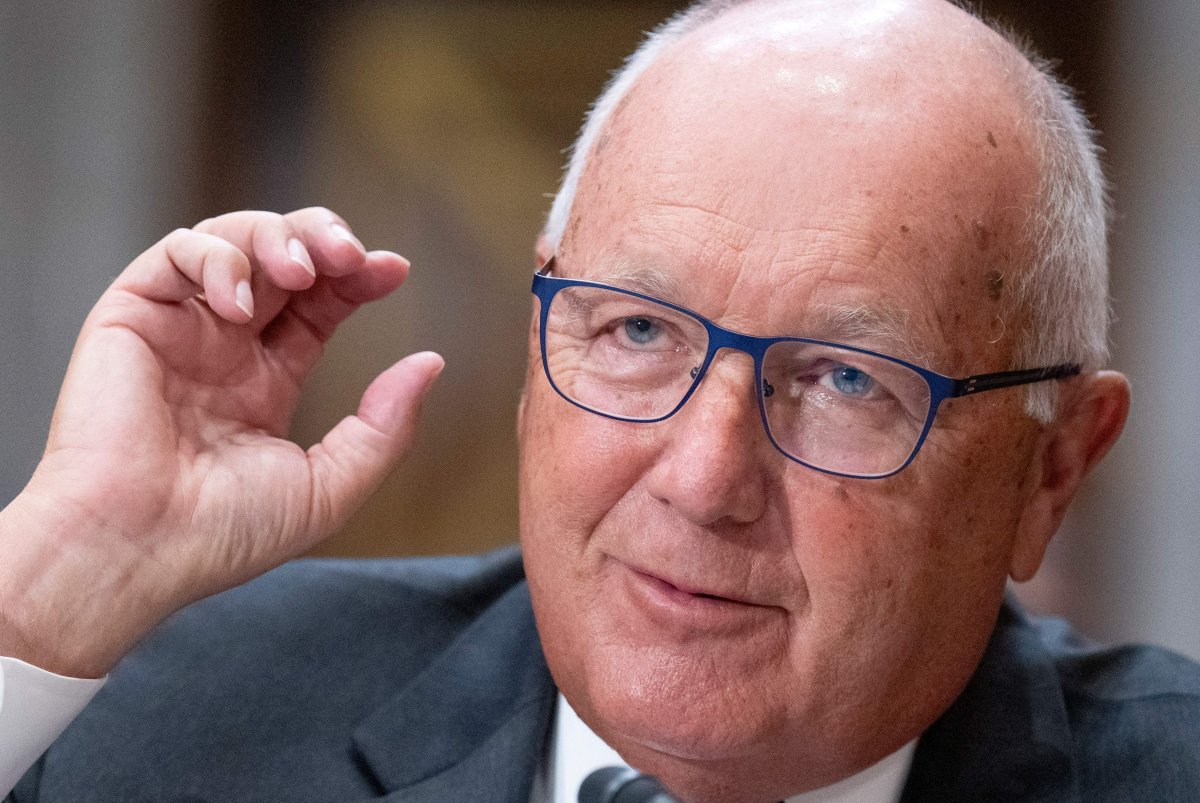
Trump Threatens Tariffs Over Wildfire Smoke Drifting Into U.S. Cities
President Donald Trump has escalated tensions with Canada by threatening steep new tariffs over wildfire smoke drifting south, linking an environmental crisis directly to trade policy in an unprecedented move. The threat arrives as hundreds of fires burn across multiple provinces, sending hazardous air into major American cities and raising urgent questions about cross-border responsibility.
Trump Links Wildfire Smoke to New Tariffs on Canada
Ottawa, Ontario – July 18, 2026 — President Trump warned on July 17 that Canada must face tariffs of up to 25 percent unless Ottawa takes immediate steps to curb wildfire smoke crossing the border. The statement, posted on Truth Social, marks a sharp escalation that ties forest fires to trade leverage at a time when existing tariffs already stand at 10 percent on select goods.
Trump's Tariff Threat
President Trump's Truth Social post on July 17 used unusually direct language, stating that Canada "must pay" for the smoke and warning of tariffs that could reach 25 percent on select goods if Ottawa failed to act within days. The wording echoed earlier trade disputes but introduced an environmental dimension not previously tied to tariff threats. Timing proved significant: Ambassador Hoekstra's interview with Global News occurred hours before the post, suggesting coordination between the White House and the embassy rather than an independent diplomatic overture.
The Prime Minister's Office in Ottawa responded with measured restraint, issuing a brief statement that emphasised ongoing cooperation through established channels while avoiding direct engagement with the tariff proposal. Officials conveyed quiet urgency behind the scenes, accelerating briefings for cabinet ministers responsible for natural resources and international trade. The phrase "call to action" from Hoekstra has been interpreted in Ottawa as a demand for accelerated fuel-management programs and prescribed burns, though federal authorities note that such measures fall primarily under provincial jurisdiction and cannot be implemented overnight.
Canadian diplomats have begun quiet outreach to U.S. congressional offices in border states, seeking to separate legitimate air-quality concerns from broader trade leverage. The existing 10 percent tariff baseline remains in place on a limited range of products, yet analysts caution that any escalation would require formal notice under USMCA provisions, creating a short window for negotiation before new measures could take effect.
Scale of Canadian Wildfires
As of mid-July, British Columbia reports 312 active fires with 612,000 hectares burned, while Alberta has 187 fires consuming 478,000 hectares. Manitoba and Ontario together account for 211 fires and 392,000 hectares, with Quebec and the Northwest Territories adding another 120 fires across 328,000 hectares. These figures exceed the ten-year average for the same period and approach the intensity seen in 2023, though total area burned remains below the record 2023 season when more than 15 million hectares were lost nationally.
Drought conditions and repeated lightning strikes have driven most ignitions this year, with human-caused fires representing less than 15 percent of starts in remote regions. Prolonged heat waves and below-normal precipitation have left forest fuels exceptionally dry across the boreal forest. National Preparedness Level 4 indicates that Canadian agencies are drawing on nearly all available resources and may soon require international assistance to sustain operations through the peak season.
The Canadian Interagency Forest Fire Centre in Winnipeg coordinates crew and equipment movements, currently deploying 2,400 firefighters, 180 helicopters and 14 air tankers across jurisdictions. Mutual-aid agreements with the United States and Australia have been activated, though availability remains limited by concurrent fire activity south of the border. Provincial governments continue to prioritise community protection and critical infrastructure while monitoring long-range smoke forecasts that affect both Canadian and American populations.
Smoke's Reach Across the Border
Smoke has blanketed major U.S. cities including Detroit, Chicago, New York and Boston, with air quality alerts issued across multiple states. Conditions have reached hazardous levels in some areas, prompting health advisories for residents.
Michigan lawmakers and Congressional Republicans have publicly demanded that Canada take additional action on forest management. These calls reflect concerns in border states most directly affected by the drifting smoke.
The World Cup Concern
MetLife Stadium in East Rutherford sits beneath the current smoke plume, with air-quality monitors on site recording PM2.5 levels above 150 micrograms per cubic metre on several days this week. FIFA guidelines generally recommend postponement when the Air Quality Index exceeds 150 for prolonged periods, though the organisation has not yet issued a formal threshold for this match. Organisers have prepared contingency plans that include moving the final to an indoor venue or shifting the date by 48 hours if conditions deteriorate further.
A postponement would carry substantial economic consequences for the New Jersey and New York region, with hotels, restaurants and transportation providers already reporting cancellations. Local tourism officials estimate daily losses in the tens of millions of dollars should the event be delayed. Argentina and Spain have both expressed willingness to play under adjusted conditions but have requested clear medical guidance for players with respiratory sensitivities.
U.S. officials continue discussions with FIFA and Canadian authorities to determine whether improved forest-management commitments from Ottawa could sufficiently reduce smoke before kickoff. The situation underscores how transboundary environmental events can now intersect with major international sporting events in ways that require rapid coordination across multiple governments.
Strained Bilateral Relations
Trump's earlier suggestion that Canada could become the 51st state, made during a March interview, set an already tense tone for bilateral discussions. Trade relations have since oscillated between cooperation under the USMCA and periodic tariff threats on steel, aluminum and dairy. The current smoke-related proposal adds an environmental lever to these economic frictions, complicating efforts to maintain stable dialogue.
Canadian diplomatic strategy focuses on quiet engagement through the embassy in Washington and direct premier-to-governor contacts in affected states. Ontario Premier Doug Ford and British Columbia Premier David Eby have both issued statements stressing that forest management remains a provincial responsibility under the Constitution, limiting the federal government's ability to impose uniform national standards. Alberta and Quebec premiers have similarly highlighted jurisdictional boundaries while offering to share best practices on prescribed burning.
These exchanges have revived domestic debates about Canadian sovereignty, with some commentators questioning whether environmental pressures from the south could erode provincial control over natural resources. Ottawa continues to frame the issue as one of shared stewardship rather than external interference, seeking to preserve room for negotiation without conceding authority over Crown lands.
Implications for Trade and Environment
Any new tariffs would require a formal Section 232 or Section 301 investigation process, typically taking weeks or months rather than days. Sectors most exposed include softwood lumber, aluminum and certain agricultural products already subject to quota arrangements. Previous disputes, such as the 2018 steel and aluminum tariffs, were ultimately resolved through negotiated quotas and side letters rather than permanent duties.
Analysts view the current threat as a mixture of genuine constituent pressure from smoke-affected states and political posturing ahead of domestic electoral cycles. While air-quality concerns are real, the linkage to tariffs represents an unconventional use of trade tools that could face legal challenges under USMCA dispute-settlement mechanisms. Canadian exporters are preparing contingency supply-chain adjustments while monitoring whether the administration intends to pursue formal action or simply maintain rhetorical pressure.
Longer-term environmental cooperation may ultimately prove more durable than tariff measures. Parliamentary committees have already examined expanded prescribed-burn programs and enhanced federal-provincial data sharing, measures that could reduce future smoke events without altering constitutional divisions of power. The episode illustrates how climate-driven events increasingly test the limits of existing bilateral frameworks.
Tags: Canada-US relations, wildfires, tariffs, Donald Trump, Pete Hoekstra, World Cup, air quality, USMCA, British Columbia, Alberta
By Alex Thompson, Staff Writer
This article was produced with AI-assisted research and editorial support. Reporting is based on sources cited in the article.
What's Your Reaction?
 Like
0
Like
0
 Dislike
0
Dislike
0
 Love
0
Love
0
 Funny
0
Funny
0
 Wow
0
Wow
0
 Sad
0
Sad
0
 Angry
0
Angry
0
Canada Correspondent at Global1.News. Based in Toronto, covering Canadian politics, energy, trade, and US-Canada relations. Provides the Canadian perspective on North American and global affairs.











Comments (0)