
Shangwe, le bal: Wanjiru Kamuyu's Dance of Joy Unites Cultures in Lyon
Kenyan-American choreographer Wanjiru Kamuyu brought her participatory dance project Shangwe, le bal to Lyon, France, where East African rhythms met French ballroom traditions in a burst of shared movement. The work drew on the continent's deep dance heritage, allowing the African diaspora to reach back across oceans and generations through joyful steps that echo village gatherings and urban festivals alike. In this celebration, 60 amateur dancer
Kenyan-American choreographer Wanjiru Kamuyu brought her participatory dance project Shangwe, le bal to Lyon, France, where East African rhythms met French ballroom traditions in a burst of shared movement. The work drew on the continent's deep dance heritage, allowing the African diaspora to reach back across oceans and generations through joyful steps that echo village gatherings and urban festivals alike. In this celebration, 60 amateur dancers joined professionals and deaf performers, turning the Subsistances cultural space into a living bridge between continents.
Shangwe, le bal: Wanjiru Kamuyu's Dance of Joy Unites Cultures in Lyon
Dakar, Senegal — Wanjiru Kamuyu, the Kenyan-American choreographer born in Kenya to Kenyan and African-American parents, created Shangwe, le bal as a space where Kiswahili joy meets the French tradition of le bal. The project mixes celebration with cultural memory, inviting participants to discover East African heritage through movement in the heart of France. This participatory experience highlights how diaspora artists carry and reshape their roots on global stages, much like Senegal's own vibrant dance scenes that pulse through Dakar streets and festivals.
A Joyful Project Born from East African Heritage
Wanjiru Kamuyu was born in Kenya to Kenyan and African-American parents, giving her a layered identity that spans continents from the start. She has lived and created in Paris, France since 2007, marking 19 years of artistic life in France by 2026. As founder of WKcollective since 2009, she has built a platform that gathers multidisciplinary artists from varied backgrounds to explore shared stories.
The title Shangwe, le bal balances the Kiswahili word for joy with the French term for dance or ball, creating a subtitle that honors both linguistic worlds. This naming reflects Kamuyu's own words that the project brings in all of who she is, particularly her East African heritage where she was born and raised and which remains home. The work draws directly from those early rhythms and community dances that shaped her.
Three collaborating choreographers from East Africa joined the effort: Pretty Lodenyi from Kenya, Joyeux Ntsinzi from Burundi, and Halima Masoud from Tanzania. Their combined input ensured authentic movement vocabularies from the region informed every sequence. Together they wove personal and collective memories into the choreography.
Kamuyu's full identity finds expression here through the integration of her Kenyan upbringing with her American and French experiences. The project allows her to foreground East African elements that might otherwise remain secondary in European contemporary dance contexts. This deliberate focus strengthens the cultural threads that connect her past to the present.
The creative process emphasized heritage as a living resource rather than a static reference. Dancers learned sequences rooted in East African social dances while adapting them for mixed groups. This approach created a cultural discovery journey for both dancers and audience alike.
By centering these elements, Shangwe positions African heritage as central to contemporary expression in France. It demonstrates how artists can honor origins while innovating within new environments. The result feels grounded and expansive at once.
Celebration at Les Subs in Lyon: Dance Without Borders
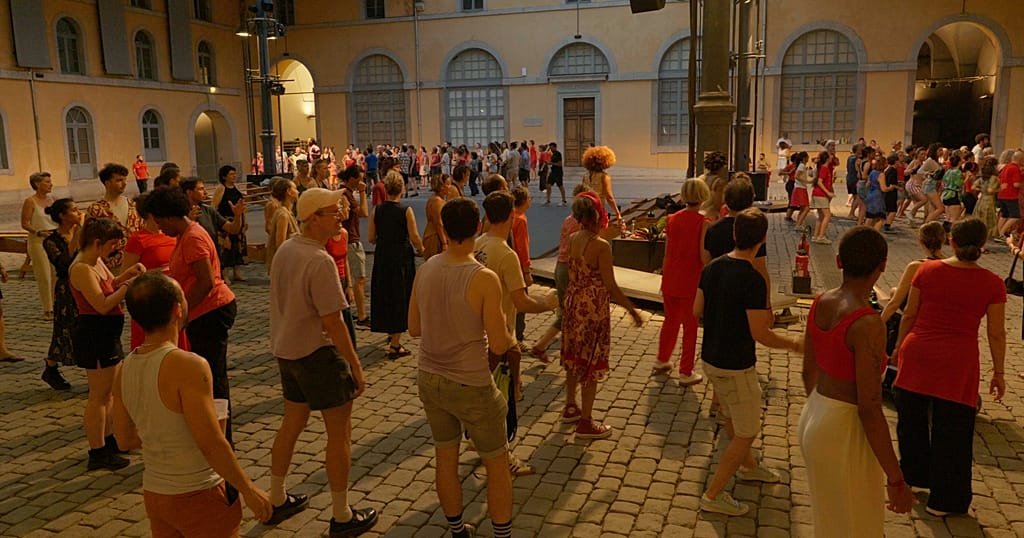
The performance took place at Les Subs, the Subsistances cultural space in Lyon, southeastern France, near the river Saône. It formed part of Les Nuits de Fourvière festival 2026, Lyon's annual summer performing arts festival that draws large crowds each year. The venue's open layout suited the participatory format perfectly.
Around 60 amateur dancers and audience participants filled the space despite the sweltering July heat. People moved freely between watching and joining, creating an atmosphere where boundaries between performers and viewers dissolved. The energy remained high throughout the evening.
Kamuyu called out, "Welcome, everyone, to Shangwe, le bal!" as her voice rang over the audience at the start. Her greeting set a warm, inclusive tone that invited immediate engagement. The relaxed beats of the music then filled the space, blending with chatter, laughter, and spontaneous clapping.
The festive atmosphere encouraged everyone present to contribute their own energy to the collective movement. Participants responded with smiles and improvised steps that reflected personal styles. This organic exchange turned the event into a true shared celebration.
Les Nuits de Fourvière provided the ideal platform for such a project, given its history of presenting diverse performing arts. The July timing aligned with summer festivals across Europe, allowing the work to reach both local residents and international visitors. The setting amplified the project's joyful message.
The performance created a space of celebration, sharing, and joyful resilience that lingered long after the final movements. Audience members left with new connections to East African dance forms. The evening underscored dance's power to unite people across differences.
Multilingual, Multicultural: Language in Motion
The performance alternated between French, English, and Kiswahili, reflecting the project's cross-cultural foundation. Kamuyu taught the audience words in her first language while demonstrating corresponding movements that everyone repeated with enthusiasm. This interactive teaching built immediate familiarity with the material.
Two deaf dancers participated through French sign language, adding a layer of radical inclusivity to the experience. Their presence expanded the definition of participation and showed how movement can transcend spoken words. The integration felt seamless and natural within the larger flow.
The work was described as a participatory experience, a burning ball that comes alive with the complicity of amateurs. This characterization captures the collaborative spirit that defined every moment. Audience members became co-creators rather than passive observers.
Linguistic inclusion mirrored the broader cultural mission of bridging African and European worlds. By weaving languages together, the project made space for multiple identities to coexist on equal terms. Participants gained both physical and verbal tools for connection.
The teaching of movements tied to Kiswahili words created moments of discovery for many in the Lyon audience. People eagerly repeated phrases and gestures, building a shared vocabulary on the spot. These exchanges deepened the sense of cultural exchange.
Such multilingual layering enriches the performance while modeling respect for diverse heritages. It invites audiences to engage actively with African languages and rhythms. The approach strengthens the project's role as a bridge between communities.
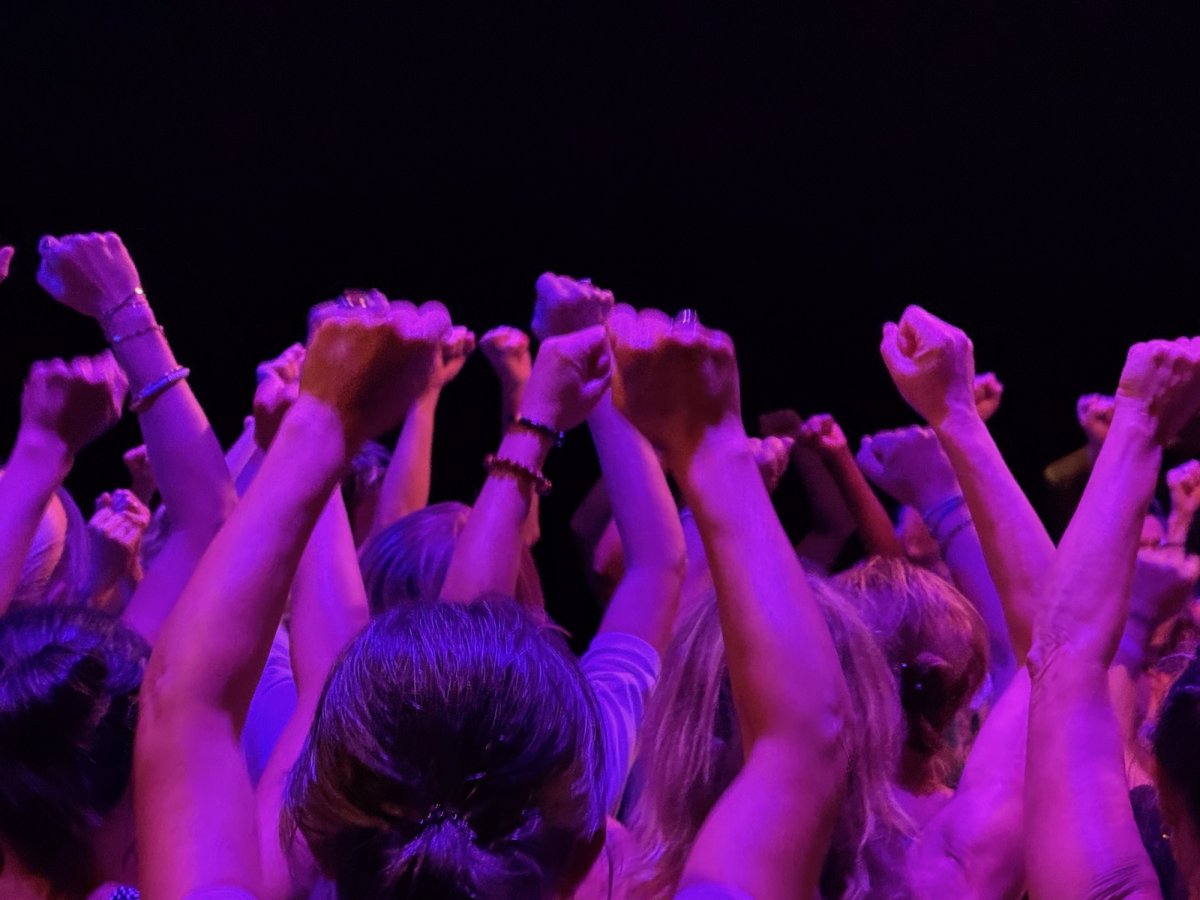
Wanjiru Kamuyu: Choreographer of the African Diaspora
Kamuyu's artistic journey includes notable works such as An Immigrant's Story, which addresses immigration and diaspora themes directly. Portraits in Red received its Chicago premiere, while Fragmented Shadows appeared at the Wexner Center for the Arts. These pieces established her reputation for exploring complex personal and collective histories.
Recurring themes in her choreography include immigration, identity, decolonization, African heritage, and the diaspora experience. She returns to these subjects with fresh perspectives each time, drawing from lived realities. Her work consistently centers African voices within global conversations.
She has been featured in Dance Magazine and on RFI's En Sol Majeur, where she improvised on the theme of Home Sweet Home. These platforms have amplified her voice and introduced her methods to wider audiences. The coverage highlights her innovative blend of traditions.
Her company WKcollective attracts multidisciplinary artists of diverse backgrounds who share an interest in cultural dialogue. The ensemble serves as a laboratory for testing ideas around belonging and expression. This collaborative model supports ongoing experimentation.
Kamuyu's 19 years in France have allowed her to develop a distinctive voice that speaks to both European and African contexts. Her projects often examine how heritage travels and transforms across borders. This sustained presence has enriched the French dance scene.
Through these efforts she models how diaspora artists can maintain deep ties to their origins while contributing to new cultural landscapes. Her trajectory offers inspiration for emerging creators navigating similar paths.
The Creative Ecosystem: Team Behind Shangwe
The creative team supporting Shangwe includes Birgit Neppl as costume and set designer, whose designs enhanced the festive atmosphere. Cyril Mulon handled lighting, creating warm and inviting environments that shifted with the energy. Jean-Philippe Barrios, known as LACRYMOBOY, composed the music that drove the relaxed beats.
David Gaulein-Stef served as artistic assistant, movement coach, and dramaturge, helping shape the participatory sequences. Dirk Korell acted as dramaturge and producer, overseeing the project's development and logistics. Their combined expertise ensured smooth execution.
Julie Compans provided audio description, while Carlos Carreras coached French sign language and Nelly Célérine performed as both dancer and French sign language interpreter. These roles made the work accessible to a broader range of participants. Rokia Bamba served as DJ, adding dynamic musical transitions.
A related participatory project, PAMOJA, le bal, explores togetherness in Kiswahili and extends the same inclusive principles. It offers another entry point for audiences to engage with East African dance forms. The two works complement each other in their approach to community building.
The team's diverse skills created a supportive ecosystem that allowed the performance to flourish. Each member contributed to the project's emphasis on joy and connection. Their collaboration reflected the same spirit of sharing that defined the stage work.
This behind-the-scenes structure demonstrates how large-scale participatory events rely on careful coordination. The result was a seamless experience that felt spontaneous yet meticulously prepared.
What Shangwe Means for African Dance on the World Stage
Shangwe represents a new model of African cultural export that prioritizes participation, joy, and inclusivity over spectacle. Rather than presenting polished performances for passive viewing, it invites active involvement from all present. This shift opens doors for deeper cultural engagement.
Kamuyu serves as a bridge between African heritage and global contemporary dance, showing how roots can nourish innovation abroad. Her work demonstrates that maintaining connections to origin stories strengthens rather than limits artistic expression. Diaspora artists like her expand the possibilities for African dance worldwide.
The importance of such artists lies in their ability to celebrate roots while innovating in new contexts. They carry rhythms and movements across borders, adapting them without losing essence. This process enriches both source and destination cultures.
Senegal's own rich dance traditions, from Mbalax rhythms to the Saint-Louis Jazz Festival and Dakar Biennale, offer parallel examples of joyful communal expression. These local practices remind us that dance has long served as both celebration and resistance across the continent. Shangwe echoes these values on an international scale.
African audiences and artists can learn from this approach that dance functions as both celebration and resilience. It builds community while challenging exclusionary norms. The model encourages similar participatory projects closer to home.
Ultimately, Shangwe affirms that African dance on the world stage thrives when it remains rooted in joy and connection. The project's success points toward future possibilities for cultural exchange that honor heritage while embracing openness.
By Amara Diop, Staff Writer
This article was produced with AI-assisted research and editorial support. Reporting is based on sources cited in the article.
What's Your Reaction?
 Like
0
Like
0
 Dislike
0
Dislike
0
 Love
0
Love
0
 Funny
0
Funny
0
 Wow
0
Wow
0
 Sad
0
Sad
0
 Angry
0
Angry
0

West Africa/Sahel Correspondent at Global1.News. Dakar-based journalist covering politics, security, climate, and development across Francophone and Anglophone West Africa. Tells the stories of a region undergoing profound transformation.









Comments (0)