
WHO Cancer 2026: India's 15 Lakh Cases by 2025
The World Health Organisation and International Agency for Research on Cancer's Global Status Report on Cancer 2026 projects annual new cases rising from 20.6 million today to nearly 35 million by 2050, a 70% increase, while nearly 10 million people die from cancer each year—more than 26,000 deaths daily. Cancer remains the second leading cause of death after heart disease, yet stark inequities persist: high-income countries achieve 87% five-year breast cancer survival versus 42% in low-incom...
The World Health Organisation and International Agency for Research on Cancer's Global Status Report on Cancer 2026 projects annual new cases rising from 20.6 million today to nearly 35 million by 2050, a 70% increase, while nearly 10 million people die from cancer each year—more than 26,000 deaths daily. Cancer remains the second leading cause of death after heart disease, yet stark inequities persist: high-income countries achieve 87% five-year breast cancer survival versus 42% in low-income settings. With Asia accounting for more than half of global cases and deaths, India's position demands urgent, data-led scrutiny of prevention gaps and care access.
India's Cancer Trajectory: Analysing Global Projections Against Domestic Realities
New Delhi, India – July 17, 2026 — The Global Status Report on Cancer 2026 underscores how 40% of cancers link to preventable factors including tobacco, alcohol, obesity, inactivity, unhealthy diets, HPV, hepatitis B/C and H. pylori. Tobacco use has fallen 27% globally since 2010 and more countries now maintain national cancer control plans, yet access to essential medicines stays limited in low- and middle-income nations. Europe, with 9% of world population, contributes one-fifth of cases, while lung cancer leads globally—men face lung, prostate and colorectal cancers most often; women confront breast, lung and colorectal disease. ICMR projections indicate India will record over 15 lakh new cases annually by 2025, placing the country at the centre of Asia's disproportionate burden.
The Tobacco Challenge: Smokeless Products and Enforcement Shortfalls
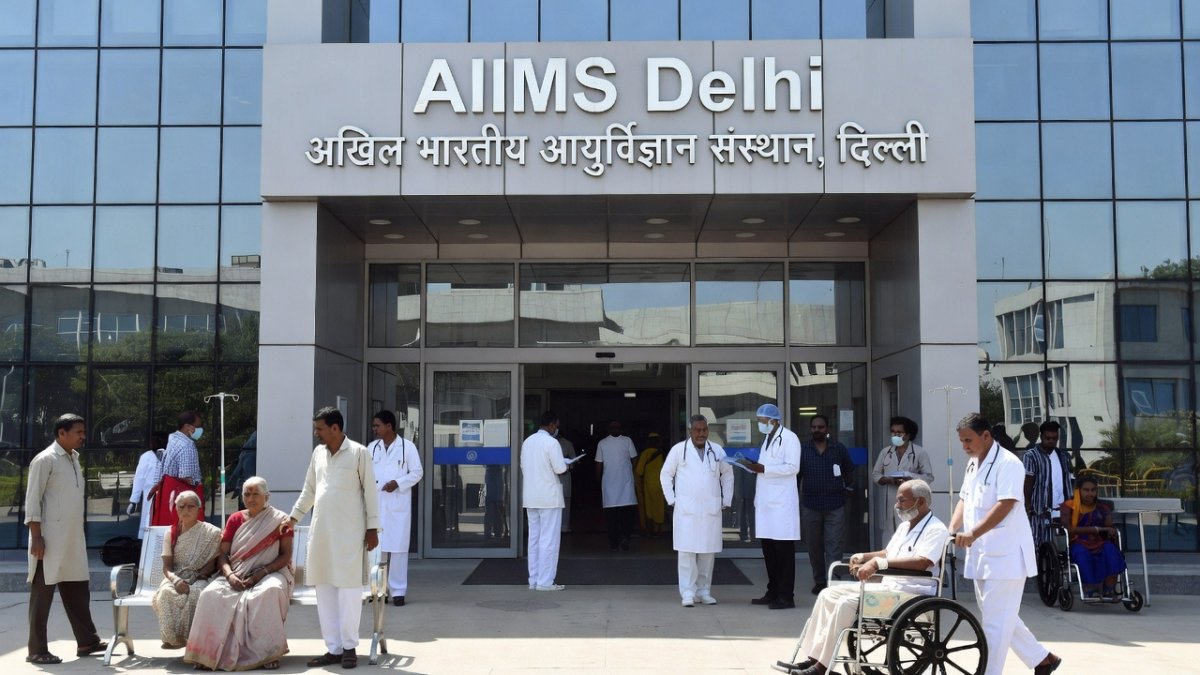
India's tobacco landscape reveals 21% of adults consume gutka or pan masala compared with 10% who smoke, with prevalence exceeding 35% in Uttar Pradesh and Bihar. This pattern drives disproportionate oral and oesophageal cancers. The 2023 PHFI analysis estimates annual healthcare and productivity losses at Rs 1.8 lakh crore. COTPA 2003 mandates warnings and bans, yet enforcement remains patchy—only 12 states achieved full compliance in 2022 audits. Kerala's strict gutka bans reduced usage 18% since 2016, while Rajasthan reports rising smokeless consumption among women. These state-level contrasts highlight how targeted regulation can alter trajectories when political will aligns with monitoring.
Registry Infrastructure: Closing Urban-Rural Data Divides
The National Cancer Registry Programme operates through the NCDIR network of 38 population-based and over 100 hospital-based registries. Urban hubs such as Mumbai and Chennai enjoy strong coverage, yet rural representation covers under 15% of districts. Kerala and Tamil Nadu achieve near-complete coverage above 90%, whereas Bihar and Odisha lag below 30%, producing systematic under-reporting estimated at 40-50%. The 2021 digital portal integration with Ayushman Bharat dashboards improved real-time data flows, though interoperability issues persist. In contrast, the US SEER programme covers 48% of its population with molecular subtyping; India's NCRP remains largely incidence-focused without routine survival or staging metrics, limiting precise policy targeting.
PM-JAY Coverage: Progress and Persistent Financial Toxicity
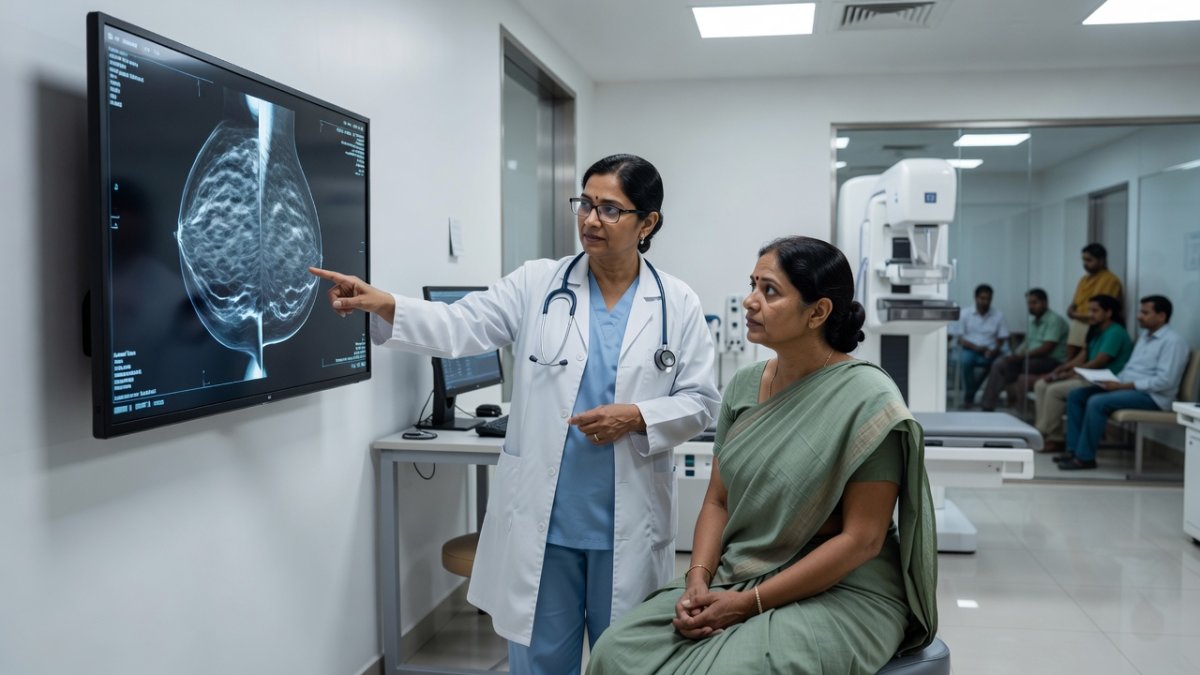
Since its 2018 launch, PM-JAY has covered cancer treatment for over 28 lakh beneficiaries, disbursing Rs 4,200 crore for oncology at empanelled centres including AIIMS. Nevertheless, out-of-pocket expenditure averages 62% of total costs according to 2023 NSS analysis. Average treatment for breast or colorectal cancer reaches Rs 8-12 lakh in private facilities, exceeding the Rs 5 lakh PM-JAY cap. Maharashtra's Jeevandayee Yojana has treated 1.4 lakh cancer patients since 2017 with supplementary top-ups, while Tamil Nadu's CMCHIS reports 85% coverage for radiation therapy. Without harmonised portability across schemes, interstate migrants face repeated denials, contributing to catastrophic health expenditure in 34% of cancer-affected households.
Women's Cancers: Late Presentation and Vaccination Gaps
Breast cancer incidence stands at 1.54 lakh new cases annually per ICMR-NCDIR 2022 data, with mortality rates 30% higher than global averages because 70% of women present at stage III or IV. Screening coverage remains under 5% of eligible women aged 30-69. Cervical cancer elimination targets require 90% HPV vaccination by 2030, yet national coverage sits at just 4%. Sikkim achieves 85% through school-based drives, while Uttar Pradesh remains below 1%. ASHA workers reached 2.3 crore women via NCD screening camps in 2023, but training gaps limit referral efficacy. India's HPV vaccination rate trails Australia's 80% uptake, underscoring the need for scaled school and community delivery models.
Policy Frameworks and Budgetary Priorities
The National Cancer Control Programme under the Ministry of Health coordinates prevention efforts, supported by Rs 300 crore allocated for cancer care in the 2026 Union Budget. HPV vaccination is recommended for girls aged 9-14, with AIIMS designated a Centre of Excellence. State-level schemes in Maharashtra, Tamil Nadu and Karnataka demonstrate supplementary pathways, yet fewer than one in three countries worldwide include comprehensive cancer care under universal health coverage. India's fragmented landscape requires stronger integration of registries, insurance portability and prevention campaigns to convert policy intent into measurable survival gains.
The Bottom Line
With global cases projected to reach 35 million by 2050 and India facing over 15 lakh annual cases by 2025, the data reveal that closing survival gaps demands simultaneous advances in tobacco enforcement, rural registry expansion, insurance portability and HPV vaccination scale-up. States demonstrating measurable progress—Kerala on gutka control, Sikkim on HPV coverage, Tamil Nadu on radiation access—offer replicable templates. Sustained analytical focus on these metrics will determine whether India's response narrows or widens the 45-percentage-point survival divide between high- and low-income settings.
— By Dr. Raj Patel, Staff Writer
This article was produced with AI-assisted research and editorial support. Reporting is based on sources cited in the article.
What's Your Reaction?
 Like
0
Like
0
 Dislike
0
Dislike
0
 Love
0
Love
0
 Funny
0
Funny
0
 Wow
0
Wow
0
 Sad
0
Sad
0
 Angry
0
Angry
0

India/South Asia Correspondent at Global1.News. Analytical voice with a background in science and health journalism. Based in New Delhi, covering Indian politics, education, healthcare, technology, and policy. Breaks down complex data into clear, actionable reporting.














Comments (0)