
Japan Bioplastics Adoption Grows Amid Naphtha Shock Crisis
Japan's bioplastics sector is expanding rapidly after the February 2026 naphtha shock from the Strait of Hormuz closure. Rice Resin Inc. saw 3-5x demand growth, Fukagawa city plans rice-based refuse bags, and FamilyMart doubled biomass content to 50%. With 46,741 firms at risk across 21 industries, the crisis is accelerating Japan's shift from petroleum-based to biomass feedstocks.
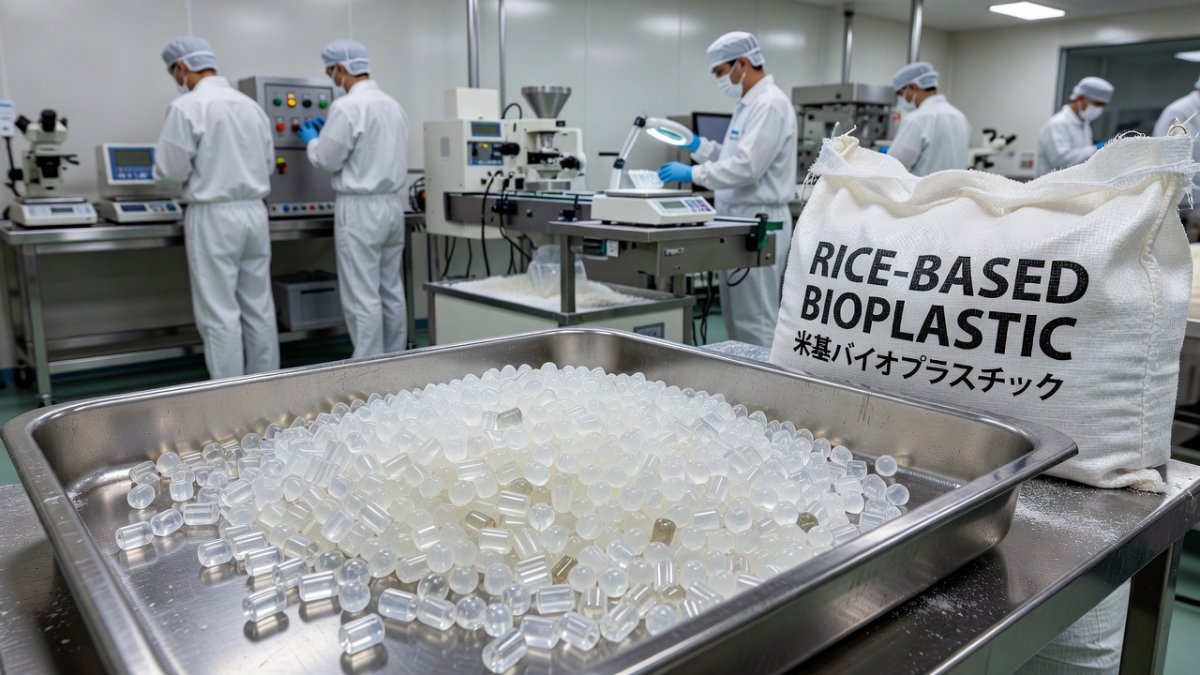
The Naphtha Shock Overview
The Strait of Hormuz effectively closed on February 28, 2026, cutting off a critical supply route for Japanese industry. Japan imports more than 60 percent of its naphtha, with approximately 70 percent sourced from the Middle East via that strait. Singapore naphtha spot prices broke USD 1,000 per metric ton on March 25, a 56 percent surge from USD 588 on February 27.
Domestic private naphtha inventory stood at roughly 20 days when the disruption began. Six of Japan's 12 ethylene units moved to reduced capacity. Chemical industry output fell 8.6 percent month-over-month and 15.1 percent year-over-year in March 2026. General-purpose synthetic resin transaction prices rose 30 percent during the same month.
Teikoku Databank estimates supply risks now affect 46,741 manufacturing firms across 21 industrial subcategories, including automotive, medical devices, agriculture, semiconductor materials, packaging, and construction. Alternative procurement routes are projected to cover about 60 percent of May needs and 70 percent of June 2026 requirements.
The Bioplastics Surge — Rice Resin Inc. and the 3-5x Demand Increase
Rice Resin Inc., based in Namie, Fukushima Prefecture, has recorded a three- to fivefold rise in consultation requests since the conflict began. The company produces approximately 500 tonnes of bioplastic annually using a blend containing up to 70 percent non-edible rice from old government stockpiles.
Previously, Rice Resin cost twice as much as petroleum-derived materials. Rising naphtha prices have narrowed that gap, improving economic viability. COO Shinji Okuda noted that the cost differential has narrowed significantly, making the material more competitive for industrial buyers seeking supply stability.
The shift reflects a broader move in corporate Japan from viewing biomass as a corporate social responsibility measure to treating it as a raw-material security option. Mitsui Chemicals has operated biomass naphtha-derived chemical production at its Osaka plant since December 2021 using mass-balance traceability, providing an established pathway now attracting renewed attention.
Municipal Adoption — Fukagawa Hokkaido Case Study
Fukagawa city in Hokkaido is preparing to introduce Rice Resin refuse bags on a trial basis. An April tender attracted no bidders because the original supplier could not secure raw materials. The rice-based alternative could enter use as early as November 2026.
A Fukagawa official stated that rice-based bags would allow the city to highlight its identity as a leading rice-producing area while addressing procurement difficulties. The trial represents one of the first municipal-level responses that directly links local agricultural resources to public-service resilience.
Similar experiments are under discussion in other rice-producing regions, illustrating how the naphtha shock is accelerating localized material strategies across Japan's prefectures.
Corporate Response — FamilyMart and Industry Adaptation
FamilyMart Co., Ltd. doubled the biomass content of its shopping bags to 50 percent in mid-June, primarily using sugar cane. The change is expected to improve raw-material procurement stability while containing costs amid volatile naphtha prices.
Major snack maker Calbee announced on May 12 that it would reduce the number of colors on packaging of 14 products to just two, citing the situation in the Middle East. Toto, Japan's leading home-fixtures manufacturer, temporarily suspended orders for prefabricated bathrooms in April due to shortages of naphtha-derived organic solvents.
Shin-Etsu Chemical announced price hikes for polyvinyl chloride, directly attributing the increases to sharp rises in ethylene costs. These moves demonstrate how downstream manufacturers are adjusting specifications and pricing to manage feedstock volatility.
Government Strategy and Alternative Feedstocks
The Japanese government continues to promote domestic biomass resources and reduced reliance on specific regions for raw materials and energy. Chemical recycling through pyrolysis oil from waste plastics could reach over 1.5 million tons per year of alternative naphtha supply capacity by 2026.
On May 12, Asahi Kasei, Mitsui Chemicals, and Mitsubishi Chemical agreed on a joint-venture equity ratio of 45/45/10 to consolidate ethylene operations in western Japan by fiscal 2030. The consolidation aims to improve efficiency while the industry evaluates biomass and recycled feedstocks.
These initiatives align with METI's long-standing emphasis on diversifying feedstock sources and strengthening domestic supply chains for critical materials.
Broader Economic Impact Across 21 Industries
The cascade of supply constraints has affected automotive parts, medical equipment, agricultural films, semiconductor packaging materials, food packaging, and construction components. Transaction prices for general-purpose resins rose 30 percent in March, squeezing margins for small and medium-sized manufacturers.
With 46,741 firms identified at risk, the disruption extends beyond the chemical sector into Japan's broader manufacturing base. Companies are accelerating qualification of alternative materials, including bioplastics and chemically recycled naphtha, to maintain production continuity.
What This Means for Japan's Long-Term Industrial Policy and Energy Security
The naphtha shock has accelerated the transition of bionaphtha and rice-based resins from niche CSR projects to strategic supply options. Japanese firms are now evaluating biomass content targets and chemical-recycling capacity as core elements of procurement planning.
Policy discussions within METI and related ministries increasingly focus on expanding domestic biomass utilization and regional feedstock networks. The Fukagawa trial and Rice Resin demand surge illustrate how local agricultural resources can support national supply security.
Over the medium term, the combination of ethylene consolidation, increased chemical recycling, and wider biomass adoption is expected to reduce Japan's exposure to single-route crude-oil dependencies while supporting corporate efforts to stabilize costs and maintain output across multiple industrial sectors.
Tags: Japan bioplastics, naphtha shock, Rice Resin Inc., Strait of Hormuz, FamilyMart, Fukagawa Hokkaido, Mitsui Chemicals, chemical recycling, METI policy
By Kenji Tanaka, Staff Writer
This article was produced with AI-assisted research and editorial support. Reporting is based on sources cited in the article.
What's Your Reaction?
 Like
0
Like
0
 Dislike
0
Dislike
0
 Love
0
Love
0
 Funny
0
Funny
0
 Wow
0
Wow
0
 Sad
0
Sad
0
 Angry
0
Angry
0

Japan Correspondent at Global1.News. Tokyo-based voice covering Japanese politics, technology, economy, and culture. Tracks the intersection of tradition and innovation in one of the world's most dynamic societies.














Comments (0)