
Japan's Rebuke Exposes Mumbai-Ahmedabad Rail Delays
Japan's public rebuke of Indian officials over stalled commitments has thrust the Mumbai-Ahmedabad High-Speed Rail corridor into the spotlight, exposing how diplomatic friction and execution shortfalls threaten to push India's flagship bullet-train project well beyond its revised 2035 horizon. Japan Accusation Exposes Mumbai-Ahmedabad Rail Delays New Delhi, India — The 508-kilometre Mumbai-Ahmedabad corridor, sanctioned at Rs 1.
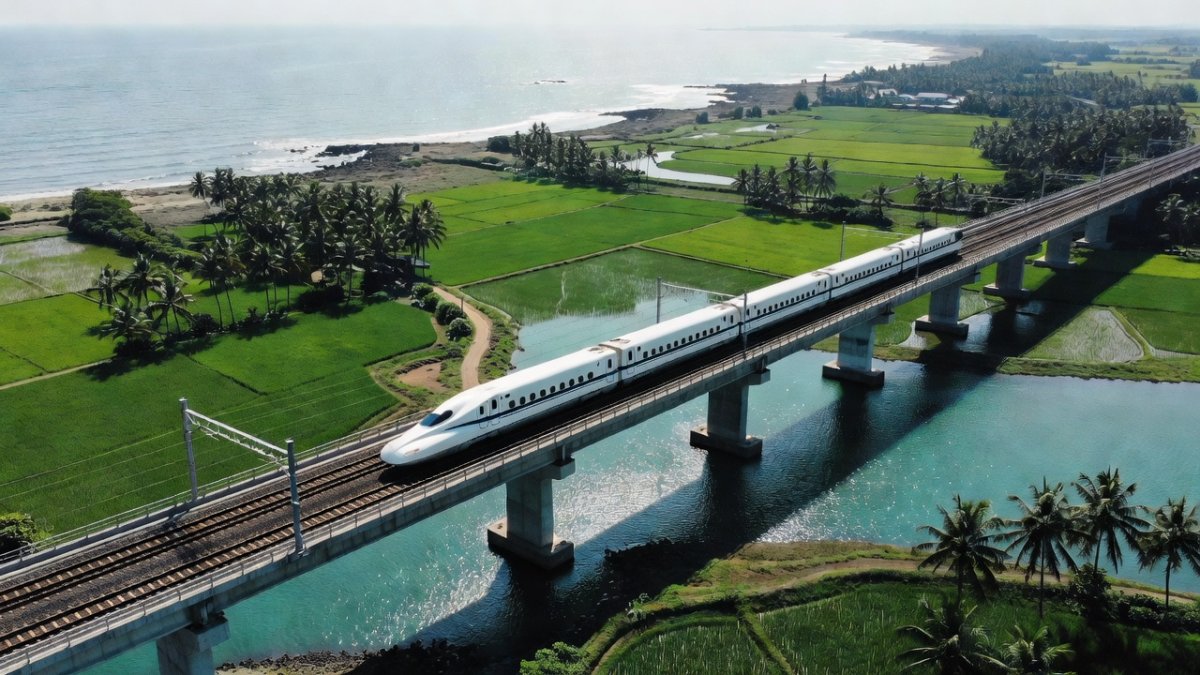
Japan's public rebuke of Indian officials over stalled commitments has thrust the Mumbai-Ahmedabad High-Speed Rail corridor into the spotlight, exposing how diplomatic friction and execution shortfalls threaten to push India's flagship bullet-train project well beyond its revised 2035 horizon.
Japan Accusation Exposes Mumbai-Ahmedabad Rail Delays
New Delhi, India — The 508-kilometre Mumbai-Ahmedabad corridor, sanctioned at Rs 1.08 lakh crore with a Rs 88,000 crore Japanese soft loan at 0.1 percent interest repayable over 50 years including a 15-year moratorium, now faces renewed scrutiny after former Japanese Justice Minister Hideki Makihara accused Indian negotiators of repeated failures to honour commitments. The line, designed for Shinkansen Series E5 and E6 rolling stock operating at 320 km/h, links Mumbai's Bandra-Kurla Complex with Ahmedabad's Sabarmati station and was once slated for partial operations by 2028. Successive revisions have shifted targets to 2035 or later, underscoring how land and technical bottlenecks continue to inflate costs and erode projected economic returns.
Project Scale and Financing Framework
The corridor's Rs 1.08 lakh crore outlay dwarfs typical Indian Railways annual capital expenditure, which averaged Rs 1.6 lakh crore between 2020-2024, and absorbs nearly 42 percent of the 2023-24 Union Budget's Rs 2.55 lakh crore rail allocation spread across 68,000 route kilometres. Global benchmarks place the project at approximately Rs 212 crore per kilometre, exceeding China's average of Rs 140-160 crore per kilometre for 350 km/h lines but remaining below California's Phase 1 costs of Rs 280 crore per kilometre. The concessional JICA financing reduces annual debt servicing by an estimated Rs 4,200 crore compared with market rates of 6.8-7.4 percent on state development loans, though it introduces yen-rupee fluctuation risks managed through RBI hedging.
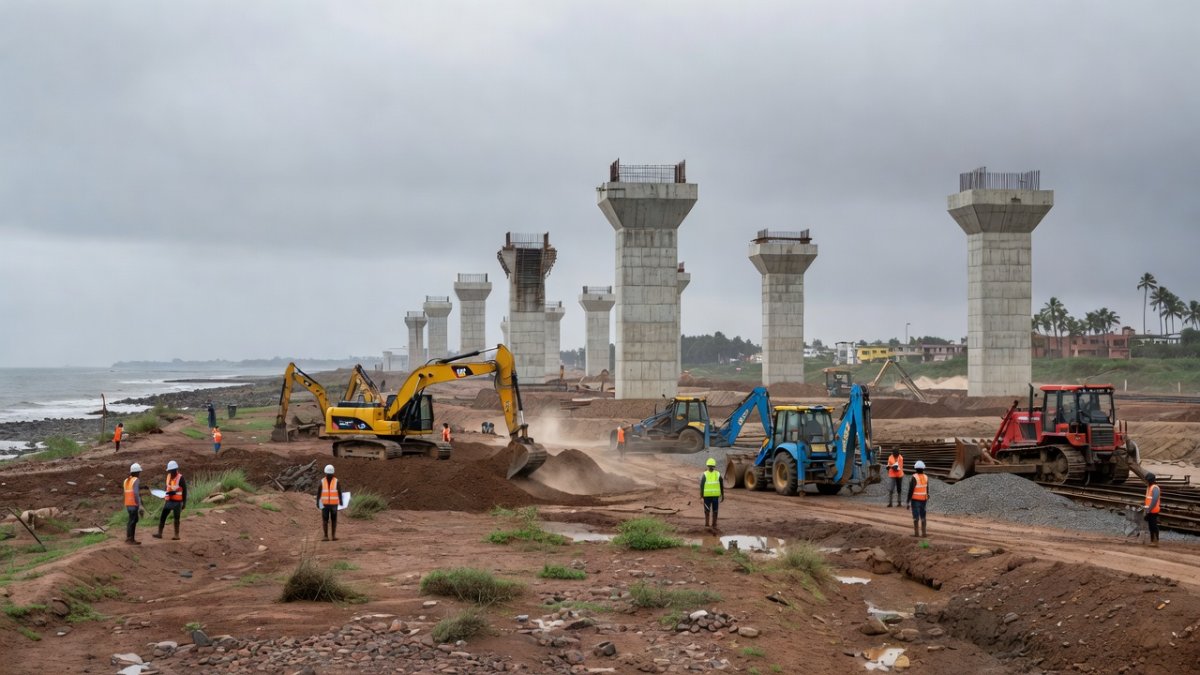
Shinkansen technology demands track tolerances of 2 mm alignment precision and distributed traction with active suspension, standards absent from the existing Western Dedicated Freight Corridor. Policy implications include greater dependence on bilateral ODA that could crowd out multilateral funding from the Asian Development Bank for competing semi-high-speed corridors such as Delhi-Varanasi.
Japanese Accusations Surface in July 2026
On 17 July 2026, former Japanese Justice Minister Hideki Makihara stated that Indian officials repeatedly failed to honour commitments and pursued self-interest during negotiations, citing stalled land handovers and shifting technical requirements as primary causes of delay. These remarks arrived amid ongoing joint reviews between the National High Speed Rail Corporation Limited and Japan International Cooperation Agency teams, amplifying concerns over execution shortfalls that have already extended timelines by more than a decade.
Makihara voiced his concerns on X in a July 2026 thread that quickly gained traction among policy circles in Tokyo. He wrote that Indian officials appeared driven by "self-interest" rather than the partnership spirit that had defined the project since 2015, pointing to repeated land-handover shortfalls and last-minute changes to signalling specifications. The post echoed earlier warnings contained in JICA's 2024 progress reviews, which had already flagged a 34-month cumulative delay and cost escalations exceeding 18 percent. Those internal assessments had remained largely private until Makihara's intervention.
By contrast, other flagship India-Japan ventures have encountered fewer public recriminations. The Dedicated Freight Corridor's western arm reached 92 percent completion by mid-2025 despite pandemic disruptions, while successive Delhi Metro phases were handed over within revised budgets. Northeast connectivity packages in Mizoram and Nagaland, financed through JICA loans totalling $1.8 billion, have maintained steady disbursement rates above 85 percent. Makihara's decision to air grievances publicly therefore signals a narrowing tolerance in Tokyo for further slippage, especially as New Delhi simultaneously courts Japanese capital for semiconductor parks and green-hydrogen corridors.
The comments have prompted fresh scrutiny of coordination mechanisms between the Centre and state governments, highlighting how pandemic-related supply disruptions and revised environmental clearances account for much of the slippage while exposing deeper governance challenges within the Ministry of Railways.
Ministry Rebuttal and Land Acquisition Progress
India's Ministry of External Affairs classified Makihara's statements as individual opinion at variance with facts and affirmed that bilateral cooperation continues under established protocols. Government records show 98 percent of land acquisition completed in Gujarat, while Maharashtra districts including Palghar and Thane stand at 72 percent. Officials maintain that external factors rather than systemic lapses explain the bulk of delays.
Within Maharashtra's coastal districts, fragmented holdings and litigation have concentrated challenges, with Gujarat alignments through agricultural zones near Anand and Kheda requiring additional 2024 compensation packages. These disparities illustrate uneven progress across the two states despite the project's strategic importance.
Domestic Political Fallout and Coalition Strains
Congress leader Pawan Khera cited the Japanese remarks to question Prime Minister Narendra Modi's oversight, arguing that repeated deadline extensions reflect coordination failures between the Centre and Maharashtra and Gujarat governments. The exchange has resurfaced debates over accountability within the Ministry of Railways and the role of state revenue departments in land acquisition.
Inside Maharashtra's Mahayuti coalition, Deputy Chief Minister Devendra Fadnavis has defended the land acquisition pace while Chief Minister Eknath Shinde's Shiv Sena faction faces pressure from Konkan-region MLAs concerned about coastal displacement ahead of the 2027 assembly elections. The opposition Maha Vikas Aghadi has framed delays as emblematic of NDA governance shortfalls, linking them to the seven-year slippage on the 1,337-kilometre Dedicated Freight Corridor's western arm and the deferral of Navi Mumbai International Airport from 2025 to 2027.
Land Acquisition Impacts on Affected Villages
Land acquisition in Palghar district has directly affected 2,847 families across 27 villages including Kelve, Dahanu Road and Boisar, according to Maharashtra Revenue Department 2022 gazette notifications. Compensation under the RFCTLARR Act, 2013, stands at four times market value, averaging Rs 1.8 crore per hectare for agricultural land plus Rs 12 lakh solatium per displaced household. The Palghar collectorate has completed only 68 percent of awards as of March 2024, prompting Bombay High Court petitions over valuation methodologies.
With 47 reserved Scheduled Tribe seats potentially influenced by Palghar and Thane land issues, the project's trajectory may recalibrate coalition arithmetic ahead of future elections. Analysts note that repeated deadline revisions risk eroding voter confidence in the National Infrastructure Pipeline's 2025 targets for 50 high-speed and semi-high-speed corridors.
Technical Hurdles, Fiscal Exposure and Bilateral Stakes
Technical adaptations for the 21-kilometre Thane Creek bridge and 8.5-kilometre tunnelling through the Sahyadri ranges in seismic zone III require peak ground acceleration design parameters of 0.16g, exceeding Indian Railways' standard 0.12g specifications. The National High Speed Rail Corporation has mandated base isolation bearings and ductile detailing compliant with IS 1893:2016, adding Rs 3,800 crore to civil costs, while environmental litigation has delayed forest clearances for 142 hectares in the Matheran Eco-Sensitive Zone.
Indian taxpayers shoulder the rupee-denominated portion estimated at Rs 20,000 crore beyond the Japanese loan, with delays inflating interest during construction and raising opportunity costs for suburban rail upgrades in the Mumbai Metropolitan Region. The corridor remains a cornerstone of India-Japan strategic cooperation alongside Northeast initiatives, yet persistent shortfalls risk eroding confidence among other potential lenders and technology partners while leaving western-state citizens reliant on congested highways and conventional rail services operating at 60-80 percent capacity utilisation.
The bullet-train impasse also tests the wider strategic partnership. Ongoing collaboration includes smart-city pilots in Varanasi and Ahmedabad, plus the still-nascent Asia-Africa Growth Corridor framework. Yet prolonged uncertainty over the 508-kilometre high-speed line risks dampening Japanese appetite for additional large-ticket rail projects, such as the proposed Delhi-Varanasi corridor. Unlike China's Belt and Road engagements in Pakistan and Sri Lanka — where debt sustainability concerns have already prompted project downsizing — Japan's model emphasises concessional finance and technology transfer. Persistent delays could therefore nudge Tokyo toward smaller, quicker-return investments, complicating India's Act East Policy objectives that rely on Japanese participation to balance Chinese influence in the Bay of Bengal and Southeast Asian connectivity corridors.
— By Dr. Raj Patel, Staff WriterThis article was produced with AI-assisted research and editorial support. Reporting is based on sources cited in the article.
What's Your Reaction?
 Like
0
Like
0
 Dislike
0
Dislike
0
 Love
0
Love
0
 Funny
0
Funny
0
 Wow
0
Wow
0
 Sad
0
Sad
0
 Angry
0
Angry
0

India/South Asia Correspondent at Global1.News. Analytical voice with a background in science and health journalism. Based in New Delhi, covering Indian politics, education, healthcare, technology, and policy. Breaks down complex data into clear, actionable reporting.













Comments (0)