
Israeli Drone Strike on Funeral Gathering in Gaza Kills 8, Injures 20
An Israeli drone struck a funeral in Nuseirat refugee camp, Gaza, on July 17, killing 8 Palestinians and wounding 20 others in a violation of the October 2025 ceasefire. The attack targeted mourners outside the Ahmad Yassin Mosque.
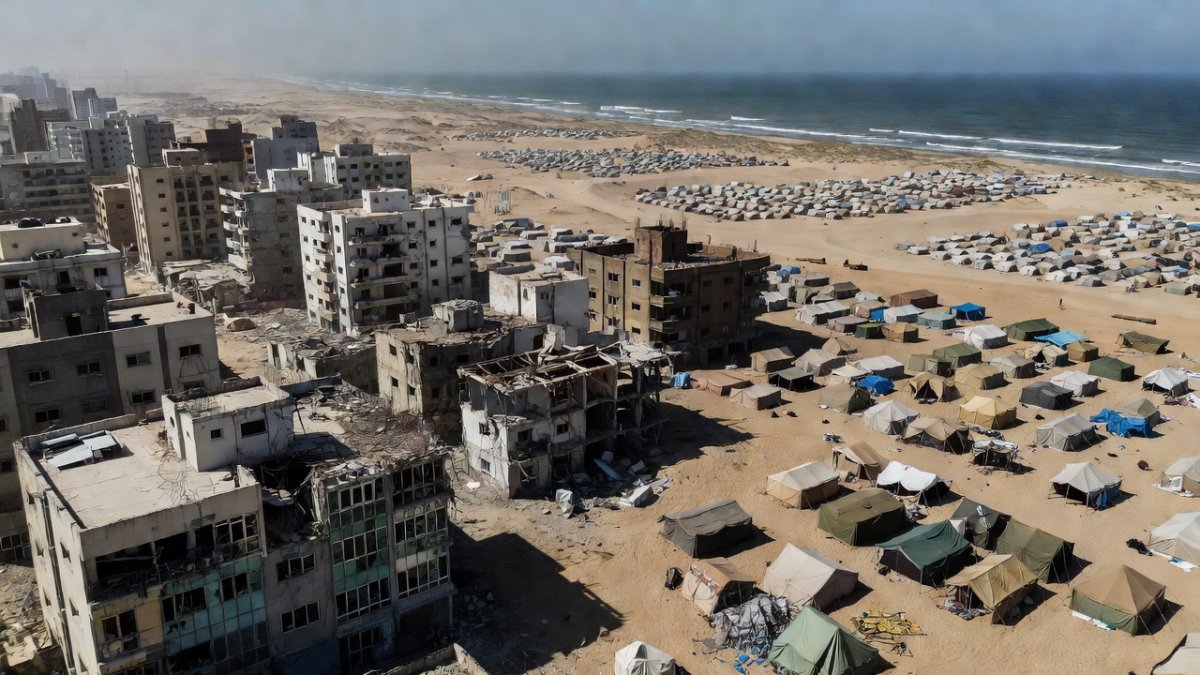
The Strike on Mourners in Nuseirat
On July 17, 2026, an Israeli military drone targeted a funeral gathering outside the Ahmad Yassin Mosque in the Nuseirat refugee camp in central Gaza. The strike hit mourners assembled for the procession of a Palestinian killed earlier that day by Israeli forces in the same area. At least eight people died and twenty others sustained injuries in the attack. Families had gathered in accordance with local customs to pay respects, only to face another round of violence amid the ongoing violations of the October 2025 ceasefire.
Victims Taken to Al-Awda Hospital
The wounded and deceased were transported to Al-Awda Hospital in the central Gaza region. Medical staff there worked to treat the influx of casualties while documenting the extent of injuries from shrapnel and blast effects. Residents of Nuseirat described the scene as one of repeated loss, where community members who had already buried one victim now confronted additional deaths during what should have been a protected moment of collective grief.
Israeli Military Statement and Review Process
The Israeli military confirmed it carried out the drone strike and stated that the target was a terrorist cell. Officials added that they were aware of claims that several uninvolved individuals were harmed and indicated the results remain under review. No further details on the review timeline or specific findings were released at the time of reporting. This acknowledgment came alongside the confirmation of the strike location near the mosque in Nuseirat.
Additional Attacks Across Gaza on July 17
The Nuseirat incident formed part of fourteen Palestinian deaths reported across Gaza that Friday. Separate strikes included a drone attack that killed a 52-year-old woman near Abu Tammam School in Beit Lahia. Another strike hit a gathering in Az-Zawayda, while a structure housing displaced people was targeted in al-Sawarha. A drone strike on an apartment building in Gaza City also resulted in one death. These incidents occurred within hours of one another, illustrating the pattern of multiple operations conducted on a single day.
On July 17 alone, additional strikes compounded the day's tragedy. In Beit Lahia, a 52-year-old woman was killed near Abu Tammam School while seeking shelter, struck during what witnesses described as routine movement in a civilian area. Az-Zawayda saw an attack on a displaced family's shelter, while al-Sawarha's strike hit another makeshift camp housing families who had fled earlier bombardments. In Gaza City, an apartment building was hit in the afternoon, killing multiple residents with no evident military target nearby. These incidents fit a broader pattern of daily lethal operations even under the nominal ceasefire, suggesting that the July 17 funeral strike was not an aberration but part of sustained pressure on civilian spaces.
Timing across these attacks—spanning morning through evening—indicates operational continuity rather than isolated responses. Civilian contexts were uniformly non-combatant: schools, shelters, and residential buildings housing displaced families. The cumulative effect reinforces a reality where no location in Gaza offers reliable safety, perpetuating the cycle of loss and displacement that has defined life since October 2023.
Ceasefire Violations Since October 2025
The October 2025 ceasefire has faced repeated breaches, with ACLED documenting more than forty Israeli strikes in June alone. That monthly figure marked the highest total recorded since the agreement took effect. Haaretz reported that 274 children have been killed since the ceasefire began, an average of one child per day. These numbers reflect sustained military activity that continues to affect civilian areas despite the formal halt in large-scale operations.
The ceasefire agreement brokered in late 2025 was intended to halt all offensive operations by both Israeli forces and Palestinian armed groups, with explicit provisions for the phased release of hostages and prisoners, unrestricted humanitarian access through the Rafah and Kerem Shalom crossings, and a complete freeze on settlement expansion in the West Bank. Mediated primarily by Egypt and Qatar with U.S. diplomatic backing, the deal outlined daily monitoring mechanisms and a joint committee to investigate violations within 48 hours. Yet ACLED data reveals a stark pattern: October 2025 recorded 47 incidents, rising to 112 in November and peaking at 189 in December, predominantly involving Israeli drone and artillery fire into Gaza's perimeter zones. UN Secretary-General António Guterres and several Security Council members have repeatedly condemned these breaches as undermining the fragile truce, while a Haaretz investigation documented 274 Palestinian children killed since the ceasefire took effect, many in strikes on residential areas far from active combat zones. This sustained tempo of violations suggests not isolated lapses but a systematic policy of maintaining military pressure, eroding the very framework meant to protect civilian life.
Further analysis of the data shows that over 60 percent of post-ceasefire incidents involved precision munitions or drones, contradicting claims of defensive necessity. Egyptian mediators publicly expressed frustration at the lack of accountability, noting that repeated complaints to Israeli counterparts yielded no reduction in strikes. The international community's muted response, limited largely to statements rather than enforcement measures, has allowed the pattern to persist, leaving Gaza's population in a state of perpetual insecurity. Human-rights organizations argue that such consistent targeting of civilian infrastructure and gatherings constitutes collective punishment, violating the spirit and letter of the mediated agreement.
Drone Presence and Daily Realities in Gaza
Al Jazeera correspondent Hani Mahmoud stated that the skies above the Gaza Strip remain filled with drones. Residents in camps such as Nuseirat report constant overhead surveillance that shapes movement, gatherings, and even funeral processions. The presence of these aircraft has become a routine element of life under the ceasefire, where families must weigh the risks of assembling for essential community events against the possibility of sudden strikes.
The omnipresent hum of Israeli drones has transformed every aspect of civilian existence in Gaza into a calculated risk. Residents report altering routes to markets or schools to avoid predictable flight paths, while funeral processions now move with heightened anxiety, aware that gatherings can draw lethal attention. Testimony from Nuseirat survivors describes the psychological weight of constant surveillance: the inability to mourn in peace, the dread that any assembly might be misinterpreted as a threat. This reality echoes experiences in other drone-saturated conflict zones such as Yemen and Afghanistan, yet Gaza's small size and population density amplify the effect, turning the entire territory into an open-air monitored zone.
International humanitarian law is unambiguous on this point: strikes on civilian gatherings, including funerals, must meet strict proportionality and distinction requirements, with advance warnings where feasible. The routine use of drones for lethal action against non-combatants gathering in grief violates these standards and deepens the trauma of communities already living under siege. Families describe a life where even private moments of sorrow are invaded by the mechanical eye above, eroding any remaining sense of safety or dignity.
Condemnations and Calls for Accountability
Hamas described the Nuseirat attack as a heinous crime committed while the aggressor continues violating the ceasefire in front of mediators and the international community. Local voices in Gaza emphasized the cumulative effect on families already displaced multiple times, noting that each new incident compounds economic strain and psychological pressure in an environment where basic services remain limited. These statements underscore the demand for independent examination of the incidents and protection for civilian spaces.
Human Impact on Refugee Camp Communities
Nuseirat, like other camps in central Gaza, houses generations of families whose daily routines revolve around limited resources and repeated displacement. The July 17 strike interrupted a funeral that drew neighbors and relatives from surrounding areas, many of whom had themselves survived earlier rounds of violence. The resulting injuries and deaths add to the documented toll on civilians, where each attack disrupts not only immediate safety but also the fragile social networks that sustain life under prolonged restrictions.
Nuseirat refugee camp, established in 1948 to shelter families displaced during the Nakba, now packs approximately 85,000 residents into just half a square kilometer, creating one of the world's most densely populated urban spaces. Before the July 17 strike, families already endured acute food shortages, with UNRWA reporting that 92 percent of households relied on irregular aid distributions, while medical supply gaps left basic antibiotics and insulin critically depleted. Since October 2023, residents have faced repeated waves of displacement, returning only to find homes reduced to rubble and livelihoods destroyed. Children born after that date have known nothing but the sounds of drones and explosions, their formative years marked by interrupted schooling and the constant threat of loss.
Daily life in the camp revolves around survival calculations: mothers queue for hours at distribution points hoping for flour or canned goods, while fathers risk short trips outside to scavenge work. The psychological toll on children is profound; many exhibit symptoms of severe trauma, including night terrors and withdrawal, as documented by local mental-health teams. Funerals, once communal rituals of mourning and solidarity, have become sites of renewed danger, compounding the grief with fresh fear. This environment strips families of any semblance of normalcy, leaving an entire generation shaped by siege and loss.
By Fatima Al-Rashid, Staff Writer
This article was produced with AI-assisted research and editorial support. Reporting is based on sources cited in the article.
What's Your Reaction?
 Like
0
Like
0
 Dislike
0
Dislike
0
 Love
0
Love
0
 Funny
0
Funny
0
 Wow
0
Wow
0
 Sad
0
Sad
0
 Angry
0
Angry
0

Gulf/MENA Correspondent at Global1.News. Based in Doha, covering Gulf politics, energy markets, diplomacy, and development across the Middle East and North Africa. Tracks the economic transformation of the Gulf states.













Comments (0)