
<p>Recent reports of oil spills in the Gulf of Paria have once again highlighted the delicate balance between energy production and environmental protection shared by Trinidad and Tobago and Venezuela. What began as a minor incident has escalated into diplomatic exchanges, raising questions about cross-border cooperation in these vital waters. As communities on both sides depend on the gulf for their livelihoods, the need for swift and transparent action has never been clearer.</p>
Recent reports of oil spills in the Gulf of Paria have once again highlighted the delicate balance between energy production and environmental protection shared by Trinidad and Tobago and Venezuela. What began as a minor incident has escalated into diplomatic exchanges, raising questions about cross-border cooperation in these vital waters. As communities on both sides depend on the gulf for their livelihoods, the need for swift and transparent action has never been cleare...
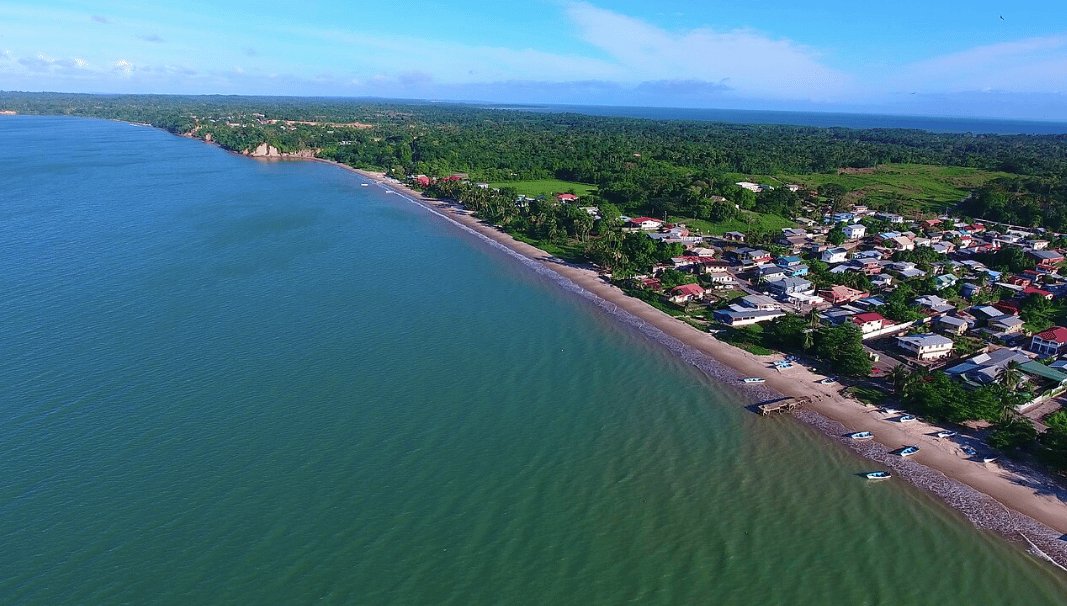
Recent reports of oil spills in the Gulf of Paria have once again highlighted the delicate balance between energy production and environmental protection shared by Trinidad and Tobago and Venezuela. What began as a minor incident has escalated into diplomatic exchanges, raising questions about cross-border cooperation in these vital waters. As communities on both sides depend on the gulf for their livelihoods, the need for swift and transparent action has never been clearer.
The Spark in Shared Waters
The Gulf of Paria has long been more than a stretch of sea between Trinidad and Tobago and Venezuela. For generations it has fed fishing families on both sides and supported the energy industries that keep our economies afloat. Now a reported oil spill from May 1 2026 has stirred fresh unease across these waters that we share.
Trinidad and Tobago’s Ministry of Energy and Energy Industries confirmed that state-owned Heritage Petroleum detected the incident at the Main Soldado offshore field. Officials described it as a contained release of roughly 10 barrels that was addressed the same day with chemical dispersants deployed six to eight nautical miles from the maritime border.
Trinidad’s Containment Efforts
Trinidadian authorities moved quickly once the leak was spotted. Heritage Petroleum, as the state-owned operator of the Main Soldado field since its restructuring in 2018, has maintained a fleet of 120 offshore platforms across the Gulf of Paria, drawing on decades of production that began in the 1950s under earlier Shell concessions. The field itself has yielded over 400 million barrels historically, yet its ageing infrastructure has prompted annual safety audits by the Ministry of Energy and Energy Industries that recorded just three minor releases between 2020 and 2025, each under five barrels. Visual checks and drone surveys followed the use of dispersants and showed no visible hydrocarbons left on the surface. The source was repaired and returned to service by May 2. Energy Minister Roodal Moonilal emphasised that trajectory modelling had indicated the spill could have crossed into Venezuelan waters if left untreated.
Trinidadian crews deployed chemical dispersants within four hours of detection, a protocol refined after the 2014 Point Fortin incident that saw 28 barrels reach local mangroves before containment. Regional comparisons further highlight the measured pace here. Neighbouring Guyana reported a 2023 ExxonMobil-linked release of 15 barrels that required two days for full assessment, while Suriname’s offshore operators have faced criticism for slower drone integration. Trinidad’s use of real-time satellite feeds from the University of the West Indies Seismic Research Centre allowed trajectory models to predict Venezuelan drift within six nautical miles, prompting immediate notification to CARICOM energy desks. The ministry also signalled willingness to build a structured framework with Venezuelan counterparts for handling future cross-border incidents. This measured approach reflects the reality that both nations rely on the same body of water for oil and gas production while depending on it for food security through fisheries. Such steps reflect a broader industry shift toward shared monitoring since the 1990s maritime delimitation talks, where both nations agreed to joint environmental baselines that now underpin daily operations for 8,500 energy workers across the Gulf.
Venezuela Raises the Alarm
Caracas took a different view. Venezuela’s government stated that the hydrocarbon spill had reached coastal areas in Sucre and Delta Amacuro states as well as the Gulf of Paria itself. Venezuelan Foreign Minister Yvan Gil issued a formal note verbale on 3 May 2026 demanding full incident logs, independent third-party verification by UN Environment Programme experts, and an initial compensation package estimated at US$12 million for affected coastal communities in Sucre and Delta Amacuro. The timeline shows Caracas first raised concerns through its embassy in Port of Spain on 2 May, followed by a 48-hour window in which Venezuelan navy patrols collected water samples showing elevated hydrocarbon levels at 0.8 milligrams per litre. Foreign Minister Yvan Gil instructed his ministry to seek detailed information and compensation while invoking international environmental obligations.
Venezuelan reports spoke of impacts across 647 square miles affecting four national parks, 12 wetland systems and around 140 marine species. They also highlighted concerns for roughly 500 artisanal fishermen whose livelihoods could be disrupted. Diplomatic exchanges intensified when Trinidad’s High Commissioner met Gil on 5 May, yet Caracas rejected the offered joint technical team, insisting instead on direct access to Heritage Petroleum’s internal maintenance records dating back to 2023. Port of Spain has strongly disputed the scale of these claims describing the event as minor and quickly contained. Possible legal avenues include referral to the International Tribunal for the Law of the Sea under the 1982 UN Convention, where Venezuela could argue breach of Article 194 obligations on pollution prevention, or invocation of the 1990 Caracas Declaration on Caribbean environmental cooperation. Historical precedent exists in the 2008 maritime boundary arbitration between Barbados and Trinidad, which established binding consultation mechanisms still cited in current talks. These moves carry regional weight, as any precedent could influence future claims by Guyana or Suriname over shared basins, while straining the fragile trust built through 2024 energy dialogues that had eased earlier sanctions-related tensions.
A Second Incident Heightens Tensions
Matters grew more serious when Venezuela reported a second larger spill on June 12 2026 detected through satellite imagery. Satellite imagery captured by the European Space Agency’s Sentinel-2 on 12 June 2026 revealed a slick measuring 18 square kilometres, roughly four times the May release, with spectral analysis indicating heavier crude consistent with Soldado-grade oil rather than the lighter condensate first reported. Foreign Minister Yvan Gil again called for reparations and warned of possible international legal steps. Trinidad and Tobago responded by launching a joint operation involving the Air Guard, Coast Guard and drone surveillance to investigate any further activity in its waters.
Trinidad’s subsequent Air Guard and Coast Guard sweep, launched within 18 hours, deployed three vessels and two drones across a 25-nautical-mile corridor, confirming no active leakage from its platforms yet noting possible subsurface seepage from legacy wells abandoned in the 1970s. The investigation’s preliminary report, released 15 June, attributed the larger scale to wind-driven dispersion patterns absent in the earlier event, underscoring how seasonal currents can amplify even modest releases. Both reported incidents are said to have originated from Trinidadian waters according to Venezuelan statements. The sequence has placed additional pressure on already delicate relations between the two neighbours who must manage a shared maritime boundary in an ecologically sensitive zone. These developments have chilled recent warming in bilateral ties that followed the 2023 resumption of direct flights between Port of Spain and Caracas. Venezuelan statements now reference possible suspension of joint fisheries patrols agreed in 2021, while Trinidadian officials have quietly sought CARICOM facilitation to avoid escalation. The episodes expose the Gulf’s vulnerability as a 7,800-square-kilometre shared basin supporting 22,000 artisanal fishers regionally, where unresolved boundary frictions dating to the 1942 Gulf of Paria Treaty continue to complicate coordinated environmental governance.
Effects on Local Livelihoods
Fishing communities on the Trinidad side of the Gulf of Paria understand the stakes all too well. Rising costs of living and inflation have already squeezed household budgets across the Caribbean. Any threat to marine ecosystems adds another layer of worry for families who depend on the sea for daily income and food.
Mangroves and wetlands serve as nurseries for fish and natural buffers against storms. Damage here would not only affect today’s catch but could reduce future stocks for years. Small island developing states like ours already face climate change pressures that make protecting these habitats even more urgent.
Energy Ties and Regional Diplomacy
The Gulf remains vital for energy cooperation. The bp Loran gas development, valued at US$3.2 billion and targeting 2.5 trillion cubic feet of Venezuelan reserves, hinges on Trinidadian liquefaction infrastructure at Point Fortin that processed 18 million tonnes of LNG in 2025. This interdependence makes the Gulf of Paria’s 1.8 billion barrels of proven oil equivalent critical to both economies, with Trinidad deriving 38 percent of its export revenue from cross-border monetisation schemes. Trinidad and Tobago continues to explore ways to monetise Venezuelan gas resources including through projects such as the bp Loran deal. At the same time both countries must balance production with environmental safeguards if they are to maintain trust with fishing communities and regional partners in CARICOM.
CARICOM’s 2024 mediation framework, modelled on its successful role in the Barbados-Guyana fisheries accord, could provide neutral observers for spill protocols, yet member states like Jamaica have already signalled reluctance to endorse any mechanism that might draw them into Venezuelan sanctions disputes. At stake lies not only immediate revenue but long-term energy security for 1.4 million Trinidadian households and Venezuelan communities reliant on Gulf fisheries worth US$240 million annually. Failure to establish binding incident-response pacts risks derailing the 2025 cross-border pipeline feasibility study, while successful cooperation might set standards for other Caribbean basins facing similar climate and production pressures. Minister Moonilal’s call for a joint incident-management framework offers a practical starting point. Such cooperation could help prevent minor leaks from becoming larger diplomatic disputes while protecting the marine environment that supports both economies. Minister Moonilal’s framework proposal thus represents a pragmatic bridge between commercial imperatives and the community livelihoods that have sustained both shores for generations.
Looking Ahead in the Gulf of Paria
The recent events remind us that the waters between Trinidad and Venezuela do not respect political borders. What happens on one side can quickly reach the other affecting mangroves, fisheries and the families who rely on them. Clear communication and shared monitoring will be essential as both nations continue to develop their energy sectors.
Trinidad and Tobago has expressed readiness to work with Venezuela on future incidents. Whether that leads to concrete agreements remains to be seen but the people of both countries share an interest in keeping the Gulf of Paria healthy for generations to come.
By Sharon Sahatoo, Staff WriterThis article was produced with AI-assisted research and editorial support. Reporting is based on sources cited in the article.
What's Your Reaction?
 Like
0
Like
0
 Dislike
0
Dislike
0
 Love
0
Love
0
 Funny
0
Funny
0
 Wow
0
Wow
0
 Sad
0
Sad
0
 Angry
0
Angry
0

Caribbean Correspondent at Global1.News. Based in Port of Spain, Trinidad, covering Caribbean politics, economy, energy, climate, and culture. Amplifying the voices and stories of the Caribbean region.










Comments (0)