
UNESCO Demands Japan Fully Address Forced Labor History at Sado Island Gold Mines
UNESCO has found Japan's efforts to address the history of forced Korean labor at the Sado mines insufficient. The 48th World Heritage Committee session, opening in Busan on July 19, will decide whether additional corrective measures are required. This upcoming review places renewed international attention on how the site's wartime record is presented.
UNESCO has found Japan's efforts to address the history of forced Korean labor at the Sado mines insufficient. The 48th World Heritage Committee session, opening in Busan on July 19, will decide whether additional corrective measures are required. This upcoming review places renewed international attention on how the site's wartime record is presented.
UNESCO Demands Japan Fully Address Forced Labor History at Sado Island Gold Mines
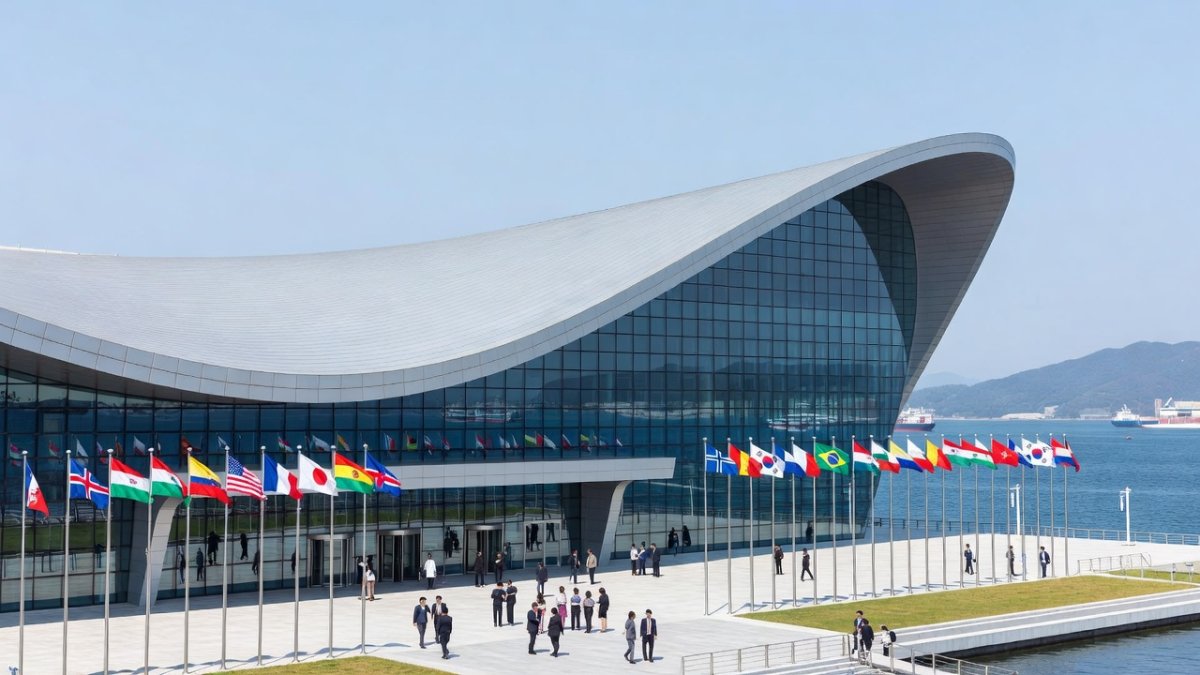
Busan, South Korea – July 17, 2026 — The UNESCO World Heritage Committee released a draft decision on July 15, 2026, that finds Japan's measures to reflect the whole history of the Sado Island Gold Mines remain insufficient despite some progress. The decision recommends that Japan hold close consultation with the States Parties concerned, a reference that points directly to South Korea. This development occurs as the 48th World Heritage Committee session prepares to convene in Busan from July 19 to 29, 2026, marking the first time Korea has hosted the committee since joining the World Heritage Convention in 1988.
Scholarly examination of UNESCO procedures shows that such draft decisions function as formal assessments of compliance rather than final sanctions. The language employed underscores ongoing monitoring rather than immediate punitive action, consistent with the organization's preference for iterative reporting over abrupt removal of status.
Within the framework of historical institutionalism, the draft decision illustrates how UNESCO procedures have evolved since the 1965 Japan–South Korea normalization treaty, which prioritized economic cooperation over unresolved colonial grievances. Subsequent comfort women agreements in the 1990s and 2015 demonstrated similar patterns of deferred reckoning, yet the 2023–2024 diplomatic thaw under Presidents Yoon Suk Yeol and Prime Minister Kishida has created limited space for heritage-related dialogue without reopening compensation claims.
From the standpoint of regional geopolitics, persistent memory disputes over sites such as the Sado mines complicate trilateral coordination among Seoul, Tokyo, and Washington. Divergent interpretations of wartime labor hinder joint contingency planning for North Korean provocations and coordinated economic measures targeting Chinese technological competition, underscoring how mnemonic security concerns can constrain alliance cohesion even amid shared strategic interests.
Conditional Inscription and Its Historical Framing
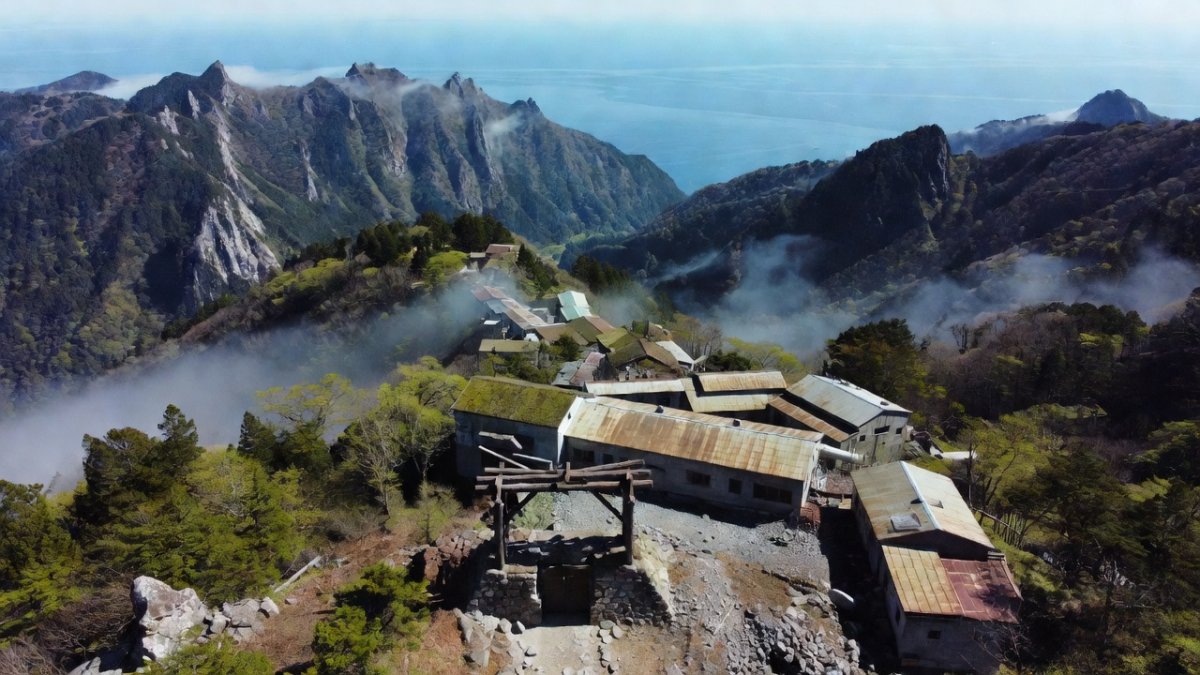
The Sado Island Gold Mines in Niigata Prefecture received inscription as a UNESCO World Heritage site in July 2024 during the 46th World Heritage Committee session. That listing was granted on the condition that Japan develop a strategy to present the site's whole history across all periods. UNESCO's official justification centers on the location as an outstanding example of manual mining and smelting technology from the 17th to 19th centuries, explicitly excluding emphasis on the wartime period.
Academic analysis of World Heritage criteria reveals that the 17th-19th century technological focus was selected to align with established Outstanding Universal Value standards. This selective framing creates tension when later historical layers, including the period of Japanese colonial rule from 1910 to 1945, enter the interpretive requirements.
Heritage diplomacy surrounding the Sado inscription echoes earlier controversies at Gunkanjima, where Japan's emphasis on industrial heritage similarly marginalized Korean forced labor narratives. Both cases reveal how selective chronological framing—privileging pre-1945 technological achievements—serves domestic mnemonic security while inviting international scrutiny during periodic reporting cycles.
Comparative analysis further shows that these interpretive choices reflect institutional path dependencies established during Japan's 2015 World Heritage campaign, when promises of balanced representation were made but only partially implemented. The resulting tension affects reconciliation processes by sustaining Korean perceptions that heritage listings function as instruments of national branding rather than platforms for inclusive historical acknowledgment.
Documented Forced Mobilization of Korean Laborers
More than 1,500 Koreans were forced to work at the Sado mines under harsh conditions between 1939 and the end of World War II, according to a 2022 joint report by the Korean Center for Historical Truth and Justice and the Northeast Asian History Foundation. The Sado mine complex itself operated for nearly 400 years before closing in 1989, providing a long chronological span that the current interpretation strategy must address.
From the perspective of Korean foreign policy, insistence on comprehensive representation of this forced mobilization forms part of a broader effort to secure acknowledgment of colonial-era labor practices within international heritage frameworks. Such positioning influences bilateral dialogue and shapes regional memory politics without direct linkage to inter-Korean security matters.
Placing the Sado mobilization within broader Korea–Japan relations highlights continuities with the 1965 treaty's silence on individual victim redress, a pattern later replicated in comfort women negotiations. The 2023–2024 bilateral thaw has enabled working-level talks on heritage interpretation, yet core disagreements over terminology persist, illustrating the limits of diplomatic pragmatism when historical institutional legacies remain unaddressed.
Academic perspectives on mnemonic security suggest that South Korea's insistence on explicit recognition of forced labor at Sado functions as a defensive strategy against perceived Japanese efforts to sanitize colonial history. This stance parallels Korean objections at Gunkanjima and influences how both governments calibrate public messaging during trilateral security consultations involving the United States.
Japan's State of Conservation Report and Subsequent Measures
Japan submitted its State of Conservation report in December 2025. In response, the July 15, 2026 draft decision determined that the steps taken remain insufficient. Japan has added signposts on Sado Island directing visitors to former Korean laborer dormitories and communal kitchens and has established an exhibition corner. None of Japan's official documents or signage employ the term forced labor, instead referring to workers from the Korean Peninsula.
Comparative heritage studies indicate that terminological choices in site interpretation carry significant weight in reconciliation processes. The absence of explicit terminology limits the extent to which the interpretive materials convey the documented conditions of mobilization, thereby sustaining the committee's assessment of insufficiency.
Japan's avoidance of the term "forced labor" in Sado signage mirrors its approach at Gunkanjima, where similar linguistic restraint drew UNESCO criticism and Korean protests. Such terminological decisions reflect entrenched historical institutionalism within Japan's heritage bureaucracy, prioritizing domestic political sensitivities over fuller engagement with reconciliation processes.
Regional geopolitical implications emerge when these interpretive disputes spill into trilateral forums. Divergent readings of wartime labor complicate coordinated messaging on North Korean human rights and supply-chain resilience vis-à-vis China, demonstrating how unresolved heritage issues can erode the trust required for sustained alliance coordination under the Yoon–Kishida framework.
South Korea's Diplomatic Response and Memorial Practices
South Korea's foreign ministry welcomed the draft decision, stating that it reflects the consistent position that Japan's implementation of the committee's recommendations remains insufficient. A ministry official further noted that Japan must faithfully and sincerely implement both the World Heritage Committee's decision and its own promise. Korea has boycotted Japan's memorial ceremony at the Sado mines for two consecutive years in 2025 and 2026, citing inadequate reflection of forced labor history, while holding separate memorial services for Korean forced laborers.
These actions illustrate Korea's use of both multilateral UNESCO channels and bilateral signaling to advance historical accountability. The pattern demonstrates how heritage governance intersects with foreign policy instruments aimed at regional historical clarity.
South Korea's advocacy at the Busan session builds on precedents set during Gunkanjima deliberations, employing heritage diplomacy to link colonial labor recognition with broader reconciliation objectives. The 2023–2024 diplomatic thaw has facilitated quiet bilateral consultations, yet Korean civil society continues to press for explicit acknowledgment that aligns with standards established after the 1965 treaty and subsequent comfort women arrangements.
Viewed through the lens of mnemonic security, Seoul's position seeks to safeguard collective memory against perceived revisionism while preserving space for trilateral cooperation on North Korea and China. This balancing act reveals how historical institutional legacies continue to shape contemporary alliance dynamics, even as both governments pursue pragmatic engagement.
Broader Implications for Northeast Asian Heritage Diplomacy
The Sado Mines decision establishes a procedural precedent for managing dissonant historical narratives at UNESCO sites across Northeast Asia. By mandating supplementary interpretive measures that acknowledge Korean forced labor, the Committee has effectively extended the logic previously applied to Gunkanjima (Hashima Island) and the serial Meiji Industrial Sites, where similar Korean objections concerning wartime mobilization were addressed through limited on-site signage rather than narrative revision. This approach signals that future nominations involving Japanese industrial heritage will likely face heightened scrutiny regarding the integration of multinational labor histories, thereby constraining unilateral presentation strategies.
Korea's hosting of the 48th session of the World Heritage Committee provides an institutional platform through which these interpretive standards can be further institutionalized. As chair, Seoul is positioned to shape the Committee's working methods on "sites of memory," encouraging the adoption of guidelines that require explicit acknowledgment of contested labor regimes in serial or transnational nominations. Such diplomatic leverage may encourage parallel claims from other regional actors while reinforcing Korea's role as a norm entrepreneur in heritage governance.
Prospects for the 50th Session and Long-Term Compliance
The draft decision sets a new deadline for Japan to submit a further progress report by December 1, 2027, for review at the 50th World Heritage Committee session. Delisting a UNESCO site over noncompliance remains rare, with only a handful of the more than 1,000 sites ever removed. This rarity suggests that the committee will continue to favor extended reporting cycles over exclusion.
Regional dynamics analysis shows that sustained engagement through UNESCO mechanisms can incrementally shape bilateral heritage narratives between Korea and Japan. The upcoming Busan session offers a concrete venue for further deliberation, potentially reinforcing Korea's advocacy for fuller historical representation without altering the technological focus established at inscription.
The December 2027 compliance deadline intersects directly with Korea's presidential transition. Because the next election will occur in the first half of 2027, the incoming administration will assume office only months before the UNESCO reporting obligation matures, leaving limited time for policy recalibration or renewed bilateral negotiation.
This compressed timeline raises the prospect that heritage diplomacy could become an early foreign-policy test for the new government. An administration seeking to differentiate itself from its predecessor may either accelerate technical cooperation to meet the deadline or adopt a more assertive stance that links Sado compliance to outstanding issues such as wartime labor litigation, thereby injecting electoral politics into what has hitherto been treated as a technical conservation matter.
By Prof. David Park, Staff Writer
This article was produced with AI-assisted research and editorial support. Reporting is based on sources cited in the article.
What's Your Reaction?
 Like
0
Like
0
 Dislike
0
Dislike
0
 Love
0
Love
0
 Funny
0
Funny
0
 Wow
0
Wow
0
 Sad
0
Sad
0
 Angry
0
Angry
0

East Asia/Technology Correspondent at Global1.News. Seoul-based voice covering Korean politics, technology, business, and culture. Analyzes how technology and geopolitics intersect across East Asia.














Comments (0)