
US Blockade Triggers Hormuz Closure Amid Iran Standoff
In the shadow of entrenched Sunni-Shia rivalries across the Persian Gulf, the renewed US naval blockade of Iranian ports and Tehran’s retaliatory closure of the Strait of Hormuz have crystallized a high-stakes contest over energy security and great-power influence. Washington’s military moves, lacking a defined end-state, collide with Iran’s bid to monetize the vital chokepoint, while China and regional actors maneuver to protect their interests. The resulting deadlock risks
US Blockade Triggers Hormuz Closure Amid Iran Standoff
Beirut, Lebanon – July 17, 2026 — The United States renewed its naval blockade of Iranian ports between 15 and 17 July 2026 while conducting precision strikes on coastal surveillance radars, air-defense batteries, logistics hubs, and maritime facilities. Iranian forces responded by targeting military sites in Kuwait, Bahrain, and Jordan and declaring the Strait of Hormuz closed until Washington ceases its operations.
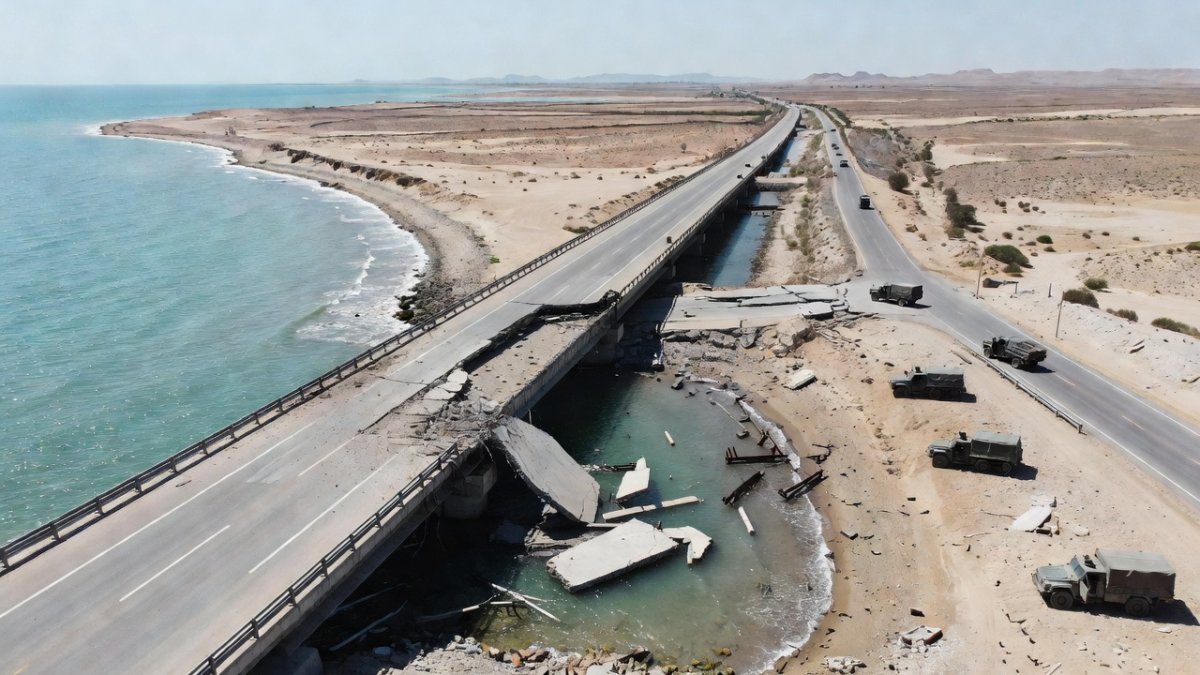
US Military Actions and Infrastructure Damage
US forces struck multiple Iranian military targets along the southern coast. Daytime footage released by Al Arabiya English shows damage to a bridge in Bandar Khamir, consistent with strikes on logistics infrastructure supporting maritime operations.
US strikes concentrated on Iran’s southern littoral, particularly Hormozgan province, where Bandar Khamir serves as a critical logistics node linking coastal highways to IRGC naval facilities near Bandar Abbas. CENTCOM statements emphasized degradation of surveillance radars and air-defense batteries to protect freedom of navigation, yet the pattern of attacks on bridges and fuel depots suggests a broader effort to disrupt IRGC asymmetric resupply lines. This campaign echoes the 2019–2020 pressure period but differs in scale, employing precision munitions rather than the single high-value target strikes seen after the Soleimani killing.
Analysts note that previous US operations against Iranian maritime infrastructure, such as the limited 2023 responses to Red Sea attacks, avoided sustained coastal bombardment. Here, repeated strikes over 48 hours have produced visible damage to dual-use civilian infrastructure, raising questions about proportionality. Satellite imagery reviewed by the International Institute for Strategic Studies indicates at least four logistics hubs affected, yet IRGC mobility assets appear largely intact, allowing Tehran to sustain closure threats without immediate collapse of operational capacity.
The IRGC immediately announced that the Strait of Hormuz “will remain closed until the US ends its aggression.” Shipping data compiled by Al Arabiya English on 16 July recorded a sharp drop in vessel transits through the 21-mile-wide chokepoint.
Iran’s Hormuz Leverage and Revenue Proposal
Tehran has framed the closure as economic coercion rather than outright blockade, signaling willingness to reopen the strait in exchange for passage tolls projected to generate $40 billion annually. This approach mirrors earlier Iranian threats but now occurs against the backdrop of sustained US strikes that have not yet produced measurable degradation of Iran’s capacity to sustain asymmetric operations.
Iran’s closure threat revives a long-standing doctrine first tested during the 1980s Tanker War and sharpened in 2019 when Revolutionary Guard forces seized the British-flagged tanker Stena Impero and harassed vessels near the strait. The 2023–2024 escalations, including shadow-fleet diversions, demonstrated Tehran’s ability to impose costs without full closure. The current $40 billion annual transit-fee proposal represents an escalation of this economic coercion model, positioning the waterway as a revenue source rather than a simple chokepoint.
Global oil markets have already priced in the risk. Brent crude climbed above $92 per barrel by 14 July 2026, according to Bloomberg data, while tanker war-risk premiums surged 40 percent. OPEC+ members, particularly Saudi Arabia and the UAE, face pressure to increase output, yet spare capacity remains limited. China, Iran’s largest oil customer, has signaled quiet concern through diplomatic channels, urging de-escalation to protect its energy imports that transit the same route; Beijing’s hedging reflects its reluctance to see either Washington or Tehran fully control the strait’s economics.
Israeli Assessment of the Collapse of the MoU
Israeli President Isaac Herzog stated on 17 July that he was “not surprised” by the breakdown of the US-Iran memorandum of understanding. He expressed full confidence in President Trump’s leadership, describing the American response as “firm” and labeling Iran an “empire of evil.” Herzog characterized US-Israel divergences as “tactical, not strategic” and voiced hope for eventual normalization with Saudi Arabia under Crown Prince Mohammed bin Salman.
Expert Assessments of Washington’s Objectives
Professor Scott Lucas observed that “the regime is NOT on its knees,” noting Iran’s demonstrated resilience after months of conflict. Former UK defense minister Tobias Ellwood questioned the absence of achievable goals, asking “What on EARTH is Trump trying to achieve?” Retired US Navy Commander Kirk Lippold argued that Iran “has NOT LEARNED” from prior pressure, while Greg Swenson of Republicans Overseas predicted that sustained military and economic measures would ultimately produce regime change.
Professor Scott Lucas of the University of Sheffield argues that Iran’s resilience after months of strikes shows the limits of military pressure alone, echoing his earlier assessments that regime cohesion has not fractured. Former UK defense minister Tobias Ellwood has questioned the absence of measurable benchmarks, warning that open-ended operations risk mission creep without allied buy-in. Retired US Navy Commander Kirk Lippold contends that Tehran has absorbed previous sanctions lessons and adapted its sanctions-evasion networks, while Greg Swenson of Republicans Overseas maintains that cumulative economic and military measures could still trigger internal elite fractures.
Think-tank analysis adds further nuance. Chatham House researchers highlight the absence of a diplomatic off-ramp, contrasting the current approach with the 2015 JCPOA framework. Carnegie Middle East Center analysts describe the policy as “maximum pressure 2.0” but note that regional partners are less aligned than in 2018–2020. The International Crisis Group warns that without renewed engagement channels, the impasse accelerates Iran’s nuclear timeline, a risk that neither pure coercion nor immediate diplomacy has yet resolved.
Regional Implications
The conflict has already drawn Kuwait, Bahrain, and Jordan into the line of Iranian retaliation, underscoring the risk of wider Gulf escalation. Oil prices reached a one-month high by 14 July according to Bloomberg data, while shipping insurance premiums have risen sharply. Saudi Arabia remains outside direct strikes but faces indirect pressure on its own export routes and on the prospects for regional normalization. Without a defined diplomatic pathway, the current cycle of blockade, closure, and strikes risks entrenching a prolonged war of attrition across the Persian Gulf and its littoral states.
Gulf states are pursuing careful hedging. The UAE has quietly expanded energy cooperation with Iraq while maintaining security ties with Washington, whereas Saudi Arabia has accelerated its own missile-defense upgrades without committing forces. Qatar continues to balance LNG exports with mediation offers, reflecting its distinct risk calculus. Israel has reinforced its naval presence in the Red Sea and conducted additional air drills, yet remains focused on containing Hezbollah and Hamas spillover rather than direct Hormuz involvement.
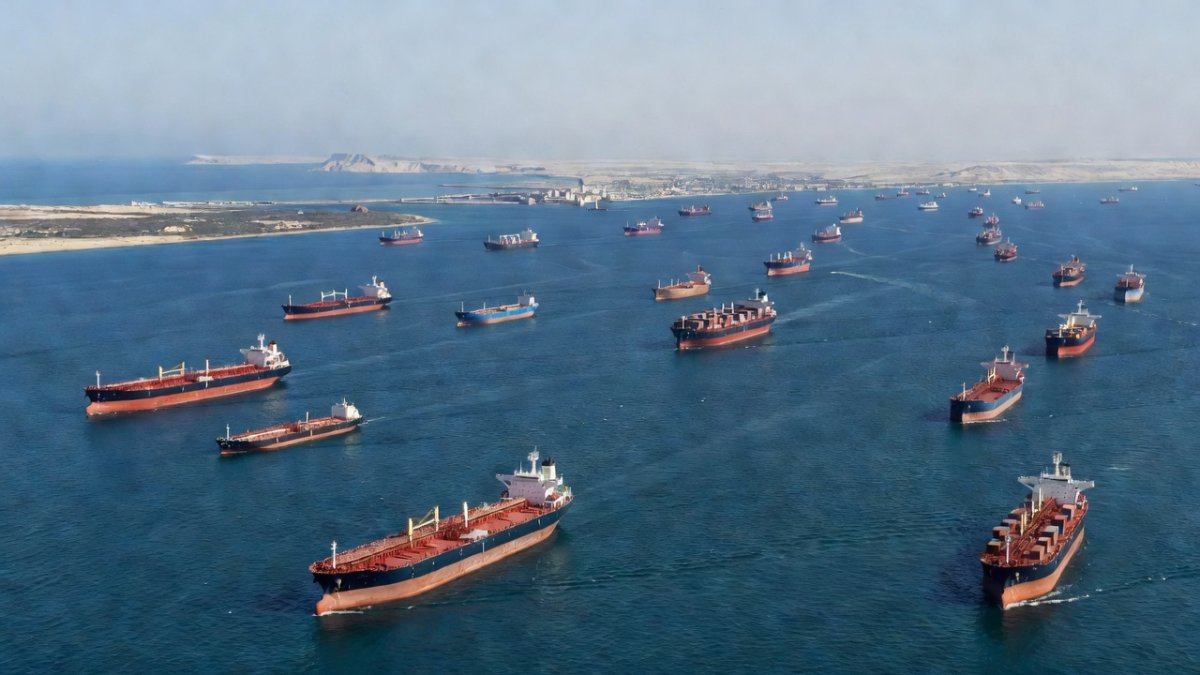
Turkey has positioned itself as a potential mediator, leveraging its NATO status and energy transit role, while monitoring Kurdish dynamics that could be affected by prolonged instability. Iran’s nuclear program has gained momentum amid the crisis, with IAEA reports noting accelerated enrichment at Fordow. Domestically, the economic squeeze has driven inflation above 45 percent and triggered localized protests over fuel shortages, underscoring the humanitarian costs borne by ordinary Iranians even as the regime frames the standoff as resistance to foreign aggression.
By Malik Hassan, Staff Writer
This article was produced with AI-assisted research and editorial support. Reporting is based on sources cited in the article.
What's Your Reaction?
 Like
0
Like
0
 Dislike
0
Dislike
0
 Love
0
Love
0
 Funny
0
Funny
0
 Wow
0
Wow
0
 Sad
0
Sad
0
 Angry
0
Angry
0
Middle East Correspondent at Global1.News. Based in Beirut, covering politics, conflict, energy, and society across the Middle East. Brings context and depth to a region often reduced to headlines.










Comments (0)