
China Assures Thailand Cambodia Tanks Not for Thai Border
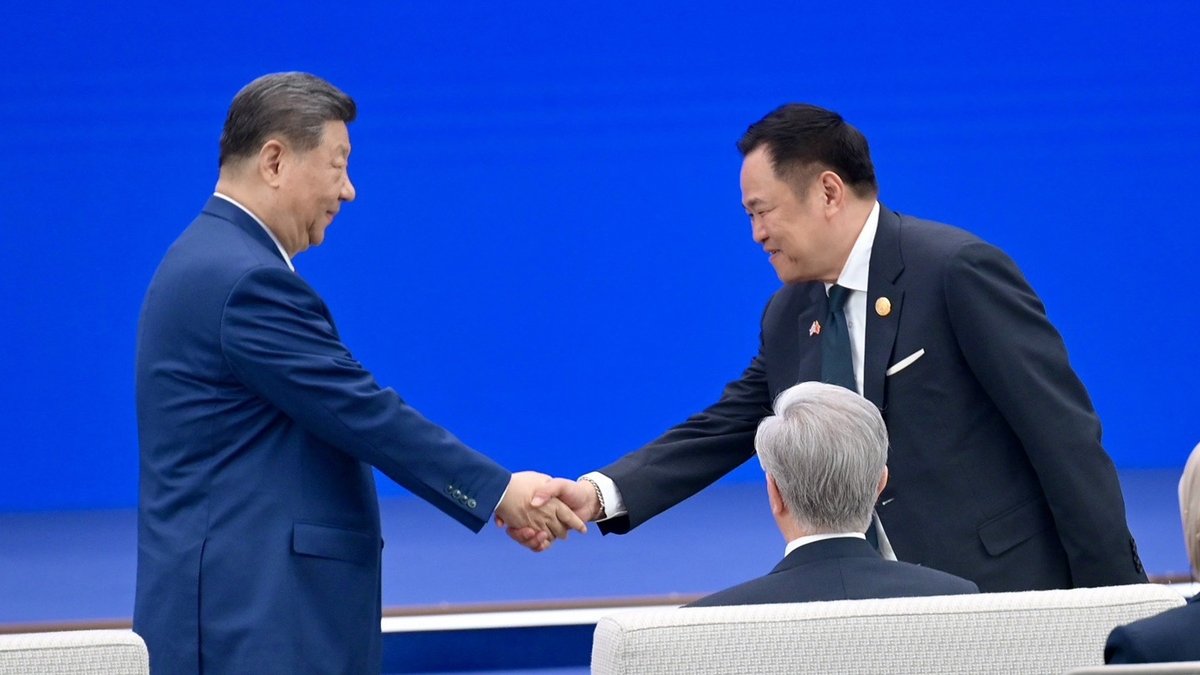
A Meeting in Shanghai — Anutin Raises Thailand's Security Concerns with Xi Prime Minister Anutin Charnvirakul returned from Shanghai this week with a clear message of reassurance for the Thai people. During bilateral talks on Friday with Chinese President Xi Jinping, he raised concerns about Chinese-made military equipment being supplied to Cambodia. The discussions took place while Anutin attended the World Artificial Intelligence Conference, which runs from July 17 to 20.
A Meeting in Shanghai — Anutin Raises Thailand's Security Concerns with Xi
Prime Minister Anutin Charnvirakul returned from Shanghai this week with a clear message of reassurance for the Thai people. During bilateral talks on Friday with Chinese President Xi Jinping, he raised concerns about Chinese-made military equipment being supplied to Cambodia. The discussions took place while Anutin attended the World Artificial Intelligence Conference, which runs from July 17 to 20.
Anutin became prime minister in 2024 after Srettha Thavisin, leading the Bhumjaithai Party with its strong roots in the northeast. His decision to speak openly in Shanghai reflects the steady style many Thais have come to expect from their leaders when dealing with powerful friends. The World Artificial Intelligence Conference brought together over one thousand global leaders, giving the prime minister a natural setting to combine conversations about technology with matters of lasting security.
President Xi delivered a keynote address at the conference on the importance of AI cooperation across borders. Against this backdrop of forward-looking discussions, the direct exchange on military supplies stood out as a sign of trust between the two nations. Thai readers know that such personal assurances carry weight because they build on years of regular contact at the highest levels.
The prime minister spoke directly about Thailand's worries over tanks and armoured vehicles heading to Cambodia. In response, President Xi offered personal assurances that this equipment would never be used against Thailand. Such direct exchanges reflect the long-standing friendship between the two nations and the importance of open communication on matters of national security.
China's Military Supplies to Cambodia — Why Bangkok is Watching Closely
Thailand has observed with quiet attention the delivery of Chinese military hardware to Cambodia. The equipment includes tanks and armoured vehicles, and these supplies arrive at a time when border areas remain sensitive. Anutin made clear that Thailand values its relationship with China and sought clarity to maintain peace along shared frontiers.
Thailand's approach to foreign relations has long been described as bamboo diplomacy, bending with the wind while staying rooted. This flexible style allows leaders to raise difficult topics without damaging valuable partnerships. By choosing the setting of the Shanghai conference, Anutin showed how economic and technological ties can provide the space for honest security talks.
China's assurances came as a welcome step toward easing any uncertainty. For communities living near the border, especially in the northeastern provinces, such guarantees help preserve a sense of stability. Thai officials continue to monitor developments closely while maintaining respectful dialogue with all partners involved.
Border trade between Thailand and Cambodia supports livelihoods across the Isaan region, where more than twenty million people live. Families often cross for markets, temple visits, and family gatherings, making any sign of tension feel personal. The prime minister's direct conversation in Shanghai therefore carried meaning far beyond the conference halls.
Border Tensions with Cambodia — The Context Behind the Concerns
The long-standing border dispute near Preah Vihear temple has shaped relations between Thailand and Cambodia for generations. Deadly clashes erupted last year along parts of the disputed frontier, reminding residents on both sides of the human cost of unresolved issues. Families in Isaan communities often share cultural ties across the border, making peace a deeply personal matter.
Preah Vihear, a UNESCO World Heritage site, holds deep meaning for Buddhist communities on both sides of the border. The International Court of Justice ruled on ownership in 1962, yet the surrounding areas saw renewed fighting between 2008 and 2011. These episodes remain in living memory for many families who still cross the frontier for festivals and trade.
President Xi separately encouraged both countries to settle their differences through dialogue. This call aligns with Thailand's own preference for peaceful solutions rooted in mutual respect. The presence of Chinese military facilities, such as at Ream naval base, adds another layer to regional dynamics that Thai leaders must navigate with care.
Isaan's border trade, worth billions of baht each year, depends on calm conditions at checkpoints and markets. When tensions rise, small traders and farmers feel the effects first. The prime minister's emphasis on dialogue therefore speaks directly to the daily concerns of people whose lives straddle the frontier.
China's Regional Role — Balancing Relations with Thailand and Cambodia
China maintains important ties with both Thailand and Cambodia through its Belt and Road Initiative. Infrastructure projects in each country reflect Beijing's broader engagement across Southeast Asia. Anutin's meeting in Shanghai highlighted how economic cooperation can coexist with honest discussions on security matters.
In Thailand, Belt and Road projects include support for the Eastern Economic Corridor and the high-speed rail line connecting Bangkok to Nakhon Ratchasima. These developments promise better connectivity for Isaan communities and new opportunities for young people. Cambodia has seen Chinese investment in Sihanoukville port and hydropower plants, showing how the same initiative touches both neighbours.
Thai readers understand that strong friendships require honest conversations. By raising concerns directly with President Xi, the prime minister demonstrated a balanced approach that protects national interests while preserving valuable partnerships. This style of diplomacy has long been part of Thailand's gentle yet firm tradition in foreign affairs.
Bamboo diplomacy allows Thailand to maintain close ties with China while also working within ASEAN frameworks. The prime minister's visit showed that economic projects and security talks can advance together when leaders speak plainly. Communities in the northeast welcome this steady approach because it supports both trade routes and family connections across the border.
ASEAN and Regional Stability — What This Means for Southeast Asia
Events in Shanghai carry meaning beyond bilateral relations. Within ASEAN, stability along the Thai-Cambodian border contributes to the wider sense of security that allows communities to thrive. When major partners like China support dialogue, it reinforces the region's preference for peaceful resolution of disputes.
ASEAN brings together ten member states that share a commitment to non-interference and consensus. This principle has helped the grouping manage differences without outside pressure. Thailand's experience at the border shows how quiet diplomacy inside ASEAN can complement conversations with larger partners such as China.
Residents in border provinces of Isaan know that calm borders support daily life, trade, and cultural exchange. The assurances given in Shanghai help create space for continued cooperation across the region. Southeast Asian nations often look to such moments as examples of how larger powers can play a constructive role.
Border markets in the northeast depend on steady relations so that goods and people can move freely. When ASEAN principles guide talks between neighbours, families on both sides of the frontier feel more secure about planning for the seasons ahead. The Shanghai meeting added another layer of reassurance that these everyday rhythms can continue.
The View from Bangkok — Analysis for Thai Readers
For Thai citizens, the outcome of the Shanghai talks offers reassurance that their concerns are heard at the highest levels. The prime minister's direct approach reflects a commitment to protecting the kingdom while honoring friendships built over decades. In border communities, where families have long navigated shared histories with Cambodia, this news brings a measure of calm.
Thailand's position remains consistent: peaceful dialogue serves everyone best. The assurances from China, combined with calls for continued talks between Bangkok and Phnom Penh, point toward a path that respects sovereignty and regional harmony. As the World Artificial Intelligence Conference continues in Shanghai, the conversations on security remind us that technology and diplomacy both shape the future our children will inherit.
Many in Isaan remember how past border tensions affected temple visits and market days. The prime minister's choice to raise these issues during a major technology gathering shows that security and progress belong together. This balanced message resonates with readers who value both tradition and the opportunities that new rail links and trade routes can bring.
By speaking plainly yet respectfully, Anutin upheld the bamboo diplomacy that has served Thailand through changing regional winds. The result is a quiet confidence that the kingdom can protect its interests while staying open to cooperation. For families along the northeastern frontier, that confidence matters most when planning the next harvest or school year.
By Ann Srisawat, Staff Writer
This article was produced with AI-assisted research and editorial support. Reporting is based on sources cited in the article.
What's Your Reaction?
 Like
0
Like
0
 Dislike
0
Dislike
0
 Love
0
Love
0
 Funny
0
Funny
0
 Wow
0
Wow
0
 Sad
0
Sad
0
 Angry
0
Angry
0

Southeast Asia Correspondent at Global1.News. Based in Bangkok, covering Thai and Southeast Asian politics, economy, technology, and culture. Deep regional perspective on one of the world's most dynamic regions.













Comments (0)