
Ivory Coast Fashion Designers Take the Global Stage
Ivory Coast fashion is having a moment — and the world is taking notice. From Beyoncé to Aya Nakamura, the biggest names in global music are reaching across the Atlantic to Abidjan, a West African metropolis that has quietly become one of the continent's most dynamic fashion capitals, for one-of-a-kind designs that fuse ancestral textile traditions with contemporary luxury. Ivory Coast Fashion Designers Take the Global Stage Abidjan, Ivory Coast — In a city where the hum of sewing machines bl...
Ivory Coast fashion is having a moment — and the world is taking notice. From Beyoncé to Aya Nakamura, the biggest names in global music are reaching across the Atlantic to Abidjan, a West African metropolis that has quietly become one of the continent's most dynamic fashion capitals, for one-of-a-kind designs that fuse ancestral textile traditions with contemporary luxury.
Ivory Coast Fashion Designers Take the Global Stage
Abidjan, Ivory Coast — In a city where the hum of sewing machines blends with the rhythms of coupé-décalé, a generation of Ivorian designers is proving that African fashion isn't just knocking on the door of the global industry — it's already inside, dressing the most famous people on the planet and redefining what luxury means in the process.
From Abidjan to Beyoncé: The Loza Maléombho Story
Loza Maléombho brings an Ivorian-American perspective shaped by her studies at the University of the Arts in Philadelphia and internships with Jill Stuart and Yigal Azrouël in New York. She launched her label in Abidjan in 2009, grounding her work in the city's creative energy while drawing on family roots across the Atlantic.
Beyoncé's stylist discovered Maléombho on Instagram, leading to a custom black-and-white print jacket featuring gold Baoule mask clasps that the singer wore in the 2020 "Already" music video. That video has since accumulated 70 million YouTube views, exposing the designer's work to millions worldwide.
Maléombho also dressed Solange Knowles, who spotlighted her in a 2015 "Black Designer Spotlight," along with Kelly Rowland. These placements confirmed her place among designers favored by major African-American artists seeking authentic connections to West African aesthetics.
Her signature fabrics include jute, cotton Baoule pagne, and cotton-silk Kita pagne. Kita pagne weaving traces its origins to the Ashanti Kingdom that once spanned parts of Ivory Coast and Ghana, giving each garment layers of historical meaning.
After the Beyoncé feature, Maléombho's website crashed from the surge of international orders. Collectors from multiple continents sought pieces that carried both ancestral patterns and forward-looking silhouettes.
Her Afrofuturist aesthetic blends tradition and modernity without apology. The Spring/Summer 2026 collection, described as "an immersive Fashion Portal," continues this approach by inviting wearers into imagined futures rooted in Ivorian textile mastery.
Elie Kuame: Twenty Years of Ivorian Haute Couture
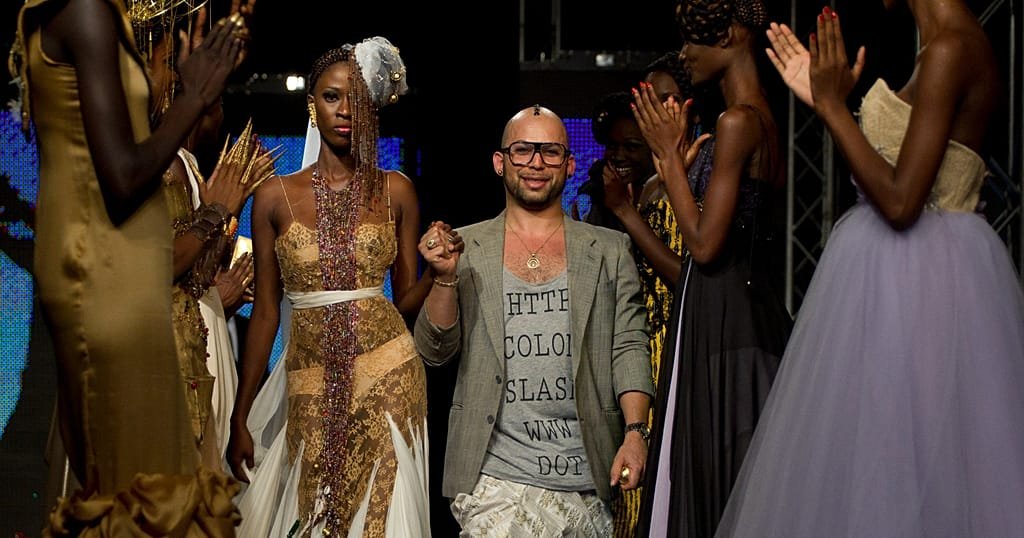
Elie Kuame, an Ivorian-Lebanese designer, runs his fashion house in Cocody and prepares to celebrate its 20th anniversary. The milestone reflects two decades of steady craftsmanship that has elevated Ivorian techniques to international recognition.
Pagnes make up 50 percent of his fabric use, keeping traditional woven cloths at the center of every collection. This choice preserves skills passed through generations while meeting the demands of clients who expect both heritage and refinement.
UNESCO recognizes Ivorian weaving traditions as intangible cultural heritage, a status that validates the handwork Kuame commissions daily. Artisans in his workshop spend hours on meticulous hand-sewn beading and embroidery that distinguish each garment.
Prices range from hundreds to thousands of dollars, reflecting the labor intensity and material quality. Yet this reality creates a visible gap with the Ivorian minimum wage of around $130 per month, a tension many local designers openly discuss.
Kuame addresses that gap by providing steady jobs and skills training inside his atelier. Young tailors and embroiderers gain professional experience that builds both personal income and national pride in Ivorian creativity.
Balancing accessibility with exclusivity remains his ongoing challenge. He maintains high-end lines for global clients while exploring smaller capsule collections that allow more Abidjan residents to own pieces made in their own city.
Gilles Fernandez: The Men's Designer Dressing Africa's Biggest Stars
Gilles Fernandez works primarily in menswear and has stated in an AFP interview that fashion serves as Africa's "soft power." He sees clothing as a diplomatic tool that reshapes how the world perceives the continent.
Fernandez has dressed rappers Youssoupha and Black M, creating stage looks that merge sharp tailoring with West African textile references. These collaborations reach audiences across Francophone Africa and Europe through music videos and live performances.
He exhibited at the high-end Parisian department store Galeries Lafayette during the AfricaNOW event, which celebrates African design on an international platform. The showcase introduced his work to buyers who rarely encounter Ivorian menswear firsthand.
Fernandez and LaFalaise Dion co-created a sparkling dress with cowrie shells, pearls, and gemstones for Aya Nakamura's Stade de France concert. More than 70,000 people attended the show, witnessing the garment under stage lights.
Nakamura, the world's most-streamed Francophone singer, later performed at the Paris 2024 Olympics opening ceremony. Her visibility amplifies the reach of the Ivorian designers who dress her for major moments.
His men's line remains distinct from the custom Nakamura piece, yet both demonstrate the same commitment to detail. Fernandez continues to develop collections that honor Ivorian tailoring traditions while meeting the needs of contemporary performers.
Abidjan: West Africa's Fashion Capital
Abidjan stands as a leading fashion hub within Africa's expanding industry. The city's expanding middle class has broadened the domestic customer base, allowing designers to test ideas locally before exporting them.
E-commerce growth now enables direct global sales from Abidjan studios. Buyers in Europe and North America order pieces without traveling, shortening the distance between Ivorian workshops and international wardrobes.
UNESCO projects a 42 percent demand increase for African fashion in the coming decade. This forecast positions Abidjan designers to capture significant market share if infrastructure and training keep pace.
Abidjan Fashion Week serves as a key platform where emerging and established creators present collections to buyers, press, and local audiences. The event strengthens networks that extend from Plateau to Cocody and beyond.
The city's vibrant creative ecosystem includes skilled artisans who maintain textile traditions alongside young entrepreneurs fluent in social media. Instagram has become the primary channel connecting these designers with global celebrities seeking distinctive pieces.
Fashion functions here as soft power that reshapes perceptions of the continent. When international stars wear Ivorian designs, they introduce audiences to a modern Africa defined by innovation rather than outdated stereotypes.
Laurence Airline, founded in 2012 by Ivorian designer Laurence Jolliet in the Treichville district, and Adama Paris, launched in 2015 by Adama Ndiaye, have joined the scene alongside newer voices from the École Supérieure des Arts et Techniques de la Mode d'Abidjan, which graduated its first cohort of pattern-makers in 2018. These houses work daily with networks of weavers in Bouaké and dyers in Korhogo, ensuring that every bolt of cloth moves through skilled hands before reaching the cutting table. Co-working spaces such as the Abidjan Fashion Lab, opened in 2021 in Cocody, and the incubator program run by the Agence Ivoirienne de la Mode since 2019 now host over forty emerging labels, offering shared looms, digital pattern software, and mentorship that turns family sewing traditions into export-ready collections.
E-commerce has tightened the link between these workshops and buyers abroad. Jumia Ivory Coast, active since 2014, lists ready-to-wear pieces from Abidjan studios that reach Lagos and Paris within five days, while Instagram shopping and WhatsApp catalogs let designers like those at Adama Paris close custom orders directly with clients in Atlanta and London. This direct channel has lifted export revenues for participating ateliers by an estimated 35 percent between 2020 and 2024, according to figures from the Ivorian Ministry of Trade.
Abidjan’s advantage lies in its deep textile heritage and compact supply chain, which sets it apart from Lagos’s scale-driven ready-to-wear scene, Dakar’s strong tailoring guilds, Nairobi’s growing tech-fashion crossover, and Johannesburg’s luxury retail focus. The city’s weavers, beaders, and embroiderers remain embedded in the same neighborhoods as the designers, shortening production cycles and preserving techniques that other hubs must import. Economically, the sector now supports roughly 8,000 formal jobs in Abidjan alone, draws fashion tourists to the annual Abidjan Fashion Week, and contributes an increasing share of the city’s service exports, with tax receipts from atelier sales rising steadily since 2017.
Traditional Textiles Meet Global Luxury
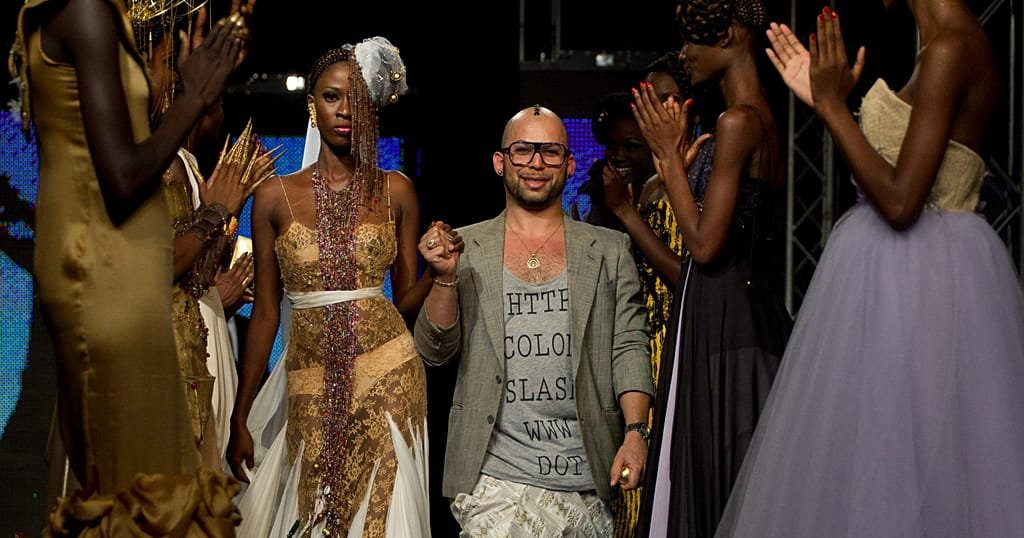
The textiles powering Ivorian fashion include Baoule pagne, Kita pagne, jute, and handwoven loincloths. Each carries specific regional techniques that designers adapt for contemporary silhouettes.
Kita pagne origins trace to the Ashanti Kingdom spanning Ivory Coast and Ghana. Loza Maléombho incorporates cotton-silk versions of this cloth, preserving its weight and sheen while updating its application.
UNESCO has granted Ivorian weaving traditions intangible cultural heritage status. This recognition supports efforts to document and transmit skills that might otherwise fade under industrial competition.
Contemporary designers modernize these traditions without reducing them to ethnic clichés. They treat pagne as a living material rather than a costume element, allowing patterns to speak across cultural boundaries.
These creators navigate the fine line between cultural appreciation and appropriation. They maintain ownership of their narratives by controlling production in Abidjan and crediting the artisans whose hands shape every meter of cloth.
Imane Ayissi became the first sub-Saharan African designer at Paris Haute Couture Week in 2020, paving the way for Ivorian talents who now receive similar invitations. His precedent opened doors that current designers continue to widen.
Indigo dyeing practiced in Korhogo villages and the mud-cloth techniques adapted from neighboring Sahelian traditions carry centuries of meaning tied to status, protection, and seasonal rites. Designers source these cloths through long-standing village cooperatives that pay weavers and dyers above the national minimum wage, often formalizing agreements that include profit shares on each finished garment sold abroad. When Louis Vuitton and Dior have referenced similar patterns in past collections, the difference lies in whether the original artisans receive credit and compensation, a standard Ivorian houses now insist upon in any joint project.
Demand from Abidjan studios has revived apprenticeship numbers, with young people in Daloa and Man returning to looms their grandparents once used because orders now guarantee steady income. African-American and Caribbean clients, many of them descendants of families displaced centuries ago, seek these same textiles as tangible links to ancestry, purchasing pieces that carry documented village origins and stories passed through the cloth itself. Traditional production methods rely on plant-based dyes and zero-waste cutting layouts that consume far less water and generate almost no chemical runoff compared with the fast-fashion supply chains that dominate global markets.
What's Next for Ivorian Fashion
The future trajectory of Ivorian fashion looks toward sustained growth, supported by UNESCO's projection of a 42 percent demand increase for African fashion items. Designers in Abidjan prepare supply chains and training programs to meet that expansion.
Affordability remains a challenge in a country where the minimum wage sits around $130 per month. Several houses now offer smaller, lower-priced items alongside couture lines to keep local customers engaged.
Designers provide employment and skills training that extend beyond their own ateliers. Workshops teach weaving, embroidery, and pattern cutting, creating pathways for young people who might otherwise leave the creative sector.
International acclaim has not pulled these creators away from Abidjan. Most maintain their primary studios in the city, ensuring that the next generation sees success modeled locally rather than only abroad.
The growing African middle class offers a robust domestic market that reduces reliance on exports alone. This base allows designers to experiment while still generating steady revenue from regional clients.
Fashion weeks and exhibitions at venues such as Galeries Lafayette in Paris continue to open doors. In Senegal, Dakar Fashion Week provides a parallel platform that strengthens regional exchange across West Africa. The next generation of Ivorian designers gains confidence from these pioneers' success, knowing that global stages now expect and welcome their voices.
By Amara Diop, Staff WriterThis article was produced with AI-assisted research and editorial support. Reporting is based on sources cited in the article.
What's Your Reaction?
 Like
0
Like
0
 Dislike
0
Dislike
0
 Love
0
Love
0
 Funny
0
Funny
0
 Wow
0
Wow
0
 Sad
0
Sad
0
 Angry
0
Angry
0

West Africa/Sahel Correspondent at Global1.News. Dakar-based journalist covering politics, security, climate, and development across Francophone and Anglophone West Africa. Tells the stories of a region undergoing profound transformation.










Comments (0)