
US Retaliatory Strikes Target Iranian Facilities Following Hormuz Incident
The United States conducted military strikes inside Iran on Friday targeting missile and drone storage sites along with coastal radar facilities. US Central Command described the action as a direct response to an attack on a commercial vessel in the Strait of Hormuz. The operation followed reports of damage to a cargo ship and came amid references to a prior ceasefire agreement
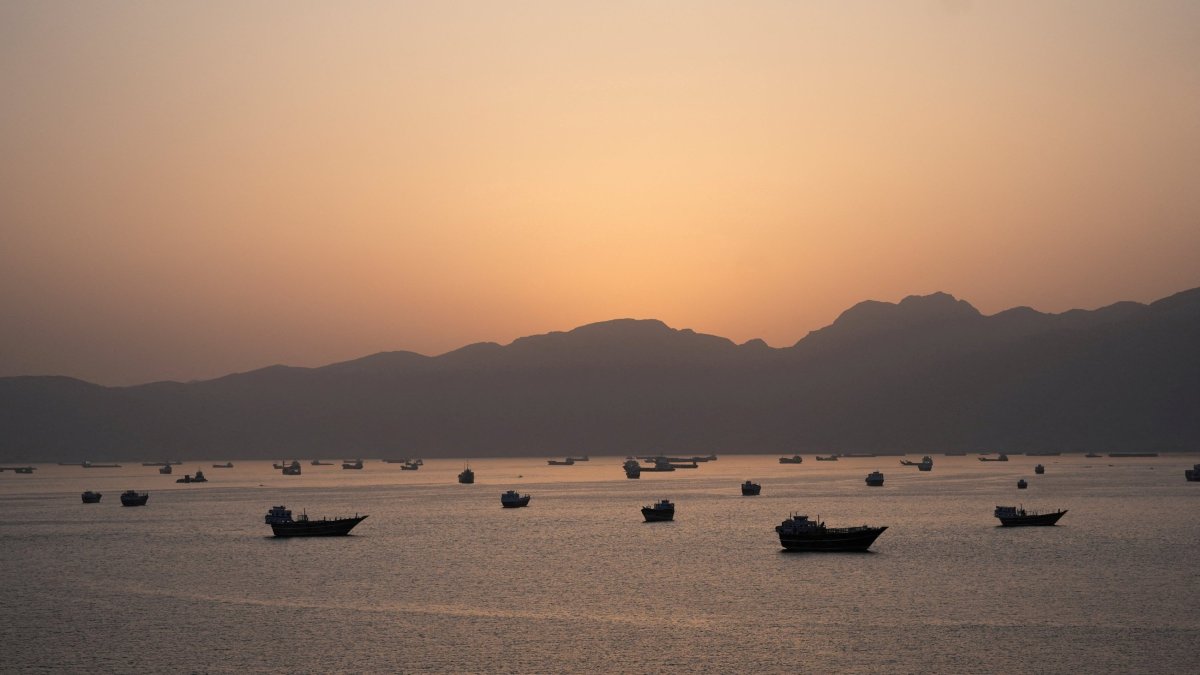
The United States conducted military strikes inside Iran on Friday targeting missile and drone storage sites along with coastal radar facilities. US Central Command described the action as a direct response to an attack on a commercial vessel in the Strait of Hormuz. The operation followed reports of damage to a cargo ship and came amid references to a prior ceasefire agreement, raising the stakes in a confrontation that directly impacts global energy security and the broader Middle East strategic landscape.
US Retaliatory Strikes Target Iranian Facilities Following Hormuz Incident
Beirut, Lebanon – June 27, 2026 — The United States carried out military strikes inside Iranian territory targeting missile and drone storage facilities as well as coastal radar installations, marking a significant escalation in the ongoing confrontation between Washington and Tehran. The operation, confirmed by US Central Command, was characterized as a direct response to what American officials described as an Iranian attack on commercial shipping in the Strait of Hormuz.
Details of the Reported Shipping Incident
According to the UK Maritime Trade Operations (UKMTO) center, a cargo vessel sustained damage from an unknown projectile off the coast of Oman on Thursday. The strike damaged the ship's bridge, though no casualties or environmental damage were reported in that initial account. US President Donald Trump stated on Truth Social that Tehran had launched at least four one-way attack drones toward ships in the area, with American forces intercepting three while one reached its target, causing damage.
Trump characterized the event as a "foolish violation" of a ceasefire agreement, though the precise parameters of that understanding remain unclear. When pressed by reporters about potential further responses, the president replied simply, "You'll find out." CENTCOM labeled the alleged Iranian action as "dangerous behavior" and "unwarranted aggression" that "clearly" violated the ceasefire. Iranian state television reported that an explosion was heard in the city of Sirik in Hormozgan Province, which overlooks the Strait of Hormuz, though no information was disclosed on the source of the explosion.
US Strategic Calculus in the Response
The choice of targets — missile and drone storage sites plus coastal radar facilities — reflects a calibrated effort to degrade Iran's capacity to conduct similar asymmetric attacks while avoiding the broader escalation that strikes on nuclear or leadership targets would provoke. By hitting facilities tied directly to the weapons used in the shipping incident, Washington sends a targeted message: commercial traffic through the Strait of Hormuz is a red line.
The involvement of US Central Command rather than ad hoc or special operations suggests the strikes were planned through established military channels, likely following standard retaliatory authorization procedures. This approach aligns with longstanding US strategic interests in maintaining freedom of navigation through the Strait of Hormuz, a waterway that remains the most critical chokepoint for global energy transit.
Energy Security and Market Implications
The Strait of Hormuz handles approximately one-fifth of the world's seaborne oil trade — roughly 17 million barrels per day passing through its narrow waters. Even the perception of heightened risk prompts immediate reactions from insurers, shippers, and commodity traders. The reported attack and subsequent US military response introduce fresh uncertainty into crude pricing calculations at a moment when markets are already navigating OPEC+ production decisions and demand forecasts.
Gulf states such as Saudi Arabia and the United Arab Emirates have invested heavily in economic diversification plans — including Saudi Vision 2030 and the UAE's post-oil strategy — partly to reduce their long-term reliance on revenue streams dependent on volatile transit routes. Heightened tensions in the Strait could accelerate those diversification efforts while simultaneously prompting OPEC+ members to reassess output strategies. Gulf oil producers face a delicate balancing act: higher prices benefit their fiscal positions, but sustained instability in the Strait undermines the stable operating environment their investment plans require.
Iran's Regional Position and Proxy Networks
The incident occurs against the backdrop of Iran's established network of regional partners and proxies across the Middle East. Tehran has historically employed asymmetric capabilities — drones, missiles, naval mines, and proxy militia forces — to exert pressure on adversaries without triggering full-scale conventional conflict. The reported use of one-way attack drones against commercial shipping fits this well-established pattern of calibrated escalation.
Any further escalation risks drawing in additional actors across Iran's network. Hezbollah in Lebanon, Shia militias in Iraq, and Houthi forces in Yemen all maintain varying degrees of capability to disrupt regional stability. Sunni-Shia geopolitical competition adds another layer of complexity, as Gulf Arab states monitor Iranian actions closely while maintaining their own security partnerships with the United States through mechanisms such as the Gulf Cooperation Council and bilateral defense agreements.
Impact on Ceasefire and Diplomatic Channels
President Trump's reference to a ceasefire agreement — the details of which remain publicly undefined — suggests that prior understandings between Washington and Tehran, however informal or indirect, have been placed under significant strain. The US military response tests whether both sides will return to restraint or whether a cycle of retaliation begins.
Regional capitals, particularly in the GCC, will be watching closely for signs that diplomatic backchannels remain functional. Past episodes of US-Iran military friction — including the January 2020 Soleimani strike and the April 2024 exchanges — have shown that direct military actions can sometimes open space for de-escalation talks once immediate objectives are addressed. The key question is whether communication channels through Oman, Qatar, or Switzerland remain viable in the current environment.
Broader Geopolitical Ramifications
The episode intersects with multiple ongoing regional dynamics. Arab-Israeli normalization efforts under the Abraham Accords framework continue to reshape Middle Eastern alignments, and any sustained US-Iran tension affects Israeli security calculations directly. Turkey's evolving regional posture under President Erdoğan — balancing NATO commitments with independent diplomatic outreach to both Tehran and Moscow — adds another dimension to the strategic picture.
Great-power competition also plays a significant role. China maintains substantial economic and diplomatic ties with Tehran, including the 25-year cooperation agreement signed in 2021, while Russia has deepened its military and political relationship with Iran since the Ukraine conflict began. Both powers have an interest in constraining US freedom of action in the region, even if they do not endorse specific Iranian actions against commercial shipping.
Outlook for Regional Stability
The immediate priority for all parties remains preventing further disruption to commercial traffic through the Strait of Hormuz. Maritime security patrols, insurance adjustments, and diplomatic messaging will dominate the near-term picture. Sustained US-Iran friction could influence future calculations by both sides regarding proxy activities and direct engagements across the broader Middle East — from Iraq to Yemen to Syria.
Energy importers outside the region, particularly in Asia and Europe, will continue to diversify supply sources and maintain strategic petroleum reserves as a hedge against prolonged disruption. Within the Middle East, the incident underscores the persistent linkage between maritime security, energy flows, and wider geopolitical competition — a connection that has defined the region's strategic importance for decades and shows no sign of diminishing.
By Malik Hassan, Staff Writer
This article was produced with AI-assisted research and editorial support. Reporting is based on sources cited in the article.
What's Your Reaction?
 Like
0
Like
0
 Dislike
0
Dislike
0
 Love
0
Love
0
 Funny
0
Funny
0
 Wow
0
Wow
0
 Sad
0
Sad
0
 Angry
0
Angry
0

Middle East Correspondent at Global1.News. Based in Beirut, covering politics, conflict, energy, and society across the Middle East. Brings context and depth to a region often reduced to headlines.












Comments (0)