
Trump Accuses China of 2020 Voter Fraud in Primetime Address
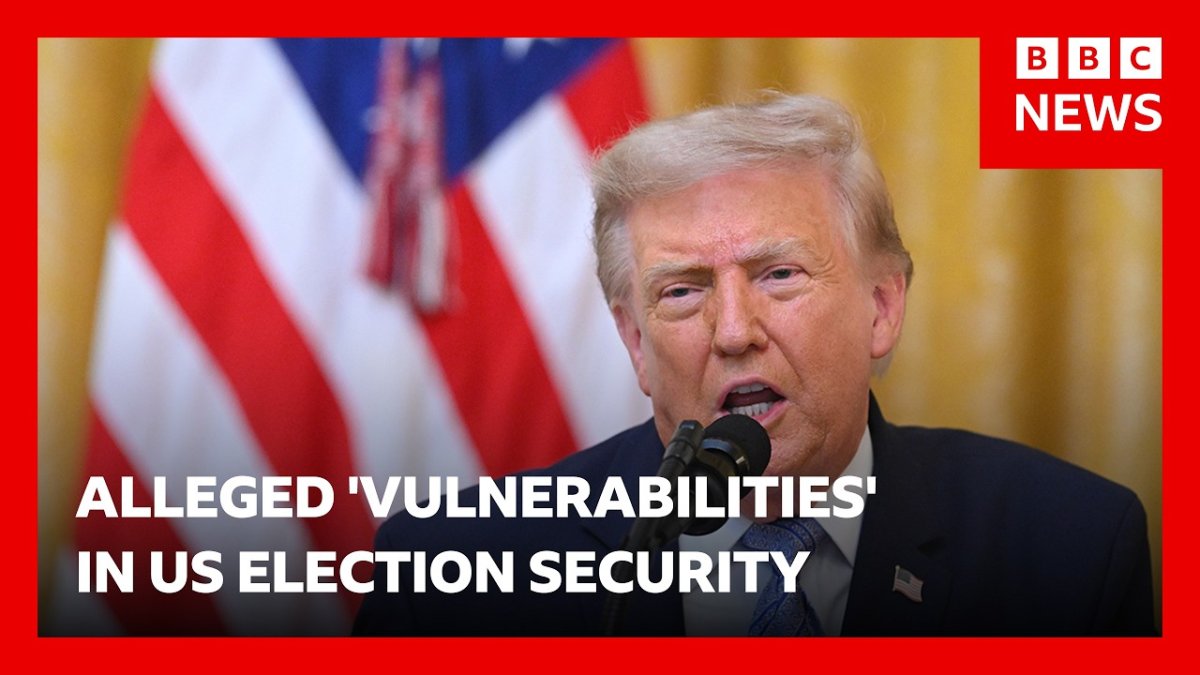
In the BBC News video "US President Donald Trump alleges China committed 2020 voter fraud | BBC News," White House reporter Bernd Debusmann Jr. and North America correspondent Anthony Zurcher detail President Donald Trump's half-hour primetime address from the White House on Thursday. Trump accused China of interfering in the 2020 US presidential election and alleged shocking vulnerabilities in American voting systems. The speech, delivered three months before the November...
In the BBC News video "US President Donald Trump alleges China committed 2020 voter fraud | BBC News," White House reporter Bernd Debusmann Jr. and North America correspondent Anthony Zurcher detail President Donald Trump's half-hour primetime address from the White House on Thursday. Trump accused China of interfering in the 2020 US presidential election and alleged shocking vulnerabilities in American voting systems. The speech, delivered three months before the November midterm elections, has drawn sharp responses from Beijing, Democrats, and the US intelligence community.
The BBC report underscores the extraordinary nature of a sitting president using primetime airtime to challenge the integrity of the electoral system that elected him, while simultaneously releasing declassified intelligence materials to support claims that contradict official US intelligence assessments. The speech represents one of the most direct confrontations between a US administration and the findings of its own intelligence community in recent memory, raising questions about the politicisation of classified information and the erosion of institutional trust in American democracy.
Trump's China Accusation: A Primetime Gambit
Washington, DC – 17 July 2026 — President Donald Trump used a nationally televised primetime address from the East Room of the White House to level his most serious accusations yet against China regarding the 2020 presidential election, alleging what he described as the "largest compromise of election data in history." Speaking for approximately thirty minutes before an audience of top administration officials that included members of his cabinet and national security team, the president claimed Beijing had illicitly acquired 220 million American voter files and called for sweeping new voting restrictions. The move comes amid a sharply divided political landscape, with Trump's approval rating at 37 percent and the November midterm elections looming just three months away, threatening to reshape control of Congress for the remainder of his presidency.
The Primetime Address: Key Claims
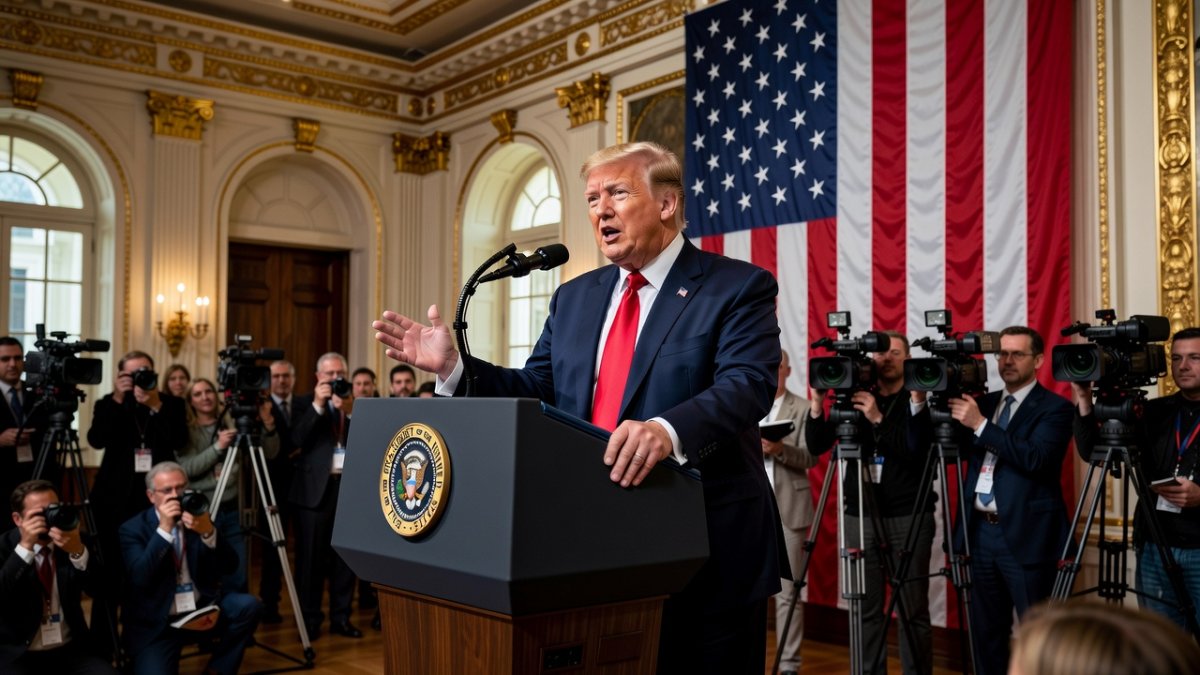
President Donald Trump spoke for approximately thirty minutes from the White House on Thursday evening. He accused China of illicit acquisition of 220 million voter files containing personal information. Trump stated that voter data in 18 states was bought, stolen or hacked by China. He said he had declassified hundreds of intelligence files, though heavily redacted, to support these claims. The president also attacked ABC, NBC and CNN for declining to carry the address live and suggested their broadcast licences should face review. These statements form the core of his public case presented to the American people.
China's foreign ministry responded swiftly through spokesman Lin Jian. Lin Jian called the allegations entirely fabricated and malicious smears that have long been proven to be groundless. Beijing maintains that no evidence supports claims of interference in the 2020 contest. This official denial stands in direct contrast to the assertions made during the primetime address. The exchange highlights the diplomatic friction that such accusations can generate between the two nations.
The White House released the declassified documents alongside the speech. BBC reporters Bernd Debusmann Jr. and Anthony Zurcher are among those reviewing the materials. Much of the voter data referenced remains publicly available through state election offices. The heavy redactions limit independent verification of the intelligence claims at this stage. Observers note that the timing aligns with preparations for the upcoming midterm contests.
Intelligence Community Contradiction
The US intelligence community reached a different conclusion in its 2021 assessment. The National Intelligence Council report expressed high confidence that China did not deploy interference efforts during the 2020 election. Analysts assessed that Beijing did not view either electoral outcome as advantageous enough to justify the risk of exposure and retaliation. This assessment was coordinated across multiple agencies and stood in contrast to findings about Russian activities in prior cycles.
US Cybersecurity and Infrastructure Security Agency officials described the 2020 election as the most secure in American history. No evidence of widespread fraud emerged from extensive post-election reviews and legal challenges. Russian interference in 2016 was confirmed by the intelligence community with significant detail on methods and actors. The current claims about China lack similar corroboration from those same sources. This discrepancy has become a central point of contention in public debate.
Midterm Politics and Democratic Response
The address occurs three months before the November midterm elections, when control of Congress hangs in the balance. Senate Majority Leader Chuck Schumer stated that in America voters choose their leaders, not the other way around. Democrats have framed the speech as an attempt to undermine confidence in electoral processes ahead of the vote. The political environment includes voter concerns over economic conditions and foreign policy developments.
Former Vice President Kamala Harris said Trump wants Americans to lose confidence in the electoral system so they stay home this November. Democratic strategy emphasizes protecting participation and countering narratives that could depress turnout. These responses aim to position the allegations within a broader discussion of democratic norms. The midterm outcome will determine legislative priorities for the remainder of the presidential term.
A Washington Post-Ipsos poll this week showed Trump's approval rating at 37 percent. Pessimism about living costs and the Iran conflict contributes to the president's political vulnerability. The speech represents an effort to shift the national conversation toward election integrity issues. Success or failure in this effort could influence Republican performance in key races.
The SAVE America Act and Voting Rights
President Trump renewed his call for passage of the SAVE America Act during the address. The legislation would ban most mail voting and require proof of citizenship along with photo identification. The bill has remained stalled in the Senate for months despite Republican support. Procedural obstacles and partisan divisions have prevented advancement to a floor vote.
Critics argue the measure would disproportionately affect voters who face barriers reaching polling places or obtaining required identification. The Department of Homeland Security has referenced approximately 278,000 non-citizens on voter rolls, though Trump did not specify whether any had cast ballots or altered outcomes. Debate over the bill reflects deeper divisions on how to balance access and security in elections. Legislative prospects remain uncertain given the current Senate composition.
Voting rights organisations have already signalled they would mount legal challenges to the SAVE America Act if it advanced, arguing it imposes unconstitutional burdens on the right to vote. The requirement for documentary proof of citizenship, they contend, would disproportionately affect elderly voters, minority communities, and low-income Americans who may not possess birth certificates or passports readily. Similar voter ID requirements in states such as Texas and Georgia have withstood legal scrutiny in recent years, but the federal scope of the SAVE Act would represent an unprecedented expansion of election restrictions nationwide.
Media, Michigan, and the Broader Pattern
Trump criticized major networks for not airing the speech live and questioned their decisions on coverage. Networks typically evaluate presidential addresses based on newsworthiness and competing programming demands. The president's remarks on broadcast licences have sparked discussion about regulatory authority and press independence. This tension adds another layer to ongoing debates about media responsibility during election periods.
Trump also referenced a Democratic-affiliated group's voter registration activities in Michigan that state law enforcement reportedly examined. The FBI's involvement reportedly limited further state action in that case. No evidence has emerged that any such activity changed vote totals or involved hacked voting machines. The example serves as part of the president's broader narrative on vulnerabilities without demonstrating systemic impact.
The Michigan claim fits a broader pattern of the president's reliance on unsubstantiated narratives about electoral integrity. During the address, Trump alleged that US voting machines remain "extremely exposed" to interference by foreign adversaries, including Russia, China and Iran. Election security experts have long documented shortcomings in American voting infrastructure — some addressed after the 2016 election when the US intelligence community confirmed Russian meddling through hacking and social media campaigns. However, no agency or independent review has found evidence that any foreign power altered vote tallies or compromised ballot-counting systems in 2020 or subsequent elections.
Analysis — What This Means for US Democracy and US-China Relations
This development could affect public confidence in electoral institutions over the longer term. Repeated challenges to past results may deepen partisan divides even when courts and audits find no basis for overturning outcomes. On the diplomatic front, US-China relations already face pressure from trade disputes, tariff policies, and the Iran conflict. China's foreign ministry has characterized the latest statements as malicious smears intended to damage Beijing's standing. The pattern risks complicating cooperation on other global issues where mutual interests exist.
Trump has advanced election-related claims consistently over the past decade, including through numerous 2020 legal challenges that did not succeed. The narrative continues to resonate strongly with segments of his political base. For the midterms, the approach may mobilize core supporters while prompting counter-mobilization from opponents concerned about participation. Looking ahead to 2028, the durability of these arguments will depend on whether new evidence emerges or institutional responses shift. The coming months will test how these dynamics play out in actual voting behavior and legislative action.
By Irina Volkov, Staff Writer
This article was produced with AI-assisted research and editorial support. Reporting is based on sources cited in the article.
What's Your Reaction?
 Like
0
Like
0
 Dislike
0
Dislike
0
 Love
0
Love
0
 Funny
0
Funny
0
 Wow
0
Wow
0
 Sad
0
Sad
0
 Angry
0
Angry
0

Russia/Eastern Europe Correspondent at Global1.News. Covering Russian politics, energy, security, and the shifting dynamics of the post-Soviet space. Provides clear-eyed analysis on one of the world's most opaque regions.











Comments (0)