
Operation Hard Ball: FBI Takes Down Bishnoi Network
Listen up, folks — the FBI just landed the biggest single-day blow yet against India-linked gangs running murder-for-hire plots straight into North America. Operation Hard Ball exposes how bosses like Lawrence Bishnoi call shots from Indian prisons while their networks move hits, extortion cash, and fentanyl across three countries. This case proves these syndicates treat the U.S. and Canada as both revenue streams and operational playgrounds.
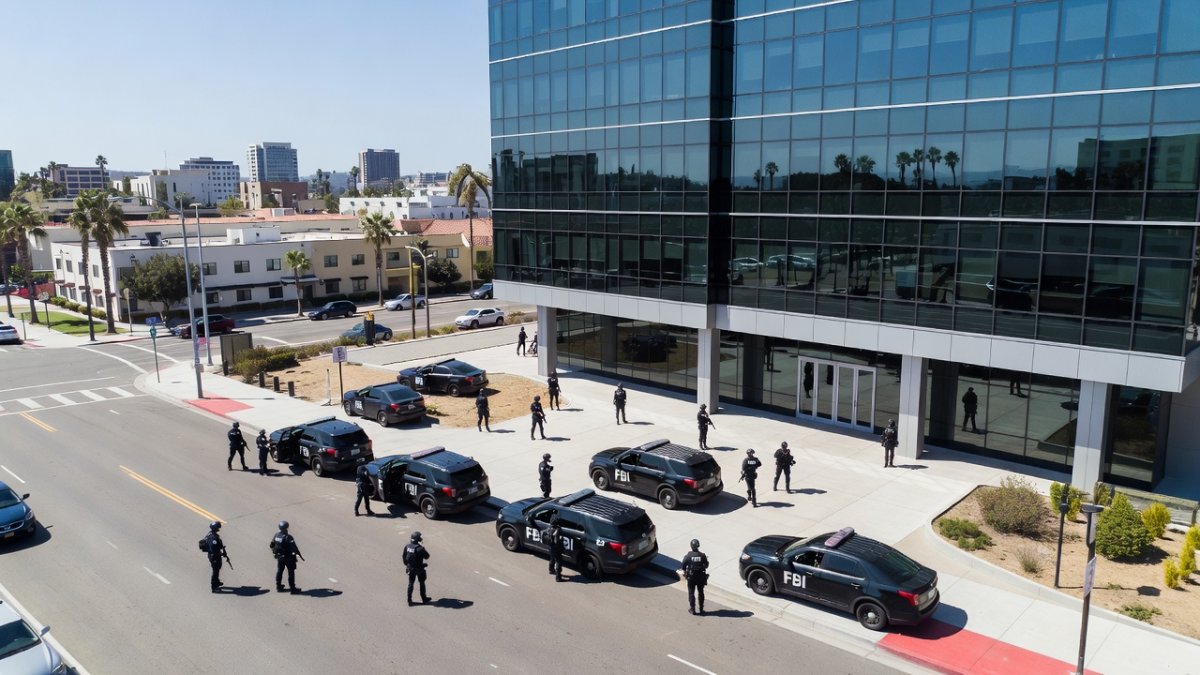
FBI Operation Hard Ball Takes Down Bishnoi Network
Atlanta, GA — Listen up, folks — this is the kind of story that cuts straight through the noise. The FBI just dropped the hammer on one of the most dangerous India-linked crime networks operating on American soil. Operation Hard Ball isn't some routine bust. It's the largest crackdown yet on transnational gangs tied to extortion, drugs, and murder-for-hire. Lawrence Bishnoi and his right-hand man Goldy Brar now face federal charges for running the hit on Canadian Sikh leader Hardeep Singh Nijjar. Twenty-four arrests already. Three indictments. A fifty-thousand-dollar reward on Brar's head. This one is moving fast.
What Happened: The Indictment
On July 7, 2026, federal prosecutors in Los Angeles unsealed three separate indictments naming thirty-seven people connected to India-based organized crime. The charges center on the Bishnoi Gang's reach into the United States. Lawrence Bishnoi, already locked up in India, and his Canada-based deputy Goldy Brar stand accused of directing the June 18, 2023 assassination of Hardeep Singh Nijjar outside a Surrey, British Columbia gurdwara. Twenty-four suspects have been taken into custody across the country as part of the sweep. The FBI is not playing around here.
The indictments lay out how the gang used encrypted apps, money mules, and U.S.-based associates to coordinate hits and move cash. This is not small-time stuff. We're talking coordinated criminal enterprises that stretch from Punjab to California. The Bureau made clear these groups also ran extortion rackets and drug pipelines inside North America. No fluff, just hard evidence that landed on the docket.
The Victim: Who Was Hardeep Singh Nijjar?
Hardeep Singh Nijjar was a Canadian Sikh separatist leader who built a following through his work at the Guru Nanak Sikh Gurdwara in Surrey. He advocated for an independent Khalistan and had been flagged by Indian authorities for years. On June 18, 2023, gunmen shot him dead in the gurdwara parking lot. Canadian police quickly tied the killing to the Bishnoi network. The FBI's indictments now put that link in federal court for the first time.
Nijjar's death sent shockwaves through Sikh communities on both sides of the border. It also forced governments to confront how far these gangs would go to silence critics. The U.S. charges treat the murder as a transnational hit ordered from inside an Indian prison. That detail alone changes the conversation.
Operation Hard Ball: How the FBI Connected the Dots
The FBI named the operation "Operation Hard Ball" because they went after three separate India-linked crime groups at once. Investigators traced phone records, financial transfers, and witness statements that tied Bishnoi and Brar directly to the Nijjar plot. The same network allegedly handled threats against Bollywood star Salman Khan and the 2022 murder of Punjabi singer Sidhu Moose Wala. This was not a one-off job. It was a business model.
Agents followed the money and the orders across borders. They watched how gang members in the U.S. handled logistics while the bosses sat in India or Canada. The result is the biggest single-day takedown of this kind of network in recent memory. Twenty-four arrests prove the reach was real and the evidence was solid.
Investigators relied heavily on metadata from encrypted platforms such as Signal and WhatsApp to map command chains between Bishnoi in India and Brar in Canada. Financial forensics teams traced layered wire transfers through U.S. money-service businesses and cryptocurrency mixers, identifying more than forty mule accounts that moved proceeds from extortion and fentanyl distribution. These records, combined with cell-site location data and cooperating-witness statements, established that U.S.-based associates handled logistics for the Nijjar hit while the principals remained abroad.
The operation mirrors earlier multi-jurisdictional takedowns such as the 2017 MS-13 surge in Long Island and the 2023 Italian Mafia money-laundering case in New York, where prosecutors used the same blend of digital tracing and financial subpoenas to dismantle command structures. Here, three distinct India-linked syndicates were targeted simultaneously: the Bishnoi network, a Punjab-based group specializing in contract killings, and a West Coast cell focused on narcotics and real-estate extortion. Agents documented how each cell maintained separate U.S. bank accounts yet shared encrypted channels for operational orders.
Twenty-four arrests occurred across Los Angeles, New York, Chicago, and Houston, with additional detentions in Vancouver and Toronto coordinated through RCMP liaison officers. The scale matches the largest single-day enforcement action against South Asian organized crime in FBI history, underscoring how the Bureau treated these networks as integrated transnational enterprises rather than isolated street crews.
The Canada Connection: Bishnoi's North American Network
Goldy Brar, whose real name is Satinderjeet Singh, sits at the center of the Canadian side. He remains at large, which is why the FBI posted a fifty-thousand-dollar reward for information leading to his arrest. Canadian authorities have already linked the Bishnoi group to extortion, drug trafficking, and kidnappings inside their borders. RCMP files show the gang treated North America as both a revenue source and a safe haven for planning.
Right now, Canada's Minister of Public Safety is in Federal Court fighting to keep Karamveer Singh Bishnoi, an alleged senior member, locked in an immigration detention facility while he fights deportation. Ottawa is not taking chances. They know these networks do not stop at the border. The U.S. indictments give Canadian prosecutors even more leverage to keep the pressure on.
Extradition Battle: Will Bishnoi Face US Courts?
The United States plans to seek Lawrence Bishnoi's extradition from India under the 1997 treaty. Bishnoi is already serving time in an Indian prison, so the legal fight will be complicated and slow. India’s Ministry of External Affairs has stated it remains committed to fighting transnational organized crime, but actual handover is another matter. Treaties exist on paper. Politics decide what happens next.
Brar is the more immediate target because he is still free. The fifty-thousand-dollar reward signals the Bureau wants him badly and fast. If either man lands in a U.S. courtroom, the trial will expose exactly how these gangs moved money and orders across three countries. That kind of transparency rarely happens without a fight.
Under the 1997 U.S.-India extradition treaty, requests must demonstrate dual criminality and sufficient evidence for the requested offense. The treaty permits extradition for murder and racketeering but contains no automatic obligation to surrender nationals; India routinely declines to extradite its own citizens, preferring to prosecute domestically under its own penal code. Political considerations further complicate matters, as Indian authorities weigh domestic security concerns and public opinion before approving any transfer.
Past cases illustrate the pattern. Fugitive businessman Vijay Mallya was extradited in 2017 after lengthy proceedings, yet several accused terrorists and organized-crime figures have remained in Indian custody despite U.S. requests. If Bishnoi were handed over, a U.S. trial would likely feature extensive classified evidence and witness protection measures unavailable in Indian proceedings. Conversely, an Indian trial would keep the case under local jurisdiction but could limit American prosecutors’ ability to introduce testimony from U.S.-based victims and cooperators.
Should extradition stall, federal authorities retain the option to pursue a provisional arrest warrant and continue gathering evidence for a future request. The fifty-thousand-dollar reward for Brar signals that the Bureau views at-large Canadian operatives as the more immediate enforcement priority while the Bishnoi extradition process unfolds over years rather than months.
What This Means for US-India Relations
The indictments do not accuse the Indian government of any role in Nijjar’s killing. That matters. It keeps the focus on criminal actors, not state policy. Still, the case lands at a sensitive time. Both countries have pledged deeper cooperation on organized crime, yet extradition requests often stall when the target is already behind bars in India. Expect quiet diplomacy and public statements that say little.
Washington is signaling it will treat these gangs as a national security priority, not just a law-enforcement footnote. That could mean more joint task forces and shared intelligence going forward. India has its own reasons to want these networks disrupted. Whether that produces actual extraditions remains to be seen.
The case accelerates existing FBI-RCMP-India intelligence-sharing frameworks established under the 2018 Criminal Matters Assistance Treaty. Joint working groups are now reviewing protocols for real-time financial-intelligence exchange, which could shorten the multi-year timelines that previously hampered cross-border investigations. Both capitals have signaled interest in expanding these mechanisms into a standing trilateral task force focused on South Asian syndicates.
By explicitly avoiding any allegation of Indian government involvement, Washington preserves diplomatic space for broader counterterrorism and trade talks. This distinction matters because earlier Canadian statements had raised questions about possible state links; the U.S. indictments keep the narrative centered on criminal actors. Canada’s ongoing detention litigation against Karamveer Singh Bishnoi adds a third dimension, requiring Ottawa to coordinate deportation strategy with both Washington and New Delhi.
Over time, successful extraditions or coordinated prosecutions could serve as precedent for handling future cases involving Khalistan-linked violence or Bollywood-targeted extortion. The outcome will test whether the three countries can convert this single enforcement action into durable institutional cooperation rather than episodic headline-driven responses.
The Bottom Line
Operation Hard Ball shows the Bishnoi Gang’s reach finally hit a hard ceiling. Twenty-four arrests, three indictments, and a fifty-thousand-dollar bounty on Goldy Brar prove the FBI is serious. Bishnoi may still be sitting in an Indian cell, but the legal net just got a lot tighter. Canada is holding its own line in court. The next moves will come through extradition filings and whatever Brar does next to stay free. This story is nowhere near finished.
By Jessica Ali, Staff Writer
This article was produced with AI-assisted research and editorial support. Reporting is based on sources cited in the article.
What's Your Reaction?
 Like
0
Like
0
 Dislike
0
Dislike
0
 Love
0
Love
0
 Funny
0
Funny
0
 Wow
0
Wow
0
 Sad
0
Sad
0
 Angry
0
Angry
0

Editor-in-Chief at Global1.News. Atlanta-based journalist who cuts through the BS and tells it like it is. Lead anchor, host, and the voice you hear when the spin stops and the truth starts.













Comments (0)