
Springboks Ticket Prices Stir Debate Before Wales Kings Park Clash
Springboks Ticket Prices Ignite Debate Before Wales Test The air outside Hollywoodbets Kings Park pulses with Durban’s signature match-day energy—braai smoke curling through packed car parks, taxis hooting, and green-and-gold jerseys everywhere—yet that excitement collides with a stark reality: the cheapest ticket for the Springboks against Wales costs R507.50.
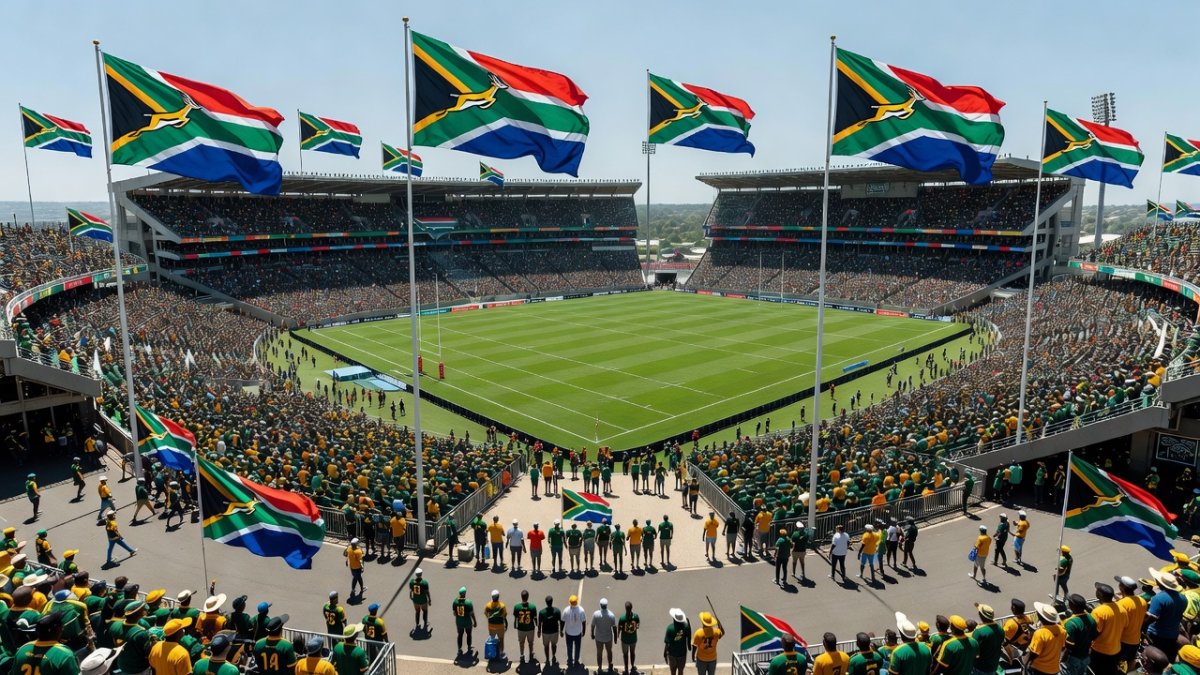
Springboks Ticket Prices Ignite Debate Before Wales Test
Durban, South Africa — Article continues...
Springbok Fever Meets Financial Reality: The R507 Question
The air outside Hollywoodbets Kings Park already hums with that unmistakable Durban energy. Braai smoke drifts across the car parks, taxis hoot, and fans in green and gold debate the one thing that has everyone talking: the cheapest ticket for today’s clash against Wales sits at R507.50. For many ordinary South Africans that price still feels steep, and the conversation in the shebeens from Soweto to Umlazi is the same — how do we keep the Springboks close to the people who made them?
From Ellis Park to Kings Park: A Season of Ticket Turmoil
The England Test at Ellis Park on 4 July told its own story. SA Rugby slashed prices from R950 down to R450 when sales lagged, and 52,790 supporters still turned out at the 62,000-capacity ground. The Scotland match at Loftus Versfeld helped push combined attendance past 98,000. Yet the Wales fixture at Kings Park opens with tickets ranging from R507.50 to R1,857.50 and many seats still available. Analysts note the broader Springbok range now stretches from R450 up to R3,500, while next year’s All Blacks series starts at R850. The pattern is clear: demand is strong, but price sensitivity remains real.
Mark Alexander and the Cross of Sustainability
SA Rugby president Mark Alexander has faced the backlash head-on. He rejected accusations of greed, pointing out that the organisation posted a financial loss in 2025. “Our commercial strategies are designed to cover the cost of running rugby in South Africa, not to increase profits,” he stated. A full review of the ticketing framework is now underway ahead of the 2027 season. The tension is obvious: rugby has become the most-watched sport in the country, yet the governing body must balance books while protecting the grassroots and transformation programmes that feed the national team.
SA Rugby’s balance sheet tells a story that goes far beyond one Durban afternoon. The 2025 loss came after years of carrying four professional franchises through the United Rugby Championship, funding the Currie Cup, sustaining the Springbok programme and investing in the women’s game that still operates on far thinner margins. Every rand spent on high-performance structures, medical support and travel for national teams leaves less room for the smaller unions that rely on grants to keep their own competitions alive. Mark Alexander’s insistence that commercial decisions exist to cover these costs rather than chase profit lands differently when supporters remember how quickly Ellis Park prices were cut to fill seats. That late adjustment showed the market will only stretch so far before ordinary families choose between a Test match and household essentials.
The pressure from World Rugby’s calendar and broadcast demands collides with SARU’s duty to its fourteen provincial unions and the wallets of fans who still travel by taxi from townships to the stadium. When ticket ranges stretch from the lower hundreds into the thousands, the gap between the paying public and the people who produce the next generation of players widens. On the ground in Durban the talk is not only about one match but about whether the same supporters who packed Ellis Park after the price drop will still feel welcome when the All Blacks arrive next year. Alexander’s review ahead of 2027 is therefore not just an accounting exercise; it is a test of whether the organisation can keep the books straight while the heartbeat of the game remains audible in every corner of the country.
Four Debutants, One Nation: Erasmus Reinvents the Boks
Inside the camp, Rassie Erasmus has chosen a different kind of boldness. Four players will earn their first caps in the starting XV against Wales. Flyhalf Vusi Moyo, the SA U20 star from the World Rugby Junior Championship, takes the number 10 jersey. Wing Jaco Williams, also from the U20 side, lines up on the right. Lock Ruben van Heerden and prop Carlu Sadie complete the quartet of uncapped players. Stormers loose forward Paul de Villiers earns his third cap. The backline reads 15 Aphelele Fassi, 14 Jaco Williams, 13 Jesse Kriel, 12 Damian de Allende, 11 Kurt-Lee Arendse, 10 Vusi Moyo, 9 Cobus Reinach. The forwards are anchored by Jasper Wiese at eight, Pieter-Steph du Toit captaining from seven, and Malcolm Marx at hooker. Erasmus has struck the balance between blooding new talent and keeping a competitive edge.
Vusi Moyo’s rise from the SA U20 side that competed at the Junior World Championship to wearing the number ten jersey against Wales captures the speed at which the pathway now operates. His distribution and composure under pressure will be watched closely, yet his selection also signals that the system is deliberately moving players from age-grade success into senior Tests before the window closes. Jaco Williams brings raw speed on the wing that Erasmus has long valued, while lock Ruben van Heerden and prop Carlu Sadie add physicality and set-piece reliability that the coaching group believes can be sharpened at this level. Paul de Villiers, already on his third cap, provides the bridge between the established loose-forward depth and the new faces, showing that experience and youth are being blended rather than simply swapped.
The decision to blood four uncapped players in one starting XV against Wales carries weight beyond the result. It demonstrates that South African rugby’s bench runs deeper than any single matchday squad and that the transformation project is not only about numbers on a spreadsheet but about actual bodies on the field reflecting the country’s make-up. When these players run out at Kings Park they carry the hopes of every schoolboy and club player who has followed the same route through provincial age groups and university rugby. Erasmus is betting that early exposure will harden them faster than waiting for perfect conditions, and the Durban crowd will judge both the scoreboard and the courage of that bet in equal measure.
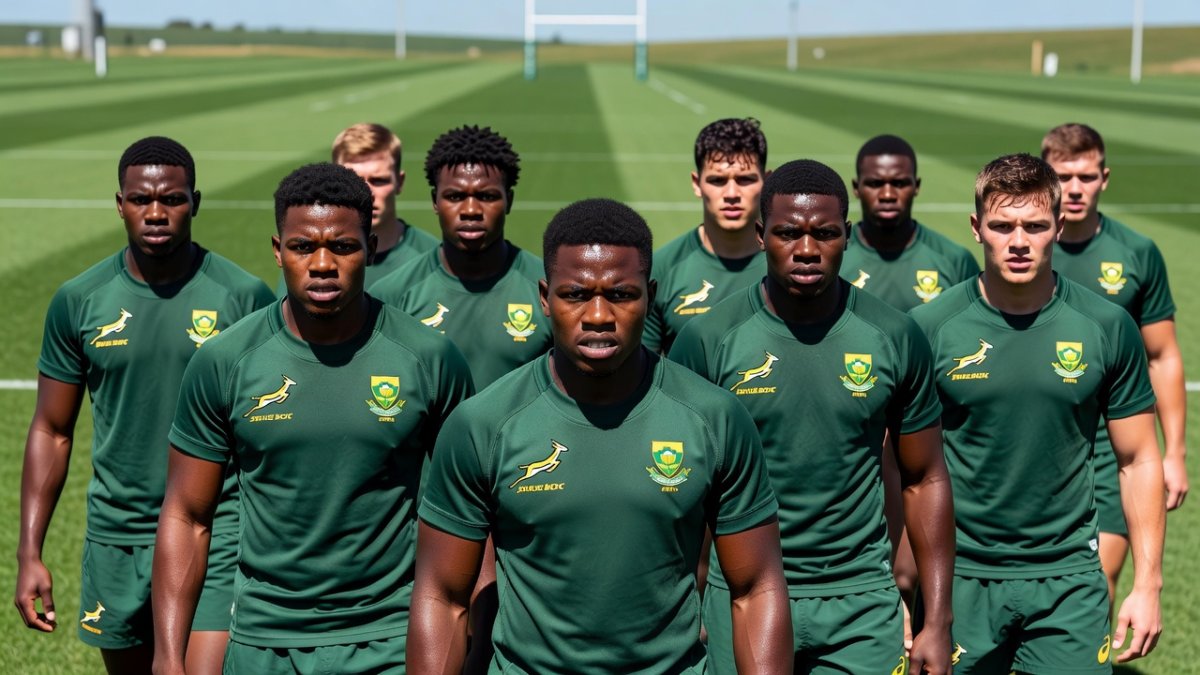
Wales at Kings Park: A Test of Depth and Passion
Kick-off is set for 17:40 SAST. The Springboks arrive with five consecutive victories over Wales and fresh momentum after a 45-21 win over England and a 42-28 victory against Scotland. Wales sit fifth on the Northern Hemisphere log following a 35-21 defeat to Argentina. Kwagga Smith has welcomed the pressure from the rising stars, knowing the next generation must be tested if South African rugby is to stay strong. The Durban crowd will judge both the scoreboard and the accessibility debate in equal measure.
The Bigger Picture: Rugby's Soul in South Africa
Rugby’s unifying power has always run deeper than any single match. When ticket prices rise, the risk is that township kids and rural supporters drift away from the game that once gave them heroes like Chester Williams and Bryan Habana. Transformation targets and grassroots development depend on young fans being able to afford to watch the Springboks live. The current review offers a chance to protect that link. If the average supporter feels priced out, the sport loses part of its soul — the very thing that turns a Test match into a national celebration rather than a corporate event.
Rugby’s place in South African life has always stretched beyond the white lines. The 1995, 2007, 2019 and 2023 World Cup triumphs created moments when the whole nation paused, yet those memories only endure if the next generation can still reach the stadium to feel the same electricity. When a family in Zwide or a group of schoolboys from a township programme cannot stretch to R507.50, the risk is that the sport loses the very supporters who once produced Chester Williams and Bryan Habana. Grassroots clubs and development initiatives depend on visible role models who remain connected to the communities that raised them, and the current pricing conversation directly affects whether those links stay intact.
The MyPlayers union has repeatedly highlighted how commercial growth must be matched by investment back into the base that supplies talent. Schools rugby and the Varsity Cup continue to unearth players who never imagined wearing green and gold until they watched a Test from the stands as children. If those stands become the preserve of corporate hospitality, the pipeline narrows and the social fabric that turns a Springbok victory into a national celebration frays. The review now underway offers a chance to protect that connection, ensuring that affordability and excellence remain two sides of the same coin rather than competing priorities.
What to Watch For: The Road to 2027
Today’s result will feed directly into planning for the 2027 Rugby World Cup cycle. Erasmus will monitor how the four debutants handle the physical and tactical demands of Test rugby. Vusi Moyo’s distribution and decision-making under pressure will be scrutinised closely. Off the field, the ticketing review will shape whether more families can afford to bring their children to future internationals. The Springboks remain the heartbeat of South African sport, but the rhythm depends on keeping the game reachable for the next generation of fans who dream of wearing the green and gold themselves.
Tags: springboks, ticket prices, nations championship, wales, kings park, rassie erasmus, vusi moyo, mark alexander, transformation, grassroots rugby
By Dante Williams, Staff Writer
This article was produced with AI-assisted research and editorial support. Reporting is based on sources cited in the article.
What's Your Reaction?
 Like
0
Like
0
 Dislike
0
Dislike
0
 Love
0
Love
0
 Funny
0
Funny
0
 Wow
0
Wow
0
 Sad
0
Sad
0
 Angry
0
Angry
0

Breaking News and Investigations Correspondent at Global1.News. Based in London, covering global breaking news, security, and investigative stories. Known for digging deeper and connecting the dots across continents.












Comments (0)