
Russian Court Bars Nadezhdin From Duma Ballot Over Navalny Photo
A Moscow court fined opposition politician Boris Nadezhdin 1,000 rubles ($13) for displaying a Navalny photo, classified as extremist symbols under Russian law. The conviction automatically disqualifies him from collecting signatures for September's State Duma elections, ending his parliamentary campaign.
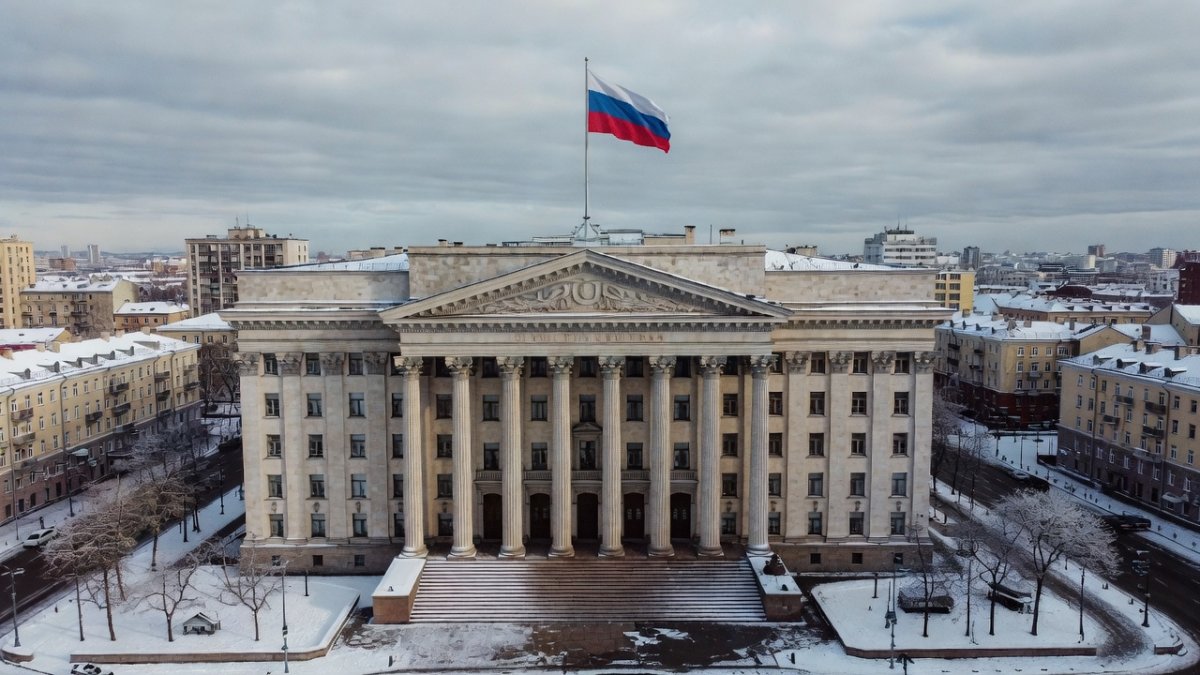
A small fine of just 1,000 rubles has delivered a decisive blow to one of Russia's last visible opposition voices, exposing how administrative rulings now function as effective tools of political elimination ahead of the September parliamentary vote. Boris Nadezhdin's conviction over a Navalny photograph illustrates the Kremlin's systematic narrowing of electoral space through layered legal restrictions.
Russian Court Bars Nadezhdin From Duma Ballot
Moscow, Russia — In a move that underscores the Kremlin's tightening grip on opposition figures ahead of parliamentary elections, a Moscow region judge this week imposed a nominal fine on former State Duma deputy Boris Nadezhdin for displaying a photograph of Alexei Navalny, immediately disqualifying him from signature collection required for independent candidacy in the September State Duma elections.
Court Ruling and Immediate Political Consequences
The Tverskoy District Court ruled that Nadezhdin violated rules on extremist symbols by displaying a photograph of Alexei Navalny, whose organizations carry official extremist designations under Russian law. The court ordered a fine of 1,000 rubles, equivalent to roughly $13, according to reporting by the exiled Mediazona outlet on Friday. While the monetary penalty remains minimal, Russian election law treats any conviction under extremism statutes as grounds for disqualification from ballot access. The conviction immediately bars Nadezhdin from gathering signatures needed to qualify as an independent candidate in the September State Duma elections.
Nadezhdin had already been blocked from leaving the country, a restriction reported on July 16 that further limits his ability to campaign or seek support abroad. The ruling also prevents him from proceeding with his mid-June filing to run in the upcoming parliamentary vote.
Nadezhdin's Political Record and Opposition Alliances
Nadezhdin served in the State Duma from 1999 to 2003 and maintained close ties to the late opposition leader Boris Nemtsov, the prominent liberal reformer assassinated in 2015. Between 1999 and 2003, while Nemtsov served as a leader of the Union of Right Forces, Nadezhdin worked as an advisor on economic policy and regional outreach. The two men collaborated on the 2000 "Program 2000" manifesto, which called for transparent privatization and judicial reform.
In the lead-up to Russia's March 2024 presidential election, Nadezhdin mounted an unusually visible campaign that drew on his decades-long ties to liberal opposition circles. He personally oversaw the collection of more than 100,000 signatures across 40 regions. His platform centered on an immediate end to the war in Ukraine, restoration of relations with the West, and the release of political prisoners -- themes that resonated with urban professionals and younger voters disillusioned by the conflict. Yet on February 8, 2024, the Central Election Commission (CEC) under chairwoman Ella Pamfilova rejected his candidacy on technical grounds, citing irregularities in signature validation -- a decision widely viewed as politically motivated.
His party, Civic Initiative, was later dissolved under foreign agent and undesirable organization rules. Today he operates without formal party infrastructure, relying on informal networks of former colleagues and independent election observers.
Sequence of Recent Designations
The cascade of measures against Nadezhdin began on July 10, when Russia's Ministry of Justice added him to the foreign-agent registry for alleged contacts with "undesirable" international organizations, including the European Endowment for Democracy. Under the 2012 foreign-agent law, this designation immediately required him to label all public statements, restricted his ability to receive foreign funding, and exposed him to fines for non-compliance.
Three days later, on July 13, police detained him at his Moscow apartment on charges of "discrediting the armed forces," citing social-media posts from 2022. The detention was followed on July 16 by a travel ban issued by the Interior Ministry, preventing him from leaving the country even for medical treatment abroad. On July 17, the Moscow region court delivered today's ruling on the Navalny photo charge. Mediazona reported that the rapid escalation mirrored patterns seen in earlier cases against figures such as Vladimir Kara-Murza, where the foreign-agent label served as the legal trigger for cascading restrictions.
Legally, the foreign-agent designation functions as an entry point into a broader system of prohibitions. Once registered, individuals are barred from holding public office, teaching at state universities, or organizing public events without prior notification. Any subsequent administrative or criminal case can then reference the designation as evidence of "systematic opposition activity," justifying further sanctions. The July 17 ruling by the Tverskoy District Court added a requirement that Nadezhdin report weekly to local police.
Broader Application of Extremism Statutes
Since 2022, Russian courts have applied extremism statutes to more than 1,200 opposition figures and activists, according to aggregated data compiled by OVD-Info and the Memorial Human Rights Center. The majority of these cases involve charges under Article 280 and Article 282 of the Criminal Code, which criminalize "public calls for extremist activity" and "incitement of hatred." Human Rights Watch's February 2026 report documented a sharp increase in prosecutions following the July 2025 amendments that expanded the definition of extremism to include any expression deemed to "undermine constitutional order" or "discredit state institutions." The report highlighted that 87 percent of defendants in these cases had no prior criminal record, suggesting the statutes are being used preemptively against political opponents.
These changes built directly on the 2021 designation of Alexei Navalny's Anti-Corruption Foundation and its regional offices as extremist organizations, a ruling that criminalized any form of association with Navalny's network. Prosecutors now routinely cite the Navalny precedent when pursuing cases against other liberals, arguing that participation in signature drives or anti-war statements constitutes "continuation of extremist activity." The Supreme Court has recorded that convictions under extremism laws rose from 312 in 2021 to 784 in 2025, with the largest category involving online statements.
Kremlin Power Structures and Electoral Control
Decisions of this nature originate within the judicial system but align with priorities set by the presidential administration and the Central Election Commission. The foreign-agent label, travel restrictions, and extremism findings operate together to limit visibility and organizational capacity for figures outside the ruling United Russia framework. Official statements from the Kremlin have framed such actions as enforcement of existing statutes rather than targeted political intervention -- a framing that monitoring groups contest given the concentration of measures against anti-war figures.
Monitoring Groups and Human Rights Findings
Organizations tracking political freedoms in Russia describe the fine and disqualification as part of an intensified pre-election effort to reduce competition. The nominal financial penalty in Nadezhdin's case, they note, masks the severity of the resulting exclusion from the ballot process -- a pattern that has become increasingly common as the September vote approaches. The Memorial Human Rights Center has documented that the combination of foreign-agent designations, travel bans, and extremism charges produces a cumulative effect on political participation, effectively eliminating candidates through administrative means rather than direct prohibitions. Election monitors observe that this layered approach allows authorities to remove opponents from contention without the appearance of overt intervention in the electoral process.
Outlook for September Elections
At least 14 opposition candidates have already been excluded from the September 2026 State Duma elections through a combination of registration denials and administrative disqualifications. Among them are former Yabloko deputy Nikolai Rybakov and independent municipal deputy Anastasia Udaltsova, both barred on grounds of alleged "extremist ties." The remaining field is dominated by United Russia nominees and a handful of token candidates from the Liberal Democratic Party and A Just Russia, ensuring minimal competition.
Independent analysts at the Carnegie Moscow Center estimate that United Russia will secure at least 320 of the 450 Duma seats, a projection based on the absence of viable opposition figures on the ballot and the Kremlin's control over regional electoral commissions. Election monitors from the Golos movement report that signature requirements have been enforced unevenly, with pro-government candidates routinely receiving waivers while independents face exhaustive verification. The Levada Center notes that with the field reduced to loyalist parties, the September elections are expected to serve primarily as a ratification of existing power structures rather than a contest of competing platforms.
By Irina Volkov, Staff Writer
This article was produced with AI-assisted research and editorial support. Reporting is based on sources cited in the article.
What's Your Reaction?
 Like
0
Like
0
 Dislike
0
Dislike
0
 Love
0
Love
0
 Funny
0
Funny
0
 Wow
0
Wow
0
 Sad
0
Sad
0
 Angry
0
Angry
0

Russia/Eastern Europe Correspondent at Global1.News. Covering Russian politics, energy, security, and the shifting dynamics of the post-Soviet space. Provides clear-eyed analysis on one of the world's most opaque regions.












Comments (0)