
Israeli Settlers Assault CNN Journalists in Occupied West Bank
In a shocking escalation of violence in the occupied West Bank, armed Israeli settlers launched a coordinated attack on a CNN journalist convoy in Sinjil, smashing vehicles and brandishing weapons during a commemoration event. The assault highlights the growing risks to international media documenting settler aggression against Palestinians. This incident follows a pattern of unchecked attacks that endanger press freedom and civilian safety alike
In a shocking escalation of violence in the occupied West Bank, armed Israeli settlers launched a coordinated attack on a CNN journalist convoy in Sinjil, smashing vehicles and brandishing weapons during a commemoration event. The assault highlights the growing risks to international media documenting settler aggression against Palestinians. This incident follows a pattern of unchecked attacks that endanger press freedom and civilian safety alike.
Israeli Settlers Assault CNN Crew in West Bank
Sinjil, Occupied West Bank — Article continues...
In a recent Middle East Eye report, footage captured the precise moment four armed Israeli settlers descended on a convoy of journalists in Sinjil, hurling stones, smashing windshields with metal and wooden rods, and brandishing a knife in an attempt to slash vehicle tires. The journalists had gathered to mark the one-year anniversary of the killing of Saif Musallet, a 20-year-old Palestinian-American beaten to death by settlers in the same village on July 11, 2025. The attack forced the CNN crew and accompanying reporters to retreat under a barrage of rocks while settlers shouted threats, underscoring the immediate dangers faced by those documenting events in the occupied West Bank.The Attack on Journalists in Sinjil
On July 11, 2026, four armed Israeli settlers targeted the convoy near Sinjil, north of Ramallah. They carried metal and wooden rods, stones, and at least one knife. The settlers attempted to damage CNN's vehicle by slashing its tires while the journalists covered the anniversary commemoration. Israeli police from the Samaria Brigade arrested the four settlers following the incident. Deutsche Welle journalists had faced a similar assault by settlers in Sinjil earlier that month, revealing a repeated pattern of interference with media coverage in the area.
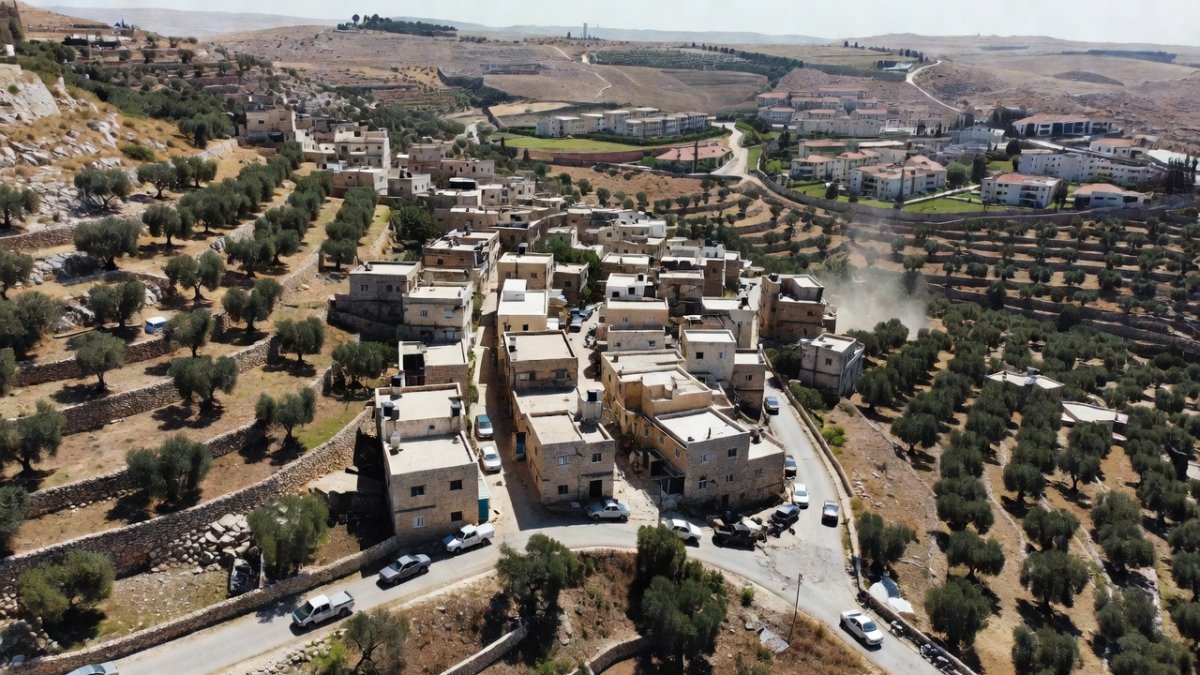
CNN journalists later described the assault as sudden and terrifying, with settlers charging the vehicles while yelling phrases such as "Get out of here" and "This is our land now." The crew reported that Israeli forces arrived nearly twenty minutes after the attack began, allowing the settlers time to damage equipment and intimidate the reporters before any intervention occurred. This delay mirrors patterns documented by human rights groups where security forces prioritize settler safety over protecting civilians or journalists.
The incident highlights how press freedom in the West Bank is increasingly compromised by coordinated settler actions that exploit the protective presence of Israeli military units. When journalists attempting to document a peaceful commemoration are forced into retreat, the public loses access to firsthand accounts of life under occupation. Such attacks serve to intimidate not only media workers but also the Palestinian communities they seek to represent.
Human impact extends beyond the immediate physical threat, as repeated assaults on reporters erode trust in international coverage and leave Palestinian voices further isolated. Families in Sinjil expressed relief that no journalists were seriously injured, yet they noted the psychological toll of witnessing yet another display of unchecked aggression on the anniversary of a young man's death.
Commemorating Saif Musallet's Killing
Saif Musallet, also known as Sayfollah, was beaten to death by Israeli settlers in Sinjil on July 11, 2025. His father, Kamel Musallet, traveled to the village on the anniversary to visit his son's grave but was himself attacked by settlers. The family has sought accountability for the original killing amid ongoing settler presence in the region. The commemoration drew journalists precisely because the circumstances of Saif's death remain unresolved one year later.
Kamel Musallet recounted being surrounded and struck while standing at his son's gravesite, an act that compounded the family's grief and demonstrated how violence persists even at sites of mourning. Settlers reportedly shouted insults and threats, forcing him to flee without completing his visit. This personal violation underscores the daily reality faced by Palestinian families who cannot safely honor their dead in areas under expanding settlement control.
The unresolved nature of Saif's killing reflects broader failures in accountability mechanisms, where investigations into settler violence rarely result in prosecutions. One year later, the Musallet family continues to advocate for justice through international channels, highlighting how individual tragedies become emblematic of systemic dispossession in the West Bank.
Palestinian residents view such commemorations as acts of resistance against erasure, yet the recurring attacks reveal how even remembrance is policed. The presence of journalists was intended to provide a measure of protection, but the assault on the convoy showed the limits of that safeguard when Israeli authorities respond slowly or not at all.
Surge in Settler Violence Since 2023
Settler violence across the West Bank has increased sharply since the war on Gaza began in October 2023. The Colonization and Wall Resistance Commission documented more than 7,000 settler attacks on Palestinians over the subsequent two years, resulting in 33 deaths. These incidents include assaults on individuals, property damage, and restrictions on movement. In Sinjil and surrounding villages, such attacks have disrupted daily life, farming activities, and access to essential services for Palestinian residents.
This surge aligns with Israeli government policies that have accelerated settlement expansion and provided legal cover for outpost construction. Analysts connect the rise in attacks to statements from far-right ministers encouraging Jewish presence in the West Bank, creating an environment where settlers feel emboldened to act with impunity. The ICJ's July 2024 advisory opinion declaring settlements illegal has done little to curb this momentum on the ground.
Daily life for Palestinians in affected areas involves constant vigilance, with farmers abandoning fields and families altering routes to avoid confrontation. Children in Sinjil report heightened anxiety during school commutes, while economic losses from damaged olive groves and restricted grazing lands deepen poverty. These conditions illustrate how settler violence functions as a tool of territorial control rather than isolated incidents.
Human rights monitors note that the pattern since 2023 represents a qualitative shift, with attacks becoming more organized and lethal. US policy responses have remained largely rhetorical, with limited pressure on Israel to restrain settlers despite documented evidence linking violence to state-backed expansion.
Context of Impunity and Government Policy
Israel's far-right government has advanced settlement construction in the West Bank while settler attacks have frequently occurred without meaningful consequences. Israeli forces have often been observed protecting settlers rather than intervening to safeguard Palestinians. The International Court of Justice ruled in July 2024 that all Israeli settlements in the West Bank are illegal under international law. Despite this determination, expansion continues, and mechanisms for holding perpetrators accountable remain limited according to human rights monitors.

Impunity is reinforced by military policies that classify many settler actions as "price tag" responses to Palestinian resistance, thereby framing aggression as defensive. Government subsidies for settlement infrastructure further embed this violence within official strategy, making it difficult to separate individual perpetrators from state support structures.
The ICJ ruling has prompted calls for sanctions and boycotts internationally, yet enforcement remains absent. Palestinian communities experience this gap as abandonment, where legal pronouncements fail to alter the balance of power that allows settlers to operate freely.
US policy continues to provide military aid without conditions tied to settler restraint, despite congressional concerns. This approach sustains the cycle by signaling that violations of international law carry no material cost, leaving Palestinians to bear the human consequences of unchecked expansion.
International Legal Implications and Global Responsibility
The Sinjil attacks on journalists and the Musallet family raise urgent questions under international humanitarian law, particularly following the ICJ's July 2024 determination that Israeli settlements violate the Fourth Geneva Convention. States party to the convention hold obligations to ensure respect for its provisions, yet few have moved beyond statements of concern to concrete measures such as targeted sanctions or suspension of trade preferences that benefit settlement enterprises.
US policy remains inconsistent with these legal findings, as continued military assistance flows without requirements that Israel address settler impunity. This stance contrasts with domestic US rhetoric on press freedom and human rights, creating a credibility gap that Palestinian advocates argue undermines global norms. The detention of Congressman Ro Khanna's delegation by settlers in the same week further illustrates how even diplomatic visits face risks when enforcement mechanisms are absent.
Broader accountability efforts, including potential referrals to the International Criminal Court, gain urgency from incidents like the CNN assault. Without coordinated international action, the cycle of violence documented in Sinjil will continue to erode the protective value of legal frameworks and deepen Palestinian isolation under occupation.
Additional Incidents Highlighting Risks
In the same week as the Sinjil attack on journalists, US Congressman Ro Khanna reported that he and his delegation were detained by armed Israeli settlers during a visit to the occupied West Bank. This event, alongside the assaults on CNN and Deutsche Welle crews, illustrates how even official visitors and international media encounter direct threats. Palestinian communities in the area describe living under constant pressure from both settler actions and the absence of reliable protection from authorities.
The Ro Khanna incident involved settlers blocking roads and issuing warnings, forcing the delegation to alter plans under armed escort. Such events reveal how settler networks extend influence beyond isolated villages, affecting international diplomacy and media access alike. Palestinian witnesses noted the similarity to tactics used against local residents, underscoring a unified strategy of intimidation.
These overlapping attacks on journalists, families, and elected officials point to systematic impunity that shields perpetrators from consequences. Israeli authorities' delayed responses allow violence to escalate before any restraint is applied, eroding confidence in official commitments to the rule of law.
Communities in the West Bank interpret these patterns as evidence that external attention alone cannot substitute for enforceable protections. The human cost accumulates in restricted movement, lost livelihoods, and persistent fear that shapes every aspect of daily existence.
Human Impact on Palestinian Communities
Residents of Sinjil and nearby villages report that repeated settler incursions have restricted their ability to tend fields, travel safely, and maintain family connections. Kamel Musallet's experience attempting to visit his son's grave reflects the personal toll on families who have lost relatives to violence. Broader patterns documented by the Colonization and Wall Resistance Commission show that such attacks compound economic hardship and psychological strain for Palestinians living under occupation. These conditions persist as settlement activity expands in the territory.
The cumulative effect on mental health is profound, with residents describing chronic stress from anticipating attacks during routine activities. Children grow up navigating checkpoints and avoiding certain roads, while elders recount how once-open lands have become contested zones. Economic data from the commission links settler violence directly to declining agricultural output and rising unemployment in affected villages.
Kamel Musallet's ongoing advocacy highlights resilience amid grief, yet many families lack resources to pursue similar efforts. International solidarity visits provide momentary visibility, but the absence of sustained protection leaves communities vulnerable to renewed assaults after attention fades.
These lived realities connect individual suffering to larger policy choices, where settlement expansion is prioritized over Palestinian security and rights. The result is a fragmented society where hope for normalcy diminishes with each passing incident.
Implications for Press Freedom and Accountability
The targeting of journalists covering commemorative events limits the documentation of conditions on the ground. When media teams must retreat from physical assaults, the public record of events in places like Sinjil becomes harder to establish. Palestinian voices emphasize that sustained international attention is necessary to address the systematic nature of the violence and its effects on daily existence under occupation. Without stronger enforcement of legal standards, including the International Court of Justice findings, the cycle of attacks continues to affect both residents and those reporting on their circumstances.
Press freedom organizations have documented a chilling effect, with some outlets reducing on-the-ground coverage due to safety concerns. This self-censorship deprives global audiences of accurate portrayals of occupation dynamics and settler influence. Palestinian journalists face even greater risks, often operating without the relative protections afforded to international crews.
Accountability requires linking media incidents to the ICJ framework and pressing for enforcement mechanisms that deter future violence. US policy could play a pivotal role by conditioning aid on concrete steps against impunity, yet current approaches fall short of this standard.
Ultimately, the safety of journalists and the dignity of Palestinian communities remain intertwined. Addressing one without the other perpetuates the conditions that allow attacks like those in Sinjil to recur without consequence. By Fatima Al-Rashid, Staff Writer
This article was produced with AI-assisted research and editorial support. Reporting is based on sources cited in the article.
What's Your Reaction?
 Like
0
Like
0
 Dislike
0
Dislike
0
 Love
0
Love
0
 Funny
0
Funny
0
 Wow
0
Wow
0
 Sad
0
Sad
0
 Angry
0
Angry
0
Gulf/MENA Correspondent at Global1.News. Based in Doha, covering Gulf politics, energy markets, diplomacy, and development across the Middle East and North Africa. Tracks the economic transformation of the Gulf states.











Comments (0)