
Ukraine Four Years On — A Country Transformed by War
In a recent BBC News documentary, veteran correspondent Nick Beake returns to Ukraine, more than four years after Russia's full-scale invasion began, to see how the country has been transformed by the longest and deadliest conflict on European soil since the Second World War. Ukraine Four Years On — A Country Transformed by War Kyiv, Ukraine — More than four years after Russia
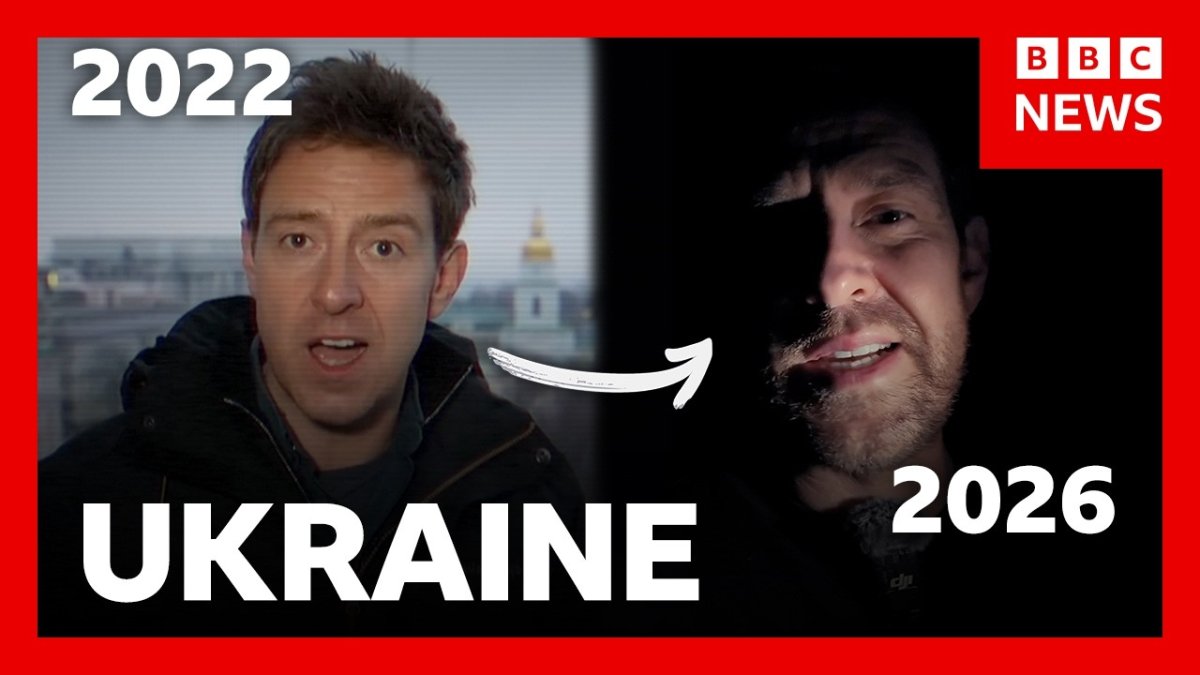
In a recent BBC News documentary, veteran correspondent Nick Beake returns to Ukraine, more than four years after Russia's full-scale invasion began, to see how the country has been transformed by the longest and deadliest conflict on European soil since the Second World War.
Ukraine Four Years On — A Country Transformed by War
Kyiv, Ukraine — More than four years after Russia launched its full-scale invasion, Ukraine has been reshaped in ways that will endure for generations. BBC correspondent Nick Beake, who was in the capital when the war began, returns to document a nation living through the longest conflict on European soil since 1945.
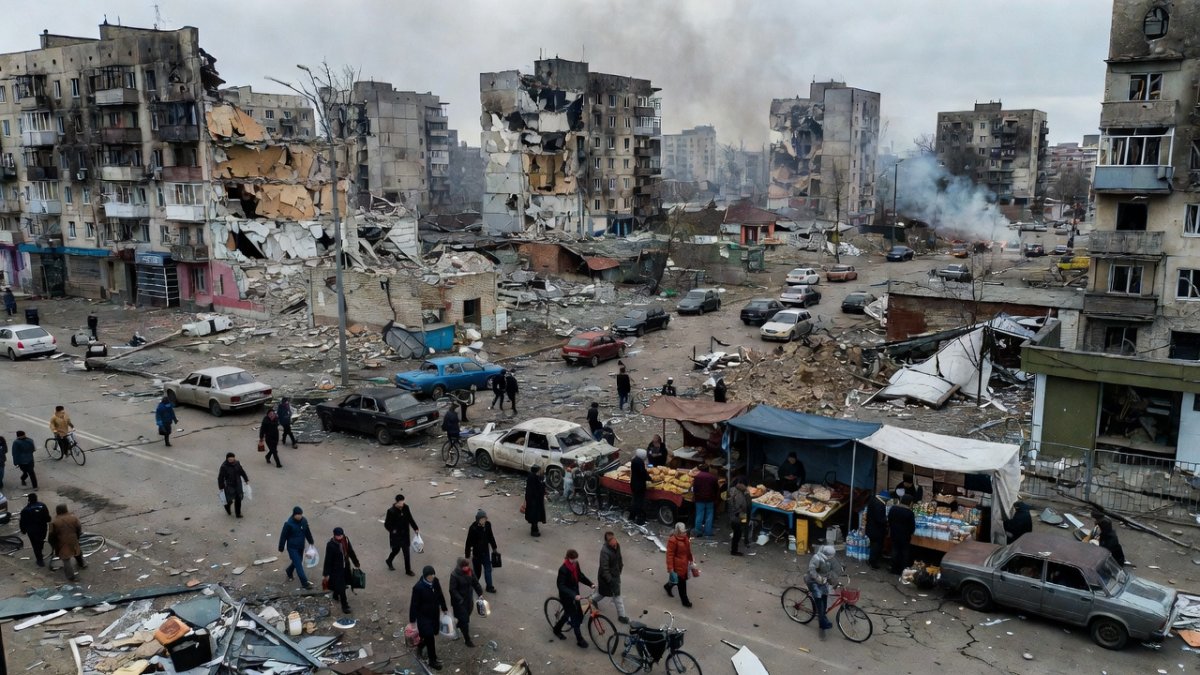
Four Years of War — A Country Transformed
Nick Beake, the BBC correspondent who reported from Kyiv as Russian forces reached the outskirts of the capital in February 2022, has returned to Ukraine to document a country that has been reshaped by more than four years of relentless conflict. In his latest report for BBC News, Beake travels through a nation where the war has become an inescapable fact of daily existence — from the frontlines of Donetsk to the streets of Kyiv, where air raid sirens remain a routine part of life.
The transformation is visible everywhere, he reports. Cities that once welcomed foreign visitors now bear the scars of missile strikes and drone attacks. Infrastructure that took decades to build has been systematically targeted. And a generation of Ukrainians has come of age knowing nothing but war.
What follows is analysis from multiple verified sources on the state of the war in June 2026 — the battlefield dynamics, the deep-strike campaigns, the human cost, and the geopolitical calculations that continue to shape the conflict.
The Battlefield — Grinding Advance in Donetsk
The most intense fighting in recent weeks has centred on Donetsk Oblast, where Russian forces have made incremental but significant gains around the strategically important towns of Kostyantynivka and Chasiv Yar. These urban battles represent the latest phase of Russia's slow, methodical advance through the Donbas — a campaign that has consumed thousands of lives on both sides for every kilometre of ground gained.
According to battlefield mapping sources including the Institute for the Study of War, Russian forces have entered the city limits of Kostyantynivka and are contesting blocks against Ukrainian defenders. Pro-Russian military bloggers claim up to 95 percent control of certain sectors, though independent verification remains limited due to the fog of war and heavy electronic warfare jamming both sides employ.
Ukrainian forces, meanwhile, have conducted a fighting withdrawal in parts of the sector, preserving combat power for subsequent defensive lines rather than risking encirclement. This tactical approach — trading terrain for time and manpower preservation — has been a consistent feature of Ukrainian military doctrine since 2022.
But the Donetsk front tells only part of the story. In western Donetsk and eastern Dnipropetrovsk, Ukrainian forces achieved notable localized successes in recent weeks, advancing and clearing positions across approximately 200 square kilometres. Geolocated evidence confirmed by open-source intelligence analysts shows Ukrainian troops pushing Russian forces back beyond the Mokri Yaly and Vovcha rivers — a rare instance of Ukrainian territorial recovery in a sector that had been under steady Russian pressure. Further north near Kharkiv, Ukrainian units have conducted limited counterattacks to disrupt Russian assembly areas, while in the south around Kherson, artillery duels continue across the Dnipro River with both sides using small boat raids to probe defences. Russian Defense Ministry statements continue to frame these advances as part of a broader effort to secure the entire Donetsk region, while Ukrainian Armed Forces commanders emphasize the high cost to Russian units in manpower and equipment. Both sides suffer heavy casualties in these attritional engagements, with neither achieving a breakthrough that would alter the overall strategic balance.
Electronic warfare has become decisive in these sectors, with Russian Lancet drones and Lancet-style loitering munitions countered by Ukrainian jamming systems that force Russian units to operate with degraded GPS and communications. Ukrainian FPV drones, in turn, exploit gaps created by their own electronic warfare units to strike Russian armour at ranges previously considered safe.
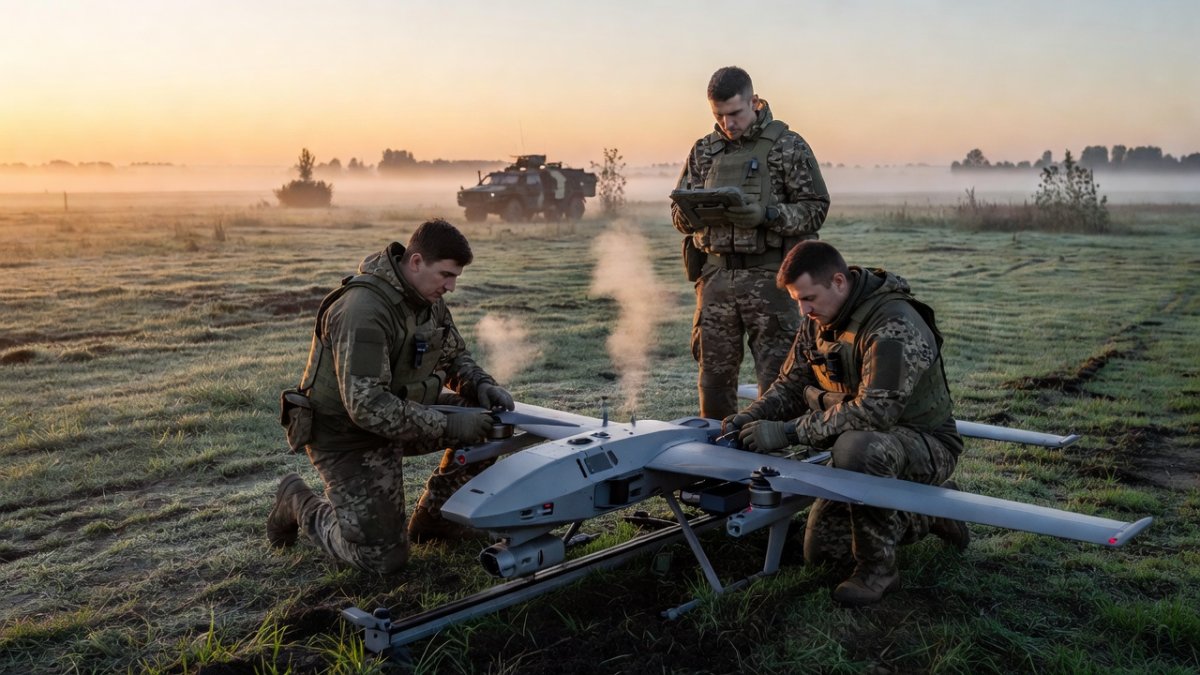
The Deep-Strike Campaign — Taking the War to Russia
Perhaps the most significant strategic development of 2026 has been Ukraine's expansion of its long-range strike capability. Ukrainian drones and missiles now regularly hit targets deep inside Russian territory — fuel depots, oil refineries, ammunition storage sites, and military logistics hubs hundreds of kilometres from the border.
These strikes have had a measurable impact on Russian military operations. Fuel shortages have been reported in occupied territories, including Crimea, where Ukrainian interdiction of bridges and ground lines of communication linking the peninsula to occupied Kherson has forced Russian logistics commanders to rely on pontoon bridges and sand-alternative crossings. The Chonhar road and railway bridges have been struck repeatedly, disrupting the flow of supplies to Russian forces in southern Ukraine. In the Black Sea, Ukrainian maritime drones have continued to target Russian naval assets and port infrastructure, limiting Moscow's ability to project power from Sevastopol and Novorossiysk while protecting Ukrainian grain export routes.
Ukrainian President Volodymyr Zelensky has justified these strikes as legitimate self-defence under international law, arguing that Russia's use of its own territory as a staging ground for missile and drone attacks makes every military logistics node a lawful target. The Kremlin has condemned the strikes as acts of terrorism and warned of retaliation.
The deep-strike campaign has also demonstrated Ukraine's growing domestic drone production capacity. Western defence officials acknowledge that Ukraine now produces a significant portion of its long-range drones domestically, reducing dependence on foreign-supplied systems and making the campaign more sustainable over time. Ukraine holds tactical drone overmatch on the battlefield, allowing Ukrainian units to conduct precision strikes that compensate for shortages in conventional artillery ammunition. Russian electronic warfare units have responded by deploying new decoy and spoofing systems around key refineries, yet Ukrainian operators continue to adapt flight profiles and frequencies to maintain strike effectiveness.
The Human Cost — A Demographic Catastrophe
Behind the battlefield statistics lies a human tragedy of staggering proportions. More than four years of war have produced what demographers describe as a demographic catastrophe for Ukraine. Millions have fled the country as refugees. Millions more are internally displaced. The population — estimated at roughly 43 million before the 2022 invasion — has declined significantly through a combination of emigration, war casualties, and a collapse in birth rates.
Beake's documentary captures this human toll firsthand. He speaks with families who have lost homes, loved ones, and any sense of normalcy. Children who were toddlers when the invasion began are now old enough to understand the air raid sirens that still punctuate daily life. Schools operate in bomb shelters. Hospitals treat soldiers with battlefield injuries alongside civilians wounded in missile strikes.
On the Russian side, the human cost is no less severe, though far less visible to the outside world. Western intelligence assessments estimate Russian casualties in the hundreds of thousands, with recruitment campaigns struggling to replenish losses. The Kremlin has sought to maintain domestic support for the war through carefully managed state media narratives while avoiding the kind of mass mobilisation that proved politically damaging in previous phases of the conflict. Russian forces face logistical challenges, fuel shortages, recruitment difficulties that compound these pressures. Domestic protests remain rare but have surfaced in regions far from Moscow when casualty notifications reach small towns, prompting authorities to increase financial incentives for contract soldiers.
Geopolitical Dynamics — Shifting Alliances and War Fatigue
The international landscape surrounding the Ukraine war has shifted significantly since 2022. While Western military aid continues to flow — particularly from European NATO members who have stepped up their contributions — signs of war fatigue are evident in several key capitals. Political debates in the United States over the scale and duration of support for Ukraine have intensified, with some Republican lawmakers questioning whether the current level of assistance is sustainable.
European NATO members, meanwhile, have increasingly shouldered the burden of military aid, recognising that a Ukrainian defeat would fundamentally alter the European security order. NATO's eastern flank has been reinforced, and Russia has responded by expanding its own military infrastructure along its border with alliance members — though Western intelligence assessments do not consider a direct NATO-Russia confrontation likely in the near term. Diplomatic efforts, including back-channel talks mediated by Turkey and occasional prisoner exchanges, have produced limited results, with neither side willing to compromise on core territorial demands.
The war has also reshaped global energy markets. Europe's rapid diversification away from Russian gas — once considered unthinkable — is now a reality. Moscow has been forced to redirect its energy exports to China and India at discounted prices, reducing the revenue stream that once funded a significant portion of Russia's military budget. These economic pressures, combined with Western sanctions, have constrained but not crippled Russia's war economy.
Analysis and Implications — A War Without End?
As the war enters its fifth year, neither side appears capable of delivering a decisive military blow. Russia lacks the manpower and equipment for a large-scale offensive to capture all of Donetsk, let alone the additional territory it would need to force Ukraine to negotiate on Moscow's terms. Ukraine, despite its tactical ingenuity and drone superiority, lacks the armoured vehicles and artillery ammunition to conduct large-scale counteroffensives on the model of 2022's Kharkiv and Kherson campaigns.
The result is a war of attrition — grim, costly, and with no obvious off-ramp. Both sides are investing heavily in drone technology, electronic warfare, and long-range strike capabilities, suggesting that the conflict's character will continue to evolve even if the frontline moves slowly. Analysts suggest that the most likely near-term scenario is continued positional fighting in Donetsk, punctuated by Ukrainian deep-strike operations and Russian missile campaigns against Ukrainian energy infrastructure as winter approaches. Ukrainian authorities are accelerating repairs to power plants and substations while stockpiling generators and transformers, anticipating renewed strikes on the grid that could leave millions without heat during the coldest months.
For ordinary Ukrainians, this means the war is not a temporary crisis but a permanent condition — one that has already reshaped the country's demographics, economy, and national identity in ways that will endure long after the fighting eventually stops. International support for Ukraine continues but with shifting political dynamics that could influence the pace of future assistance.
By Irina Volkov, Staff Writer
This article was produced with AI-assisted research and editorial support. Reporting is based on sources cited in the article.
What's Your Reaction?
 Like
0
Like
0
 Dislike
0
Dislike
0
 Love
0
Love
0
 Funny
0
Funny
0
 Wow
0
Wow
0
 Sad
0
Sad
0
 Angry
0
Angry
0
Russia/Eastern Europe Correspondent at Global1.News. Covering Russian politics, energy, security, and the shifting dynamics of the post-Soviet space. Provides clear-eyed analysis on one of the world's most opaque regions.












Comments (0)