
China's Sharp Rebuke of British Steel Nationalisation Highlights Deepening Tensions in UK-China Economic Relations
The United Kingdom government's decision to nationalise British Steel has drawn a firm rebuke from China's Ministry of Commerce (MOFCOM).
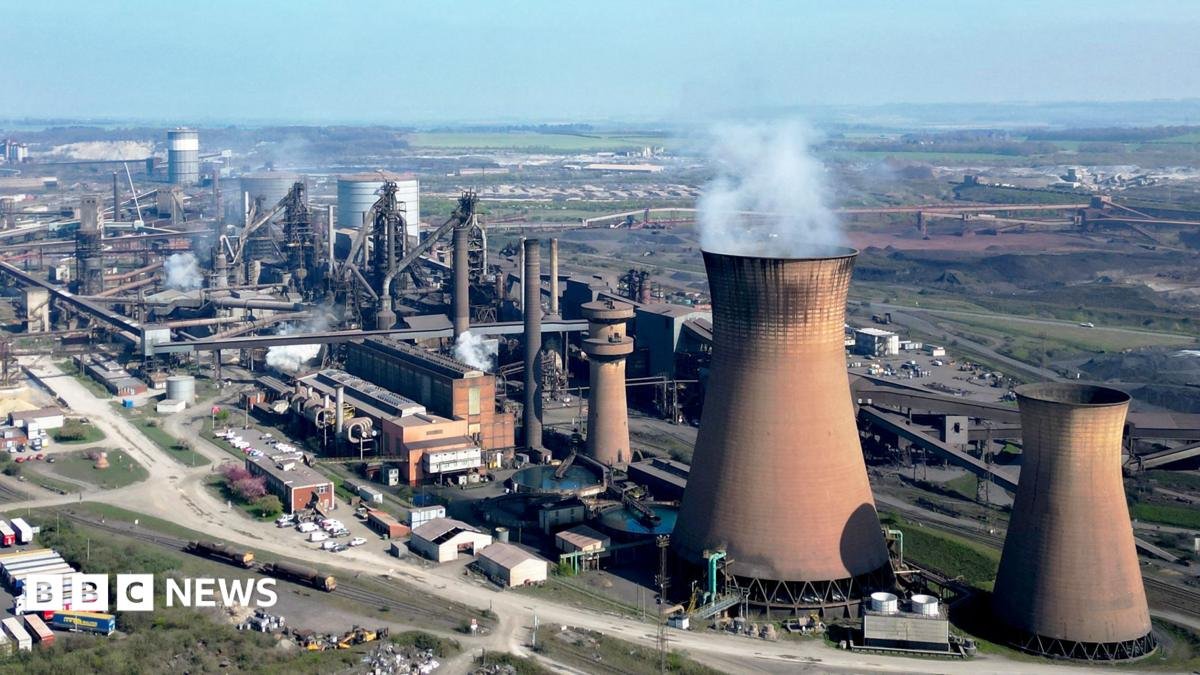
China's Sharp Rebuke of British Steel Nationalisation Highlights Deepening Tensions in UK-China Economic Relations
The Nationalisation of British Steel and MOFCOM's Official Response
The United Kingdom government's decision to nationalise British Steel has drawn a firm rebuke from China's Ministry of Commerce (MOFCOM). On Friday, following the UK's announcement, MOFCOM stated that it "firmly opposes and is strongly dissatisfied with the British government's decision." The ministry accused London of seriously infringing upon Jingye Group's legitimate rights and interests, while severely undermining the confidence of Chinese companies investing in the UK.
MOFCOM emphasised that the British side had disregarded Jingye's significant contribution to the UK economy and society, choosing instead to forcibly take control of the company in the name of national security. This response reflects Beijing's broader concern over what it perceives as discriminatory treatment of Chinese state-linked investments in critical infrastructure sectors. The commerce ministry further indicated that Beijing would monitor developments closely and support Chinese firms in protecting their rights, though it stopped short of outlining specific retaliatory measures.
UK officials, including Small Business Minister Blair McDougall, defended the move by noting that negotiations with Jingye had failed to produce an agreement representing value to the taxpayer. McDougall told the House of Commons that an independent valuer would be appointed in the autumn to determine any compensation due, which could ultimately amount to nil. This stance underscores the UK's prioritisation of fiscal responsibility and strategic autonomy over maintaining seamless bilateral investment flows.
The China-UK Bilateral Investment Treaty of 1986 and Its Legal Implications
At the heart of the dispute lies the China-UK Bilateral Investment Treaty signed in 1986. MOFCOM has called on Britain to "faithfully fulfil" its obligations under this agreement, which was designed to promote and protect investments between the two countries. The treaty's provisions on fair and equitable treatment, protection against expropriation, and mechanisms for dispute settlement now face a significant test.
Legal analysts note that while the treaty provides a framework for investor-state dispute settlement, its enforcement mechanisms are relatively limited by contemporary standards. Jingye Group, which had owned British Steel since acquiring it in 2020, is seeking compensation for what it describes as daily losses of £700,000. The UK's position, articulated through legislation passed by Parliament on Wednesday, allows for public ownership under a public interest test, potentially invoking national security exceptions that may complicate claims under the 1986 treaty.
This case could set important precedents for how older bilateral investment treaties are interpreted in an era of heightened geopolitical competition. For China, defending the treaty's integrity aligns with its long-standing advocacy for stable international investment rules, particularly as it seeks to expand the Belt and Road Initiative and other outbound investment channels. The outcome may influence future negotiations over modernised investment agreements between China and Western economies.
The Strategic Timing Amid Andy Burnham's Impending Premiership
The nationalisation's timing adds a layer of political complexity, coinciding with Andy Burnham's scheduled entry into Downing Street on Monday. As the new prime minister prepares to assume office, this decision on British Steel represents one of the first major industrial policy tests for his administration. The move comes after the UK government took control of operations at the Scunthorpe plant last year, even while Jingye retained ownership, limiting London's ability to fully direct the company's future trajectory.
Burnham's government has framed the nationalisation as essential to protecting approximately 2,700 direct jobs at Scunthorpe and thousands more in the supply chain. A UK government spokesperson reiterated that Britain highly values its relationship with China and remains open to Chinese investment, attempting to compartmentalise the dispute. However, the decision risks straining bilateral ties at a moment when the new leadership might have preferred to focus on resetting relations in other areas such as trade, technology, and climate cooperation.
From Beijing's perspective, the timing may be interpreted as a deliberate signal from the incoming administration about the boundaries of acceptable Chinese involvement in strategically sensitive UK industries. This development occurs against the backdrop of evolving UK foreign policy that balances economic engagement with national security considerations, particularly regarding critical materials and supply chain resilience.
Broader China-UK Economic Relations and Patterns of Chinese Investment in the UK
The British Steel controversy must be situated within the wider context of China-UK economic relations. Chinese investment in the United Kingdom has historically spanned sectors from infrastructure and energy to automotive and technology. Jingye's acquisition of British Steel formed part of a pattern where Chinese firms sought to acquire established industrial assets, bringing both capital and operational expertise while navigating local political sensitivities.
Recent years have seen increased scrutiny of such investments, particularly in areas deemed vital to national security. The UK's evolving screening regime for foreign direct investment has created a more challenging environment for Chinese entities. MOFCOM's statement about undermined investor confidence reflects genuine concerns among Chinese businesses that political risks in Western markets are rising, potentially deterring future commitments.
Despite these frictions, both sides continue to acknowledge mutual economic interests. The UK spokesperson's comments about remaining open to Chinese investment suggest an attempt to prevent this dispute from contaminating broader bilateral economic engagement. For China, maintaining access to advanced Western markets remains a key component of its Dual Circulation strategy, which seeks to balance domestic development with selective international integration. The current tensions illustrate the difficulties in sustaining this balance when strategic sectors become politicised.
The Steel Industry's Strategic Importance to National Security and Economic Resilience
Steel production holds profound strategic significance for both China and the United Kingdom, albeit in markedly different contexts. For the UK, retaining the capacity to produce virgin steel at Scunthorpe prevents it from becoming the only G7 member without this foundational industrial capability. The National Audit Office reported in March that the Scunthorpe works was costing the government approximately £1.3 million per day, highlighting the fiscal burden of maintaining unprofitable but strategically vital operations.
China, as the world's largest steel producer, views its dominance in this sector as both an economic strength and a tool of industrial policy. Chinese firms like Jingye have expanded internationally partly to secure market access and raw material supplies while managing overcapacity challenges at home. The nationalisation of British Steel therefore touches upon deeper questions about global steel supply chains and the extent to which major economies should maintain domestic production capabilities regardless of cost.
Peter Kyle, who has been involved in industrial strategy discussions, has emphasised the need for a coherent approach to foundational industries. The UK's reliance on imports from the EU, the US, China, and India for much of its steel consumption makes domestic production a matter of supply chain security, especially in scenarios involving geopolitical disruption. This case exemplifies how steel transcends mere commercial considerations to become intertwined with questions of technological sovereignty and industrial resilience.
Historical Context: From Thatcher's 1988 Privatisation to the 2026 Renationalisation
The current renationalisation of British Steel represents a striking reversal of industrial policy trends established nearly four decades ago. In 1988, Margaret Thatcher's government privatised British Steel as part of a broader programme of reducing state involvement in heavy industry. That privatisation was celebrated as a triumph of market-oriented reform, aligning with the Conservative emphasis on efficiency and competition.
The 2026 decision to return the company to public ownership, following parliamentary approval of legislation enabling such moves under a public interest test, marks a significant ideological and practical shift. This renationalisation occurs in response to persistent financial losses and concerns over long-term viability under private ownership. The plant's trajectory from privatisation to renationalisation illustrates the cyclical nature of industrial policy in response to changing economic and geopolitical conditions.
For China, this development carries historical resonance given its own experiences with state-owned enterprises and market reforms since the late 1970s. Beijing has consistently argued that different national contexts require tailored approaches to industrial governance. The British Steel case provides an opportunity for Chinese commentators to contrast Western policy inconsistency with China's more stable, long-term industrial planning under frameworks such as the 14th Five-Year Plan.
Implications for Chinese Companies Investing in Western Markets
This episode carries significant implications for how Chinese companies approach investment opportunities in Western markets going forward. MOFCOM's strong statement signals to Chinese firms that Beijing will actively support their legitimate interests when faced with what it views as unfair treatment by host governments. This backing could encourage greater use of international arbitration mechanisms and diplomatic channels to protect overseas assets.
However, the dispute may also prompt Chinese investors to exercise greater caution in sensitive sectors, potentially redirecting capital toward jurisdictions perceived as more welcoming or toward domestic priorities under the Dual Circulation strategy. The case highlights the growing importance of political risk assessment in investment decisions, particularly for state-linked enterprises operating in geopolitically contested spaces.
From a broader strategic perspective, this development reinforces China's narrative about increasing protectionism in Western economies. It aligns with Beijing's efforts to strengthen multilateral investment frameworks through platforms such as the Regional Comprehensive Economic Partnership and ongoing negotiations with the European Union. Chinese companies may increasingly favour partnerships and joint ventures that mitigate political exposure while still accessing key technologies and markets.
Consequences for the UK's Industrial Strategy and G7 Steelmaking Capacity
For the United Kingdom, the nationalisation of British Steel forms a central element of its evolving industrial strategy. The decision reflects a recognition that certain foundational capabilities must be preserved through public intervention when market mechanisms prove insufficient. This approach carries both opportunities and risks, including substantial ongoing fiscal commitments and questions about long-term operational efficiency under state ownership.
The move ensures that the UK maintains virgin steel production capacity, avoiding the distinction of becoming the only G7 nation without this ability. This preservation of industrial base supports ambitions for green steel transitions, defence manufacturing, and supply chain resilience. However, it also raises questions about compatibility with net zero targets given the carbon intensity of traditional blast furnace operations at Scunthorpe.
Within the G7 context, the UK's actions may influence how other members approach their own strategic industries. The decision demonstrates a willingness to use public ownership as a tool for industrial policy, potentially setting precedents for similar interventions elsewhere. For China, this development provides insights into the limits of Western market liberalisation when confronted with perceived threats to national capabilities.
The second-order effects extend to ASEAN and Global South economies that increasingly serve as alternative investment destinations for Chinese capital. As Western markets become more selective, Chinese firms may accelerate engagement with developing economies where political risks are perceived differently and where infrastructure needs align with Beijing's development cooperation priorities. This shift could further reshape global investment patterns and industrial value chains in the coming years.
The British Steel nationalisation thus represents more than a bilateral commercial dispute. It encapsulates fundamental questions about the future of globalisation, the role of the state in strategic industries, and the evolving relationship between economic interdependence and national security priorities. As both London and Beijing navigate these complexities, the outcome will likely influence not only their bilateral ties but also broader patterns of international economic cooperation.
By Prof. Marcus Chen, Staff Writer
This article was produced with AI-assisted research and editorial support. Reporting is based on sources cited in the article.
What's Your Reaction?
 Like
0
Like
0
 Dislike
0
Dislike
0
 Love
0
Love
0
 Funny
0
Funny
0
 Wow
0
Wow
0
 Sad
0
Sad
0
 Angry
0
Angry
0

World Politics Analyst at Global1.News. Based in Beijing, covering US-China relations, global trade, and geopolitical strategy. Brings deep analytical perspective to the power dynamics shaping international affairs.















Comments (0)