
Trump Holds Firm: No Sanctions Relief for Iran Without Comprehensive Deal
US President Donald Trump's refusal to unfreeze Iranian assets or ease sanctions before any agreement with Tehran sharpens the long-running strategic contest between Washington and Iran, with direct consequences for Gulf security arrangements and global energy price stability. The stance arrives as Gulf states accelerate economic diversification away from oil dependence while n
US President Donald Trump's refusal to unfreeze Iranian assets or ease sanctions before any agreement with Tehran sharpens the long-running strategic contest between Washington and Iran, with direct consequences for Gulf security arrangements and global energy price stability. The stance arrives as Gulf states accelerate economic diversification away from oil dependence while navigating Sunni-Shia rivalries and the shadow of Iran's nuclear program. Regional actors from Riyadh to Ankara now weigh how this hard line could reshape alliances, Israeli security calculations, and the broader balance between great-power influence and local energy markets.
Trump Holds Firm: No Sanctions Relief for Iran Without Comprehensive Deal
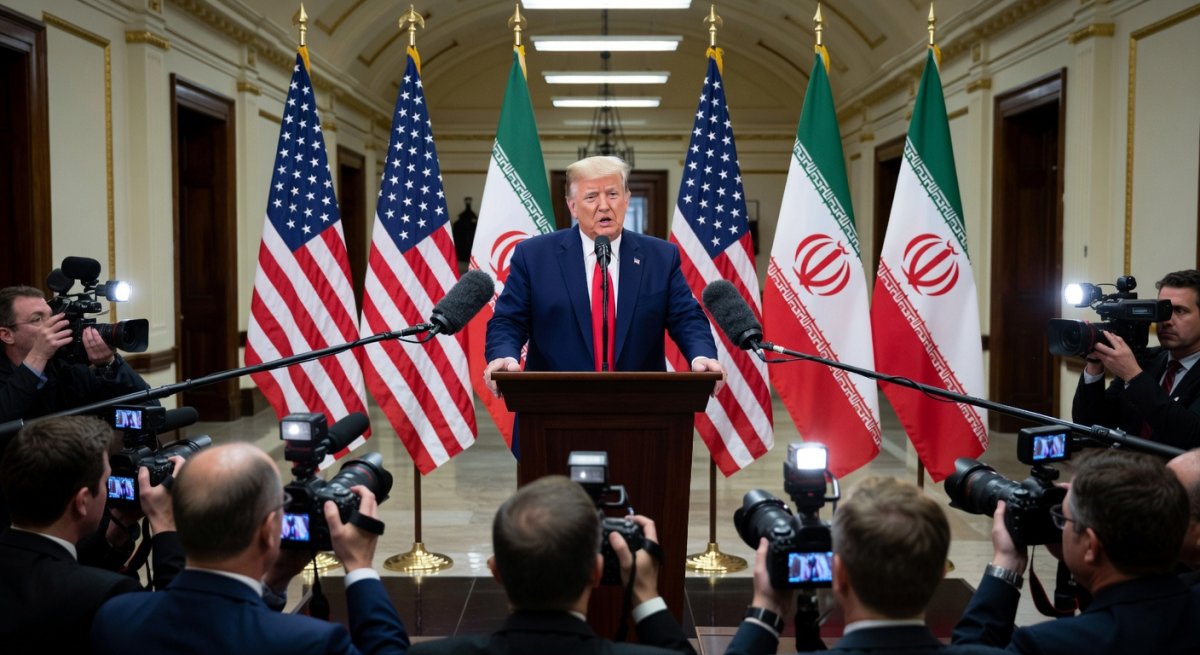
Washington, DC – June 7, 2026 — President Donald Trump declared in an NBC News "Meet the Press" interview that he will not release any portion of Iran's frozen assets or lift sanctions in advance of a verifiable peace agreement. The position locks Washington into a sequential approach that places full Iranian compliance ahead of any economic concessions, directly affecting more than $100 billion in assets held abroad and Tehran's repeated requests for an initial phased release valued between $12 billion and $24 billion.
Trump's Hard Line on Sanctions Relief
Trump's statement came after Iranian officials floated expectations of partial asset releases tied to confidence-building steps. Responding to NBC's Kristen Welker, Trump rejected any upfront concessions, insisting that sanctions relief must follow rather than precede a binding accord. "Comes after," Trump said when asked whether unfreezing assets or lifting sanctions could come before an agreement. "Yeah. If they behave, if they do a good job, we start talking. Yeah." This sequencing leaves Iran's access to its overseas reserves contingent on verified limits to enrichment and regional activities.
The frozen assets include holdings in South Korea, Japan, and European banks that Tehran has long cited as critical for stabilizing its currency and funding imports. Iranian negotiators had sought an initial tranche of $12-24 billion to demonstrate that talks could deliver tangible benefits. Iranian state media has reported that Tehran is pushing for a plan that would see half the funds released upon signing a ceasefire agreement and the other half at a later stage. Trump's refusal closes that pathway and places the burden on Tehran to accept a deal structure that delivers relief only after milestones are met.
Under the 2015 Joint Comprehensive Plan of Action (JCPOA), Iran was meant to receive at least gradual access to those assets in exchange for curbing its nuclear program. Trump unilaterally withdrew from that agreement in 2018 and reimposed sweeping sanctions, a decision that set the stage for the current crisis.
Khamenei Succession and the Leadership Dimension
Trump also addressed the question of Iranian leadership transition, noting that Mojtaba Khamenei, son of the late Supreme Leader Ayatollah Ali Khamenei, has suffered injuries that could affect his political trajectory. The president described Mojtaba as "pretty badly injured" yet "more rational" than hard-line figures within the establishment. Trump expressed willingness to meet him directly, stating: "I don't want to say whether or not I know where he is, but there's a good probability that I do."
Succession dynamics inside Iran's clerical establishment carry profound implications for any nuclear agreement. Mojtaba Khamenei assumed the role of Supreme Leader on March 9, 2026, after his father was killed in US strikes that began on February 28. A leadership figure viewed as more pragmatic could alter the internal balance between Islamic Revolutionary Guard Corps commanders and clerical authorities, potentially opening space for diplomatic compromise. Trump's public comments on this internal matter signal that Washington is closely tracking personnel changes that might create or close diplomatic windows.
Decoupling Lebanon from the Nuclear Track
Trump indicated that a short-term deal with Iran need not require resolution of the Lebanon file, explicitly stating he was "not demanding" that Lebanon be part of any agreement. He placed responsibility for Hezbollah's actions squarely on Tehran while acknowledging recent Israeli strikes on Beirut infrastructure. A US official told Al Jazeera that the Trump administration views Hezbollah as "exclusively to blame" for the fighting in Lebanon.
This decoupling allows negotiators to focus first on enrichment caps and sanctions sequencing before addressing Hezbollah's arsenal or Lebanese political paralysis. Israeli operations in Beirut have already disrupted Hezbollah supply lines and command nodes, reducing the group's immediate ability to threaten Israel's northern border. By separating Lebanon from the immediate nuclear agenda, the United States reduces the number of variables that could derail an initial agreement. Gulf states watching the process will assess whether this narrower scope improves or weakens prospects for later regional de-escalation.
The Nuclear Shadow: IAEA and Enrichment Uncertainty
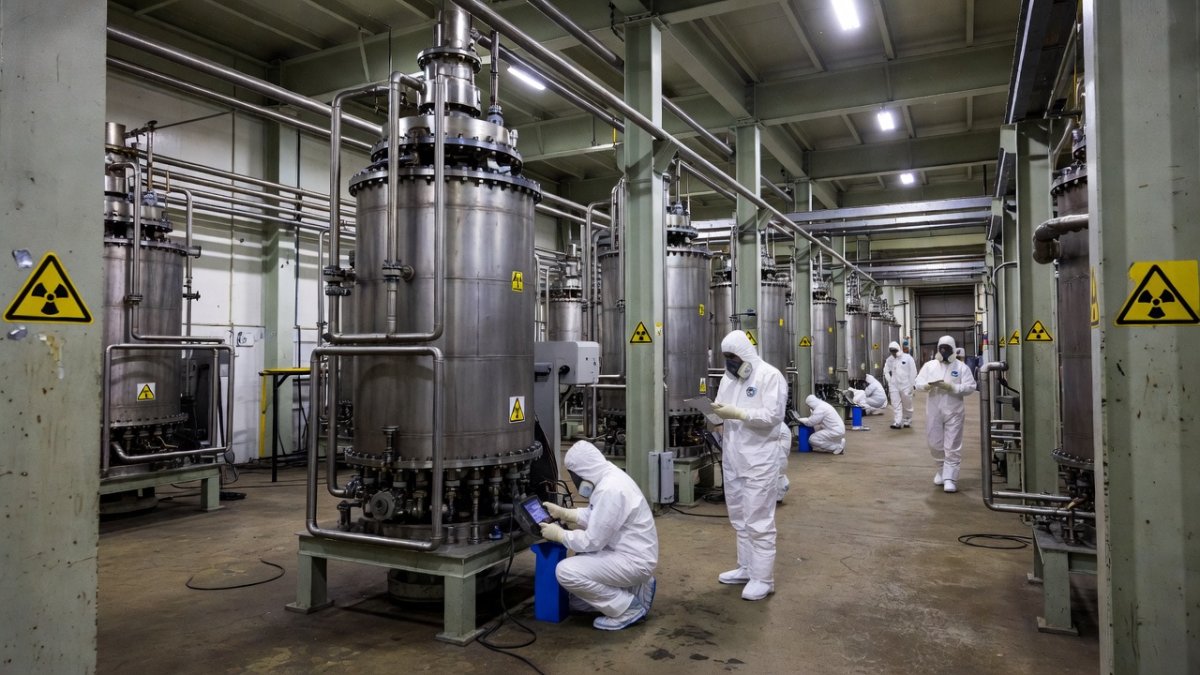
Iran retains approximately 440 kilograms of uranium enriched to 60 percent purity from stockpiles that existed before the 2025 strikes — a level just short of weapons-grade and far above the 3.67 percent cap agreed under the JCPOA. The International Atomic Energy Agency (IAEA) continues to face access restrictions that prevent verification of the material's current location and condition. IAEA Director General Rafael Grossi stated on June 4 that the agency has received no information from Iran about the status of declared nuclear materials, facilities, and locations.
Iranian parliamentary speaker Mohammad Bagher Ghalibaf warned on Sunday that Iran could retaliate in response to Israeli strikes on southern Beirut and the ongoing US naval blockade of Iranian ports. Former IRGC commander and current military adviser to the Supreme Leader, Mohsen Rezaee, told CNN that negotiations are "at a deadlock." The United States introduced a draft resolution at the IAEA Board of Governors on June 7 demanding that Iran open its sites and uranium stocks to inspection, raising the stakes in the multilateral arena.
Gulf Calculations and Energy Market Implications
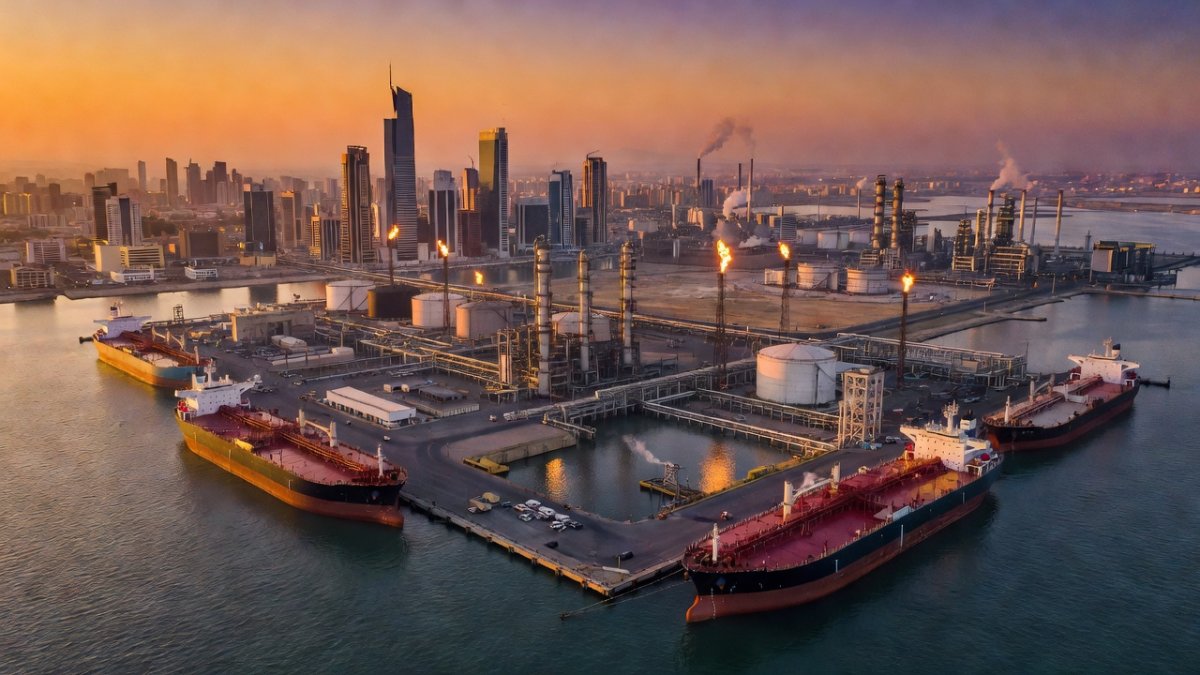
Saudi Arabia and the United Arab Emirates continue to advance Vision 2030 diversification programs that reduce reliance on hydrocarbon revenues. Both governments remain acutely sensitive to oil-price volatility that could result from renewed confrontation or, conversely, from a deal that returns Iranian barrels to international markets. The Gulf Cooperation Council's combined sovereign wealth funds, estimated at over $3 trillion, provide a buffer against price swings but cannot fully insulate regional economies from a prolonged conflict scenario.
Arab-Israeli normalization efforts add another layer of complexity, as Gulf capitals weigh security cooperation with Israel against the risk of Iranian retaliation. The Abraham Accords framework, which saw the UAE, Bahrain, and Morocco normalize ties with Israel, has already reshaped regional alignments. Turkey maintains its own balancing act, seeking economic engagement with Tehran while preserving NATO ties and monitoring Kurdish dynamics along its border. Russia and China observe the talks for signs that sanctions pressure on Iran might ease, potentially opening new energy and infrastructure partnerships.
Strategic Calculus: Dual-Track Diplomacy
Trump's formulation — "We're very close to a deal, or I'm going to blow the hell out of them" — outlines a dual-track approach that keeps military options visible while pursuing negotiations. Iran seeks sanctions relief and recognition of its regional influence; the United States seeks verifiable nuclear constraints and reduced proxy activity. Each side holds significant leverage: Washington controls the sanctions regime and naval blockade of Iranian ports, while Tehran controls enrichment levels, its opaque stockpile location, and support for armed groups across the region.
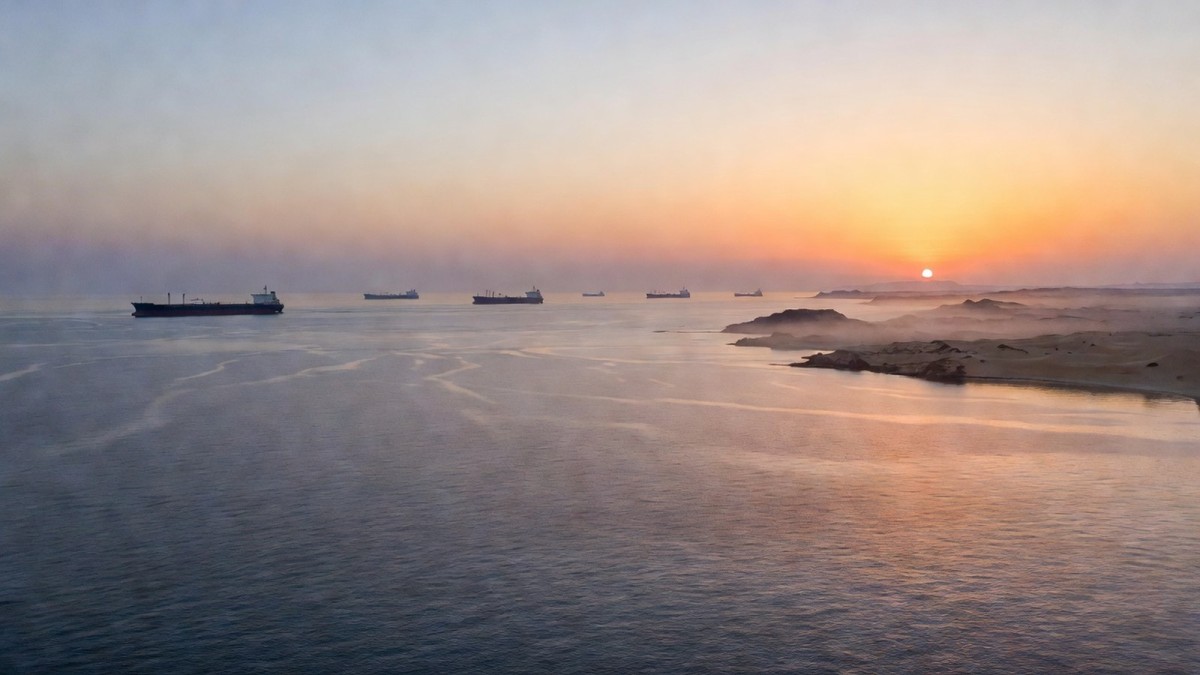
Second-order effects include the possibility that a narrow deal could embolden hard-liners inside Iran who argue that only pressure yields concessions. Conversely, failure to reach any agreement risks further Israeli or American strikes that could draw Gulf states into direct conflict. The Strait of Hormuz remains a critical flashpoint — Iran has previously threatened to disrupt shipping through the waterway through which about 20 percent of global oil passes. The sequencing of relief after compliance remains the central point of friction that will determine whether talks advance or collapse.
Regional Implications
The refusal to provide upfront sanctions relief narrows the diplomatic lane but clarifies expectations for all parties. Gulf governments will continue hedging through arms purchases, economic diversification, and diplomatic outreach while monitoring whether Iran's leadership transition produces a negotiator willing to accept the new terms. Energy markets will price the risk of supply disruption against the possibility of additional Iranian crude returning under strict limits.
Alliances across the region now face renewed tests. Arab-Israeli security coordination may deepen if Iran rejects the framework, while Turkey and Russia could position themselves as alternative interlocutors. The coming months will reveal whether Tehran accepts the sequential structure or tests Washington's willingness to enforce the "blow hell out of them" alternative. For the Middle East, the stakes could not be higher: a deal could stabilize the region and unlock Iranian economic potential; failure risks a wider conflagration that would reshape borders, alliances, and energy markets for a generation.
By Malik Hassan, Staff Writer
This article was produced with AI-assisted research and editorial support. Reporting is based on sources cited in the article.
What's Your Reaction?
 Like
0
Like
0
 Dislike
0
Dislike
0
 Love
0
Love
0
 Funny
0
Funny
0
 Wow
0
Wow
0
 Sad
0
Sad
0
 Angry
0
Angry
0
Middle East Correspondent at Global1.News. Based in Beirut, covering politics, conflict, energy, and society across the Middle East. Brings context and depth to a region often reduced to headlines.








Comments (0)