
Turkish Minister Affirms Commitment to Palestinian Cause
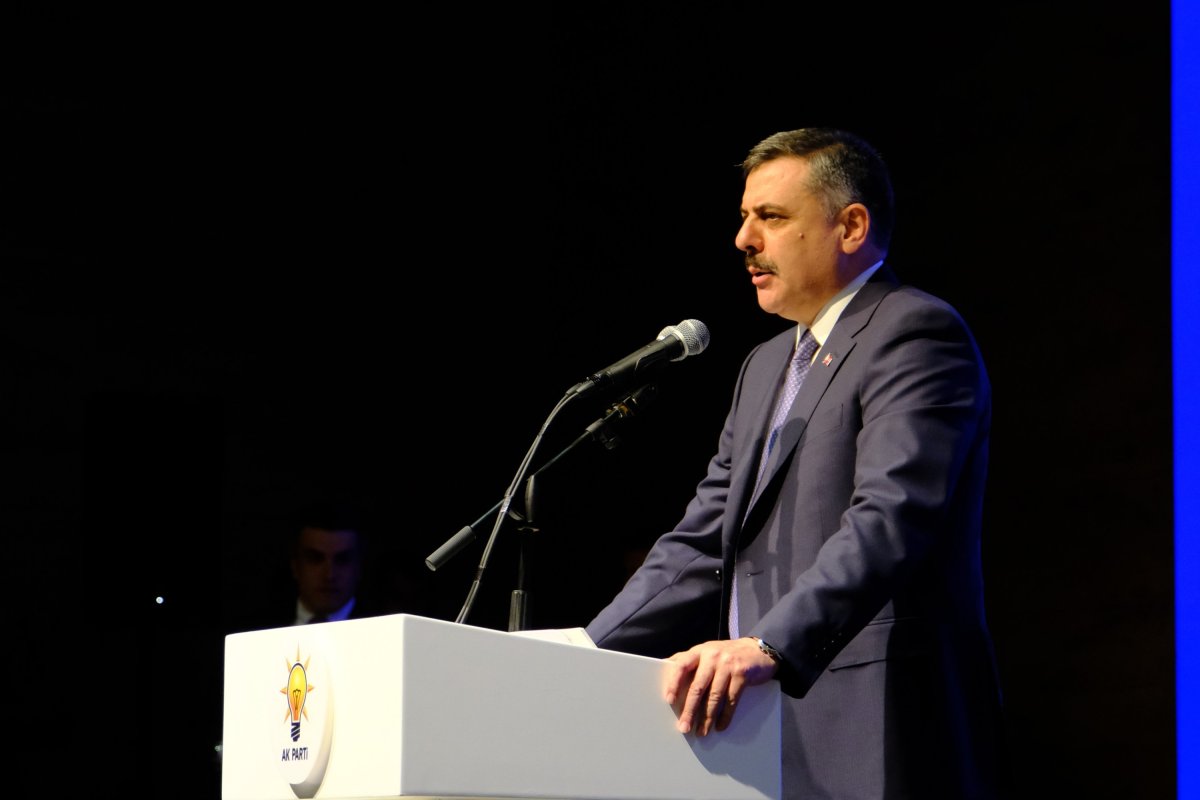
The Minister's Vision for Jerusalem Turkish Interior Minister Mustafa Ciftci expressed a personal aspiration during a Justice and Development Party event in Corum. He stated his hope to serve even briefly as governor of Jerusalem. This remark aligns with Turkey's consistent advocacy for a Palestinian state with East Jerusalem as its capital on the basis of 1967 borders. Histori
The Minister's Vision for Jerusalem
Turkish Interior Minister Mustafa Ciftci expressed a personal aspiration during a Justice and Development Party event in Corum. He stated his hope to serve even briefly as governor of Jerusalem. This remark aligns with Turkey's consistent advocacy for a Palestinian state with East Jerusalem as its capital on the basis of 1967 borders.
Historical Ottoman Context and Modern Echoes
Palestine remained under Ottoman administration from the sixteenth century until the early twentieth century. Ciftci referenced this legacy when voicing his prayer, first made during his time as governor of Erzurum, that he might one day govern Jerusalem. Turkish officials frame such statements within a narrative of historical continuity rather than immediate operational plans.
References to Recent Regional Changes
Ciftci linked his Jerusalem remarks to other developments. He cited the ouster of the Assad regime in Syria during 2024 and Azerbaijan's recovery of Karabakh in 2022. These examples illustrate Ankara's pattern of highlighting shifts that it views as favorable to its regional positioning, while avoiding specific timelines for further outcomes.
Erdogan's Role in Turkish Policy Calculus
President Recep Tayyip Erdogan remains central to Turkey's approach. Ciftci described him as a global leader whose guidance could advance Turkish objectives. Ankara seeks leverage through diplomatic support for Palestinian positions, engagement with Hamas, and criticism of Israeli settlement expansion, while balancing relations with Gulf states pursuing economic diversification under frameworks such as Vision 2030.
Strategic Competition with Iran and Its Networks
Turkey's stance occurs against the backdrop of Sunni-Shia geopolitical competition. Iranian influence through the IRGC and allied groups including Hezbollah and Hamas shapes Israeli security calculations. Ankara's rhetorical emphasis on Jerusalem serves to differentiate its Sunni-majority positioning from Tehran's regional proxy activities without direct military confrontation.
Impact on Abraham Accords and Broader Alliances
Turkey has not joined the Abraham Accords normalization process led by the United States. Its continued emphasis on Palestinian statehood creates friction with Israel and certain Arab governments that have pursued bilateral ties. This divergence affects energy market diplomacy within OPEC+ and limits coordination on issues such as Red Sea security involving Houthi actions.
Second-Order Effects on Regional Stability
Statements from Turkish officials like Ciftci reinforce domestic support for the Palestinian cause while signaling to international actors that Ankara intends to retain influence over the issue. Potential second-order effects include sustained tension in Israeli-Turkish relations, continued Turkish engagement with Qatar on mediation efforts, and indirect pressure on Egyptian and Jordanian border policies. Great-power competition involving the United States, Russia, and China further complicates any near-term resolution of the Israeli-Palestinian file. By Malik Hassan, Staff Writer
This article was produced with AI-assisted research and editorial support. Reporting is based on sources cited in the article.
What's Your Reaction?
 Like
0
Like
0
 Dislike
0
Dislike
0
 Love
0
Love
0
 Funny
0
Funny
0
 Wow
0
Wow
0
 Sad
0
Sad
0
 Angry
0
Angry
0

India/South Asia Correspondent at Global1.News. Analytical voice with a background in science and health journalism. Based in New Delhi, covering Indian politics, education, healthcare, technology, and policy. Breaks down complex data into clear, actionable reporting.













Comments (0)