
China's Q2 Growth Slows to 4.3% as Iran War and Weak Domestic Demand Weigh on Economy
China's economy grew at its slowest pace since emerging from the Covid-19 pandemic in the second quarter of 2026, official data showed on Wednesday, as the Iran war weighed on oil prices and weak domestic demand overshadowed a surge in exports. The 4.3% expansion missed Beijing's revised 4.5%-5% annual target and marked a sharp deceleration from the 5% growth recorded in the first quarter, u
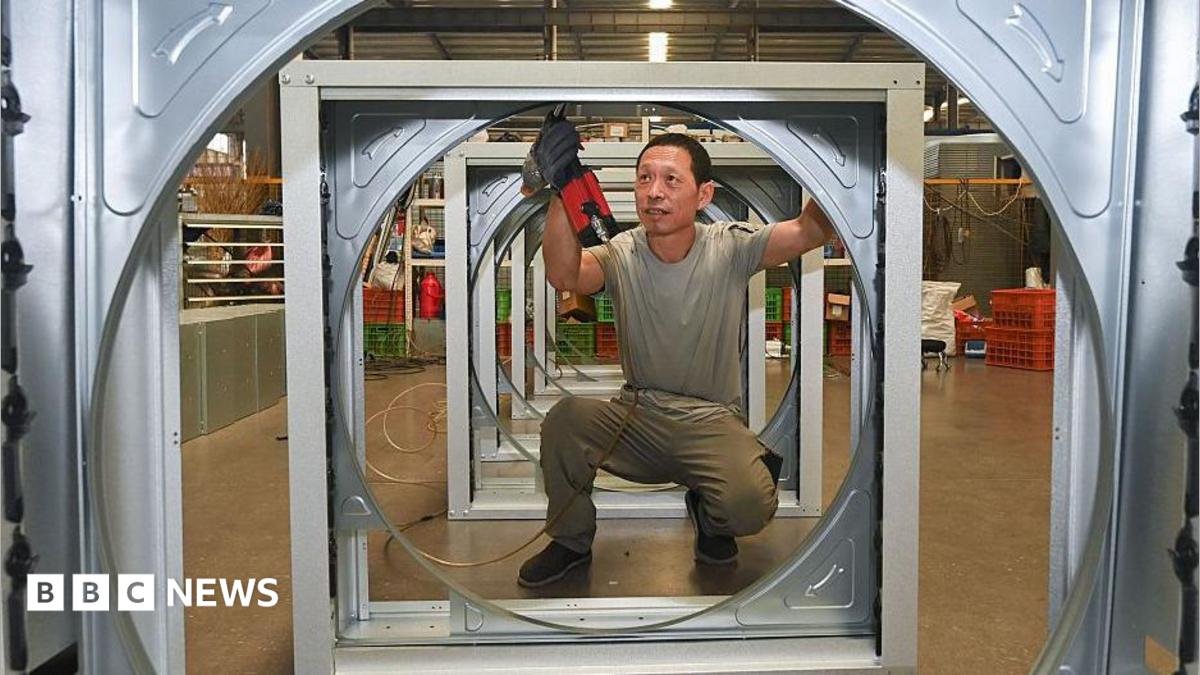
China's economy grew at its slowest pace since emerging from the Covid-19 pandemic in the second quarter of 2026, official data showed on Wednesday, as the Iran war weighed on oil prices and weak domestic demand overshadowed a surge in exports. The 4.3% expansion missed Beijing's revised 4.5%-5% annual target and marked a sharp deceleration from the 5% growth recorded in the first quarter, underscoring the twin pressures facing Chinese policymakers.
This complex picture — robust export growth of 27% in June alongside persistent weakness in the domestic property market and consumer spending — presents Beijing with a delicate balancing act between maintaining external competitiveness and addressing structural vulnerabilities at home. The National Bureau of Statistics acknowledged in its accompanying statement that "there are more external instability and uncertainty factors" confronting the world's second largest economy.
China's Q2 Growth Slows to 4.3% as Iran War and Weak Demand Weigh on Economy
Beijing, China — Article continues below.
The Q2 GDP Data
Official GDP figures showed the world's second largest economy grew in the second quarter by 4.3%, below Beijing's annual target, and after a 5% rise in the first quarter. The announcement represents the first full quarter of GDP data since the start of the Iran war on 28 February 2026 and marks the lowest quarterly expansion since the end of 2022, as China was emerging from its strict Covid-19 restrictions. In March 2026, China cut the growth target to a range of 4.5%-5%, its lowest economic expansion goal since 1991.
The Iran War's Impact on China's Economy
China's economic growth slowed sharply between the start of April and end of June 2026 as weak domestic demand and the Iran war's impact on oil prices overshadowed the country's strong exports. The announcement represents the first full quarter of GDP data since the start of the Iran war on 28 February 2026. "There are more external instability and uncertainty factors," China's National Bureau of Statistics said in a release accompanying the figures. It also noted an imbalance between strong supply and weak demand in the domestic economy. The situation will become more difficult to manage the longer the Iran war goes on.
The Q2 GDP slowdown to 4.3% from 5% in Q1 reflects the first full quarter of data since the Iran war began on 28 February 2026, with oil price volatility compounding weak domestic demand. China's National Bureau of Statistics highlighted "more external instability and uncertainty factors" alongside an imbalance between strong supply and weak demand. The situation will become more difficult to manage the longer the Iran war goes on, as sustained higher energy costs erode margins across industrial sectors.
Historical parallels with the 2022 Ukraine war are instructive: that conflict triggered a similar oil price shock that forced China to accelerate strategic petroleum reserve drawdowns, temporarily stabilizing domestic fuel prices but depleting buffers that now face renewed pressure. The current disruption in the Strait of Hormuz has constrained roughly 20% of China's crude imports, amplifying logistics costs and forcing rerouting through longer Pacific routes. This pass-through effect cascades into manufacturing supply chains, where elevated energy and raw material expenses are absorbed internally because weak demand prevents full cost recovery, exactly as noted by analysts.
Beijing's strategic petroleum reserve drawdown, while providing short-term relief, signals deeper vulnerabilities in energy security. Prolonged reliance on reserves risks compromising emergency preparedness amid escalating geopolitical tensions. The Iran war's impact thus extends beyond immediate GDP drag of 4.3% versus the 4.5%-5% target, potentially reshaping China's long-term energy diversification strategies and exposing the limits of import dependence even as exports jumped 27% in June.
Domestic Challenges: Property Market and Retail Sales
Separate data released on Wednesday highlighted the economic challenges Beijing is facing at home — including a long-running property market slump and weak consumer spending. New home prices contracted again, although the 0.1% fall in June was at a slightly slower pace than the previous month. But retail sales rose by 1% in June, improving from a 0.6% decrease in May. China's National Bureau of Statistics noted an imbalance between strong supply and weak demand in the domestic economy.
The property sector crisis continues to reflect the lingering Evergrande legacy, where unresolved developer debt restructuring has constrained new project financing and eroded buyer confidence. Local government fiscal pressures have intensified due to sharp declines in land sale revenues, limiting their capacity to support infrastructure or social spending. This fiscal squeeze at municipal levels exacerbates the supply-demand imbalance flagged by the National Bureau of Statistics, as weak local budgets reduce stimulus transmission to households.
Youth unemployment remains elevated, further dampening consumer confidence indicators that have shown only marginal recovery. The modest 1% retail sales growth in June, while improved, underscores persistent caution among households facing uncertain employment prospects and falling property values. These domestic headwinds, combined with the 0.1% new home price contraction, suggest that without targeted interventions the imbalance between strong supply and weak demand will continue to weigh on the 4.3% Q2 GDP outcome relative to the 4.5%-5% target.
The Export Paradox
It comes a day after separate data showed China's exports had jumped by 27% in June compared to a year earlier. This export strength stands in contrast to the overall slowdown in GDP growth to 4.3% in the second quarter, which fell short of the 4.5%-5% target range set in March 2026. The 27% jump in June exports highlights the resilience of China's external sector even as the Iran war's impact on oil prices and weak domestic demand contributed to the lowest quarterly expansion since the end of 2022.
A sector-level breakdown reveals that electric vehicles, solar panels, and batteries accounted for a disproportionate share of the 27% export surge, demonstrating continued strength in green technology despite global headwinds. Renminbi depreciation has provided an additional competitive buffer, lowering the foreign-currency price of these goods and offsetting higher domestic energy costs stemming from the Iran war. Trade diversion effects from the conflict have also redirected some Middle Eastern demand toward Chinese suppliers able to maintain stable delivery schedules.
Nevertheless, the shadow of US and EU tariff threats looms over this export paradox, potentially capping future gains in these strategic sectors. This external resilience contrasts sharply with the 4.3% Q2 GDP print and the persistent domestic weaknesses, raising questions about the effectiveness of the Dual Circulation strategy. While exports of 27% provide a buffer, the strategy's emphasis on boosting internal demand appears challenged by the ongoing supply-demand imbalance, suggesting Beijing may need to recalibrate its approach to better integrate external gains with domestic rebalancing.
Analyst Perspectives
Fabien Yip, a market analyst at investment platform IG told the BBC that China's businesses are absorbing higher energy and raw materials costs "because demand at the till is too weak to bear it". The situation will become more difficult to manage the longer the Iran war goes on, she added. However Capital Economics's head of China economics Julian Evans-Pritchard said the actual slowdown in the country's economy may have less to do with changing conditions, and more to do with a change in the national growth target which had "given the authorities more room to acknowledge the reality on the ground". "This may largely represent a greater willingness to accept slower growth rather than a dramatic weakening in underlying conditions," he told the BBC. David Bloom, global head of FX strategy at HSBC, said the numbers were "reasonably disappointing" but noted that China's economic data had consistently surprised to the downside over the past year.
Beijing's Policy Response Options
With GDP growth at 4.3% in the second quarter falling below the 4.5%-5% target range established in March 2026, Chinese authorities face pressure to address both the Iran war's impact on oil prices and persistent domestic weaknesses. The National Bureau of Statistics has already highlighted external instability factors and the imbalance between strong supply and weak demand. Beijing may look toward targeted stimulus measures, further monetary easing by the People's Bank of China, or fiscal support from the National Development and Reform Commission to bolster consumption and stabilize the property sector, where new home prices saw a 0.1% fall in June. Such responses would align with the Dual Circulation strategy under the 14th Five-Year Plan, emphasizing domestic demand while leveraging export gains of 27% in June.
Strategic Implications for China's Global Economic Position
The slowdown to 4.3% GDP growth in the second quarter, following 5% in the first, comes at a critical juncture for China's strategic interests amid the Iran war that began on 28 February 2026. While exports jumped by 27% in June, the combination of weak domestic demand, a 0.1% contraction in new home prices, and only modest 1% growth in retail sales underscores vulnerabilities in the world's second largest economy. This data will influence Beijing's foreign policy calculations, particularly in energy security and relations with Middle Eastern partners. The lowered 4.5%-5% growth target gives authorities flexibility but also signals acceptance of slower expansion, potentially affecting China's leverage in global trade negotiations and its ability to project economic strength under the Dual Circulation framework. Second-order effects could include heightened focus on technological self-reliance as outlined in the 14th Five-Year Plan to mitigate external shocks from geopolitical instability.
Compared with other major economies, China's 4.3% Q2 growth still outpaces many developed peers but falls short of the 4.5%-5% target and marks a deceleration from the 5% Q1 reading, altering perceptions of relative economic momentum. The Belt and Road Initiative faces new tests as partner countries reassess Beijing's capacity to sustain overseas lending and infrastructure commitments amid domestic slowdown. Heightened ASEAN economic competition adds pressure, with regional neighbors capturing some supply-chain shifts that China previously dominated.
These developments carry direct implications for preparations toward the 15th Five-Year Plan covering 2026-2030, where policymakers must reconcile slower growth acceptance with ambitions for high-quality development. The Global South's perception of the Chinese economic model may shift if the 4.3% outcome and persistent domestic weaknesses, including the 0.1% new home price fall and 1% retail sales rise, project an image of fragility rather than resilience. Sustaining the 27% export momentum while addressing the National Bureau of Statistics-noted imbalance between strong supply and weak demand will be critical to maintaining leadership credibility across developing economies.
Context Within China's Broader Economic Strategy
The latest figures from the National Bureau of Statistics reflect ongoing tensions between external pressures, including the Iran war's oil price effects, and internal structural challenges. By setting the lowest economic expansion goal since 1991 at 4.5%-5% in March 2026, Beijing has created policy space to confront pre-existing weaknesses while maintaining strong export performance of 27% growth in June. This approach connects directly to domestic politics, where stabilizing the property market and boosting consumer spending remain priorities for the leadership to ensure social stability and sustained progress toward high-quality development goals.
Geopolitical Calculus and Future Outlook
From a geopolitical perspective, what Beijing seeks is resilience against external instability factors while leveraging its export machine. The Iran war starting 28 February 2026 has introduced oil price volatility that Chinese businesses are currently absorbing amid weak domestic demand. Leverage lies in China's massive foreign exchange reserves, manufacturing capacity, and diplomatic channels through the Ministry of Foreign Affairs to secure energy supplies. Second-order effects may include accelerated diversification of energy sources and deeper integration into global supply chains despite the 4.3% Q2 growth missing the target range. Analysts suggest the data reflects both genuine challenges and a greater willingness by authorities to acknowledge slower growth realities.
By Prof. Marcus Chen, Staff Writer
This article was produced with AI-assisted research and editorial support. Reporting is based on sources cited in the article.
What's Your Reaction?
 Like
0
Like
0
 Dislike
0
Dislike
0
 Love
0
Love
0
 Funny
0
Funny
0
 Wow
0
Wow
0
 Sad
0
Sad
0
 Angry
0
Angry
0

World Politics Analyst at Global1.News. Based in Beijing, covering US-China relations, global trade, and geopolitical strategy. Brings deep analytical perspective to the power dynamics shaping international affairs.











Comments (0)