
Festival Des Masques: Benin's Sacred Mask Festival Returns to Porto-Novo
In the heart of West Africa, where the Gulf of Guinea meets centuries of spiritual tradition, Benin's Porto-Novo Mask Festival stands as one of the continent's most vibrant celebrations of cultural heritage. As the third edition prepares to open its doors on July 25-26, 2026, the festival has already established itself as a cornerstone of Benin's cultural tourism strategy — drawing thousands of visitors, dozens of sacred mask traditions, and inte
In the heart of West Africa, where the Gulf of Guinea meets centuries of spiritual tradition, Benin's Porto-Novo Mask Festival stands as one of the continent's most vibrant celebrations of cultural heritage. As the third edition prepares to open its doors on July 25-26, 2026, the festival has already established itself as a cornerstone of Benin's cultural tourism strategy — drawing thousands of visitors, dozens of sacred mask traditions, and international delegations from across Africa and beyond.
Festival Des Masques: Benin's Sacred Mask Festival Returns to Porto-Novo
Porto-Novo, Benin — The Beninese capital is preparing to host the third edition of the Festival des Masques this coming weekend, a free public celebration that brings together sacred masks from Vodun and Yoruba traditions alongside contemporary music, scholarly discourse, and community arts. The event transforms the city's emblematic squares and the Boulevard Lagunaire into living stages where ancestral spirits dance alongside modern African creativity.
A Weekend of Sacred and Ancestral Traditions
The second edition in August 2025 set a powerful precedent when President Patrice Talon joined the closing procession, underscoring the government's commitment to sacred heritage. That year the event drew visitors from neighbouring West African countries, Europe, and beyond, proving its growing appeal across the continent.
The 2026 third edition runs Saturday July 25 from 9h00 to late night and Sunday July 26 from 9h00 to late night, with free admission for most activities open to the public. Families and elders alike will gather without barriers, ensuring every generation can witness the masks in their full spiritual power.
A scientific colloquium at École du Patrimoine Africain will open discussions under the theme "Masques, Vodun: héritage et modernité." Scholars from Benin and neighbouring nations will examine how ancestral practices adapt while remaining rooted in Vodun cosmology.
Porto-Novo's streets will pulse with both ritual and reflection, creating space for elders to pass knowledge directly to youth. The festival's structure deliberately blends performance, education, and celebration so that sacred traditions remain living rather than museum pieces.
Beninese organisers have designed the weekend to honour continuity, with each mask group performing according to its own protocols. This careful scheduling respects the spiritual calendar while welcoming outsiders into the circle of respect.
West African communities recognise that such gatherings strengthen collective identity. When young Senegalese visitors attend, they see echoes of their own Ndeup and Kouss rites, reminding everyone that our spiritual languages share deep family ties across borders.
The 2025 edition drew dignitaries including religious leaders from Vodun convents, traditional chiefs from across southern Benin, and cultural figures from neighbouring countries. Their presence turned the closing procession into a statement of national pride and spiritual continuity.
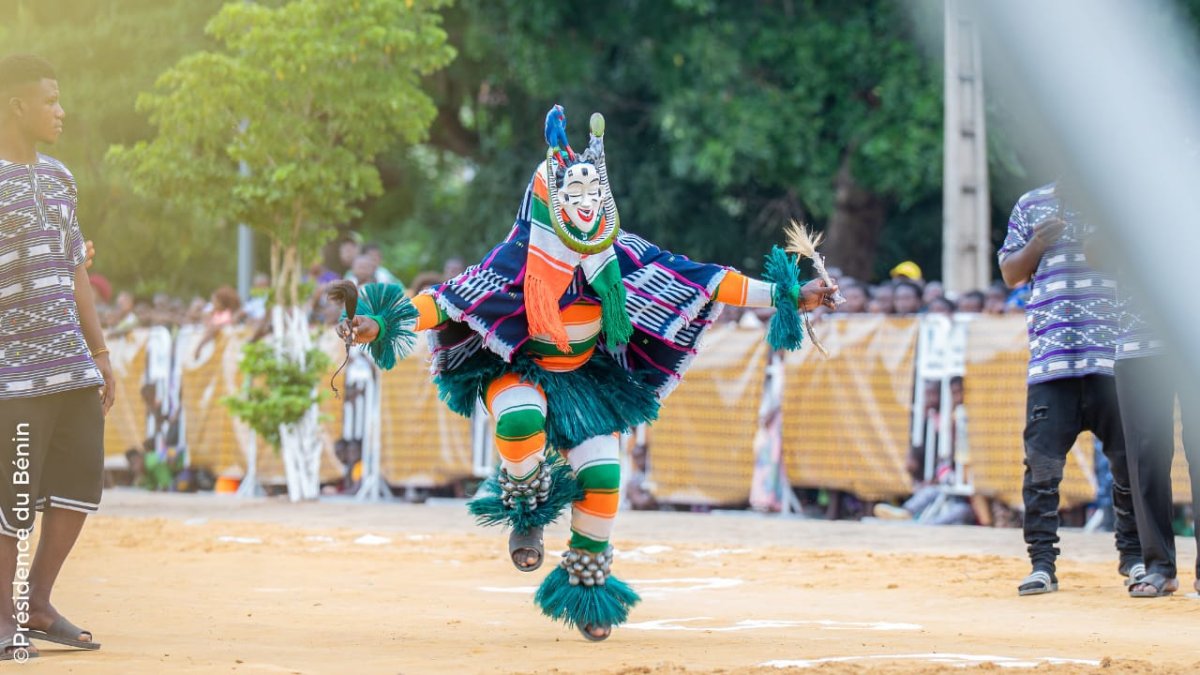
The Masks and Their Spiritual Meaning
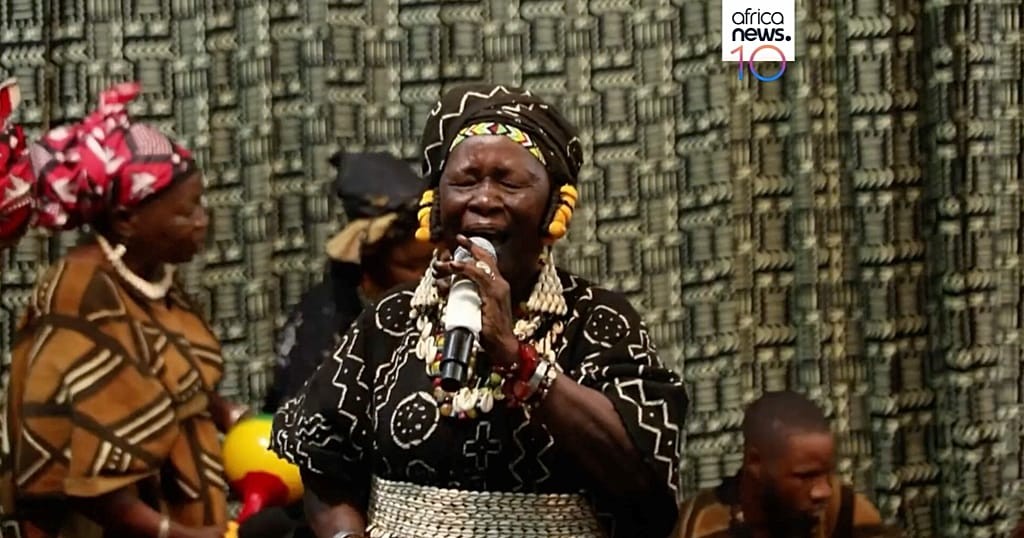
Zangbéto sacred night guardians from the Vodun tradition patrol the edges of the festival, their raffia forms moving with deliberate mystery. These guardians protect communities from harm and remind onlookers that the night itself carries ancestral vigilance.
Egungun are Yoruba ancestral spirits with elaborate, colorful multi-layered costumes and beadwork that swirl like living tapestries. Each layer represents generations of family memory, and dancers become vessels for those who came before.
Guèlèdè women's society masks honour the power of mothers and elders through carved wooden faces and raffia skirts. Their performances celebrate fertility and social balance, bringing laughter and correction in equal measure.
Gounouko, a rare mythical mask from southern Benin symbolising protection and fertility, appears only on special occasions. Its presence at the festival signals abundance and the renewal of lineage ties across villages.
Hounvè, also called Atchinan, the Python Vodun mask, coils through performances with sinuous grace. Devotees understand the python as a messenger between earth and water spirits, linking Porto-Novo's lagoon geography to deeper cosmological stories.
International masks from Togo, Côte d'Ivoire, Nigeria, and China join the local repertoire, creating a pan-African and global dialogue. Their participation shows that sacred mask traditions travel while remaining anchored in their home communities.
Five Squares, One Cultural Canvas
Saturday and Sunday mask performances unfold across five emblematic Porto-Novo squares. Zangbéto appears at Place Lokossa, where its night-guardian energy sets the tone for the entire weekend.
Egungun parade at Place Migan, their layered costumes catching sunlight as they move through the crowd. Spectators learn the names of specific ancestral lineages through the bead patterns and fabric choices.
Gèlèdè and Gounouko dance together at Place Abessan, their combined presence highlighting women's spiritual authority and protective forces. Children sit close to the performance area, absorbing rhythms and gestures they will one day inherit.
International masks perform at Place Dangbé Klunon Honto, offering comparative lessons in mask-making techniques and spiritual protocols. The educational dimension grows stronger when visitors witness how different nations honour similar principles.
Vodun Hounvè demonstration takes place at Place Houngbo, where the python mask reveals its connection to water spirits and seasonal renewal. Elders explain the symbolism in real time, turning each movement into a living classroom.
The five-square layout creates an immersive map of Porto-Novo's spiritual geography. Walking between locations becomes a pilgrimage that mirrors the journey ancestors once took along the lagoon shores.
The Great Procession and Festival Village
The Sunday Grande Procession des Masques moves from 17h-18h30 along the 350-meter stretch of Boulevard Lagunaire. Seven sacred mask groups proceed in a precise order that respects hierarchy and spiritual protocol.
The procession order begins with Gèlèdè, followed by Masques du Togo, Masques du Nord, Gounouko, Masques Côte d'Ivoire, Zangbéto, and finally Egungun. Each group maintains its own drummers and attendants, creating a living archive of regional diversity.
Along the route, the festival village offers mask-making workshops for children, wood carving demonstrations, bead jewelry creation, and traditional rhythm initiation. Young participants leave with small masks they crafted themselves, carrying the tradition forward.
Artisan stalls display work from local cooperatives, giving economic life to the cultural celebration. Families purchase beadwork and carved figures that will grace homes across Benin and beyond.
Children's activities include mask coloring, face painting, and mask-making workshops that run throughout both days. These hands-on stations ensure cultural transmission to younger generations happens through joy rather than obligation.
The village atmosphere blends education with celebration, allowing elders to share stories while artisans demonstrate techniques passed down for centuries. This living transmission keeps Vodun practices vital in a rapidly changing world.
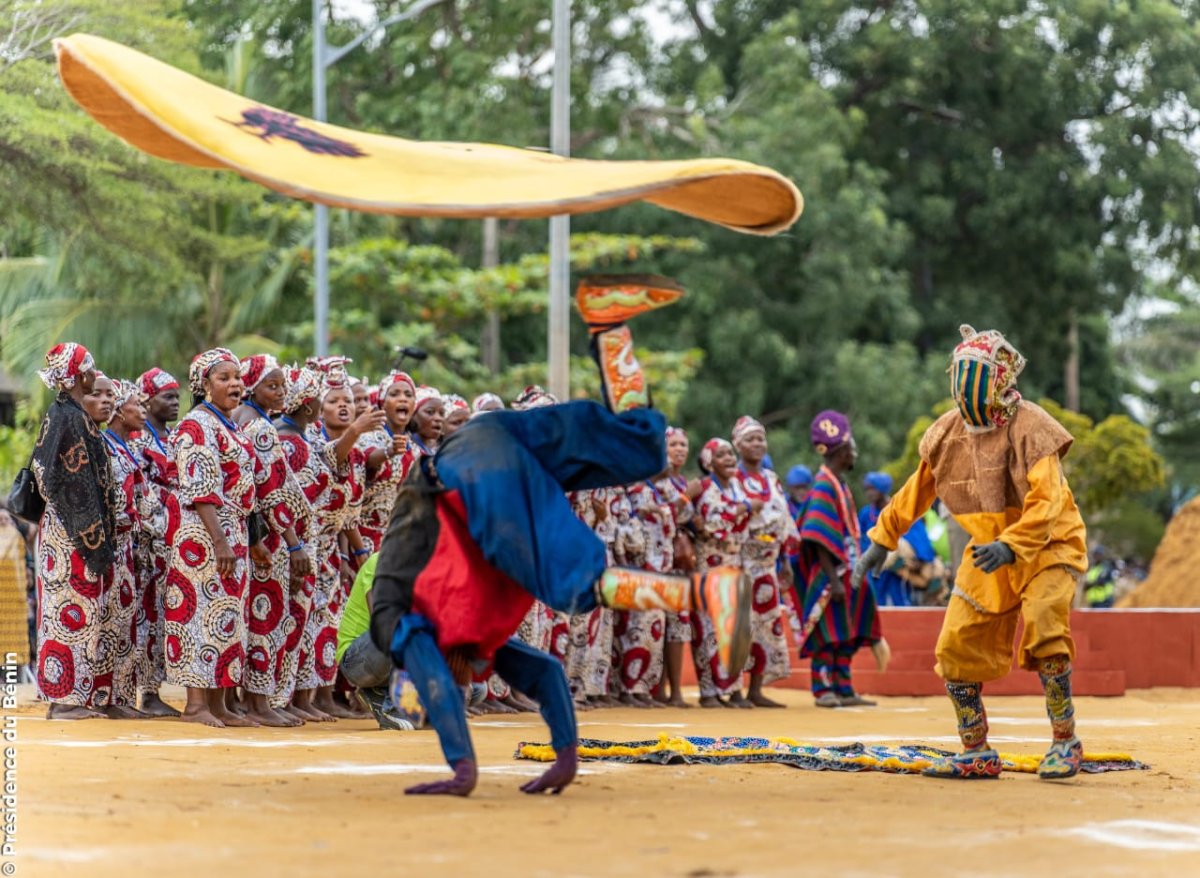
Music, Youth, and Modernity
Saturday's urban concert runs from 20h-01h and features young Beninese Afro and hip-hop artists who fuse ancestral rhythms with contemporary beats. The stage becomes a bridge between the squares and the future of Beninese sound.
Sunday's tradi-modern concert follows the same 20h-01h schedule, blending mask rhythms with electric guitars and electronic textures. Artists announced by @gouvbenin include Vano Baby, Tyaf Papa Yasir, Opa, PéPé Oléka, Aimée Hovinou, and GHIX & X-TIME.
These musicians grew up attending festivals like this one, and their performances honour the masks while claiming new creative space. The growing Beninese creative industry finds fertile ground in events that treat tradition as living fuel rather than static relic.
Youth engagement deepens when young artists share stages with mask groups, learning timing and respect directly from elders. The festival's role in youth cultural engagement extends far beyond entertainment into identity formation.
West African music scenes thrive when sacred and secular expressions meet without hierarchy. Porto-Novo's concerts demonstrate that Vodun rhythms can power dancefloors while retaining their spiritual weight.
Senegalese listeners recognise familiar polyrhythms in the Beninese sets, reminding us that our musical families stretch from Dakar to Cotonou. Such exchanges strengthen the creative economy across the entire region.
Cultural Tourism and Benin's Heritage Renaissance
Benin's government promotes the festival as a cultural tourism tool within the broader #VisitBenin and #ExploreBenin campaigns. Official recognition of Vodun as Benin's official religion since 1996 provides the legal and spiritual foundation for these efforts.
Photographer Stéphan Gladieu's Egungun portraits from the 2025 festival gained international circulation, bringing global attention to the living artistry of the masks. His images travel alongside visitors who return home carrying both photographs and stories.
The festival sits alongside other major Beninese events such as Vodun Days in Ouidah held January 8-10 and the Gaani festival, forming a year-round calendar of heritage celebrations. Together they position Benin as a destination where spiritual traditions welcome respectful visitors.
Cultural tourism generates income for mask makers, musicians, and hospitality workers while preserving the integrity of sacred practices. The balance requires constant attention from organisers and community leaders.
West African nations watching Benin's model see possibilities for their own heritage economies. When governments invest in festivals that honour ancestral knowledge, they invest in the creative future of entire generations.
The festival generates direct income for over 200 artisans, mask makers, musicians, and hospitality workers in Porto-Novo alone. Local hotels and guesthouses fill completely during the event weekend, and restaurants along Boulevard Lagunaire report their busiest period of the year.
The third edition of Festival des Masques therefore carries significance beyond Porto-Novo's lagoon shores. It models how African communities can celebrate sacred traditions openly, transmit them to children, and welcome the world without losing their centre.
By Amara Diop, Staff Writer
This article was produced with AI-assisted research and editorial support. Reporting is based on sources cited in the article.
What's Your Reaction?
 Like
0
Like
0
 Dislike
0
Dislike
0
 Love
0
Love
0
 Funny
0
Funny
0
 Wow
0
Wow
0
 Sad
0
Sad
0
 Angry
0
Angry
0

West Africa/Sahel Correspondent at Global1.News. Dakar-based journalist covering politics, security, climate, and development across Francophone and Anglophone West Africa. Tells the stories of a region undergoing profound transformation.










Comments (0)