
South Korea Defense Exports Surge to $37 Billion in 2026
South Korea's Defense Exports Surge to $37 Billion as K-Defense Reshapes Global Arms Market Tokyo, Japan – July 18, 2026 — South Korea's defense industry is experiencing an unprecedented boom, with exports projected to hit $37 billion by 2026 and fundamentally challenging established players in the global arms market.
South Korea's Defense Exports Surge to $37 Billion as K-Defense Reshapes Global Arms Market
Tokyo, Japan – July 18, 2026 —
South Korea's defense industry is experiencing an unprecedented boom, with exports projected to hit $37 billion by 2026 and fundamentally challenging established players in the global arms market. This surge is fueled by aggressive pricing that undercuts Western systems, rapid delivery timelines, and proven technologies spanning artillery, armored vehicles, and missile defenses. Major Korean contractors are posting explosive revenue growth, forcing regional powers like Japan to reassess their own industrial strategies and procurement approaches.
The Rise of South Korea's Defense Exports
South Korea's defense industry has recorded rapid growth in overseas sales. Projections indicate exports could reach $37 billion by 2026. The four leading companies—Hanwha Aerospace, Hyundai Rotem, Korea Aerospace Industries (KAI), and LIG Nex1—reported combined revenue of 40.9 trillion won in 2025, marking an 81.6 percent increase from the previous year.
Export revenue now accounts for 60 percent of total defense revenue, up from 35 percent in 2021. This shift reflects deliberate policy support and competitive pricing that undercuts Western systems by 20 to 40 percent while offering delivery timelines of six to twelve months rather than three to five years.
Artillery Technology: The K9 Thunder Howitzer
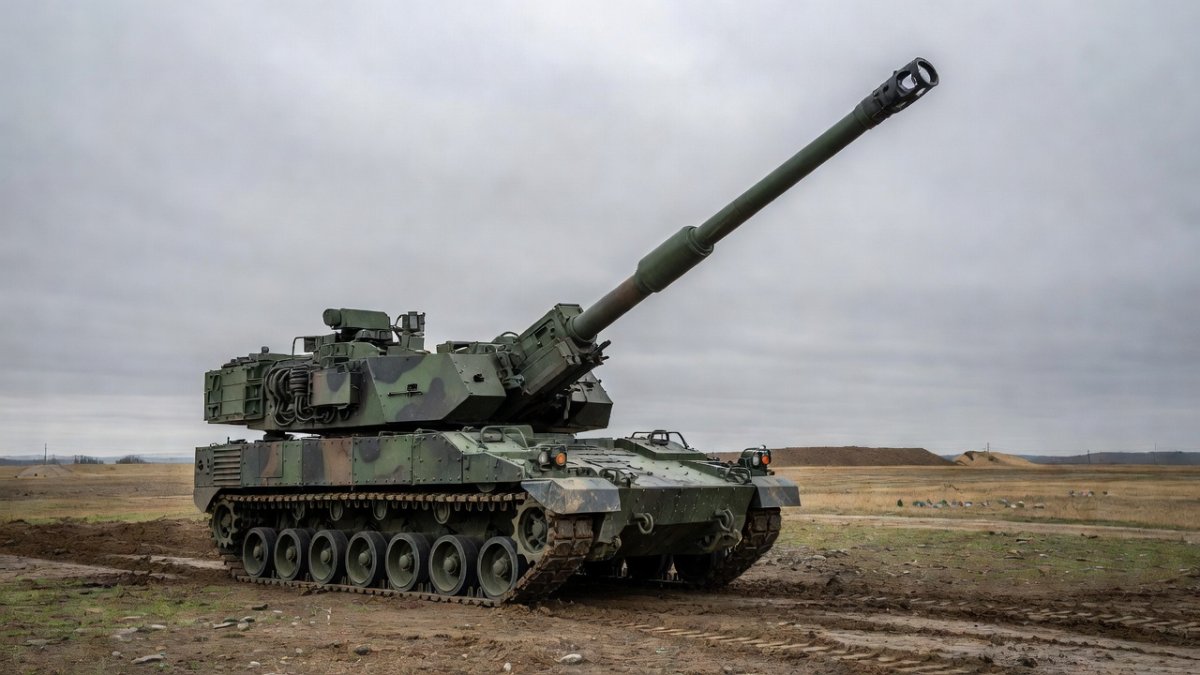
The K9 Thunder self-propelled howitzer has emerged as a cornerstone of South Korea’s defense export strategy, with Hanwha Aerospace reporting revenue of 26.61 trillion won in 2025, reflecting a 137 percent year-over-year increase and an operating margin of 13.2 percent driven largely by artillery contracts. This financial performance underscores the company’s ability to scale production while maintaining profitability amid global demand for NATO-compatible systems. The K9’s 155 mm/52-caliber gun, automated loading, and high mobility have secured orders across ten countries, including Romania’s commitment to 54 units and Poland’s acquisition of 212 platforms. These deals highlight the howitzer’s interoperability with alliance standards, enabling seamless integration into joint operations and reducing logistical burdens for European militaries seeking rapid modernization.
Complementing the K9, Hanwha’s K239 Chunmoo multiple launch rocket system has further diversified export pipelines, exemplified by Norway’s $922 million procurement for coastal defense capabilities and Estonia’s integration of the platform for similar maritime strike roles. France is actively evaluating the Chunmoo for its own artillery modernization, citing its modular pod design and rapid reload times. In Romania, supply chain localization through the H-ACE facility has achieved 80 percent domestic content by engaging thirty local companies in component manufacturing, from hydraulic systems to fire-control electronics. This approach not only mitigates geopolitical risks but also transfers technology, fostering long-term industrial partnerships that extend beyond initial deliveries.
These developments carry direct implications for Japan’s defense sector, particularly Howa Machinery’s Type 99 self-propelled howitzer and Mitsubishi Heavy Industries’ artillery programs. While Japan maintains a domestic-first production model under strict cost structures, South Korea’s aggressive localization and export pricing have intensified procurement debates in Tokyo. Japanese planners are now assessing whether selective technology partnerships or component sourcing from Korean suppliers could accelerate timelines for next-generation systems, especially as regional artillery requirements grow. The contrast in export philosophies—Korea’s market-driven expansion versus Japan’s measured approach—positions Hanwha’s success as a benchmark for evaluating future industrial base strategies.
Armored Vehicles: K2 Black Panther in Global Deals
The K2 Black Panther main battle tank forms the centerpiece of a $12 billion contract signed with Poland in July 2022. Poland has already taken delivery of 160 K2 tanks. The vehicle incorporates composite armor, an active protection system, and a 120 mm smoothbore gun paired with advanced targeting sensors.
Hyundai Rotem leads production, with technology transfers included in several export packages. The K2's lighter weight compared with some Western counterparts allows easier deployment across varied terrain while maintaining protection levels suitable for high-intensity conflict.
Missile Defense Systems and Cheongung-II Performance
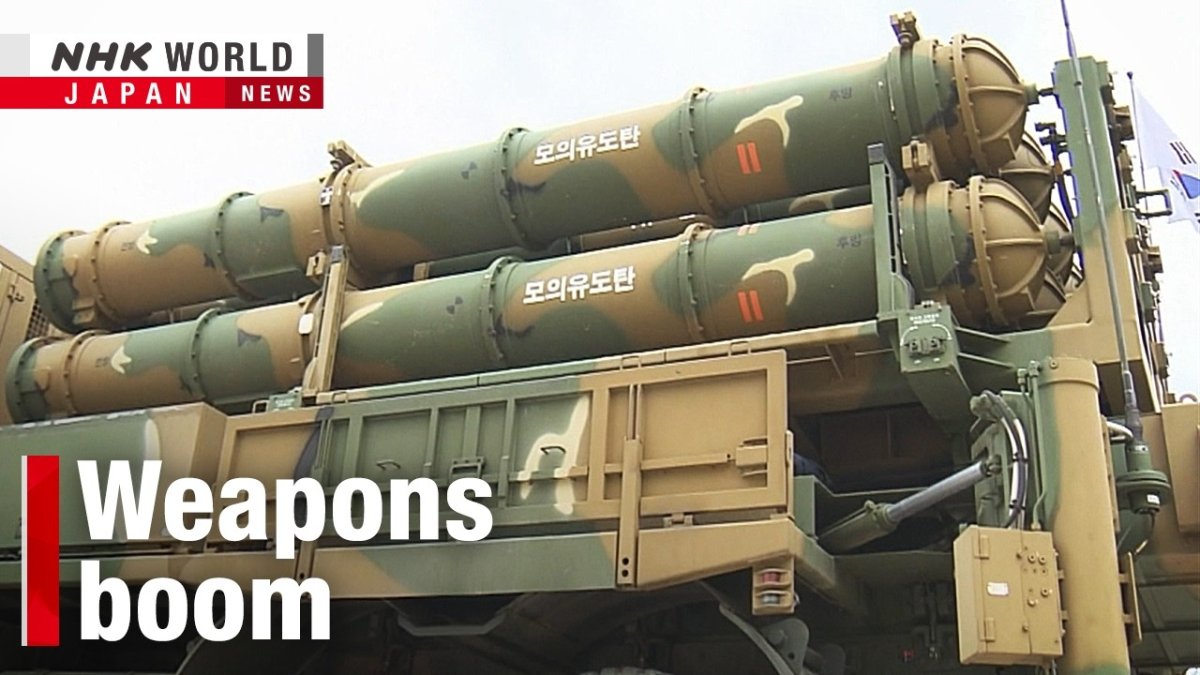
LIG Nex1 has recorded a 64.6 percent surge in operating profit, propelled by the Cheongung-II medium-range surface-to-air missile system’s proven intercept capabilities. The missile’s hit-to-kill technology and active radar seeker have demonstrated high success rates in live-fire exercises against maneuvering targets, validating its role in layered air defense architectures. Saudi Arabia’s $3.2 billion contract for Cheongung-II batteries, followed by UAE follow-on orders and a new agreement with Iraq, illustrates the system’s appeal in the Middle East, where rapid deployment and integration with existing command networks are prioritized. These deals have positioned LIG Nex1 as a competitive alternative to Western suppliers, leveraging competitive pricing without compromising performance metrics.
Japan’s missile defense posture, anchored by PAC-3 batteries and the Aegis Ashore program, faces renewed scrutiny as South Korean performance data circulates within Tokyo’s policy circles. Under the Ministry of Foreign Affairs and Ministry of Defense coordination, Japan is advancing its own Type 12 surface-to-ship missile evolution toward extended-range hypersonic variants. The Cheongung-II’s intercept records provide empirical benchmarks that influence debates over procurement timelines and cost-effectiveness, particularly as Japan seeks to balance indigenous development with alliance interoperability. Analysts note that South Korea’s export momentum has accelerated discussions on whether Tokyo should relax certain technology transfer restrictions to maintain qualitative edges.
Comparative performance metrics from Cheongung-II engagements have also informed Japan’s broader strategic recalibration, emphasizing the need for enhanced coastal and point-defense integration. While Japan’s programs benefit from established supply chains, the agility demonstrated by LIG Nex1 in securing multi-billion-dollar contracts underscores the competitive pressure on domestic firms. This dynamic encourages Tokyo to refine its missile defense strategy, incorporating lessons from Korean operational data to optimize future acquisitions and maintain deterrence credibility in the region.
Aerospace Manufacturing and the KF-21 Fighter
KAI's FA-50 light combat aircraft secured a $712 million contract with the Philippines in June 2025. The larger KF-21 Boramae 4.5-generation fighter entered Republic of Korea Air Force service in 2026, featuring active electronically scanned array radar and internal weapons bays.
Combined backlog for the Big Four firms exceeded $72 billion by late 2025, with Hanwha Aerospace alone holding 52.3 trillion won. This order book supports sustained investment in composite materials, avionics integration, and engine technology.
Comparative Analysis with Japan's Defense Sector
Japan’s defense budget trajectory targets 2 percent of GDP by 2026 under the revised National Security Strategy, funding ambitious programs such as the Type 30 next-generation fighter developed jointly with the United Kingdom and Italy, alongside accelerated hypersonic weapons research. Mitsubishi Heavy Industries, the sector’s flagship contractor, maintains a market capitalization that reflects its diversified industrial base yet lags behind Hanwha’s rapid valuation growth tied to export surges. These investments signal Tokyo’s intent to rebuild industrial capacity after decades of constrained spending, yet structural challenges persist in scaling production for international markets.
Fundamental differences in export philosophy separate the two nations. Japan’s Three Principles on Arms Exports impose rigorous oversight and limit transfers to allies under strict conditions, contrasting sharply with South Korea’s proactive marketing and flexible offset arrangements. This regulatory framework has constrained Japanese firms’ ability to compete in emerging markets where Korea has secured footholds through aggressive financing and technology-sharing packages. METI’s defense industrial base strategy seeks to address these gaps by promoting selective international collaboration, yet domestic-first production mandates continue to inflate unit costs and extend delivery schedules compared with Korean counterparts.
Cost structures and supply-chain rigidity further complicate Japan’s export prospects. Mitsubishi Heavy’s reliance on high-precision domestic components, while ensuring quality, results in higher price points that deter price-sensitive buyers. In contrast, Hanwha’s localized manufacturing models demonstrate how South Korea has converted policy flexibility into market share gains. As Tokyo evaluates METI recommendations for streamlined export procedures, the Korean experience offers a cautionary yet instructive reference for balancing security imperatives with commercial viability in an increasingly competitive global defense landscape.
Implications for Asia-Pacific Security and Japan's Strategy
South Korea's growing presence in artillery, armor, and missile defense affects procurement decisions across the region. For Japan, this development underscores the need to accelerate indigenous programs such as next-generation fighters and hypersonic countermeasures while deepening cooperation with the United States and Australia.
Japanese policymakers continue to reference the Society 5.0 framework and Green Transformation goals when evaluating dual-use technologies. Strengthened trilateral coordination among Japan, the United States, and South Korea could mitigate duplication in missile-defense architectures and enhance interoperability in the face of shared regional challenges.
Future Outlook for Global Arms Market
South Korea now ranks tenth globally in arms revenues according to SIPRI data. Sustained investment in research and development, combined with proven battlefield performance, positions its defense sector for further gains through 2030. Japanese industry observers note that competitive benchmarking against these platforms will shape future acquisition strategies and alliance technology-sharing arrangements.
By Kenji Tanaka, Staff Writer
This article was produced with AI-assisted research and editorial support. Reporting is based on sources cited in the article.
What's Your Reaction?
 Like
0
Like
0
 Dislike
0
Dislike
0
 Love
0
Love
0
 Funny
0
Funny
0
 Wow
0
Wow
0
 Sad
0
Sad
0
 Angry
0
Angry
0

Japan Correspondent at Global1.News. Tokyo-based voice covering Japanese politics, technology, economy, and culture. Tracks the intersection of tradition and innovation in one of the world's most dynamic societies.













Comments (0)