
Thai-Cambodian Border Fence Reaches 45% Completion, Officials Clarify Gap Concerns
The Border Security Committee Visits Pong Nam Ron District This week the House committee on national security, border affairs and national reform, led by chairman Monthian Songpracha, inspected the Thai-Cambodian border fence site in Pong Nam Ron district of Chanthaburi province. Officials from the Chanthaburi Marine Task Force welcomed the lawmakers and confirmed that all bord
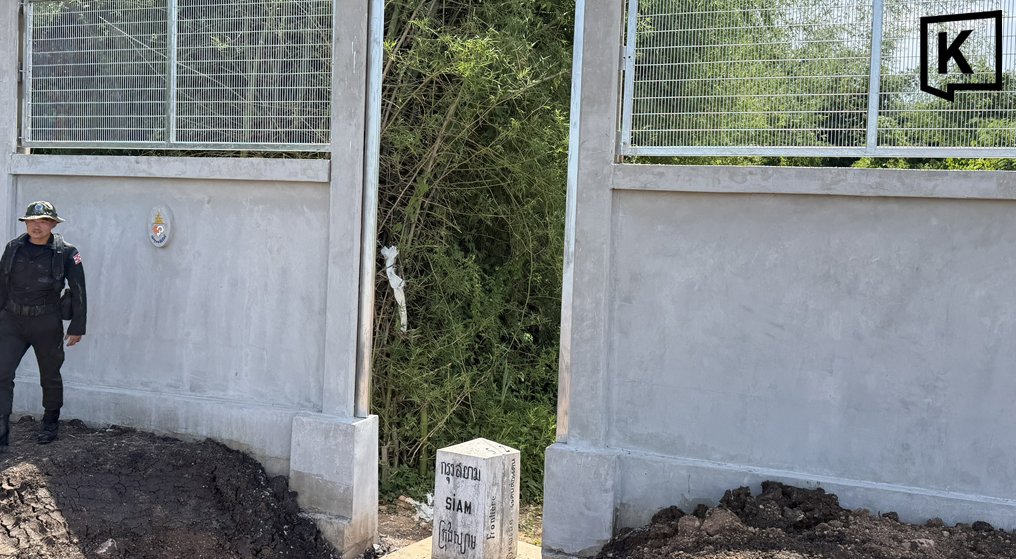
The Border Security Committee Visits Pong Nam Ron District
This week the House committee on national security, border affairs and national reform, led by chairman Monthian Songpracha, inspected the Thai-Cambodian border fence site in Pong Nam Ron district of Chanthaburi province.
Officials from the Chanthaburi Marine Task Force welcomed the lawmakers and confirmed that all border checkpoints in the area remain fully closed under current government and Royal Thai Navy policy.
The visit allowed committee members to see first-hand how Thailand coordinates with Cambodian representatives at every stage of construction, reflecting the gentle Thai approach to maintaining harmony with neighbours.
Current Progress on the 8.3-Kilometre Fence Project
The first phase covers a 1.3-kilometre stretch between boundary markers 52 and 54, an area agreed under the Joint Boundary Commission, and now stands at 45 percent complete.
The project receives funding from the Hathaitip Fund and is built by the Army Development Command, ensuring clear lines of responsibility within Thai institutions.
The second phase will run from markers 54 to 59 for roughly seven kilometres, with supporting road construction already underway to prepare for future security infrastructure along the total planned length of 8.3 kilometres.
Design Details and Temporary Gaps at Marker 52
The fence consists of a 1.95-metre concrete wall topped with barbed wire, reaching a total height of 4.3 metres, providing sturdy protection while allowing for joint procedures.
Officials explained that the visible gap at boundary marker 52 follows the French colonial-era agreement and remains a shared structure between Thailand and Cambodia.
This temporary opening exists only while Joint Boundary Commission procedures continue and will later receive a hinged panel system for joint inspections, after which no permanent opening will remain.
Claims that boundary markers had been removed were dismissed, as officials confirmed that circulating images had been edited and do not reflect actual conditions on the ground.
Restoration Work at the K. Kai Area in Ban Phakkat
The committee also visited the K. Kai area in Ban Phakkat, a natural boundary zone surrounded by Khlong Takhian canal that lost about three rai of land in 2020.
Thai border defence forces had lodged a protest at the time, noting that the change appeared man-made rather than a natural waterway shift, while Cambodian authorities described it as natural.
Thai military personnel and local communities later worked together, filling the canal with more than 200 truckloads of soil to reconnect the land and raise the Thai flag once more in the restored area.
Such community cooperation echoes the Thai spirit of collective care for the land, similar to village efforts that maintain Buddhist temple grounds across the eastern provinces.
Community-Built Access Roads and Next Steps for Funding
Around 15 kilometres of access roads have already been constructed in the K. Kai and U-shaped zones through public contributions from local residents.
Future upgrades to asphalt surfaces will require government budget allocation, yet no agency has yet been assigned responsibility for this work.
Lawmakers on the committee stated they will coordinate with relevant agencies to secure the necessary funding so that these community-built roads do not remain unused.
Why Transparent Border Management Matters for Thailand and ASEAN
By inviting Cambodian observers throughout construction, Thailand demonstrates its commitment to clear procedures that support stable relations with its eastern neighbour.
Secure and well-managed borders in Chanthaburi help protect local communities, facilitate orderly trade, and maintain the peaceful atmosphere that draws visitors to the province’s orchards and gem markets.
Within ASEAN, such practical cooperation on boundary infrastructure contributes to regional confidence, allowing Thailand to focus on shared economic and cultural ties rather than unresolved disputes.
For residents along the border, the combination of restored land at K. Kai and planned road improvements promises steadier daily life and continued access to their fields and homes.
The inspection this week therefore represents more than construction progress; it reflects Thailand’s steady approach to safeguarding its territory while nurturing the neighbourly understanding valued across Southeast Asia.
Source: Khaosod English By Ann Srisawat, Staff WriterThis article was produced with AI-assisted research and editorial support. Reporting is based on sources cited in the article.
What's Your Reaction?
 Like
0
Like
0
 Dislike
0
Dislike
0
 Love
0
Love
0
 Funny
0
Funny
0
 Wow
0
Wow
0
 Sad
0
Sad
0
 Angry
0
Angry
0

Southeast Asia Correspondent at Global1.News. Based in Bangkok, covering Thai and Southeast Asian politics, economy, technology, and culture. Deep regional perspective on one of the world's most dynamic regions.










Comments (0)