
Zhang Zhidong: Chinese Broker Behind Sinaloa Fentanyl
Zhang Zhidong, aka Brother Wang, a Peking University graduate, allegedly linked Chinese chemical factories to Sinaloa cartel fentanyl labs through shell companies and money laundering networks.
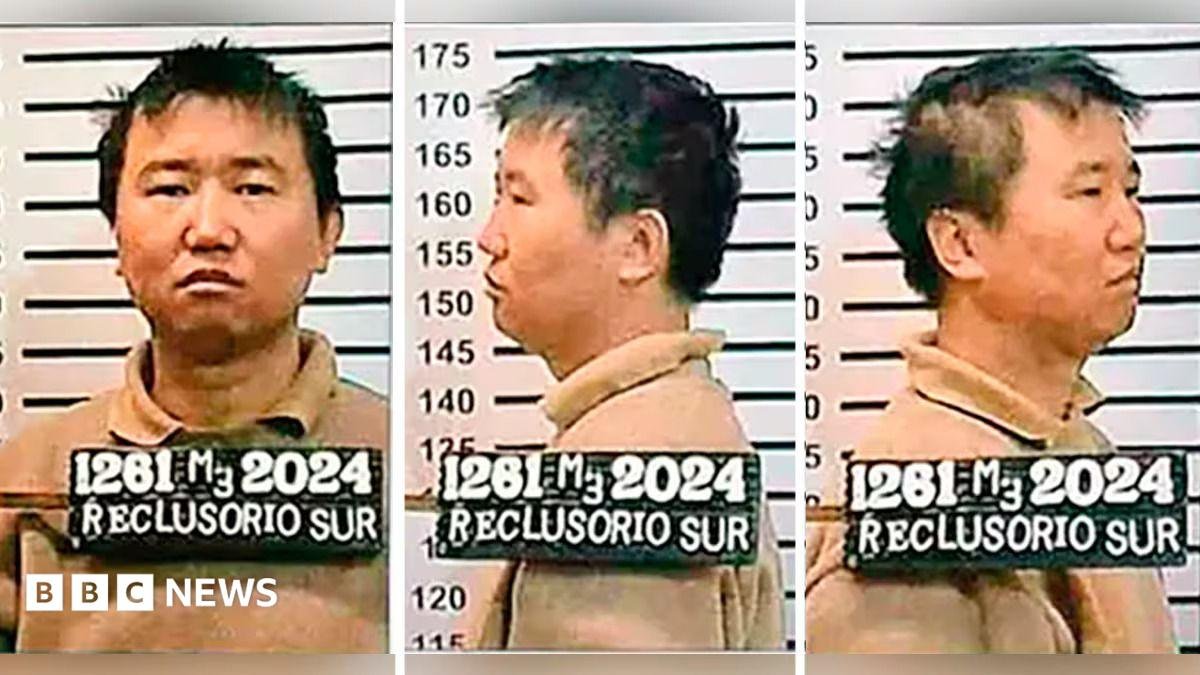
Zhang Zhidong: Chinese Broker Behind Sinaloa Fentanyl
Culiacán, Mexico — Cartel members describe Zhang Zhidong as the pivotal figure who linked distant Chinese suppliers to local laboratories, transforming the Sinaloa organization's reach in the synthetic opioid trade. Enrique, a high-level coordinator, recalls how Zhang's connections enabled the steady flow of precursor chemicals across oceans. This network operated for years before US charges brought it into public view.
The Peking University Graduate Who Became "Brother Wang"
Zhang Zhidong graduated from Peking University in Beijing with a Spanish degree in 2010. One year later he moved to Mexico to join a Chinese-owned iron ore mining company, where he quickly rose to a senior role. Colleagues at the time viewed him as resourceful and adaptable, fluent in Spanish with a distinct Beijing accent that helped him navigate both official and unofficial circles. Alex, who studied alongside Zhang and later worked at the same firm, noted his instinct for street language and his ease in building ties with whoever mattered locally. After the mining company collapsed in 2013, Zhang remained in Mexico while others returned to China. By 2016 court filings allege he had launched a massive narcotics trafficking and money laundering organization.
When the mining company collapsed in 2013, Alex returned to China, yet Zhang remained in Mexico. Within a year or two he began posting in the Peking University Spanish alumni WeChat group, offering favourable dollar exchange rates—an activity Alex believes marked his entry into money laundering. Court documents later trace the start of his alleged narcotics and laundering operations to June 2016. Cartel members describe how a romantic relationship with a relative of one of the Sinaloa leadership further embedded him inside the organisation, turning the former mining executive into the figure known as Brother Wang.
Inside the China-Mexico Fentanyl Supply Chain
Enrique explains that orders for fentanyl precursors were placed directly with Zhang, who used his contacts in China to secure the chemicals from regulated factories. The ingredients traveled by air or sea to Mexico, where cartel networks distributed them to clandestine labs across Sinaloa. Luis, who ran errands for the organization, remembers a 2019 meeting in which Zhang offered these precursor products, effectively introducing the group to large-scale fentanyl production. Victoria Dittmar of InSight Crime describes such brokers as unique connectors between chemical producers and trafficking groups, noting Zhang's rare ability to link suppliers in China with operations in Mexico and distribution points in the United States. Mexican authorities later stated that Zhang's illegal operations extended across the Americas, Europe, China, and Japan.
The Financial Engine: Shell Companies and US Cash Routes
US prosecutors detailed how Zhang recruited individuals to open accounts for more than 100 shell companies. Couriers collected cash at various American locations, deposited the money into these accounts, and wired the funds to beneficiary accounts outside the United States. This layering structure masked the origin of drug proceeds while sustaining precursor purchases from China. The US Department of Justice described the operation as one that pumped "massive quantities" of cocaine, fentanyl, and methamphetamine across the border while laundering millions of dollars in narcotics proceeds through the international banking system.
Victoria Dittmar of InSight Crime notes that brokers occupying Zhang's position sit at a crucial intersection between chemical producers and trafficking organizations, a world that outsiders find difficult to navigate. His simultaneous presence across three regions — China as supplier, Mexico as producer, and the United States as consumer — made him what researchers describe as a "quite unique" figure in the transnational drug trade. Mexican authorities estimated Zhang's operation handled more than $150 million in annual drug proceeds.
The Human Cost: Cartel Cooks and Deadly Chemicals
Luis became a fentanyl cook after that initial introduction and witnessed at least five colleagues die from exposure when substances seeped through protective clothing. He describes workers passing out during shifts, requiring others to carry them from the lab rooms. Enrique acknowledges the personal toll, revealing that one of his own relatives died from a fentanyl overdose, yet he frames the work as necessary for survival in a region with few alternatives. US Customs and Border Protection seizures illustrate how the finished product, often pressed into pills, crosses into Arizona and other states. The drug's potency means a dose the size of a few grains of salt can prove lethal, contributing to tens of thousands of deaths each year, primarily in the United States. Inside the clandestine labs of Sinaloa, the work proved brutally unforgiving: protective suits never fully sealed, allowing the substances to seep through gaps until workers collapsed and had to be carried out. Luis has watched at least five fellow cooks die in front of him, their bodies overwhelmed by the same compounds they handled daily.
Enrique, a higher-level coordinator, carries his own private reckoning. One of his relatives died from a fentanyl overdose, an event he says “shakes your conscience.” Still, he frames the trade as unavoidable: “work is work and we don’t know another way to make a living.” Luis faced the same stark choice when he tried to quit; his boss offered only two paths—put on the vest and fight on patrol, or stay inside as a cook. Both men describe an economy in which the lethal chemistry of fentanyl has become the only reliable livelihood on offer.
Escape and the International Manhunt
Zhang was arrested in Mexico in 2024 on charges of drug trafficking and money laundering. He made a dramatic escape before recapture and extradition to the United States in 2025. When he appeared in a New York court that year, then-Deputy Attorney General Todd Blanche called him one of the world's most dangerous traffickers and accused him of running a global enterprise that pumped cocaine, fentanyl, and methamphetamine into the US while laundering millions in proceeds. Zhang has pleaded not guilty and awaits trial. His lawyer declined to comment on the ongoing case. Cartel associates who spoke with the BBC provided rare details of his alleged role, confirming the scale of the network he helped establish.
China's Chemical Industry and the Control Gap
China remains the world's dominant supplier of fentanyl precursor chemicals. A 2025 US State Department report describes the country's chemical sector as "massive," encompassing 160,000 companies. Despite steps by Chinese authorities to implement controls, the report notes that oversight remains "insufficiently staffed and equipped" to monitor the vast network of producers. The precursor chemicals Zhang allegedly brokered are regulated but not banned because they serve legitimate industrial applications across multiple sectors.
The Chinese embassy in Washington told the BBC that China is "one of the world's toughest countries on counternarcotics," noting that the country scheduled all fentanyl-related substances in 2019. The embassy described China's cooperation with the United States on drug control as "extensive and in-depth" and "highly productive." Yet the tension between legitimate chemical commerce and diversion into illicit channels persists — the same gap that allegedly enabled a Peking University graduate to become the cartels' most valuable broker.
The Cartel's New Routes: Life After Brother Wang
Even after Zhang's removal from the network, Sinaloa members continue to coordinate precursor shipments and lab operations in the same manner he helped institutionalize. Enrique notes that the supply chain Zhang created remains functional, with chemicals still arriving from Chinese factories for distribution to cooks like Luis. The organization's presence in Culiacán and surrounding areas persists, adapting to enforcement pressures while maintaining the routes Zhang allegedly opened. US President Donald Trump has since classified fentanyl and its components as weapons of mass destruction, citing the trade as justification for tariffs on China, Mexico, and Canada. Cartel insiders say the economic realities of the region leave few options beyond this line of work, regardless of external crackdowns.
Zhang’s arrest and extradition removed a broker whose reach spanned Chinese chemical factories, Mexican laboratories and distribution networks inside the United States. Victoria Dittmar of InSight Crime notes that such intermediaries occupy the narrow intersection between regulated precursor producers and the cartels, a position she describes as “quite unique” and difficult for outsiders to replicate. Mexican authorities credited Zhang with moving more than 1,800 kilograms of fentanyl alone, alongside cocaine, methamphetamine and over $150 million in annual proceeds laundered through more than one hundred shell companies.
With Zhang gone, the supply lines he personally maintained have been disrupted, yet the underlying demand for precursors persists. Enrique and other cartel members speak of the trade as an entrenched economic reality rather than the work of any single individual. Dittmar emphasises that the skills Zhang possessed—connecting three continents while speaking the necessary languages—remain rare, but the structural need for someone to fill that role has not disappeared.
Around the time of Zhang's arrest, the United States Drug Enforcement Administration detected a measurable decline in fentanyl purity, which officials said was consistent with cooks struggling to obtain key precursor chemicals. Victoria Dittmar of InSight Crime describes this as a constant "game of cat and mouse" — when brokers are removed or chemicals controlled, producers adapt by finding substitutes. Cartel members confirm the immediate disruption, but one coordinator said Zhang "left lots of connections to help us keep going," and another identified a replacement broker — another Chinese national — already stepping into the role. "If he's gone, someone else will step in," the coordinator said. "The business will not stop."
By Elena Vasquez, Staff WriterThis article was produced with AI-assisted research and editorial support. Reporting is based on sources cited in the article.
What's Your Reaction?
 Like
0
Like
0
 Dislike
0
Dislike
0
 Love
0
Love
0
 Funny
0
Funny
0
 Wow
0
Wow
0
 Sad
0
Sad
0
 Angry
0
Angry
0
Latin America Correspondent at Global1.News. Based in Mexico City, covering politics, economics, energy, and culture across the region. Brings an on-the-ground perspective to stories spanning from the Rio Grande to Patagonia.









Comments (0)