
Atemoya Trade Dynamics Reflect Evolving Cross-Strait Economic Considerations
Atemoya Trade Dynamics Reflect Evolving Cross-Strait Economic Considerations Origins of the Atemoya in Taiwan's Agricultural Landscape The atemoya stands as a hybrid fruit developed from custard apple species, with its scaly heart-shaped form and creamy white flesh making it a distinctive product tied closely to Taitung county in Taiwan. This specialty crop has drawn attention
Origins of the Atemoya in Taiwan's Agricultural Landscape
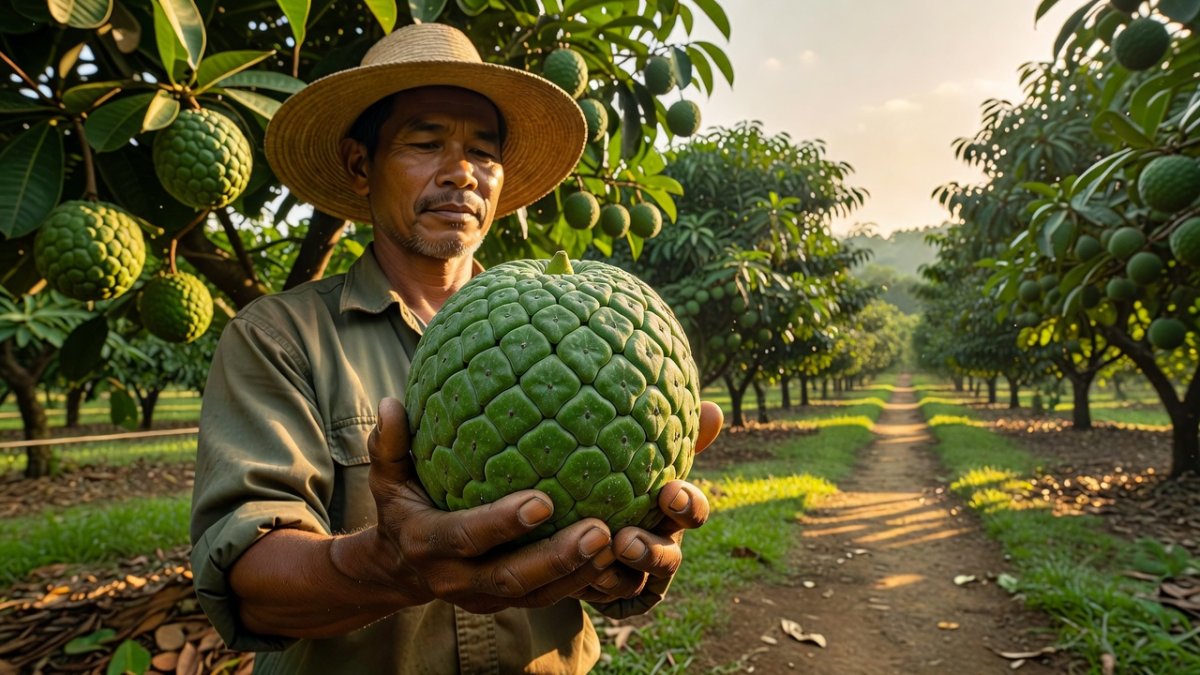
The atemoya stands as a hybrid fruit developed from custard apple species, with its scaly heart-shaped form and creamy white flesh making it a distinctive product tied closely to Taitung county in Taiwan. This specialty crop has drawn attention in recent trade discussions, particularly as China has featured among its key importers. The fruit's unique characteristics have positioned it within broader conversations about agricultural exports from Taiwan, where local production supports regional economies in specific counties.
Recent Pledges and Resulting Warnings from Taiwanese Authorities
Earlier this month, Chinese companies expressed intentions to increase purchases of atemoya during a forum held in Xiamen, a coastal city situated along the Taiwan Strait. This commitment formed part of wider efforts to expand acquisitions of Taiwanese goods such as fish and tea. Taiwan's agriculture ministry responded with a press release that characterized the approach as a potential "raise, trap, kill" sequence, suggesting that initial large-scale buying could foster dependence before subsequent market adjustments occur. The ministry highlighted past interruptions, including a suspension of imports in 2021 over pest concerns, a partial resumption in 2023, and the introduction of taxes in 2024, noting that these steps contribute to instability for growers.
Historical Patterns in Cross-Strait Fruit Trade
Observers have drawn parallels to earlier episodes involving other Taiwanese produce, such as the 2021 restrictions on pineapple imports from Taiwan. That measure led to significant adjustments for farmers and prompted domestic initiatives aimed at boosting local consumption. In the case of atemoya, similar concerns have surfaced regarding unilateral changes in import conditions without prior notice. The agriculture ministry emphasized that such patterns expose the industry to considerable risks while also pointing to China's own expansion of atemoya cultivation as an additional factor affecting Taiwan's producers.
Political Dimensions and Domestic Reactions in Taiwan
The forum in Xiamen attracted business representatives and opposition figures from Taiwan, even amid an official prohibition on participation by the central government. Taiwan's Mainland Affairs Council has indicated that attendees may face scrutiny. Lawmakers from the Kuomintang have criticized the ministry's statements as an unnecessary politicization of agricultural matters, arguing that such rhetoric could ultimately disadvantage farmers. Taipei Mayor Chiang Wan-an has similarly described the council's stance as an effort to pressure producers, likening the atemoya to a flagship product comparable in distinctiveness to major industrial achievements.
Strategic Calculus in Broader China-Taiwan Relations
Beijing maintains its position that Taiwan forms part of its territory and has referenced the possibility of unification through various means, including military exercises that have intensified in recent years near the island. These drills have at times included simulations of blockades. Beyond military activities, economic measures involving agricultural products have appeared as tools in the wider set of pressures applied toward Taiwan. The atemoya situation illustrates how trade dependencies can intersect with these dynamics, where initial market access signals may later give way to regulatory shifts that affect livelihoods in export-oriented regions like Taitung county.
Approaches to Agricultural Resilience and Future Outlook
Taiwan's agriculture ministry has outlined plans centered on sustainable development and consistent farmer incomes, with emphasis on guiding the atemoya sector toward diversified processing options such as frozen products, puree, and wines. This focus aims to reduce vulnerability to external market fluctuations. Meanwhile, the debate continues over whether warnings about reliance on any single export destination serve protective or divisive purposes. From a strategic standpoint, these exchanges underscore the complexities of economic ties across the strait, where agricultural specialties like atemoya become embedded in larger calculations involving self-reliance and diversification for both sides.
Source: BBC News
By Prof. Marcus Chen, Staff Writer
This article was produced with AI-assisted research and editorial support. Reporting is based on sources cited in the article.
What's Your Reaction?
 Like
0
Like
0
 Dislike
0
Dislike
0
 Love
0
Love
0
 Funny
0
Funny
0
 Wow
0
Wow
0
 Sad
0
Sad
0
 Angry
0
Angry
0

World Politics Analyst at Global1.News. Based in Beijing, covering US-China relations, global trade, and geopolitical strategy. Brings deep analytical perspective to the power dynamics shaping international affairs.















Comments (0)