
Gulf States Under Iranian Fire as US Strikes Intensify — A Sixth Night Changes Everything
Sixth night of US strikes on Iran triggered Iranian missiles and drones against Bahrain, Iraq, Kuwait, Oman, Qatar, Jordan and Syria on July 17, 2026. Infrastructure hits killed 8 in Iran; oil hit $86/barrel amid Hormuz threats. China, Pakistan urge ceasefire as 38 dead since June 22.By Jessica A...
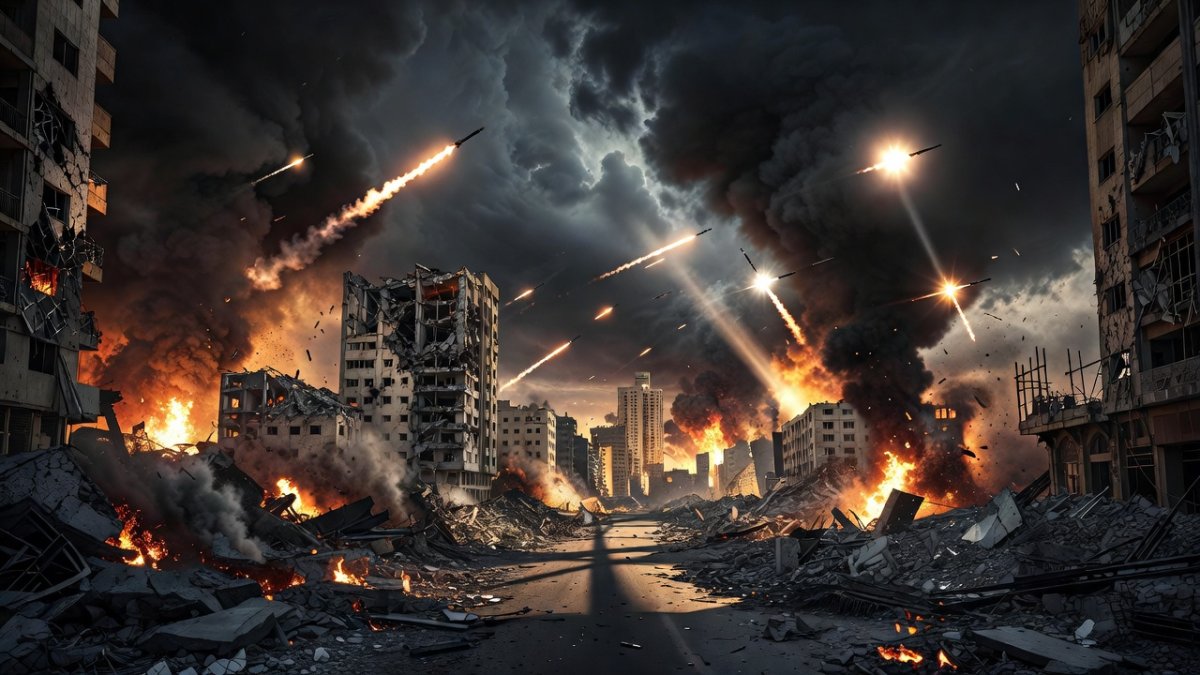
Sixth Night of Escalation Rocks the Gulf Region
Tehran launched strikes against several countries across the Gulf and wider region overnight as the United States military raised its attacks on Iran. On Friday July 17, 2026, Bahrain, Iraq, Kuwait, Oman and Qatar, as well as Jordan and Syria, were forced to take defensive action against Iranian missiles and drones amid a sixth night of US strikes on Iran. The intensity marked a clear shift from earlier phases of the confrontation that began after talks in Switzerland on June 22.
Explosions were heard across Doha as Qatar, which hosts major US military facilities, absorbed the latest wave of Iranian fire. A child was injured by falling shrapnel before Qatar's security threat level was elevated and then returned to normal. Air raid sirens activated in Bahrain while Jordan's air defence systems engaged incoming threats. In northern Iraq, US coalition forces shot down eight explosive drones over Erbil with no casualties reported.
The IRGC attacked a US special operations command centre at al-Tanf base in Syria and claimed additional hits on American assets in Oman and Kuwait. CENTCOM completed its latest major wave of strikes at 01:40 GMT on Friday, underscoring the round-the-clock nature of the campaign. Regional capitals moved to high alert as the conflict spilled further beyond Iranian borders for the sixth consecutive night.
This expansion of Iranian targeting to Gulf hosts of American forces has transformed what began as a bilateral exchange into a multi-front crisis. Officials across the affected states confirmed defensive measures were activated without delay, reflecting months of contingency planning that is now being tested in real time.
US Campaign Hits Critical Infrastructure in Southern Iran
The escalating US air campaign targeted civilian infrastructure in southern Iran, including telecommunications networks, railway systems, and the Bandar-e Khamir bridge in Hormozgan province, where at least seven people were killed. US forces struck at least six bridges, a railway station and other sites across Iran, killing at least eight people that night. Power outages were reported in Bandar Abbas as the strikes continued into the early hours.
These targets represent a deliberate broadening of the American effort beyond purely military sites. Telecommunications networks and rail links form the backbone of civilian movement and communication in the south, and their disruption compounds the pressure already felt by Iranian authorities. The Bandar-e Khamir bridge strike alone accounted for the bulk of confirmed fatalities reported from that night's operations.
Iran said 38 people have been killed and more than 400 injured in US attacks since June 22 when the sides met in Switzerland. The cumulative toll has risen steadily with each successive night of bombardment. American officials have framed the campaign as necessary to degrade Iran's ability to project power and to respond to prior Iranian actions, though the inclusion of dual-use civilian infrastructure has drawn sharp regional scrutiny.
Power outages in Bandar Abbas added another layer of hardship for residents already navigating the aftershocks of earlier waves. The destruction of multiple bridges and a railway station further isolated communities and complicated any rapid repair efforts. As the sixth night concluded, the scale of damage to southern Iranian connectivity stood as one of the most visible markers of the intensified US approach.
Iranian Retaliation Targets American Assets Across Host Nations
The IRGC claimed it destroyed a US air control radar in Oman's northern Ghanim region and a maritime surveillance radar in the Strait of Hormuz. In Kuwait, the IRGC hit a US military base targeting a missile defence radar, weapons depots and two HIMARS launchers. Bahrain saw Iranian army claims of strikes against US helicopters and reconnaissance aircraft at the Sakhir airbase, with air raid sirens sounding across the country.
These claims, if verified, would represent a coordinated attempt by Tehran to degrade the sensor and launch architecture that underpins American operations in the Gulf. The selection of radar sites in Oman and the Strait of Hormuz points to a focus on maritime domain awareness, while the Kuwait base strike aimed at both defensive systems and precision-fire capabilities. Bahrain's Sakhir airbase has long been associated with US rotary-wing and intelligence platforms.
Jordan's air defence shot down three Iranian missiles with no casualties reported, demonstrating the layered defensive posture now active across multiple borders. In northern Iraq, the interception of eight explosive drones over Erbil by US coalition forces similarly limited the immediate human cost. The IRGC's attack on the US special operations command centre at al-Tanf base in Syria extended the geographic scope of the retaliation into the Levant.
Collectively, the overnight Iranian operations forced defensive action in seven countries and underscored Tehran's willingness to strike at the network of bases and facilities that support US forces. While independent confirmation of every claimed hit remains pending, the pattern of targets reveals a clear intent to raise the cost of American basing arrangements throughout the region.
Strait of Hormuz Declared Under IRGC Control
The IRGC declared the Strait of Hormuz "remains in the hands of the IRGC Navy's admirals." This assertion comes as oil prices hit $86 per barrel amid the growing crisis that threatens global energy security. The waterway handles a substantial share of seaborne oil trade, and any sustained disruption would reverberate through markets far beyond the Gulf.
Maritime surveillance radar targeted in the Strait formed part of the Iranian claims, suggesting an effort to blind monitoring systems that track vessel movements. The combination of kinetic strikes and public declarations is designed to signal that Tehran retains the ability to influence one of the world's most critical chokepoints even under sustained American air pressure.
Shipping companies and energy traders have already begun adjusting risk premiums as the sixth night of exchanges unfolded. The $86 per barrel mark reflects immediate market sensitivity to the possibility of further escalation or temporary closures. Regional navies and commercial operators are watching IRGC naval movements with heightened caution following the latest statements from Tehran.
Control of the Strait has long been a central element of Iranian deterrence strategy. The overnight claims and the accompanying declaration reinforce that this lever remains active in the IRGC's calculus, adding a strategic dimension that extends well beyond the immediate military exchanges on land and in the air.
Diplomatic Voices Urge Immediate Ceasefire
China's Foreign Minister Wang Yi and Pakistani counterpart Ishaq Dar called for an immediate ceasefire. Wang described the June deal as "hard-won," saying "Peace is before our eyes, cannot fall at the last hurdle." Their joint appeal reflects growing international alarm that the sixth night of intensified strikes risks extinguishing remaining diplomatic space.
The June 22 meeting in Switzerland had been viewed by several capitals as a potential off-ramp. The subsequent collapse into sustained military exchanges has left mediators scrambling to re-establish channels. Wang's language underscores Beijing's assessment that the window for de-escalation is narrowing rapidly as infrastructure damage and casualty figures mount on both sides.
Pakistan's alignment with the Chinese call adds weight from a regional actor with its own complex relationships across the Gulf and with Tehran. The dual appeal is likely to be amplified in multilateral forums in the coming days as governments seek to prevent further spillover. Yet the operational tempo of US strikes and Iranian retaliatory waves has so far outpaced diplomatic initiatives.
Whether these calls translate into concrete mediation remains uncertain. The facts on the ground—eight people killed in the latest US wave, seven at the Bandar-e Khamir bridge alone, and defensive actions forced across seven countries—have hardened positions even as external powers urge restraint.
Washington Perspectives and Political Undercurrents
US Vice President JD Vance said on Joe Rogan's podcast that Israeli government members tried to influence US public opinion to oppose a deal. The comment injects a domestic political dimension into an already volatile regional confrontation. It also highlights the competing pressures surrounding any potential return to negotiations.
American officials have continued to emphasize the military campaign's objectives while CENTCOM executed its latest major wave at 01:40 GMT on Friday. The precision timing of the operations and the selection of infrastructure targets in southern Iran signal a sustained effort rather than a limited response. Domestic debate over the wisdom and end-state of the campaign is intensifying as the nights of strikes accumulate.
The Vice President's remarks about external influence efforts add another layer of scrutiny to the decision-making environment in Washington. They also risk complicating coordination with regional partners who must balance their own security interests against the expanding Iranian retaliation. The podcast format itself ensures the comments will circulate widely and quickly.
As the sixth night concluded, the interplay between battlefield developments and political messaging in the United States remained a critical variable. Any shift in public or congressional sentiment could eventually constrain or reshape the operational authorities under which CENTCOM is currently acting.
Regional Defenses and Immediate Human Impact
In Qatar, the injury of a child by falling shrapnel provided a stark human face to the night's events. Explosions across Doha forced an elevation of the security threat level that was later returned to normal once the immediate danger passed. Bahrain activated air raid sirens as Iranian claims focused on the Sakhir airbase and its complement of US helicopters and reconnaissance aircraft.
Jordan's successful interception of three Iranian missiles prevented casualties on its territory, while the downing of eight explosive drones over Erbil by US coalition forces similarly limited harm in northern Iraq. These defensive successes stand in contrast to the infrastructure losses and fatalities recorded inside Iran. The al-Tanf base strike in Syria rounded out a night of multi-domain Iranian pressure.
Kuwait absorbed claims of hits on a missile defence radar, weapons depots and two HIMARS launchers at a US military base. Oman faced assertions that a US air control radar in the northern Ghanim region had been destroyed. Each of these locations hosts or supports elements of the American posture that Iran is now systematically probing.
The cumulative effect is a region on edge, with civilian populations from Doha to Erbil experiencing the direct and indirect consequences of the expanded exchanges. Casualty figures remain lower outside Iran than within it, yet the psychological and political impact of air raid sirens and drone interceptions is already reshaping daily life across multiple capitals.
What This Means
The sixth night has fundamentally altered the geometry of the confrontation. What began as a focused US campaign against Iranian capabilities after the June 22 Switzerland meeting has now drawn in Bahrain, Iraq, Kuwait, Oman, Qatar, Jordan and Syria as active defensive theaters. Iranian targeting of radars, launchers, helicopters and command nodes at American facilities signals a deliberate strategy to raise the basing costs for Washington's partners.
Oil at $86 per barrel is only the first market signal. Sustained IRGC assertions of control over the Strait of Hormuz, paired with strikes on maritime surveillance systems, introduce genuine risk to energy transit that no major economy can ignore. The human toll—38 killed and more than 400 injured on the Iranian side since June 22, plus the overnight deaths at the Bandar-e Khamir bridge and elsewhere—will harden domestic narratives in Tehran even as international mediators urge a return to the "hard-won" June framework.
Diplomatically, the joint Chinese-Pakistani call for an immediate ceasefire reflects a recognition that the last off-ramp may be closing. Wang Yi's warning that peace "cannot fall at the last hurdle" captures the stakes. Yet operational momentum on both sides, combined with political undercurrents highlighted by Vice President Vance's comments, suggests that de-escalation will require more than statements. The coming nights will determine whether the region locks into a prolonged multi-front conflict or finds a path back from the brink.
For Gulf states hosting US forces, the overnight Iranian strikes have converted abstract contingency plans into lived reality. Defensive systems worked in Jordan and Iraq, but the injury of a child in Qatar and the activation of sirens in Bahrain illustrate that success is measured in partial terms. The strategic balance in the Gulf has shifted, and every capital from Muscat to Amman is now recalculating its exposure.
This article was produced with AI-assisted research and editorial support. Reporting is based on sources cited in the article.
What's Your Reaction?
 Like
0
Like
0
 Dislike
0
Dislike
0
 Love
0
Love
0
 Funny
0
Funny
0
 Wow
0
Wow
0
 Sad
0
Sad
0
 Angry
0
Angry
0

West Africa/Sahel Correspondent at Global1.News. Dakar-based journalist covering politics, security, climate, and development across Francophone and Anglophone West Africa. Tells the stories of a region undergoing profound transformation.











Comments (0)