
China assures Cambodia-bound tanks will not be used against Thailand, PM says
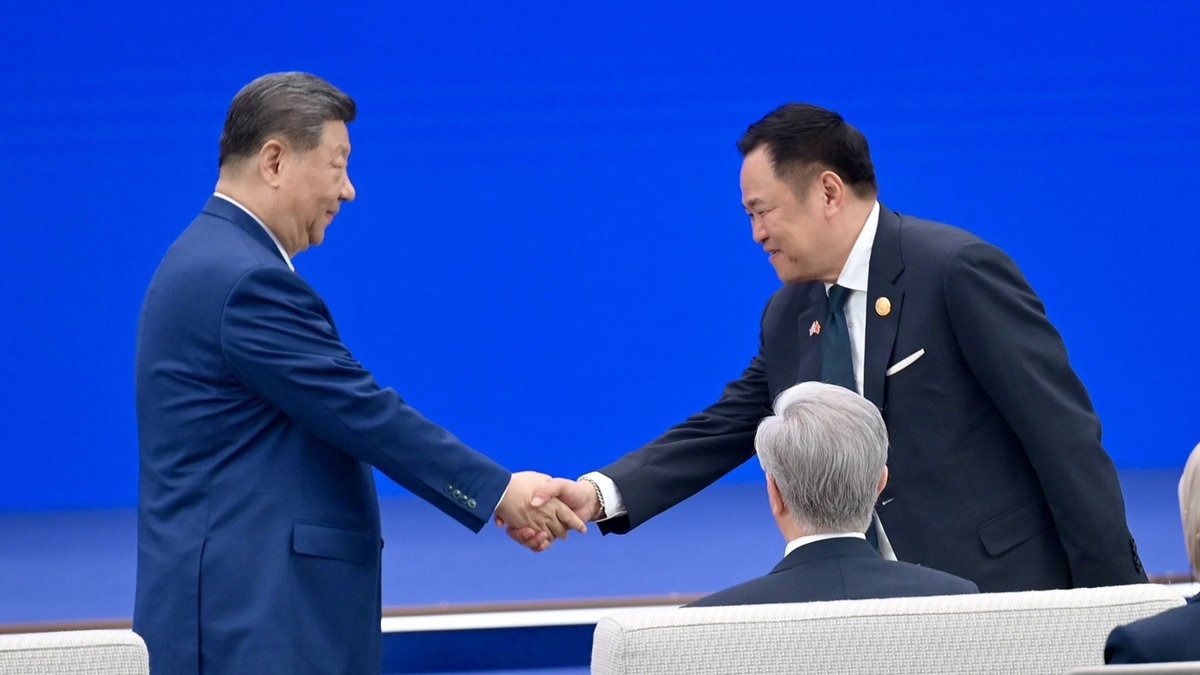
The Shanghai Talks Deliver Clear Assurances on Military Equipment Prime Minister Anutin Charnvirakul met Chinese President Xi Jinping in Shanghai on Friday to address Thailand's concerns over Chinese-made tanks bound for Cambodia. Chinese officials confirmed during the bilateral discussion that the equipment would not be used to harm Thailand under the terms of the existing contract.
The Shanghai Talks Deliver Clear Assurances on Military Equipment
Prime Minister Anutin Charnvirakul met Chinese President Xi Jinping in Shanghai on Friday to address Thailand's concerns over Chinese-made tanks bound for Cambodia. Chinese officials confirmed during the bilateral discussion that the equipment would not be used to harm Thailand under the terms of the existing contract.
The Thai Ministry of Foreign Affairs had prepared detailed briefings for the prime minister ahead of the Shanghai session. Anutin raised the issue directly, noting public anxiety in Bangkok and border provinces about the hardware deliveries.
China explained that the tank procurement agreement with Cambodia predated the recent tensions. Officials added that delivery had been postponed during the height of the conflict due to the sensitive situation along the shared border.
Thailand’s defense relationship with China stretches back more than four decades, beginning with quiet purchases of artillery and armored vehicles in the 1980s when Bangkok sought reliable suppliers outside traditional Western channels. In 2017, the Royal Thai Army took delivery of 38 VT4 main battle tanks, followed by additional batches of Chinese-made armored personnel carriers and multiple-launch rocket systems, all financed through long-term, low-interest arrangements that eased pressure on Thailand's defense budget. These acquisitions have positioned Thailand as one of China's most consistent Southeast Asian defense partners, allowing Bangkok to diversify away from older American platforms while maintaining interoperability with ASEAN neighbors.
Thai strategists view this partnership as essential for safeguarding the kingdom's sovereignty without locking the country into any single alliance. Joint exercises such as Falcon Strike have grown in scope, focusing on counter-terrorism and disaster relief—areas where both nations share practical interests. At the same time, Thai officials quietly emphasize that equipment purchases remain subject to national oversight, ensuring that any future deliveries respect local laws and public sentiment. This careful calibration reflects Thailand's long-standing preference for flexible, interest-based cooperation rather than formal alignment.
China Acknowledges Thai Public and Government Concerns
Anutin reported that Chinese representatives recognized the worries expressed by both the Thai government and Thai citizens. The acknowledgment came after Anutin outlined specific security considerations tied to Thailand's eastern frontier.
China stated it remained obligated to fulfill the long-standing contract despite the delay. The assurance emphasized that the military equipment supplied to Cambodia carries explicit restrictions against use against Thailand.
Thai communities near the Cambodian border, including those in Surin and Si Sa Ket, have followed these developments closely through local administrative channels. The prime minister's direct engagement in Shanghai provided concrete reassurance on this point.
Across Thailand, reactions to the Shanghai talks have been measured yet deeply felt. In Bangkok, editorials in the Bangkok Post and Thai-language outlets such as Matichon have welcomed the clarity on equipment provenance while urging greater transparency on future contracts. Social-media discussions, particularly among younger urban readers, reveal a blend of pride in Thailand's diplomatic poise and lingering unease about long-term dependence on any single supplier. Community radio programs in the northeast have aired village-head interviews stressing that national security decisions must never overshadow the daily concerns of farmers living near the Mekong.
In the border provinces of Ubon Ratchathani and Si Sa Ket, where families maintain centuries-old ties across the Cambodian frontier, local leaders have organized small forums to discuss how defense assurances might affect cross-border trade and family visits. These gatherings, often held beneath village spirit houses, underscore a distinctly Thai approach: security is inseparable from community harmony. Residents have asked that any new equipment be accompanied by clear environmental safeguards, reflecting the gentle but firm insistence that development must nurture rather than disturb the land they have tended for generations.
Xi Jinping Offers to Facilitate Thailand-Cambodia Dialogue
During the same meeting, President Xi proposed helping restore constructive relations between Thailand and Cambodia. He encouraged both nations to pursue a mutually acceptable solution through continued communication.
Anutin reiterated Thailand's consistent stance that it seeks no conflict while upholding its duty to protect national sovereignty and citizen safety. The Chinese offer focused on creating space for practical discussions without external pressure.
This approach aligns with Thailand's long-standing preference for quiet diplomacy in regional matters. Officials from the Thai Ministry of Foreign Affairs have maintained open lines with Cambodian counterparts even during periods of strain.
The gentle rhythm of Thai-Cambodian relations has long been punctuated by moments of tension, most notably the 2008–2011 clashes around the Preah Vihear temple. Following the 1962 International Court of Justice ruling that awarded the temple to Cambodia, successive Thai governments sought to manage overlapping claims through bilateral talks, yet nationalist sentiments on both sides occasionally flared into brief exchanges of fire. The 2011 military confrontation, which displaced thousands of villagers, remains fresh in the memory of communities along the Dangrek Mountains and continues to shape local attitudes toward any external mediation.
China's offer to facilitate renewed dialogue therefore arrives against this layered backdrop. Bangkok has traditionally preferred ASEAN-led mechanisms, yet the kingdom also recognizes that Beijing's economic leverage with Phnom Penh could encourage restraint. Thai diplomats have quietly noted that any Chinese role must complement, rather than replace, existing bilateral channels such as the Thai-Cambodia Joint Boundary Commission. For Thai citizens whose livelihoods depend on peaceful border markets and shared water resources, the prospect of stabilized relations offers quiet reassurance that cultural and economic ties can once again flourish without the shadow of past disputes.
Lancang-Mekong Cooperation Meeting Relocated to Ease Tensions
China offered to host the upcoming Lancang-Mekong Cooperation leaders' meeting in place of Thailand. The move aims to prevent any awkward positioning for member states, particularly Cambodia, amid current bilateral frictions.
The Lancang-Mekong framework covers water resource management, connectivity projects, and economic cooperation across the Mekong basin. Thailand had originally been scheduled to host the gathering.
By shifting the venue, China sought to keep the focus on shared development goals rather than political sensitivities. Thai representatives welcomed the adjustment as a practical step that preserves the forum's effectiveness.
The Lancang-Mekong Cooperation framework, launched in 2016, has become a cornerstone of Thailand's water-security strategy. Through annual meetings and technical working groups, the LMC coordinates data sharing on river flows, supports joint flood and drought monitoring stations, and funds small-scale irrigation upgrades in Thailand's northeastern provinces. For Thai rice farmers in Nakhon Ratchasima and Khon Kaen, these initiatives translate into more predictable planting calendars and reduced crop losses during erratic monsoon seasons.
Thailand has also used LMC channels to advocate for sustainable hydropower practices upstream, ensuring that downstream agricultural communities retain access to the nutrient-rich silt that has sustained the Chao Phraya and Mun river basins for centuries. Recent pilot projects on organic farming and fish conservation, supported by LMC grants, demonstrate how the framework extends beyond infrastructure into the daily cultural life of riverside villages. By anchoring these efforts in mutual respect for the Mekong's life-giving flow, Thailand safeguards both its economic interests and the gentle continuity of rural traditions.
King Maha Vajiralongkorn Extends Invitation for State Visit
Anutin conveyed a personal message from King Maha Vajiralongkorn inviting President Xi and his wife, Peng Liyuan, to make an official state visit to Thailand. Xi accepted the invitation in principle and indicated he would travel when schedules align for both sides.
The invitation reflects Thailand's tradition of using royal diplomacy to strengthen ties with key partners. Such visits have historically supported deeper cooperation in security, trade, and cultural exchange.
Thai officials in Bangkok are now preparing preliminary arrangements through established protocols. The potential visit would build on existing high-level contacts between the two countries.
Expanded Cooperation in Security, Economy, and Technology
President Xi reaffirmed China's commitment to broader collaboration with Thailand across multiple sectors. These include security coordination, economic development initiatives, technology transfer programs, and personnel training exchanges.
Thai agencies such as the Royal Thai Police and relevant defense units stand to benefit from continued training opportunities. Economic projects under discussion involve infrastructure links that support cross-border trade with neighboring ASEAN members.
These commitments matter for Thailand's position within the Mekong region. Strengthened ties help balance regional influences while advancing practical benefits for Thai businesses and communities.
Why These Developments Matter for Thai and ASEAN Interests
The Shanghai discussions underscore Thailand's proactive approach to managing border security concerns through direct high-level engagement. Assurances on the Cambodian-bound tanks provide a factual basis for public confidence in the eastern provinces.
For Southeast Asian readers, the outcome illustrates how major powers can play constructive roles in reducing friction between ASEAN members. The Lancang-Mekong adjustment shows flexibility in multilateral formats during sensitive periods.
Thailand's emphasis on sovereignty protection alongside openness to dialogue reflects core principles that guide its foreign policy. Continued cooperation with China in technology and training supports long-term national development goals without compromising regional stability.
By Ann Srisawat, Staff Writer
This article was produced with AI-assisted research and editorial support. Reporting is based on sources cited in the article.
What's Your Reaction?
 Like
0
Like
0
 Dislike
0
Dislike
0
 Love
0
Love
0
 Funny
0
Funny
0
 Wow
0
Wow
0
 Sad
0
Sad
0
 Angry
0
Angry
0

Southeast Asia Correspondent at Global1.News. Based in Bangkok, covering Thai and Southeast Asian politics, economy, technology, and culture. Deep regional perspective on one of the world's most dynamic regions.












Comments (0)