
Gulf of Paria widens as Trinidad pours oil on troubled Venezuelan waters
The Spill That Stirred Up Old Waters Early on the morning of 1 May 2026, Heritage Petroleum Company Limited picked up signs of trouble in the Main Field. By 0725 hrs the team had confirmed a release of hydrocarbon material, later described by officials as a contained incident involving roughly ten barrels.
The Spill That Stirred Up Old Waters
Early on the morning of 1 May 2026, Heritage Petroleum Company Limited picked up signs of trouble in the Main Field. By 0725 hrs the team had confirmed a release of hydrocarbon material, later described by officials as a contained incident involving roughly ten barrels. Chemical dispersants received approval at 0950 hrs that same day, and trajectory modelling quickly showed the risk that untreated material could drift across the maritime boundary into Venezuelan waters. Energy Minister Dr Roodal Moonilal moved at once to launch a formal investigation, yet the government in Port of Spain did not issue a public statement until after Caracas had already raised the matter with the international community.
Heritage Petroleum, the state-owned successor to the shuttered Petrotrin refinery, took over the Main Field operations in 2018 with promises of tighter safety protocols and better community oversight. Yet records show that the company has faced repeated scrutiny over ageing infrastructure and maintenance backlogs inherited from its predecessor. The Main Field itself sits in shallow waters where seismic activity and shifting seabed conditions make early detection of leaks especially difficult. Sensors installed after the Petrotrin era flagged anomalies just after midnight, but crews needed several hours to verify the source and volume before any public alert was considered.
By mid-morning the spill response team had deployed containment booms around the affected platform while satellite imagery from regional partners confirmed the slick’s initial movement. The decision to use chemical dispersants came after consultation with the Environmental Management Authority, though local fishers later questioned whether enough baseline data existed on how these chemicals interact with the Gulf’s unique salinity and tidal patterns. The timeline reveals a gap of nearly two weeks between the incident and Trinidad and Tobago’s first official statement, a delay that allowed Caracas to frame the narrative on the international stage.
Venezuela Raises the Alarm
Venezuela’s Foreign Ministry sent a formal letter to the international community on or around 10 May 2026, citing initial assessments that pointed to “severe risks” for ecosystems in the states of Sucre and Delta Amacuro as well as the wider Gulf of Paria. Foreign Minister Yvan Gil called for reparations in line with international environmental law, warning of damage to mangroves, wetlands and the delicate balance that supports fisheries and coastal communities on both sides of the border. The letter also noted that the two nations had signed a delimitation treaty in the 1990s precisely to manage shared hydrocarbon deposits, making any cross-border incident a matter of treaty obligation as well as neighbourly responsibility.
Minister Gil specifically invoked the 1990 delimitation treaty alongside provisions under the United Nations Convention on the Law of the Sea (UNCLOS) that require prompt notification and cooperation in cases of marine pollution. He demanded an independent environmental impact assessment conducted jointly by both nations, with particular attention to the health of seagrass beds that serve as nurseries for commercially important species. Venezuelan environmental groups such as the Fundación para la Defensa de la Naturaleza quickly echoed these calls, organising community meetings in Sucre to document any visible sheen or dead marine life washing ashore.
The legal framework leaves little room for ambiguity: both countries are bound by the polluter-pays principle embedded in international environmental law, and the 1990 treaty established a joint commission precisely for incidents like this. Caracas has signalled it may seek recourse through regional bodies if Port of Spain fails to provide full data within the coming weeks. Local NGOs in Venezuela have already begun crowd-sourcing photographs and water samples, underscoring how quickly a technical spill can become a test of diplomatic goodwill.
Trinidad and Tobago’s Account and Next Steps
Port of Spain has maintained that the spill remained minor and was brought under control rapidly. Officials stress that dispersants were deployed within hours and that modelling guided the response to prevent wider movement. Still, the timing of the public disclosure—after Venezuela’s complaint—has left some citizens asking why the Ministry of Energy waited. Dr Moonilal’s investigation is now under way, and the government has pledged to share findings with Caracas once the review is complete. In a region where oil and gas remain central to the economy, any suggestion of lax oversight touches nerves already frayed by rising living costs and memories of past industrial incidents.
Dr Moonilal, a seasoned politician with a background in economics and previous stints in the energy portfolio, brings both technical familiarity and political weight to the probe. The terms of reference include a full audit of Heritage’s detection systems, an assessment of dispersant efficacy, and recommendations for improved cross-border notification protocols. Opposition voices in Parliament have already called for an independent parliamentary committee to oversee the process, arguing that internal reviews alone cannot restore public confidence.
Civil society organisations in Trinidad, including the Fisherfolk Association and environmental watchdogs, have voiced concern that transparency remains the missing ingredient. They point to the broader pattern of limited disclosure in the energy sector, where production figures and safety records often stay shielded from public view. As the investigation unfolds, many citizens are watching to see whether this episode will finally push the government toward greater openness or simply fade once the immediate diplomatic pressure eases.
The Gulf of Paria: A Shared Living Space
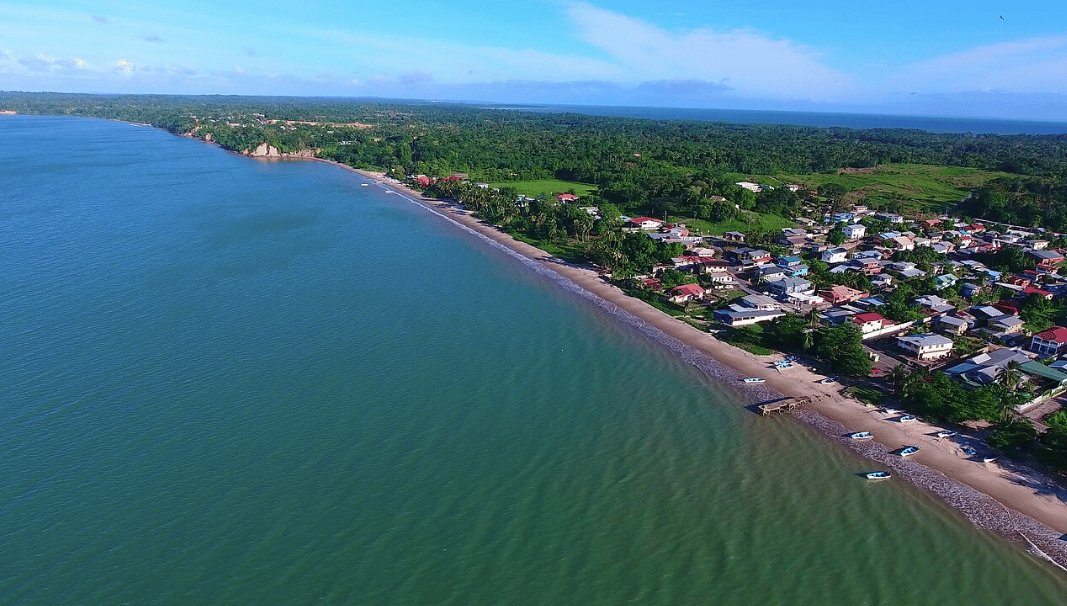
The Gulf of Paria is not an abstract line on a map; it is the fishing ground, the nursery for shrimp and finfish, and the coastal wetland that buffers both Trinidad and Venezuela against storm surges. Climate change has already lengthened the hurricane season and increased flooding risks for small island developing states. An oil spill, even a modest one, adds another layer of stress to mangroves already struggling with warmer waters and shifting salinity. Communities on the south-west peninsula of Trinidad and in Sucre state share the same tides and the same concern for the health of the sea that feeds their families. When one side feels threatened, the other cannot remain untouched.
Energy Ties That Bind—and Sometimes Strain
Trinidad and Tobago stands among the Caribbean’s largest oil and gas producers, with Atlantic LNG and the remnants of the Petrotrin legacy still shaping national fortunes. Venezuela, despite its own production challenges, holds vast reserves just across the maritime boundary. The 1990s delimitation treaty was meant to allow orderly exploitation while protecting the environment. Today that framework faces its first serious test in years. CARICOM partners watch closely, aware that any breakdown in trust between these two energy neighbours could ripple through regional supply chains and investment decisions. At a time when the world is talking about just transitions and renewable futures, the Gulf of Paria reminds us that fossil-fuel infrastructure still demands careful stewardship.
Atlantic LNG’s liquefaction trains at Point Fortin depend on steady feedstock from fields that sit uncomfortably close to the disputed waters. Any prolonged diplomatic chill could affect long-term contracts and the confidence of international partners who view Trinidad as the region’s reliable energy hub. US sanctions on Venezuelan crude have already curtailed output from fields operated by Chevron, yet a recent expansion agreement signed in April 2026 signals Washington’s willingness to ease certain restrictions in exchange for controlled production increases.
For Trinidad, the balancing act is delicate: maintain energy security while navigating sanctions that limit direct cooperation with Caracas. The episode underscores how environmental incidents can quickly intersect with geopolitics, forcing small states to weigh neighbourly obligations against wider strategic alignments. Regional energy security ultimately rests on transparent communication rather than quiet containment.
What This Means for Regional Relations
Diplomatic channels between Port of Spain and Caracas have stayed open, but the tone has sharpened. Venezuela’s demand for compensation and information arrives against a backdrop of broader Caribbean conversations about environmental justice and the rights of small states. Tourism boards in both countries worry about any perception that the Gulf is unsafe; fishers worry about their catches. Diaspora communities in Canada, the United Kingdom and the United States follow the story with personal interest, sending remittances and advice home. The episode also highlights the need for stronger joint monitoring mechanisms—perhaps under CARICOM auspices—so that future incidents can be reported and contained before they become diplomatic disputes.
CARICOM could yet play a quiet but vital mediating role, drawing on its experience with maritime boundary issues such as the Barbados-Trinidad dispute and the ongoing Guyana-Venezuela controversy. The upcoming heads of government meeting offers a natural forum to discuss joint spill-response protocols and shared environmental monitoring. Diaspora voices have already begun urging both governments to treat this as an opportunity for cooperation rather than confrontation.
Comparisons with other regional flashpoints remind us that environmental disputes rarely stay purely technical. When trust erodes, even modest incidents can harden positions and delay much-needed collaboration on climate resilience. The people living along these shared waters deserve mechanisms that prioritise prevention and rapid information sharing over prolonged finger-pointing.
Looking Ahead with Cautious Hope
Investigations take time, and environmental damage can reveal itself slowly. Trinidad and Tobago’s Ministry of Energy has promised transparency, while Venezuela continues to press its case through formal channels. Both sides know the Gulf of Paria will remain a shared resource long after this particular spill is cleaned up. The real test will be whether the two governments use this moment to strengthen cooperation on spill response, joint modelling, and climate adaptation rather than allowing old suspicions to widen the divide. For the people who live and work along these waters, the hope is simple: that the next tide brings cleaner news and steadier relations between neighbours who share more than a border—they share a future.
By Sharon Sahatoo, Staff WriterThis article was produced with AI-assisted research and editorial support. Reporting is based on sources cited in the article.
What's Your Reaction?
 Like
0
Like
0
 Dislike
0
Dislike
0
 Love
0
Love
0
 Funny
0
Funny
0
 Wow
0
Wow
0
 Sad
0
Sad
0
 Angry
0
Angry
0

Caribbean Correspondent at Global1.News. Based in Port of Spain, Trinidad, covering Caribbean politics, economy, energy, climate, and culture. Amplifying the voices and stories of the Caribbean region.










Comments (0)