
Korea-Africa Foreign Ministers Meeting Strengthens Critical Minerals Ties
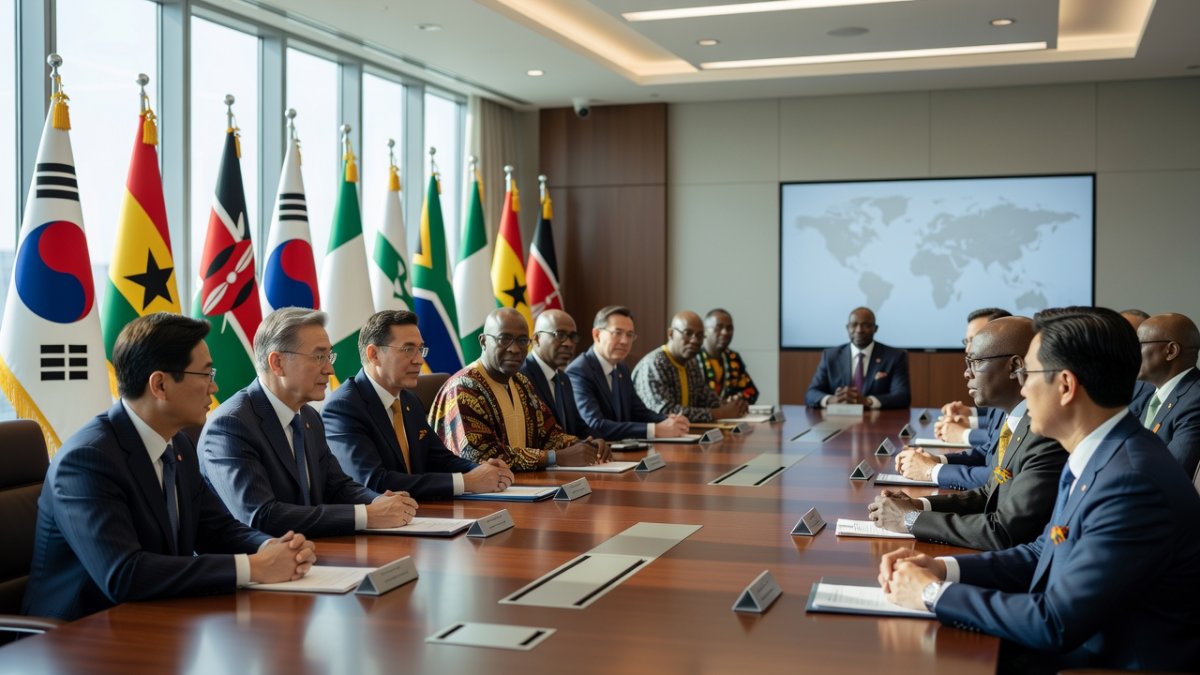
The first Korea-Africa Foreign Ministers' Meeting convened in Seoul on June 2, 2026, marking a significant step in South Korea's expanding engagement with the African continent. Foreign ministers and senior officials from approximately fifty African nations gathered to discuss supply chain resilience, maritime security, economic partnerships, and responses to global challenges
The first Korea-Africa Foreign Ministers' Meeting convened in Seoul on June 2, 2026, marking a significant step in South Korea's expanding engagement with the African continent. Foreign ministers and senior officials from approximately fifty African nations gathered to discuss supply chain resilience, maritime security, economic partnerships, and responses to global challenges such as climate change. Hosted by South Korea's Foreign Minister, the event built directly upon the 2024 Korea-Africa Summit and reflected Seoul's ambition to position itself as a Global Pivotal State.
Korea-Africa Foreign Ministers Meeting Strengthens Critical Minerals Ties
Seoul, South Korea – June 2, 2026 — South Korea welcomed foreign ministers from approximately fifty African nations for the first Korea-Africa Foreign Ministers' Meeting, a diplomatic initiative designed to deepen cooperation on critical mineral supply chains, maritime security, and economic development. The gathering, accompanied by the Korea-Africa Business Forum, operationalized commitments made at the 2024 Korea-Africa Summit and advanced President Lee Jae-myung's vision for a more globally engaged Republic of Korea.
Historical Context of Korea-Africa Relations
South Korea's diplomatic outreach to Africa has accelerated since the 2024 Korea-Africa Summit, which established a framework for regular high-level dialogue. The June 2026 ministerial meeting operationalized several commitments made two years earlier, particularly in the areas of resource security and infrastructure development. This progression aligns with Seoul's broader foreign policy reorientation away from a peninsula-centric focus toward diversified global partnerships, as articulated in the Yoon Suk Yeol administration's "Strategy for a Free, Peaceful, and Prosperous Indo-Pacific Region," a framework that the current administration of President Lee Jae-myung has reaffirmed and extended.
Historically, Korean engagement with Africa remained modest compared with that of former colonial powers or major competitors such as China and the United States. Early ties centered on development assistance through the Korea International Cooperation Agency (KOICA) and limited trade in manufactured goods. The current phase, however, integrates African mineral resources directly into Korea's semiconductor and electric vehicle supply chains, elevating the bilateral relationship to a strategic level. South Korea's trade with Africa reached approximately $22 billion in 2025, with potential for significant expansion under the new cooperation frameworks discussed at this meeting.
Critical Minerals and Supply Chain Security
Discussions at the meeting placed heavy emphasis on critical minerals, including lithium, cobalt, and rare earth elements essential for Korea's battery and semiconductor industries. South Korea, home to the world's leading memory chip manufacturers Samsung Electronics and SK hynix, as well as EV battery producers LG Energy Solution and Samsung SDI, seeks stable, diversified sources to reduce reliance on concentrated suppliers in China and Latin America. African nations, in turn, expressed interest in moving beyond raw material exports toward value-added processing and technology partnerships that could support local industrialization.
The joint statement adopted at the conclusion of the meeting explicitly referenced supply chain cooperation frameworks. These provisions aim to facilitate joint exploration projects and long-term offtake agreements involving Korean firms such as Korea Resources Corporation (KORES) and private sector partners. Such arrangements carry implications for regional competition, as China has long dominated African resource extraction while Korea positions itself as a more technology-intensive and mutually beneficial partner.
Maritime Security and Trade Expansion
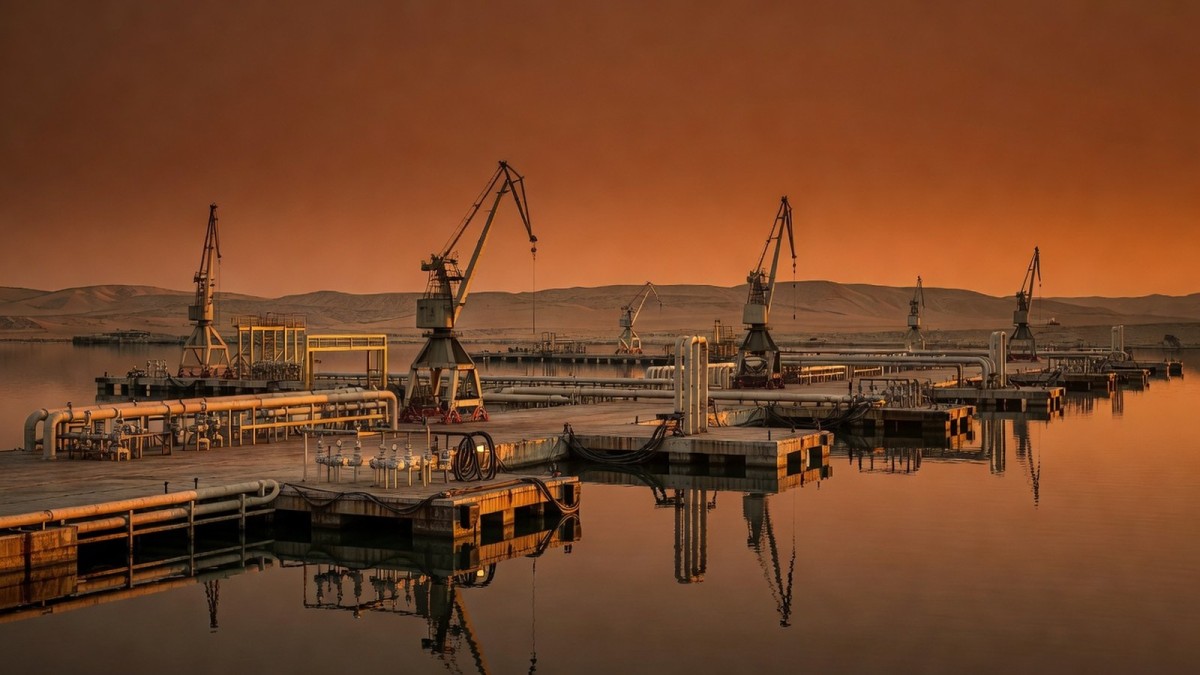
Participants addressed maritime security along key shipping routes connecting the Indian Ocean to the Atlantic via the Cape of Good Hope. South Korea's interest stems from its heavy dependence on seaborne trade — approximately 99 percent of Korea's trade volume moves by sea — and the vulnerability of chokepoints such as the Bab el-Mandeb Strait and the Gulf of Aden to disruption. African counterparts highlighted the need for capacity building in port management and coast guard operations, areas where Korean expertise in shipbuilding and port construction could prove valuable.
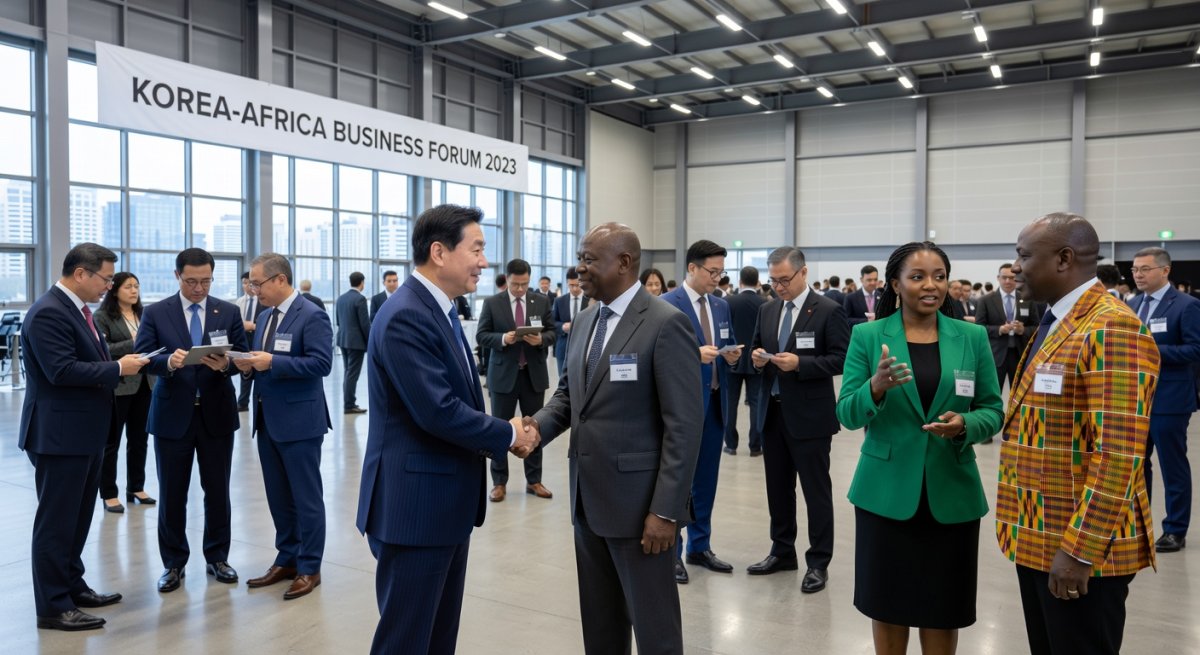
Trade expansion featured prominently, with Korean conglomerates such as Hyundai Motor Group, Samsung Electronics, and LG Electronics seeking new markets for automobiles, electronics, and construction services. The accompanying Korea-Africa Business Forum provided a platform for concrete project announcements, though implementation timelines remain subject to bilateral negotiations and local regulatory environments. Korean construction firms, which have extensive experience in Middle Eastern and Southeast Asian infrastructure projects, are particularly well-positioned for African road, rail, and energy projects.
Development Assistance and Technology Transfer
Education cooperation and technology transfer emerged as areas where mutual gains appear feasible. South Korea offered expanded scholarship programs through KOICA and vocational training initiatives modeled on its own rapid industrialization experience, often referred to as the "Miracle on the Han River." African representatives stressed the importance of adapting these models to local contexts rather than imposing standardized templates, emphasizing the need for curriculum development that reflects African economic realities.
Infrastructure investment discussions referenced ongoing Korean participation in rail, power, and digital connectivity projects across several African states. These efforts complement, rather than duplicate, initiatives by China's Belt and Road Initiative and European Union infrastructure programs, focusing on high-value segments such as smart grid technology, 5G telecommunications networks, and semiconductor-related manufacturing support. The Korea Export-Import Bank (KEXIM) and the Economic Development Cooperation Fund (EDCF) are expected to play central roles in financing these projects.
Strategic Implications for South Korea's Foreign Policy
The meeting reinforced South Korea's Indo-Pacific strategy by extending its geographic scope to include African littoral states. This widening reflects a recognition that supply chain resilience, climate cooperation, and maritime security require engagement beyond traditional regional boundaries. For South Korea, a country that has historically defined its foreign policy primarily through the prism of inter-Korean relations and the US-ROK alliance, the Africa engagement represents a meaningful broadening of diplomatic horizons.
President Lee Jae-myung's meeting with African foreign ministers underscored the political commitment to regularize Korea-Africa summits. Institutionalizing these gatherings would provide continuity across administrations and allow for multi-year planning on minerals, security, and development agendas. The Ministry of Foreign Affairs (MOFA) has indicated interest in rotating summit locations between Seoul and African capitals, a move that would signal genuine partnership rather than unilateral Korean initiative.
Prospects for Regularized Summits and Future Cooperation
While the June 2026 meeting produced a joint statement and identified priority sectors, translating declarations into binding agreements will require sustained diplomatic effort. African nations face their own competing partnerships — with China, the European Union, India, and Turkey — and Korea must demonstrate reliable delivery on investment and technology promises to maintain momentum. The Korea-Africa Business Forum provided an initial platform for public-private cooperation, but follow-through on specific projects will determine the relationship's trajectory.
The longer-term significance lies in Korea's ability to offer an alternative partnership model that emphasizes mutual industrialization rather than resource extraction alone. Success will depend on coordination among government ministries, chaebol research arms, and African regulatory bodies over the coming decade. For Northeast Asian geopolitics, a more engaged South Korea in Africa also subtly checks China's dominant position on the continent while offering African nations a genuine middle-power partner with advanced technology and manufacturing expertise.
By Prof. David Park, Staff Writer
This article was produced with AI-assisted research and editorial support. Reporting is based on sources cited in the article.
What's Your Reaction?
 Like
0
Like
0
 Dislike
0
Dislike
0
 Love
0
Love
0
 Funny
0
Funny
0
 Wow
0
Wow
0
 Sad
0
Sad
0
 Angry
0
Angry
0

East Asia/Technology Correspondent at Global1.News. Seoul-based voice covering Korean politics, technology, business, and culture. Analyzes how technology and geopolitics intersect across East Asia.













Comments (0)