
Atemoya Trade Emerges as a New Arena in Cross-Strait Economic Tensions
The atemoya as a flashpoint in cross-strait agricultural trade The atemoya, a hybrid fruit with creamy white flesh and a rough green exterior, has long been a specialty of Taiwan's Taitung county. Its position as a key export item to China has now placed it at the center of renewed friction between the two sides. Chinese companies recently pledged at a forum in Xiamen to increa
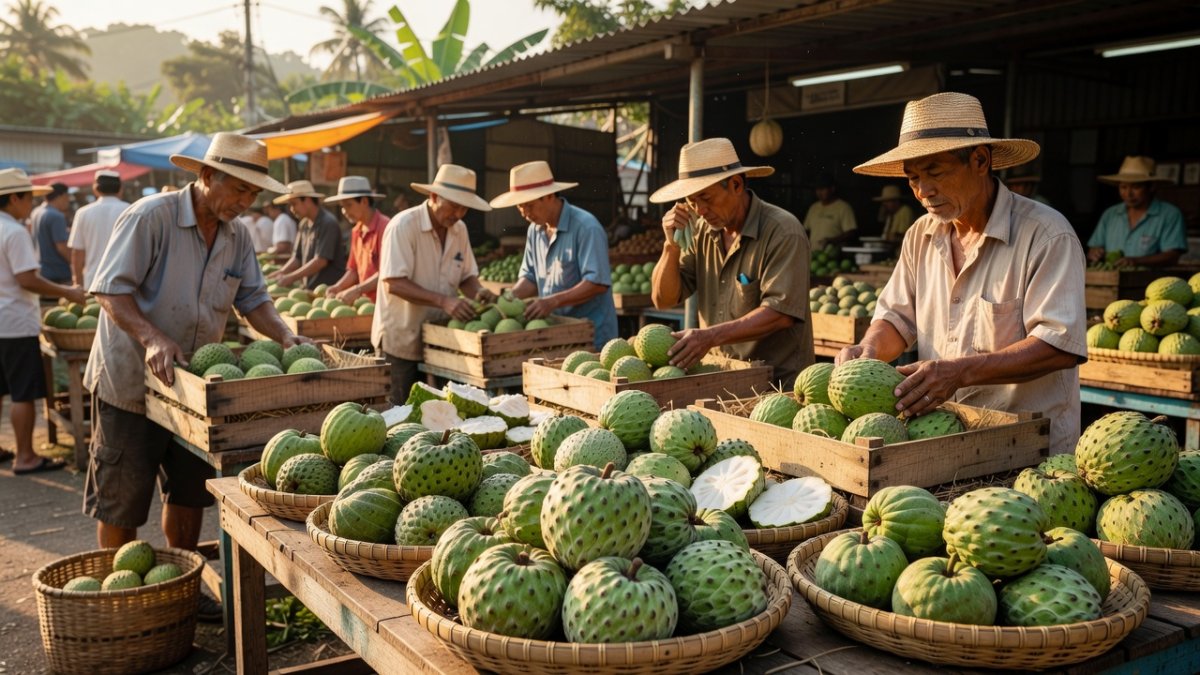
The atemoya as a flashpoint in cross-strait agricultural trade
The atemoya, a hybrid fruit with creamy white flesh and a rough green exterior, has long been a specialty of Taiwan's Taitung county. Its position as a key export item to China has now placed it at the center of renewed friction between the two sides. Chinese companies recently pledged at a forum in Xiamen to increase purchases of the fruit, alongside other Taiwanese products such as fish and tea. This development has drawn immediate scrutiny from Taipei, which views the move as part of a broader pattern rather than a straightforward commercial opportunity.
Taiwan's agriculture ministry has framed the pledge within China's strategic approach to agricultural imports. The ministry's analysis highlights how initial large-scale buying can encourage farmers to expand production, only for subsequent policy shifts to disrupt those gains. Such dynamics reflect Beijing's interest in leveraging trade dependencies to advance its position on Taiwan, which it regards as its territory. The atemoya case illustrates how even niche agricultural goods can become instruments in this ongoing contest.
China's own expansion of atemoya cultivation adds another layer to the competition. Domestic production growth on the mainland threatens to reduce reliance on Taiwanese supplies over time. This shift aligns with efforts to strengthen self-sufficiency in food production, a priority that intersects with wider economic strategies aimed at balancing external trade with internal market development. For Taitung growers, these trends signal both short-term market signals and longer-term structural challenges in cross-strait agricultural flows.
Taiwan's agriculture ministry warnings and the "raise, trap, kill" narrative
Taiwan's agriculture ministry has described China's recent pledge to buy more atemoyas as a classic example of a "raise, trap, kill" process. According to the ministry's press release, Beijing first creates reliance through substantial purchases that encourage farmers to scale up cultivation. This phase is followed by unilateral restrictions that leave producers vulnerable to sudden market disruptions without prior warning.
The ministry pointed to specific past actions on atemoyas, including a suspension of imports in 2021 over pest concerns, a partial resumption in 2023, and the introduction of taxes in 2024. These steps, it argued, demonstrate a deliberate sequence designed to influence Taiwan's agricultural sector. The warning comes as Chinese firms signaled expanded buying at the Xiamen forum earlier this month, prompting Taipei to advise farmers to prioritize sustainable development and stable income sources rather than short-term export surges.
Officials have emphasized that such patterns extend beyond individual commodities. By fostering temporary goodwill through increased purchases, the approach can shape planting decisions across regions like Taitung before policy adjustments alter the terms of trade. This narrative underscores Taiwan's focus on protecting farmers from external leverage while maintaining vigilance over cross-strait economic interactions that could affect domestic production stability.
Historical context: the 2021 pineapple ban and pattern of economic coercion
The current atemoya debate echoes the 2021 ban on Taiwanese pineapple imports by China, which caused significant disruption to farmers' livelihoods. That episode triggered a domestic consumption campaign in Taiwan aimed at offsetting the loss of the Chinese market. Many viewed the ban as an instance of economic pressure tied to broader political objectives, including Beijing's claim over the island and its refusal to rule out the use of force.
Similar tactics have appeared in other agricultural sectors, with restrictions often justified on technical grounds such as pest inspections. The atemoya experience follows this sequence: initial market access, followed by suspension, partial reopening, and then new fiscal measures. Observers note that these moves coincide with intensified military activities near Taiwan, including drills simulating blockades, suggesting a coordinated use of both military and non-military tools.
Taiwan's response has consistently stressed diversification and resilience. The agriculture ministry's current guidance builds on lessons from the pineapple case by urging farmers to avoid over-dependence on any single export destination. This historical pattern informs Taipei's cautious stance toward the latest Chinese purchase pledges, highlighting how agricultural trade has repeatedly served as a pressure point in cross-strait relations.
Domestic political divisions in Taiwan (Kuomintang vs Mainland Affairs Council)
The atemoya issue has exposed clear divisions within Taiwan's political landscape. The Mainland Affairs Council has cautioned that officials attending the Xiamen forum could face investigation, framing participation as potentially undermining Taiwan's unified approach to cross-strait matters. This stance reflects the council's emphasis on treating economic overtures from China with caution given the island's political sensitivities.
In contrast, opposition Kuomintang lawmakers have criticized these warnings as an unnecessary politicization of the atemoya industry. They argue that farmers should be free to pursue commercial opportunities without government interference framed around security concerns. Taipei Mayor Chiang Wan-an has gone further, accusing the Mainland Affairs Council of using the issue to "bully and oppress" Taiwanese farmers and describing the atemoya as the "TSMC of the fruit world" due to its unique quality.
These disagreements reveal competing visions for managing trade with China. While the ruling authorities prioritize risk mitigation and long-term stability, opposition voices stress the economic benefits of expanded market access. The debate centers on whether agricultural exports should be insulated from political considerations or treated as part of a wider strategic contest, with Taitung producers caught between these perspectives.
China's strategic calculus — agricultural diplomacy as non-military pressure
From Beijing's perspective, expanded purchases of Taiwanese atemoyas and other goods serve multiple objectives. The Xiamen forum pledge fits within efforts to demonstrate goodwill while simultaneously deepening economic ties that could influence Taiwan's policy choices. Such moves occur alongside military drills and other non-military measures aimed at reinforcing claims over the island without immediate escalation to conflict.
Agricultural diplomacy allows China to apply targeted pressure on specific sectors, creating leverage that affects rural communities and local economies in Taiwan. By alternating between market opening and restriction, Beijing can shape production decisions and test Taipei's responses. This approach aligns with broader goals of technological self-sufficiency and regional influence, where control over trade flows supports domestic priorities like the Dual Circulation strategy.
The Taiwan Affairs Office and related bodies have historically framed such trade as beneficial for both sides, yet the pattern of selective restrictions suggests calculated use of economic statecraft. For China, maintaining influence over Taiwan's export-dependent agriculture reinforces its position in the overall contest, even as mainland cultivation of similar crops reduces long-term dependence on island supplies.
Implications for Taitung farmers, regional stability, and future trade relations
Taitung farmers face immediate uncertainty as they weigh Chinese purchase pledges against the risk of future restrictions. The agriculture ministry's focus on sustainable development encourages diversification away from over-reliance on any one market, a lesson reinforced by prior disruptions. Expanded mainland production of atemoyas further complicates prospects for stable export volumes in the years ahead.
Regionally, the episode contributes to wider ASEAN and Global South observations of how economic tools intersect with sovereignty disputes. Similar dynamics could affect other export-oriented sectors if patterns of "raise, trap, kill" repeat across additional commodities. The involvement of bodies such as MOFCOM in trade facilitation underscores the institutional dimension of these pressures.
Looking forward, cross-strait trade relations will likely remain shaped by this interplay of commercial incentives and political calculations. Taiwan's emphasis on farmer income stability and China's pursuit of leverage through agricultural channels suggest continued friction rather than resolution. Both sides retain tools to influence outcomes, with second-order effects extending to supply chains and regional economic alignments that extend well beyond the atemoya itself.
By Prof. Marcus Chen, Staff WriterThis article was produced with AI-assisted research and editorial support. Reporting is based on sources cited in the article.
What's Your Reaction?
 Like
0
Like
0
 Dislike
0
Dislike
0
 Love
0
Love
0
 Funny
0
Funny
0
 Wow
0
Wow
0
 Sad
0
Sad
0
 Angry
0
Angry
0

World Politics Analyst at Global1.News. Based in Beijing, covering US-China relations, global trade, and geopolitical strategy. Brings deep analytical perspective to the power dynamics shaping international affairs.














Comments (0)