
The $830 Billion Bet: Why Hyperscaler AI Spending Should Scare Every Small Hosting Provider
Allan Ali breaks down what $830 billion in hyperscaler AI infrastructure spending means for small and mid-size hosting providers. From power shortages in Northern Virginia to hardware cost inflation, the AI buildout is reshaping the hosting industry. TrendForce forecasts $830 billion in 2026 AI capex, with the top four US cloud providers increasing data center spending by 78% in Q1 alone.
The $830 Billion Bet: Why Hyperscaler AI Spending Should Scare Every Small Hosting Provider
I've been running hosting infrastructure for over a decade. I've seen boom cycles before. I've watched VPS prices drop, I've seen the rise of dedicated servers, I've lived through the cloud wars. But nothing — and I mean nothing — compares to what's happening right now.
The numbers coming out of the hyperscaler space are genuinely hard to wrap your head around. TrendForce just raised its 2026 AI infrastructure capex forecast to $830 billion. Not million. Billion. With a B. Dell'Oro Group says global data center capex will exceed $1 trillion this year. The top four US cloud providers — Amazon, Google, Meta, and Microsoft — increased their data center spending by 78 percent in Q1 2026 alone.
Let me tell you something. I've been watching this buildout from the trenches, running actual servers, managing actual workloads. And what I'm seeing should be keeping every small and mid-size hosting provider up at night.
The $830 Billion Question: Is This a Gold Rush or a Land Grab?
Port of Spain, Trinidad — July 15, 2026 — The scale of this AI infrastructure buildout isn't just big. It's reshaping the entire hosting and cloud industry whether you're participating or not. And if you're a small provider like me, you need to understand exactly what's happening and what it means for your business.
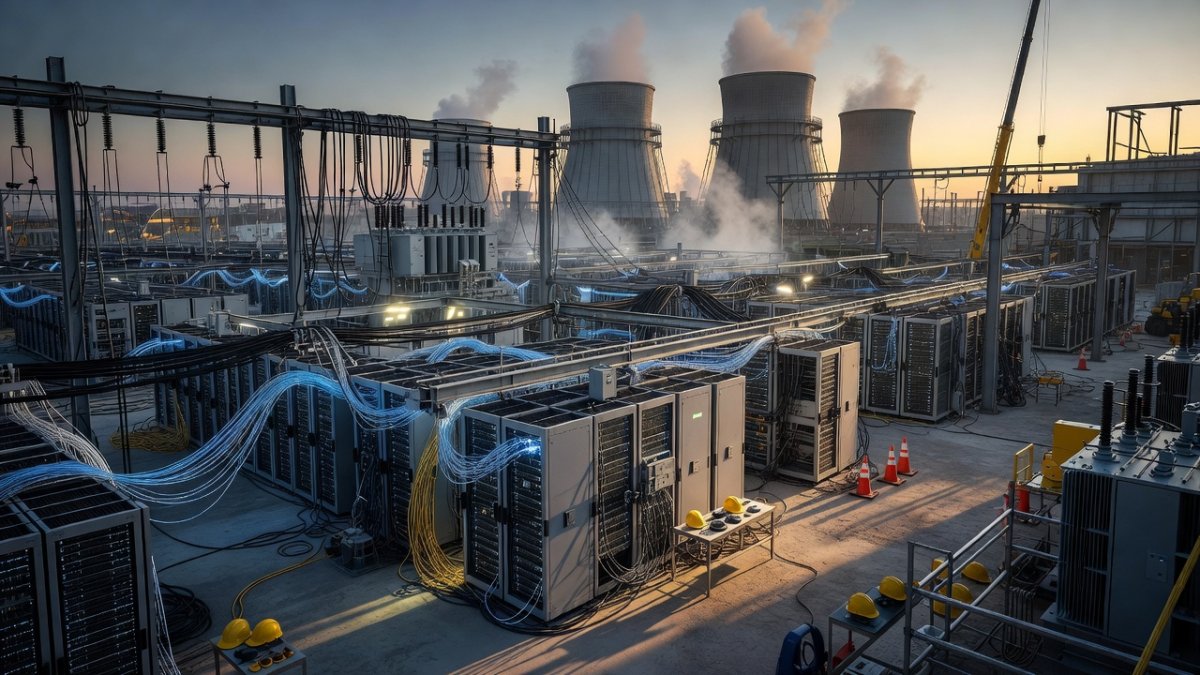
What $830 Billion Actually Buys You
Let me put this in perspective. The entire global hosting market was worth about $200 billion in 2025. These four companies — Amazon, Google, Microsoft, Meta — are planning to spend more than four times that entire market on infrastructure in a single year. The majority of this money is going into NVIDIA GPUs (H200 and B200 series), custom silicon (TPU v6, Trainium 3, Maia 100), and the power and cooling infrastructure needed to run them.
Hetzner, OVHcloud, DigitalOcean — combined, they're not spending anywhere close to what Google alone is pouring into data centers this year. The gap between hyperscaler and everyone else has never been wider.
But here's the thing that most people miss: this spending isn't just about AI. It's about infrastructure moats. Every dollar Amazon spends on data centers is a dollar that locks in their customers for another five years through tighter integrations, better networking, and lower latency. It's not a gold rush — it's a land grab.
The Power Problem Nobody Wants to Talk About
Everyone's focused on GPU availability. But the real bottleneck? Power. A single NVIDIA B200 GPU server pulls 1,500-2,000 watts under load. A full rack of these draws 40-60 kilowatts. A full data center hall? You're talking megawatts. The new builds going up right now are 200-500MW facilities. Some are talking about gigawatt-scale campuses.
For context, a typical small hosting provider runs their entire operation on 10-20 kilowatts. One rack of AI hardware in a hyperscaler data center consumes more power than ten small hosting companies combined.
This is creating a power supply crunch that's affecting everyone. In Northern Virginia — the world's largest data center market — Dominion Energy is struggling to keep up with demand. New customers are facing 3-5 year lead times for grid connections. In Ireland, data centers now consume 21% of all electricity. In Singapore, there's a moratorium on new builds.
If you're a small hosting provider and you haven't thought about how this affects your own power costs and availability, you need to start right now.
What This Means for the Rest of Us
Here's the reality check. The hyperscalers are vacuuming up every available GPU, every megawatt of power, and every square foot of data center space. This has three direct consequences for small and mid-size hosting providers:
First, hardware costs are going up. NVIDIA can't make enough GPUs to meet demand, and the hyperscalers are signing multi-year, multi-billion dollar purchase agreements. This creates a supply constraint that ripples through the entire server hardware market. You're paying more for RAM, more for SSDs, more for networking gear — even if you're not buying GPUs — because the supply chain is stretched thin across the board.
Second, colocation space is getting harder to find. Data center REITs are prioritizing hyperscale leases. If you're looking for a half-rack in a major market, you're competing for space that landlords would rather sell to AWS or Microsoft at premium rates. Colocation pricing in Tier 1 markets has gone up 15-25% in the last 18 months.
Third, talent is getting sucked into the big players. Every experienced data center technician, network engineer, and infrastructure person I know has either been recruited by a hyperscaler or has a standing offer. The salary compression is real. Small hosting companies can't compete with Google's benefits packages.
The Counter-Argument Nobody Makes
Look, I'm not saying AI is a bubble. I'm not saying this spending is wasted. But I am saying there's a massive disconnect between the hype and the reality on the ground. The $830 billion forecast assumes that AI demand continues growing at its current exponential rate. What if it doesn't? What if inference gets 10x more efficient next year? What if edge computing takes over? What if the returns on larger models start diminishing faster than expected?
The hyperscalers can absorb a $100 billion overinvestment. A small hosting provider cannot. The asymmetry of risk here is staggering. And yet, every small provider I talk to is trying to figure out how to compete in this new landscape by buying more hardware, hiring more people, expanding their footprint — exactly when they should be getting more efficient, more specialized, and more careful with every dollar.
What I'm Actually Doing About It
I'll tell you what's working for me. I'm not trying to compete on AI infrastructure. I don't have the capital, the power allocation, or the supply chain relationships to do that. What I am doing is focusing on the workloads that hyperscalers are terrible at: predictable performance with real human support, transparent pricing with no surprise bills, and specialization in niches that don't need 40-kilowatt racks.
Managed WordPress hosting. Game server hosting. High-performance VPS for developers who need reliable, affordable compute. These are markets that hyperscalers either can't serve profitably or don't care about. And they're not going away just because Google is building a gigawatt data center in Iowa.
I'm also rethinking my own power strategy. I'm looking at smaller, less congested markets. I'm building relationships with independent power providers. I'm investing in efficiency — better cooling, denser configurations, lower power per customer. Every watt I save is a competitive advantage.
The Bottom Line
The AI infrastructure buildout is the biggest thing to happen to this industry since the cloud itself. It's reshaping supply chains, power grids, talent markets, and competitive dynamics. But the winners won't just be the hyperscalers spending $830 billion. The winners will also be the small providers who understand their place in this new landscape and play to their strengths instead of trying to beat Google at their own game.
Stay lean. Stay focused. And for heaven's sake, don't try to compete on AI compute unless you've got a few billion dollars burning a hole in your pocket.
— Allan Ali, Staff Writer
This article was produced with AI-assisted research and editorial support. Reporting is based on sources cited in the article.
What's Your Reaction?
 Like
0
Like
0
 Dislike
0
Dislike
0
 Love
0
Love
0
 Funny
0
Funny
0
 Wow
0
Wow
0
 Sad
0
Sad
0
 Angry
0
Angry
0

Publisher of Global1.News. Automation architect, systems builder, and the guy making sure the truth gets published.













Comments (0)