
UK Steel Nationalisation Sparks Chinese Treaty Concerns
The United Kingdom's nationalisation of British Steel has prompted a calibrated diplomatic rebuke from Beijing, with China's Ministry of Commerce declaring that the move has severely undermined Chinese companies' confidence in investing in the UK.
UK Steel Nationalisation Sparks Chinese Treaty Concerns
Scunthorpe, England — Article continues...
The Nationalisation Decision
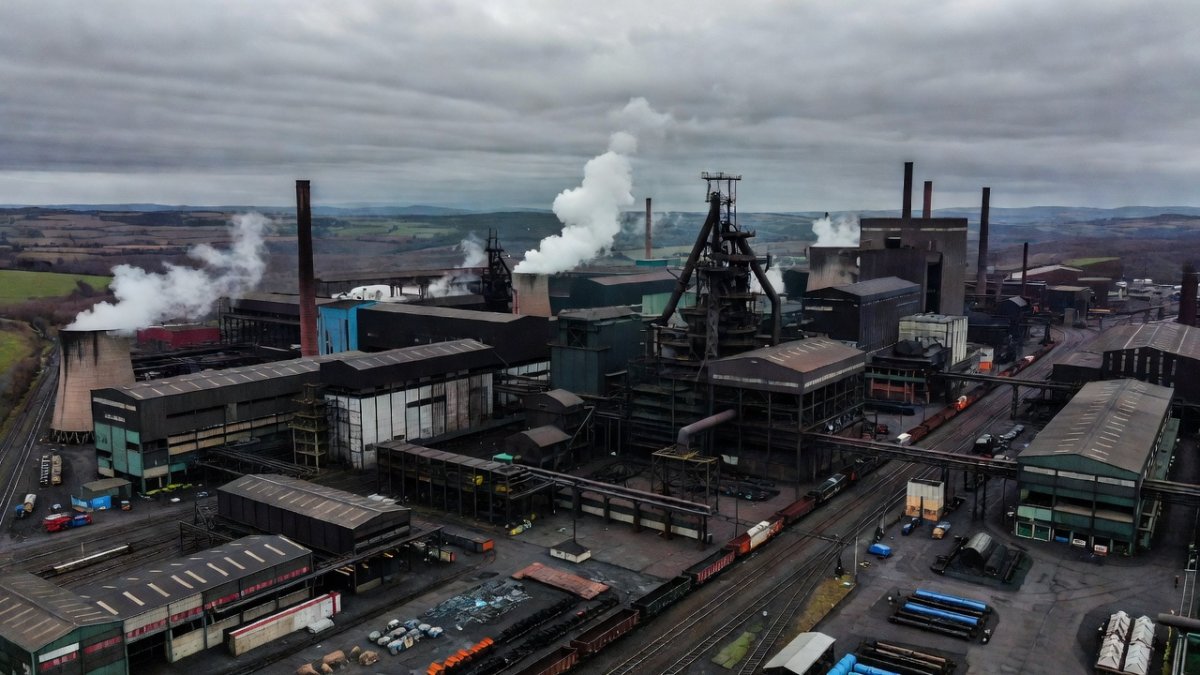
The UK government enacted the Steel Industry (Nationalisation) Act 2026 on July 16, 2026, placing British Steel's Scunthorpe operations under public ownership. Officials framed the move as essential to preserving a strategic industrial asset supporting infrastructure, defence and construction supply chains. The legislation followed an earlier period of direct operational control assumed in April 2025, when authorities intervened to keep four blast furnaces running.
China's Official Response
China's Ministry of Commerce issued a formal statement on July 17, 2026, expressing firm opposition and strong dissatisfaction. MOFCOM argued that the nationalisation undermines the predictability required for foreign direct investment and directly affects Chinese enterprises already committed to UK assets. The reaction aligns with Beijing's broader monitoring of overseas investment risks under bilateral treaties.
MOFCOM's Statement and Diplomatic Language
MOFCOM's spokesperson specifically noted that the decision "severely undermined Chinese companies' confidence in investing in the UK." This phrasing reflects standard diplomatic practice when signalling potential recourse through treaty mechanisms rather than immediate retaliation. Analysts interpret the measured tone as preserving room for negotiated settlement while documenting China's position for any future arbitration.
MOFCOM's phrasing, particularly the calibrated reference to "severely undermined" investor confidence, reflects Beijing's standard escalation ladder in investment disputes. The formulation stops short of accusing the UK of outright expropriation while documenting a treaty breach for potential arbitration. This language preserves negotiating space yet signals that any compensation shortfall could trigger formal proceedings under the 1986 UK-China Bilateral Investment Treaty. By invoking predictability rather than sovereignty, MOFCOM positions the dispute within commercial norms familiar to Western ministries, avoiding the sharper rhetoric reserved for outright bans such as those applied to Australian coal or Canadian canola.
Comparisons with prior cases illuminate the pattern. In the Huawei 5G exclusion and the blocked Nexperia acquisition of Newport Wafer Fab, Chinese statements escalated quickly to "resolute countermeasures" once national-security justifications were invoked. The Hutchison Ports episode produced quieter embassy-level lobbying because commercial redress remained available. Here, the measured tone—issued through MOFCOM rather than the Foreign Ministry—suggests Beijing views the steel nationalisation as reversible through compensation rather than a strategic rupture.
Within China's toolkit, several reciprocal options exist short of WTO litigation. Regulatory scrutiny of UK pharmaceutical and financial firms already operating in China could intensify, and policy banks might apply heightened due-diligence standards to new UK-linked projects. Yet officials have avoided threatening broad retaliation, recognising that steel represents only a fraction of bilateral trade.
Jingye's Investment History (2020 acquisition, £1.2 billion)
Jingye Group, a privately owned steelmaker based in Hebei province, purchased British Steel in March 2020 for approximately £50 million. The acquisition preserved more than 3,200 jobs across Scunthorpe, Skinningrove and Teesside sites. Over subsequent years Jingye committed more than £1.2 billion to operational continuity and environmental upgrades at the aging facilities.
Jingye's decision to commit more than £1.2 billion after acquiring British Steel for a nominal £50 million reflected a calculated long-term bet on European market access and technology absorption. The firm sought exposure to advanced rolling and coating techniques that could be transferred back to its Hebei operations, while securing a foothold inside EU supply chains ahead of potential carbon-border adjustments. Unlike state-owned enterprises, Jingye operated without explicit policy-bank financing, relying instead on its own cash flows and syndicated commercial loans.
Environmental upgrades formed a central component of the capital programme. Jingye installed upgraded dedusting systems, began feasibility work on electric-arc-furnace conversion at Scunthorpe, and prepared infrastructure for future hydrogen blending. These steps aligned with both UK regulatory pressure and China's domestic decarbonisation targets.
The disparity between purchase price and subsequent investment reveals Jingye's horizon. The low entry valuation reflected the target's legacy liabilities and pension obligations, yet the scale of follow-on spending indicated confidence that sustained operation would eventually yield returns through volume and premium products.
The Path to Crisis (financial unsustainability, 2025 consultation)
By March 2025 Jingye determined that continued operation of the blast furnaces had become commercially unviable. The company initiated consultation on closure plans. The UK government responded by assuming operational oversight in April 2025 to maintain production capacity, setting the stage for the eventual nationalisation legislation passed in July 2026. British Steel currently employs roughly 2,700 people, with about three-quarters based at Scunthorpe.
Legal and Treaty Framework (investment treaty, compensation claim)
Jingye Group filed a formal compensation claim in June 2026 under the UK-China Bilateral Investment Treaty. The treaty provides protections against expropriation and guarantees fair treatment for qualifying investments. MOFCOM's statement implicitly references these obligations, positioning the dispute within established international legal channels rather than bilateral political confrontation.
The 1986 UK-China Bilateral Investment Treaty remains the operative instrument, containing standard protections against unlawful expropriation, fair and equitable treatment, and most-favoured-nation clauses. Jingye's claim will likely centre on whether the UK's assumption of operational control and subsequent nationalisation constituted a compensable taking, notwithstanding the company's own viability assessment.
Valuation presents acute difficulties. A loss-making facility kept running only through state support complicates discounted-cash-flow methodologies. Tribunals may instead rely on asset-based or replacement-cost approaches, potentially reducing any award. Under UNCITRAL or ICSID rules, proceedings typically span three to five years from notice of arbitration to final award.
Even a favourable award would deliver financial compensation rather than policy reversal. UK statute law now embeds national-security review powers that courts have upheld as non-justiciable in their core application. An arbitration victory might therefore function primarily as leverage in settlement talks.
Implications for UK-China Investment Relations
The episode illustrates diverging priorities: the UK seeks to retain domestic steel-making capacity for national-security reasons, while China emphasises the sanctity of contractual commitments and treaty-based protections for its firms. Future Chinese investors are likely to apply heightened scrutiny to UK assets in strategic sectors, potentially slowing new commitments until clearer safeguards emerge.
Broader Strategic Context
Both governments are balancing domestic industrial policy against the need to maintain functional economic ties. For Beijing the case tests whether treaty mechanisms can still deliver predictable outcomes in Western jurisdictions. For London the nationalisation underscores the tension between protecting critical capabilities and preserving an open investment environment.
The British Steel episode forms part of a wider Western de-risking trajectory that includes the US CHIPS Act, the EU Foreign Subsidies Regulation, and the UK's National Security and Investment Act 2021. Chinese FDI to the UK and Europe declined sharply after 2022, with greenfield manufacturing projects particularly affected.
The Belt and Road dimension has contracted accordingly. Early UK participation in Manchester Airport and potential HS2 financing has given way to explicit exclusion of Chinese contractors from new strategic infrastructure.
Labour's approach under Starmer emphasises pragmatic engagement tempered by infrastructure protection, differing from Sunak's more rhetorical emphasis on "systemic challenge." Yet the continuity in nationalisation reveals limited room for divergence once security classifications are invoked.
By Prof. Marcus Chen, Staff Writer
This article was produced with AI-assisted research and editorial support. Reporting is based on sources cited in the article.
What's Your Reaction?
 Like
0
Like
0
 Dislike
0
Dislike
0
 Love
0
Love
0
 Funny
0
Funny
0
 Wow
0
Wow
0
 Sad
0
Sad
0
 Angry
0
Angry
0

World Politics Analyst at Global1.News. Based in Beijing, covering US-China relations, global trade, and geopolitical strategy. Brings deep analytical perspective to the power dynamics shaping international affairs.














Comments (0)