
Strait of Hormuz Crisis: Energy Security and Strategic Calculations in a Contested Chokepoint
Real-time vessel tracker footage from a CGTN report has revealed near-empty waters in the Strait of Hormuz, with daily transits plummeting to just 13 ships amid renewed US naval enforcement. This sharp contraction from the usual 70-plus passages exposes how swiftly a single chokepoint can throttle global energy supplies, sending immediate ripples through Asian import dependencies and refinery schedules.
Real-time vessel tracker footage from a CGTN report has revealed near-empty waters in the Strait of Hormuz, with daily transits plummeting to just 13 ships amid renewed US naval enforcement. This sharp contraction from the usual 70-plus passages exposes how swiftly a single chokepoint can throttle global energy supplies, sending immediate ripples through Asian import dependencies and refinery schedules. The development matters because it compresses Beijing’s adjustment window at a moment when China’s industrial and heating demands remain tightly linked to Gulf crude.
A Chokepoint Under Siege: The Strait of Hormuz in July 2026
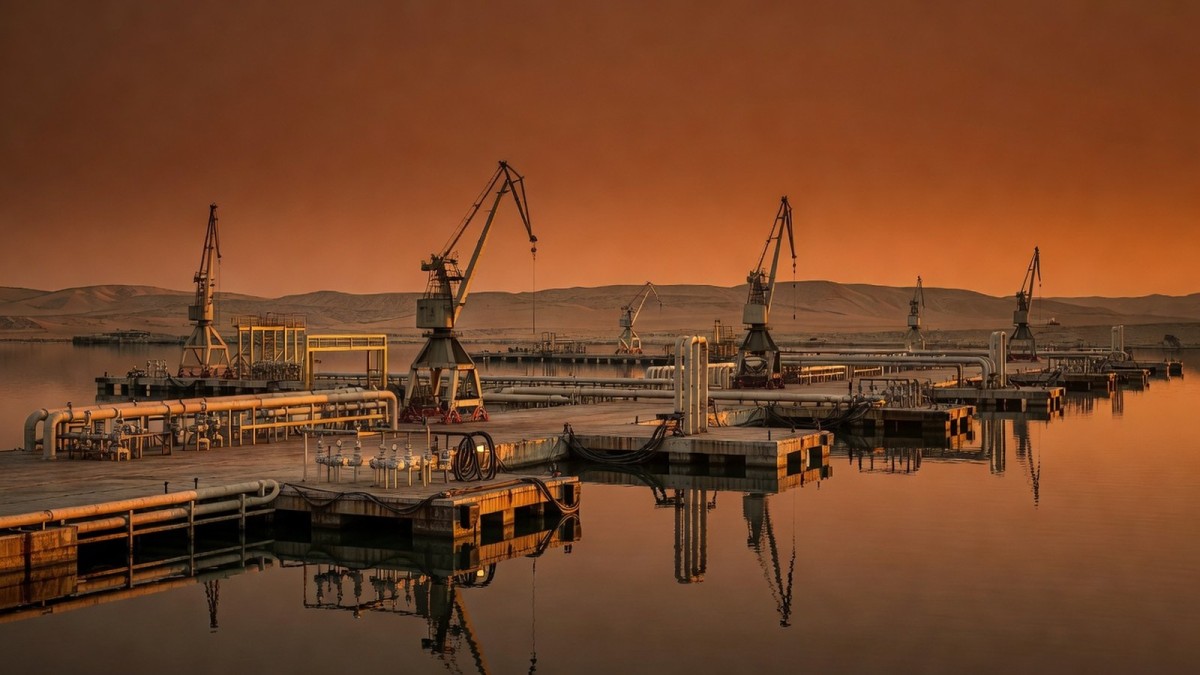
In a recent CGTN report featuring real-time vessel tracking visualization, maritime traffic through the Strait of Hormuz appears drastically reduced, underscoring the strait’s status as the world’s most critical energy chokepoint amid renewed hostilities. The footage captures a narrow waterway where normal daily passages exceed 70 vessels but have fallen sharply under blockade conditions. As of July 16, 2026, only 13 ships transited on the first full day of the reinstated US naval measures, illustrating how quickly a single corridor can constrain global energy flows.
The strait’s geography amplifies its leverage: roughly one-fifth of global oil trade must pass through this 21-mile-wide passage between Iran and Oman. Disruptions here immediately affect importers across Asia and beyond, forcing governments to reassess supply assumptions that have held for decades.
China's Energy Lifeline Hangs in the Balance
China depends on the Strait of Hormuz for approximately 5 million barrels per day of crude oil imports, a volume that directly supports its industrial base and transportation sector. When traffic collapsed in June 2026, official import statistics recorded a decade-low monthly intake, exposing the vulnerability of seaborne supply lines. The National Development and Reform Commission has long tracked such exposure as part of broader energy security planning, yet the speed of the recent decline has compressed the window for adjustment.
Beijing’s Dual Circulation strategy emphasizes reducing external dependencies, yet the Hormuz route remains difficult to bypass entirely in the near term. Officials at the Ministry of Foreign Affairs have reiterated calls for de-escalation while quietly accelerating diversification talks with suppliers that can deliver via land corridors or alternative sea lanes. The immediate effect has been higher procurement costs and tighter refinery margins inside China.
China's Strategic Petroleum Reserve (SPR) currently holds approximately 80 days of net imports, yet drawdown rates could accelerate to 1.2 million barrels per day under sustained Hormuz disruption, according to CSIS energy security models. The National Development and Reform Commission has activated tier-two contingency protocols that prioritize allocation to coastal refining hubs in Shandong and Guangdong while mandating 15 percent run cuts at inland facilities. Refiners are already shifting toward Russian ESPO crude via rail and increasing domestic Daqing output, though these alternatives cover only 40 percent of the 5 million barrels per day exposed through the strait.
Analysts at MERICS note that the current episode exceeds the 2019 Hormuz tensions, when Beijing drew down just 180,000 barrels daily for three weeks before prices stabilized. Today, with Brent above $110, the NDRC faces simultaneous pressure to stabilize domestic fuel prices and maintain strategic stockpiles ahead of winter heating demand. This vulnerability underscores Beijing's limited leverage in Gulf security dynamics despite its status as the region's largest crude buyer.
The US Naval Blockade: Strategy and Consequences
The United States reimposed its naval blockade in mid-July 2026 following the breakdown of a brief June understanding with Iran. On the first full day of enforcement, vessel transits dropped to 13, compared with the pre-crisis average above 70. This enforcement posture aims to pressure Tehran by constricting its oil export revenues while simultaneously raising costs for any party attempting to run the strait.
Escalation dynamics now hinge on rules of engagement and the willingness of third parties to test the blockade. Insurance markets have already priced in elevated risk, with war-risk premiums rising from 0.15 percent to 5 percent of vessel value. Such costs quickly translate into higher delivered prices for every barrel that still moves, regardless of origin or destination.
Iran's Multipronged Response: Regionalization of the Conflict
Iran has responded to the blockade by extending the conflict’s reach through missile and drone strikes on neighboring states including Jordan, Qatar, Oman, and the United Arab Emirates. These actions seek to impose political and economic costs on US partners in the Gulf while complicating any coordinated regional effort to restore traffic. The strikes have also prompted several Gulf states to reassess their own security arrangements and energy export schedules.
By broadening the theater, Tehran hopes to generate diplomatic pressure on Washington to ease the naval cordon. Yet the tactic risks further isolating Iran diplomatically and accelerating the very diversification efforts that could reduce Hormuz’s long-term importance to major importers.
Global Energy Markets in Uncharted Territory
Brent crude has remained above $120 per barrel as supply uncertainty persists. The combination of physical blockage and insurance-driven cost increases has produced a dual shock: reduced volumes and sharply higher transaction expenses. Liquefied natural gas cargoes have also been affected, with some Asian buyers diverting vessels around the Cape of Good Hope at considerable added expense and delay.
Approximately 6,000 seafarers remain stranded aboard vessels inside the Gulf, creating humanitarian and operational complications that further discourage commercial traffic. Refiners worldwide are drawing down inventories faster than expected, raising the prospect of localized shortages if the impasse continues into the autumn.
Brent crude has traced a steep trajectory from $80 in early July to peaks above $126, driven by a 2.1 million barrel per day supply risk premium. Asian LNG spot prices have surged past $45 per million British thermal units, forcing Japanese and South Korean utilities to activate emergency coal plants while Indian buyers defer spot cargoes. War-risk insurance premiums for Hormuz transits have climbed to 1.8 percent of hull value, up from 0.3 percent in June, according to Lloyd's syndicates.
Global shipping lanes face compounded delays as vessels reroute around the Cape of Good Hope, lifting container freight rates by 35 percent on Asia-Europe services. The Global South absorbs disproportionate pain: Pakistan and Bangladesh confront fertilizer price spikes exceeding 60 percent, while African importers struggle with diesel shortages that threaten harvest logistics. These cascading effects reveal how Hormuz volatility transmits directly into food inflation and currency stress far from the Persian Gulf.
The price spikes and rerouting costs now intersect directly with Beijing’s energy security planning, as sustained Brent levels above $120 force the National Development and Reform Commission to weigh immediate refinery allocations against longer-term reserve preservation. Higher delivered costs for the remaining Hormuz cargoes compound the 5 million barrels per day exposure, pushing Chinese planners to accelerate pipeline negotiations with Russia and Central Asian suppliers even while diplomatic channels remain open. This linkage illustrates how market volatility translates into concrete adjustments in Beijing’s diversification timeline rather than abstract risk assessments.
Energy market turbulence also shapes China’s broader geopolitical positioning, because elevated Asian LNG and crude benchmarks strengthen the case for overland corridors that bypass maritime chokepoints altogether. The Ministry of Commerce’s chartering explorations therefore serve dual purposes: immediate cargo security and a signal to Gulf actors that Beijing is preparing structural alternatives. Such moves reduce future leverage any single naval enforcement could exert over Chinese imports.
The Search for Alternative Routes and Beijing's Strategic Hedge
Chinese planners are examining every available lever to mitigate Hormuz exposure. Expanded pipeline deliveries from Russia offer one partial substitute, while the strategic petroleum reserve provides a short-term buffer. The Ministry of Commerce has also explored chartering arrangements that would route cargoes through longer but less contested sea lanes, albeit at higher freight rates.
These measures cannot fully replace 5 million barrels per day of Hormuz-sourced crude in the immediate term. Over a longer horizon, however, they reinforce Beijing’s emphasis on overland energy corridors and diversified supplier relationships that reduce the strait’s centrality to China’s energy security calculus.
What Comes Next: Scenarios for the Hormuz Crisis
Three broad scenarios now frame the outlook. A negotiated reopening would require mutual concessions on sanctions relief and naval posture, restoring traffic volumes but leaving underlying tensions unresolved. A prolonged blockade would sustain elevated prices and accelerate global efforts to bypass the strait, with second-order effects felt most acutely by energy-intensive economies in Asia and the Global South. A further escalation involving direct attacks on shipping would compound insurance costs and potentially draw additional naval assets into the theater.
For China, each path carries distinct implications for industrial output, inflation management, and diplomatic positioning. The current disruption underscores the limits of maritime dependence even as Beijing continues to invest in alternative supply architectures. Regional actors, meanwhile, must weigh the costs of alignment with either Washington or Tehran against the shared interest in keeping energy corridors functional. Global markets face a period of sustained volatility whose duration will depend on whether diplomatic off-ramps can be identified before inventories are fully exhausted.
Three principal scenarios frame the outlook. A diplomatic resolution brokered by Oman and Iraq carries roughly 35 percent probability and would restore full tanker traffic within 60 days, allowing China to replenish SPR stocks without further refinery curtailments. A prolonged blockade scenario, assessed at 45 percent likelihood, would sustain 1.5 million barrel daily shortfalls through year-end, compelling Beijing to deepen Russian and Central Asian pipeline imports while accelerating coal-to-liquids projects.
Full regional war remains a 20 percent tail risk but would trigger immediate SPR releases and naval escort arrangements that expose China's limited blue-water projection. Beijing's restrained diplomatic posture, emphasizing UN mediation rather than unilateral statements, signals a calculated preference for de-escalation that preserves energy access while avoiding entanglement in U.S.-Iran confrontation. Oman and Iraq's quiet shuttle diplomacy thus aligns with China's core interest in swift normalization of Gulf transit routes.
By Prof. Marcus Chen, Staff WriterThis article was produced with AI-assisted research and editorial support. Reporting is based on sources cited in the article.
What's Your Reaction?
 Like
0
Like
0
 Dislike
0
Dislike
0
 Love
0
Love
0
 Funny
0
Funny
0
 Wow
0
Wow
0
 Sad
0
Sad
0
 Angry
0
Angry
0

World Politics Analyst at Global1.News. Based in Beijing, covering US-China relations, global trade, and geopolitical strategy. Brings deep analytical perspective to the power dynamics shaping international affairs.











Comments (0)